The email lands in your inbox. The subject line: “Trademark Application Status: Registered.”
You did it. After months of waiting, your brand is officially protected. You breathe a massive sigh of relief, maybe even pop a bottle of something bubbly. But here’s the thing most entrepreneurs miss: you’re not done. Not even close.
That “Registered” status is just a notification. The real power lies in the document it unlocks: your Trademark Registration Certificate. Think of it as the deed to your brand’s kingdom. Without it, you’re a king with no proof of his crown.
This guide isn’t just about clicking a download button. We’ll show you how to secure your certificate, what to do in the first 72 hours after you get it, and how to transform this simple PDF into an active shield for your business. Let’s get to it.
Why Your Trademark Certificate is More Than Just a PDF
It’s easy to underestimate this digital document. You might download it, file it away in a folder named “Legal Stuff,” and forget about it. That’s a huge mistake.
A trademark registration certificate is an official legal instrument issued by a government body like the IP India portal or the United States Patent and Trademark Office (USPTO). It serves as prima facie evidence of your ownership. In plain English? In any legal dispute, the court will presume your trademark is valid and you are the owner, forcing the other party to prove otherwise. It flips the entire burden of proof.
This document is your:
- Legal Sword: It’s the foundation for filing an infringement lawsuit and sending powerful cease-and-desist letters that get taken seriously.
- Financial Asset: It allows you to license your brand to others, build a franchise model, or sell your business for a much higher valuation. Your brand is now tangible property.
- Public Notice: It grants you the exclusive right to use the coveted ® symbol, a universal sign that tells competitors, “This is mine. Back off.”
The difference between having a registered mark and having the certificate in hand is stark. It’s the difference between knowing you own a house and holding the notarized deed that proves it to the world.
| Brand Status | Before Registration (Using ™) | After Registration (With Certificate) |
|---|---|---|
| Legal Power | Limited common law rights in your specific geographic area. You must prove ownership and first use. | Presumed nationwide ownership. The burden of proof shifts to the infringer. |
| Permitted Symbol | ™ (for goods) or ℠ (for services) | ® (Registered Trademark) |
| Deterrent Effect | Moderate. Shows you claim rights, but they are unverified. | Extremely high. The ® symbol signals federal protection and a serious intent to enforce rights. |
| Asset Value | Intangible, difficult to value or sell. | A concrete, licensable, and sellable intellectual property asset. |
The 5-Step Process for Your Trademark Certificate Download (India)
In India, the Controller General of Patents, Designs and Trade Marks (CGPDTM) has made the process entirely digital. You don’t have to wait for a fancy paper certificate in the mail. You can get it right now.
Based on our experience guiding hundreds of businesses through this, here’s the exact, no-fluff process for the IP India portal.
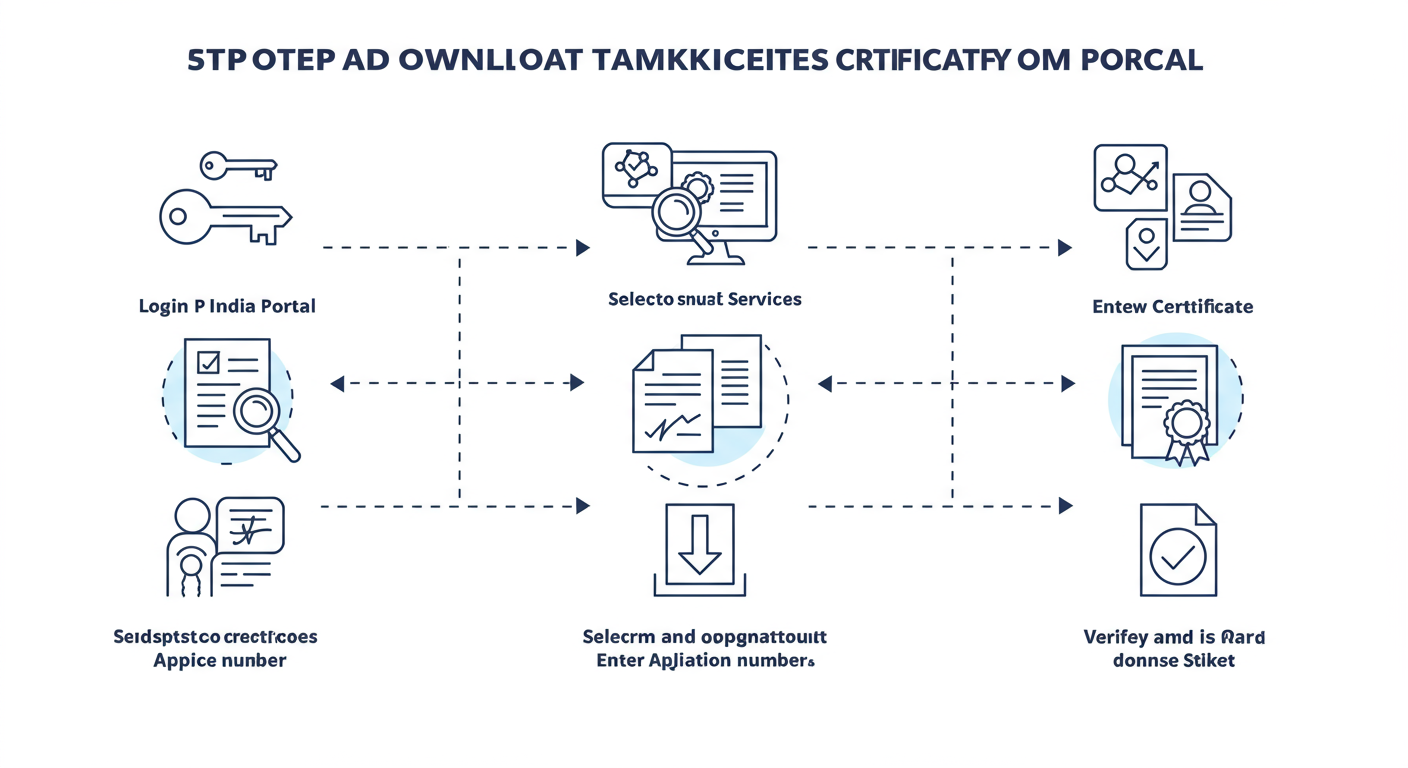
- Go to the Official Source: Navigate directly to the IP India official website. This is the only legitimate place to get your certificate. Don’t get fooled by third-party sites offering to do this for a fee.
- Find the Trademark Status Link: On the homepage, click on the “Trade Marks” tab. Look for a link labeled “Trade Mark Status” or “Application Status.” The website design changes, but the function is always there.
- Enter Your Application Number: This is the 7-digit number you received when you first filed. Enter it carefully. A single wrong digit will lead you down a rabbit hole. Complete the captcha to prove you’re human.
- Locate the Certificate in Your File History: The page will load the entire “dossier” for your trademark. The status at the top should proudly say “Registered.” Now, scroll down through the list of documents. The registration certificate is usually one of the last items added by the registry. Look for a PDF icon and the description “Registration Certificate.”
- Download, Verify, and Back It Up: Click to download the PDF. Open it immediately. This isn’t just any PDF; it’s digitally signed. Now, save it in at least three places: your computer, a cloud service (Google Drive, Dropbox), and an external hard drive. Seriously. Do it now.
💡 Pro Tip
Once you download the PDF, check the validity of the digital signature. Open the certificate in Adobe Acrobat Reader, go to the “Signature Panel,” and verify that the signature is valid. This confirms the document’s authenticity and hasn’t been tampered with. It’s a small step that adds a layer of legal certainty.
What About Other Countries? (US and Beyond)
The principle is the same globally: go to the official government IP office website. For trademarks registered in the United States, you’ll use the USPTO’s Trademark Status and Document Retrieval (TSDR) system. Just enter your serial number to find and download all documents, including the final certificate.
For a broader international perspective, the World Intellectual Property Organization (WIPO) provides resources and links to national and regional IP offices worldwide. Always start with the official source.
⚠️ Watch Out
Scammers thrive on confusion. You may receive official-looking emails or letters from third-party companies congratulating you and offering to send your certificate or list it in a private registry for a fee. Ignore them. Your official trademark certificate download is always free from the government portal.
You’ve Downloaded It. Now What? Your First 72 Hours
Getting the certificate is the starting gun, not the finish line. The actions you take immediately after your trademark certificate download are critical for maximizing its power.
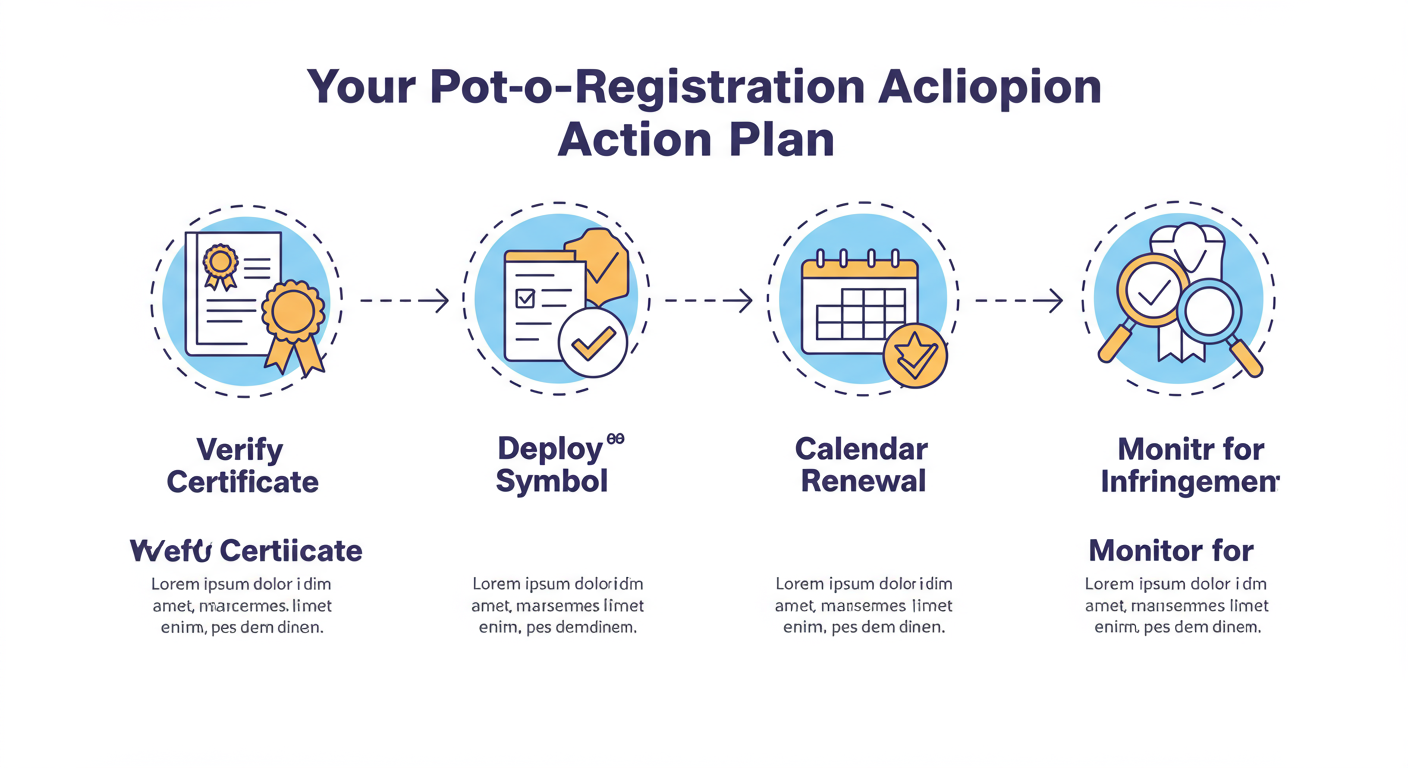
1. Verify Every Single Detail
Before you do anything else, put on your glasses and scrutinize the certificate. Are there any typos in your company name or address? Is the logo or word mark represented exactly as you filed it? Are the classes of goods and services correct? I’ve seen cases where a simple typo has caused major headaches down the road. If you find an error, you must contact the Trademark Registry immediately to file a request for correction.
2. Deploy the ® Symbol
This is the fun part. You’ve earned it. Start using the registered trademark symbol (®) with your brand name, logo, or tagline on your website, products, and marketing materials. This puts the entire world on notice of your registered rights.
| Symbol | Meaning | When to Use | Legal Power |
|---|---|---|---|
| ™ | Trademark | When you claim a mark for goods but it’s not yet registered. | Establishes common law rights; no presumption of ownership. |
| ℠ | Service Mark | When you claim a mark for services but it’s not yet registered. | Same as ™, but for services. |
| ® | Registered | Only after your mark is officially registered and you have the certificate. | Provides legal notice of federal registration; strengthens infringement claims. |
3. Calendar Your Renewal Date. Twice.
Trademark protection isn’t forever. It lasts for 10 years (in most countries) and requires renewal. Find the “Date of Registration” or “Valid Until” date on your certificate. Now, open your calendar and create two events:
- One year before expiry: “Start Trademark Renewal Process for [Your Brand].”
- Six months before expiry: “FINAL DEADLINE: Renew Trademark for [Your Brand].”
Missing this deadline can lead to the abandonment of your mark. Don’t let that happen. Unlocking Competitive Edge: Comprehensive Voluntary GST Registration Benefits for Small Businesses
🎯 Key Takeaway
Your trademark certificate isn’t a trophy to be stored; it’s a tool to be used. The moment you download it, you transition from a passive applicant to an active brand guardian responsible for verifying, deploying, and defending your intellectual property. LLP vs Pvt Ltd in 2026: The Definitive Guide for Indian Startups
4. Set Up Your Defenses: Active Monitoring
The government registers your mark; it doesn’t police it for you. That’s your job. You must actively monitor the marketplace for anyone using a confusingly similar mark for related goods or services. Early detection is key to stopping infringement before it dilutes your brand.
💡 Pro Tip
A simple, free first step in monitoring is to set up Google Alerts for your brand name, key product names, and common misspellings. This won’t catch everything, but it’s a great baseline defense that can alert you to unauthorized mentions or potential infringers online.
Common Roadblocks and How to Navigate Them
Sometimes, things don’t go perfectly smoothly. Here are a few common hiccups we’ve seen and how to handle them without panicking.
Scenario: The status says “Registered,” but the certificate isn’t available for download.
Solution: Patience. It can take the registry anywhere from a few days to a couple of weeks to generate and upload the digitally signed certificate after the status change. Just keep checking back every few days.
Scenario: The IP India or USPTO website is down or giving you an error.
Solution: It happens. Government websites can be clunky. Try clearing your browser cache, using a different browser, or simply waiting a few hours and trying again. It’s rarely a problem with your specific application.
⚠️ Watch Out
Failing to renew your trademark is catastrophic. If you miss the deadline and the grace period, your registration will be marked as “Abandoned” or “Expired.” This means your rights are extinguished, and another company could potentially register your brand name. The cost and effort to reclaim it are immense, if it’s even possible.
❓ Frequently Asked Questions
How long does it take to get the trademark certificate after registration is approved?
Once the status officially changes to “Registered,” expect the digital certificate to be available for download within 2 to 15 business days. It’s not instant, as it needs to be generated and digitally signed by the registry.
Is the downloaded PDF certificate legally valid?
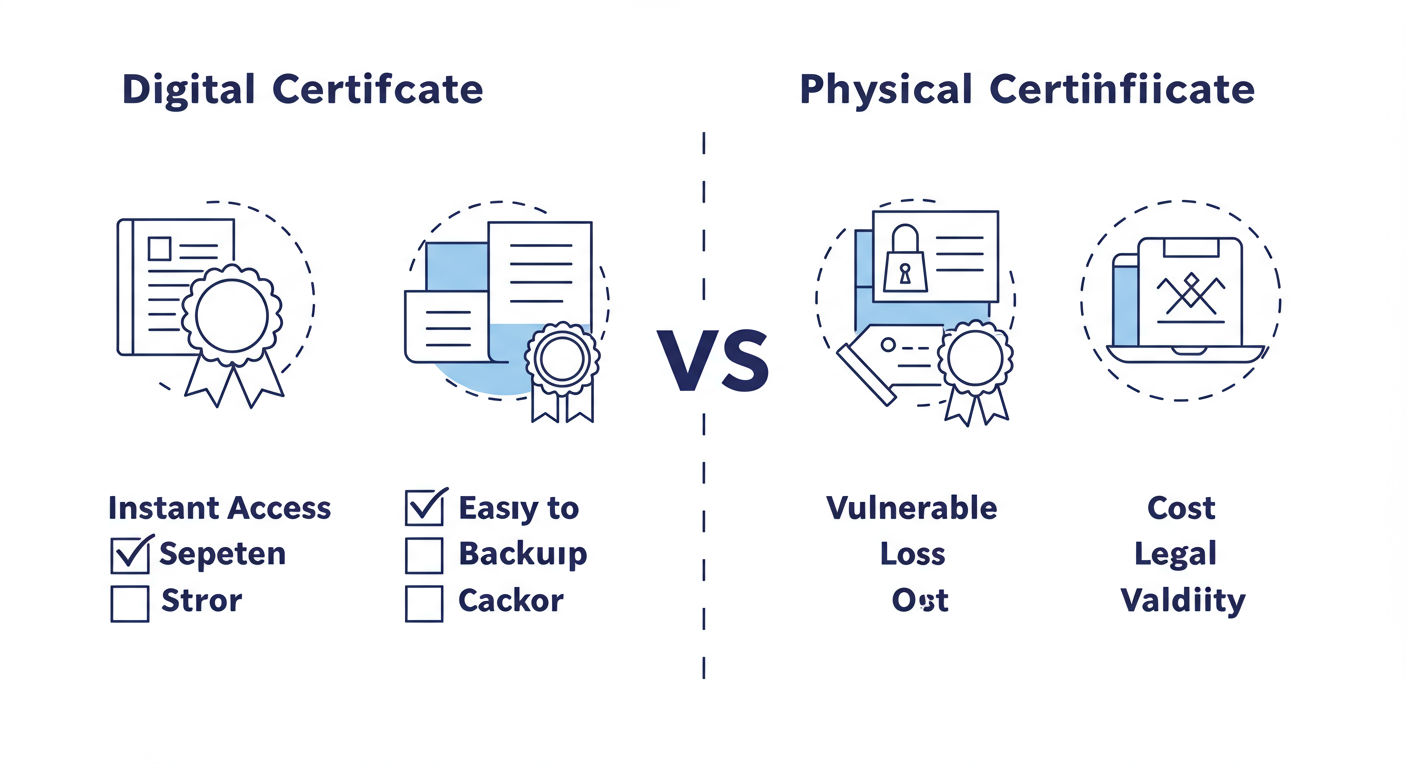
Yes, 100%. The digitally signed PDF you download from an official government portal (like IP India or USPTO) is the official, legally binding document. It’s admissible in court and holds the exact same weight as an old-fashioned paper certificate.
What if I lose my downloaded trademark certificate file?
No problem at all. This is a major benefit of the digital system. You can simply log back into the official portal using your application number and re-download the certificate at any time. It remains part of the public record.
Do I have to pay a fee for the trademark certificate download?
No. The issuance and download of the certificate are included in the registration fees you’ve already paid. Any third-party service asking for a fee to “process” or “deliver” your certificate is almost certainly a scam.
Can someone else download my trademark certificate?
Yes. Trademark registration data, including the certificate, is public information. This transparency is by design, allowing competitors, partners, and the public to verify which marks are registered and by whom. It helps everyone avoid infringement.
Conclusion: From Owner to Guardian
Congratulations again on registering your trademark. It’s a massive achievement. But the real work—and the real value—begins now.
You’ve learned that the trademark certificate download is more than a simple administrative task. It’s the moment you officially receive the keys to your brand’s kingdom. It’s the trigger for a new set of responsibilities: verifying your asset, deploying your rights with the ® symbol, and establishing a defense against infringement.
Don’t just file that PDF away. Print it, back it up, and most importantly, act on the power it gives you. Your brand is one of your most valuable assets. Now, go and protect it like one.