
Picture this: a brilliant business idea strikes you in the middle of the night. It’s a solution to a problem no one else has solved. But what happens next? How does that spark of genius transform into a living, breathing company?
It doesn’t happen by magic. It happens because of a promoter.
Most people think of founders or CEOs, but the promoter is the unsung hero who works in the shadows before the company even has a name. They are the architects of ambition, the ones who lay the entire foundation. Get this role right, and you build a skyscraper. Get it wrong, and the whole structure can collapse before it even begins.
In this deep dive, we’re pulling back the curtain. You’ll learn not just the textbook definition of who is a promoter, but what they actually do, the different hats they wear, and the serious legal tightrope they walk. By the end, you’ll understand why this role is the most critical, and most overlooked, part of any business’s origin story.
The Legal Gavel: Who is a Promoter in the Eyes of the Law?
Let’s get one thing straight: “promoter” isn’t just a fancy startup title. It’s a legal status with real-world consequences. You don’t even have to call yourself one to be considered one. The law cares about your actions, not your business card.
For instance, the Indian Companies Act, 2013 (a globally respected framework) defines a promoter based on influence and function. You’re likely a promoter if you:
- Are named as a promoter in the company’s key documents (like the prospectus).
- Have direct or indirect control over the company’s affairs, even before it’s officially formed.
- Are someone whose advice and instructions the future Board of Directors is accustomed to following.
The key takeaway? It’s about substance over style. If you’re the one pulling the strings to bring the company to life, you’re a promoter. And that comes with a heavy dose of responsibility.
⚠️ Watch Out
You can become a promoter by accident. If you’re actively helping a friend set up their company—finding investors, negotiating initial contracts, and making key decisions—you could be legally seen as a promoter. This exposes you to fiduciary duties and potential liabilities you might not even be aware of.
The Promoter’s Playbook: A 7-Step Journey from Idea to Incorporation
A promoter’s work is a masterclass in organized chaos. They’re part visionary, part project manager, and part legal navigator. Based on our experience guiding hundreds of new ventures, we’ve seen this process unfold in a consistent, seven-step journey.
Forget a simple checklist; this is a strategic campaign.
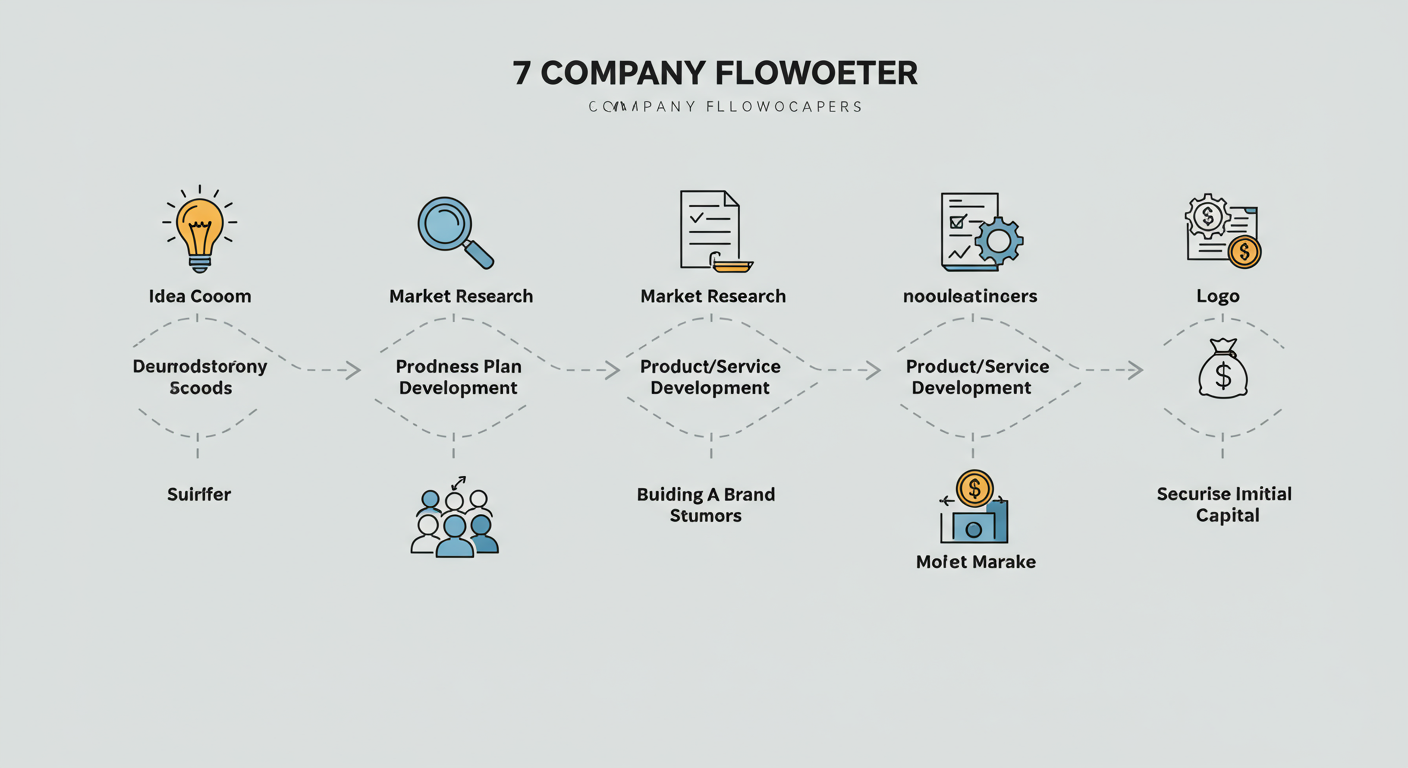
- Conceive and Interrogate the Idea: It all begins with the “what if.” But a promoter doesn’t just have an idea; they attack it from every angle. Is there a real market? Who are the competitors? What’s the unique value proposition? This isn’t just brainstorming; it’s a rigorous investigation to see if the idea has legs.
- Conduct Hard-Nosed Feasibility Studies: This is where dreams meet data. The promoter dives deep into three critical areas:
- Financial Feasibility: How much cash do we really need to get started and survive the first year? Where will it come from?
- Technical Feasibility: Do we have the technology, skills, and resources to build this product or deliver this service? If not, can we acquire them?
- Economic Feasibility: Crunching the numbers. What are the projected costs, pricing models, and potential profitability? Is there a realistic path to positive cash flow?
- Assemble the “Day Zero” Resources: With a viable plan, the promoter becomes a master assembler. This means gathering the initial assets—not just money, but the right people (co-founders, key hires), intellectual property, and even physical assets like an office or equipment.
- Draft the Company’s DNA (Legal Docs): This is non-negotiable. The promoter oversees the creation of the company’s foundational documents. The two most important are the Memorandum of Association (MOA), which defines what the company is allowed to do, and the Articles of Association (AOA), which outlines the internal rules for how it will operate.
- Name the Venture: It sounds simple, but it’s a crucial step. The promoter must choose a name that is unique, brandable, and legally available. This involves checking with the official Registrar of Companies to get it approved.
- Appoint the First Captains (Directors): A company needs a board. The promoter identifies, vets, and formally appoints the first directors. These are the individuals entrusted to manage the company post-incorporation. Their written consent is a must.
- Secure the First Fuel (Initial Capital): Finally, the promoter raises the seed capital. This isn’t venture capital; it’s the preliminary funding needed to cover incorporation fees, legal costs, and other initial expenses to get the company legally off the ground.
💡 Pro Tip
Document everything. Every decision, every expense, every conversation during the pre-incorporation phase should be meticulously recorded. Use a shared drive and meeting minutes. This paper trail is your best defense if questions about your actions as a promoter ever arise.
The Four Faces of a Promoter
Not all promoters are cut from the same cloth. They come from different backgrounds and have different motivations. Understanding the type of promoter you’re dealing with (or the type you are) is key to predicting their behavior and goals.
| Promoter Type | Primary Motivation | Typical Background | End Goal |
|---|---|---|---|
| Entrepreneurial Promoter | Build their own vision | Individual with an idea | Run and grow the company long-term |
| Professional Promoter | Profit from company formation | Specialized firms, consultants | Hand over the operational company to others |
| Financial Promoter | Strategic investment return | Venture Capital, Investment Banks | Create a valuable asset in their portfolio |
| Corporate Promoter | Expand business or enter new markets | An existing, established company | Launch a successful subsidiary |
While the classic image is the lone entrepreneur, it’s common for financial institutions or even other companies to act as promoters to execute a specific strategic goal. The key difference lies in their long-term intentions.
The Fiduciary Tightrope: A Promoter’s Sacred Duties and Serious Liabilities
This is the part every aspiring entrepreneur needs to read twice. When you act as a promoter, the law places you in a fiduciary relationship with the company you’re creating. Think of it as being a trustee or a guardian.
What does this mean in plain English? It means you have a legal and ethical duty to act in the company’s best interest, not your own. Breaking this trust isn’t just bad form; it can lead to financial ruin.
A fiduciary duty is the highest standard of care in equity or law. A promoter who breaches this duty can be held personally liable for any losses the company suffers as a result.
Your core fiduciary duties include:
- No Secret Profits: You can’t use your position to make a hidden profit at the company’s expense. For example, if you buy a domain for $100 and sell it to the company for $10,000 without telling anyone it was yours, that’s a secret profit. You could be forced to return the entire amount.
- Full Disclosure of Personal Interest: If you’re selling your own property or service to the company, you must disclose your personal stake to an independent board and ensure the deal is fair. Transparency is non-negotiable.
- Duty of Care: You must act with the same reasonable care and skill that a prudent person would use in managing their own affairs. Negligence isn’t an excuse.
🎯 Key Takeaway
A promoter’s role is defined by trust. You are the temporary guardian of a future entity. Every action you take before incorporation must be for the benefit of the company, not for your personal enrichment. Breaching this fiduciary duty is the fastest way to face legal action. Mastering the Udyam Registration Online Steps: A Comprehensive Guide for MSMEs
The Peril of Pre-Incorporation Contracts
Here’s a classic trap. Before a company is legally incorporated, it doesn’t exist. It’s a legal ghost. So, who is liable for the office lease you signed or the equipment you ordered in the company’s future name? New TDS Rates from 1 Oct 2024: What You Need to Know
You are. Personally.
⚠️ Watch Out
Never sign a contract on behalf of “XYZ Corp (to be incorporated).” Until the company is officially formed and its board formally adopts the contract, you are on the hook for it. If the company never gets off the ground or decides not to adopt the contract, the supplier can sue you personally for payment.
Let’s look at how this liability shifts. After testing this in numerous real-world scenarios, the process is clear.
| Scenario | Who is Liable? | How to Mitigate Risk |
|---|---|---|
| Before Incorporation | The Promoter is personally liable. | Sign contracts with a clause stating it’s subject to adoption by the new company. |
| After Incorporation & Adoption | The Company becomes liable. | Ensure the new Board of Directors passes a resolution to formally adopt all pre-incorporation contracts. |
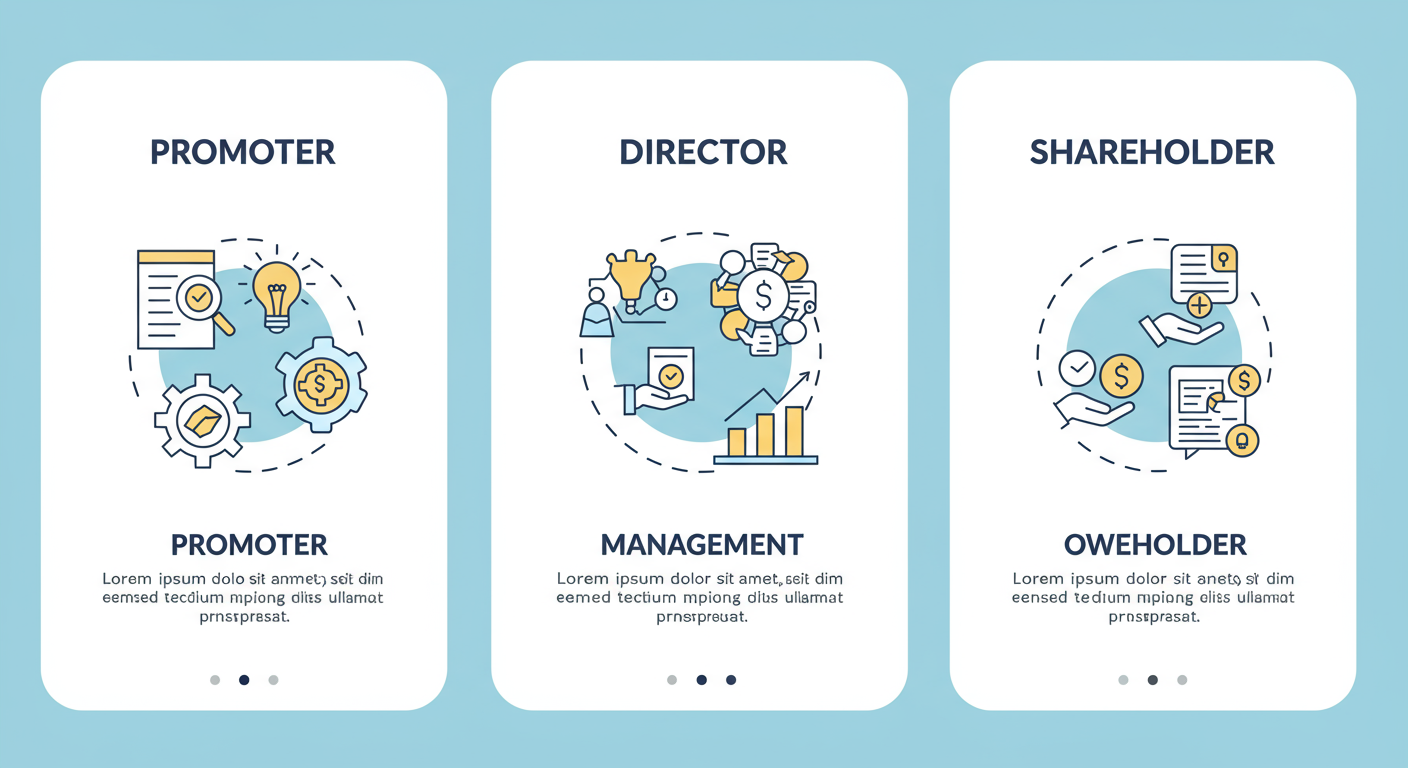
Promoter vs. Director vs. Shareholder: What’s the Difference?
In a small startup, it’s common for one person to be all three: the promoter who started it, a director who runs it, and a shareholder who owns it. But these roles are legally distinct.
Think of it like building and living in a house:
- The Promoter is the architect and construction manager. Their main job is to get the house built. Once it’s finished and the keys are handed over, their official role is done.
- The Director is the property manager. They live in the house (or manage it) day-to-day, making sure the lights stay on, repairs are made, and it’s run effectively.
- The Shareholder is the owner. They own the deed to the house. They don’t manage the plumbing, but they have the power to hire or fire the property manager (the directors).
💡 Pro Tip
From real-world campaigns, we’ve seen that the most successful founders are those who understand when to switch hats. You need the vision of a promoter, the execution of a director, and the long-term perspective of a shareholder. Knowing which hat you’re wearing in any given meeting is a critical leadership skill.
The Architect’s Legacy
So, who is a promoter? They are far more than just an “idea person.” They are the catalyst, the strategist, and the foundational force that turns a concept into a corporate reality. Their work is intense, fraught with legal duties, and often happens long before the first dollar of revenue is earned.
The promoter’s role may be temporary, but their impact is permanent. The decisions they make during that fragile, pre-incorporation phase set the company’s trajectory for years to come. According to industry research from Harvard Business School, many startup failures can be traced back to foundational mistakes—the very things a good promoter is meant to prevent.
Your next step? Before you even think about a business name or logo, take a hard look at the promoter’s playbook. Understand the duties you’re taking on. Because being a successful entrepreneur isn’t just about having a great idea; it’s about being a great architect.
❓ Frequently Asked Questions
What’s the main difference between a promoter and an early investor?
A promoter’s primary role is foundational—they do the work to form and register the company. An early investor’s role is purely financial—they provide capital for equity. While a promoter can also be an investor (and often is), their legal duties as a promoter are separate from their financial stake.
Can a promoter be paid for their pre-incorporation work?
Absolutely. Promoters can be compensated for their time and expenses. This can be a cash payment, a commission, or, most commonly, shares in the new company. The critical rule is that this compensation must be fully disclosed to the company and its shareholders. Hiding it would be a breach of fiduciary duty.
Does the promoter’s role officially end?
Yes, from a legal standpoint, the promoter’s specific duties conclude once the company is incorporated and the Board of Directors is in place to take over management. In practice, however, most entrepreneurial promoters transition into roles like CEO, board member, or majority shareholder to continue guiding their creation.
Are promoters personally liable for the company’s future debts?
Generally, no. Once a company is incorporated, it’s a separate legal entity responsible for its own debts. The corporate veil protects promoters and shareholders. The major exceptions are cases of fraud, breach of fiduciary duty, or if the promoter has personally guaranteed a loan for the company.
What is a fiduciary relationship in simple terms?
A fiduciary relationship is one of ultimate trust. It means one party (the fiduciary, i.e., the promoter) has a legal obligation to act solely in the best interests of another (the beneficiary, i.e., the company). It’s like a doctor’s duty to a patient or a lawyer’s duty to a client.
Can a company sue its own promoter?
Yes, and it happens. If, after incorporation, the new board discovers that a promoter engaged in fraud, made secret profits, or was negligent in their duties, the company can take legal action against the promoter to recover damages or rescind contracts.