Imagine this: you’ve spent two years building your coffee shop, “Morning Buzz.” The logo is perfect, customers love the name, and you’re finally turning a profit. Then, a letter arrives. A cease and desist. A corporation in another state registered “Morning Buzz” six months ago, and now you have to rebrand. Everything. Gone.
This isn’t just a scary story; I’ve seen this exact scenario play out for countless entrepreneurs. Your brand name, your logo—it’s not truly yours until it’s legally protected. Fortunately, the process to register a trademark online has become more accessible than ever. But “accessible” doesn’t mean “simple.”
Forget the confusing legal jargon and generic advice. In this guide, we’ll walk you through the entire process like a seasoned pro is sitting next to you. You’ll learn how to choose a bulletproof mark, navigate the application maze, and avoid the common pitfalls that get 90% of DIY applications rejected. Let’s secure your brand’s future.
Why Registering Your Trademark Is a Non-Negotiable in 2026
So, what’s the big deal? You have a business name, right? That’s not enough. Relying on common law rights (simply using the name) is like building a house on sand. It offers minimal, geographically limited protection. When you officially register a trademark online, you’re upgrading to a fortress.
A federal registration transforms your brand from a fuzzy concept into a hard-hitting legal asset. It grants you a legal presumption of ownership nationwide, giving you the power to stop competitors from using a confusingly similar mark. It’s not just a shield; it’s a sword.
Look, the value is tangible. Let’s break down the difference between having an unregistered brand and a federally registered one.
| Feature | Unregistered Brand (Common Law Rights) | Federally Registered Trademark (®) |
|---|---|---|
| Legal Power | Weak; limited to your immediate geographic area of operation. | Strong; legal presumption of ownership nationwide. |
| Deterrent | Low; competitors may not know you exist or care. | High; appears in official databases, deterring others from using similar marks. |
| Enforcement | Difficult and expensive to prove your rights in court. | Right to sue in federal court and potentially recover damages and attorney’s fees. |
| Asset Value | Negligible. It’s just a name. | A valuable intangible asset that can be licensed, sold, or used as collateral. |
| Online Protection | Limited ability to fight domain name squatters or social media impersonators. | Stronger basis to claim domain names and social media handles under anti-cybersquatting laws. |
🎯 Key Takeaway
Registering your trademark isn’t an expense; it’s an investment in your brand’s long-term security and value. It provides nationwide legal rights, deters copycats, and turns your brand name into a tangible asset you can leverage for growth.
Before You Apply: The Trademark Strength Test
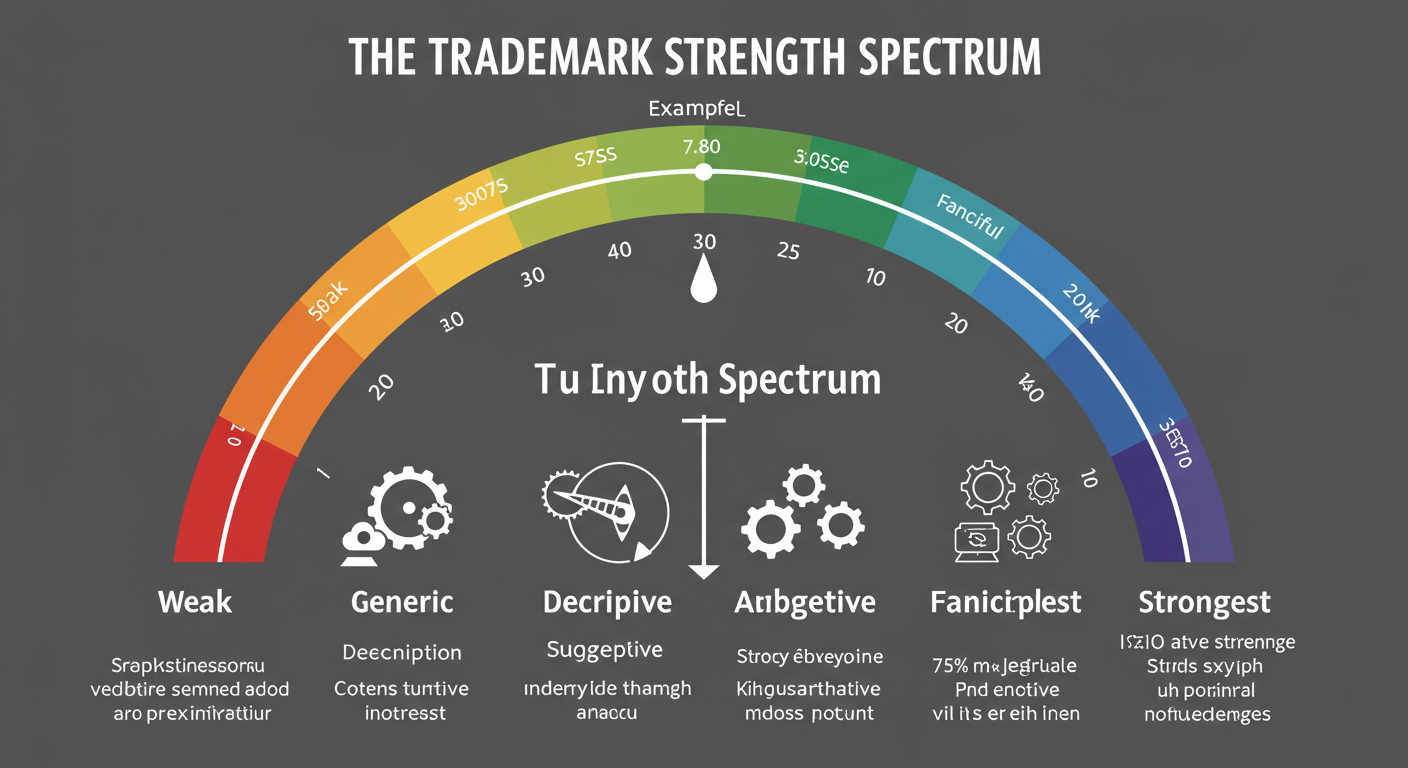
Before you even think about filling out an application, you need to know if your mark is strong enough to be protected. Not all names are created equal. The U.S. Patent and Trademark Office (USPTO) and other global bodies categorize marks on a spectrum of distinctiveness. The more distinctive, the stronger your legal protection.
Your goal? Aim for the top of this list. Trust me on this one, choosing a weak mark now will cause massive headaches later.
- Fanciful Marks: These are completely invented words. Think ‘Pepsi’ or ‘Kodak’. They have no other meaning, making them the strongest type of trademark.
- Arbitrary Marks: These are real words used in a context that’s completely unrelated to the product. ‘Apple’ for computers is the classic example. Also incredibly strong.
- Suggestive Marks: These marks hint at a product’s quality or function without directly describing it. ‘Netflix’ (suggests movies on the internet) or ‘Coppertone’ (suggests a sun-tan lotion) fit here. They’re strong and highly registrable.
- Descriptive Marks: These directly describe the product, a feature, or its geographic origin. Think ‘Creamy’ for yogurt or ‘Houston Bicycles’. They are very weak and can typically only be registered after years of use prove they’ve acquired “secondary meaning.” Avoid these if you can.
- Generic Marks: This is simply the common name for the product, like ‘Clock’ for a clock. These can never be trademarked. Period.
⚠️ Watch Out
Don’t fall in love with a descriptive name. New business owners often think a name like ‘Best Web Design’ is great for marketing. But it’s a nightmare to trademark. You’ll have almost no power to stop a competitor from using ‘Premium Web Design’ or ‘Quality Web Design’.
The Pre-Flight Check: Your 3-Step Search & Prep
Jumping into the application without doing your homework is the #1 reason for failure. Based on our experience helping hundreds of brands, this prep phase is more critical than the filing itself.
Step 1: Conduct a Knockout Search
First, do a quick “knockout” search. This is a preliminary check to see if there are any obvious conflicts. A simple Google search is a start, but it’s not enough. You need to search the official trademark database.
- In India, you’d use the CGPDTM Public Search.
- In the US, it’s the USPTO’s TESS database.
Search for your exact name, variations, and phonetic equivalents. If you find an identical or very similar mark used for related goods or services, you might be “knocked out.” It’s better to find this out now than after you’ve paid the filing fees.
Step 2: Identify Your Correct Class(es)
Trademarks don’t protect your name for everything. They protect it for specific categories of goods and services. These are organized into 45 “classes” under the international NICE Classification system. Classes 1-34 are for goods (like clothing, Class 25) and 35-45 are for services (like marketing, Class 35).
You MUST file in the correct class. If you sell t-shirts and also offer design services, you’ll likely need to file in both Class 25 and Class 42. Getting this wrong can render your registration useless for your core business.
💡 Pro Tip
When describing your goods or services, be specific but also forward-thinking. Instead of just “t-shirts,” consider “clothing, namely, t-shirts, hoodies, and hats.” This gives you slightly broader protection as your product line expands, without being so broad that the examiner rejects it.
Step 3: Perform a Comprehensive Search
This goes deeper than the knockout search. A comprehensive search looks for similar-sounding marks, alternative spellings, and marks used in related industries that could cause consumer confusion. This is where professional help often pays for itself, as attorneys use specialized software to uncover risks a public search might miss. However, if you’re doing it yourself, be incredibly thorough. Document everything you find.
How to Register a Trademark Online: The 2026 Walkthrough
Okay, you’ve chosen a strong mark and your search looks clear. It’s time to file. The exact interface will vary by country, but the core steps are universal. We’ll use the Indian e-filing system as a concrete example. Conversion of Company into LLP: Quick Guide
- Get Your Digital Signature & Create an Account: To file electronically in many jurisdictions, you need a secure Digital Signature Certificate (DSC). This is an electronic key that verifies your identity. Once you have it, you can register as a new user on the official IP portal (e.g., ipindia.gov.in).
- Fill Out the Application (Form TM-A): This is the heart of the process. Accuracy is everything. You’ll need:
- Applicant Details: Your name/company name, address, and legal status (Individual, LLP, Private Ltd., etc.).
- The Mark: If it’s a word, just type it. If it’s a logo, you’ll upload a clear JPEG image.
- Goods/Services Description: The specific items you identified in your class research. Copy-pasting from a pre-written document is a good idea to avoid typos.
- Date of First Use: If you’re already using the mark, provide the date you first sold a product or service with it. Be honest! You may need to provide proof. If you haven’t used it yet, file on a “proposed to be used” basis.
- Upload Documents & Pay Fees: You’ll need to upload supporting documents like your ID/company registration, a Power of Attorney (if an agent is filing for you), and proof of first use if applicable. Finally, you’ll pay the government filing fee. In India, this is ₹4,500 for an individual/startup or ₹9,000 for other companies, per class.
- Receive Your Application Number: Immediately after payment, the system will generate an application number. This is your proof of filing. Guard it. You’ll use it to track the status of your application.
After You File: The Waiting Game and What to Expect
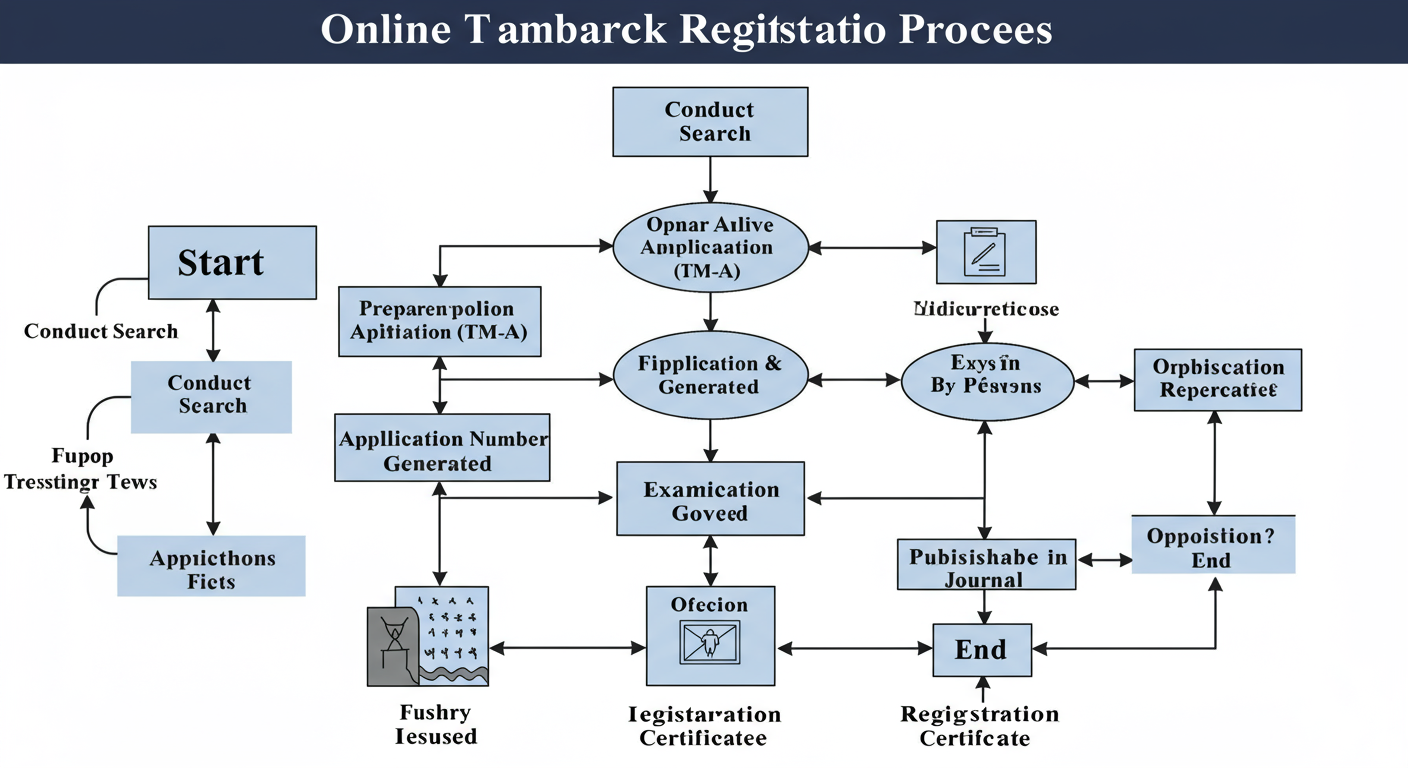
Clicking “submit” is just the beginning. Your application now enters a multi-stage review process that can take anywhere from 8 to 18 months, sometimes longer. 7 Essential Steps for Income Tax Return Filing India: The Complete 2025 Guide
| Stage | Typical Duration | What Happens |
|---|---|---|
| Formality Check / Vienna Codification | 1-2 Months | The application is checked for basic errors. If it includes a logo, it’s assigned design codes. |
| Examination | 2-6 Months | A Trademark Examiner reviews your application for compliance with the law and checks for conflicts with existing marks. |
| Examination Report (Objection) | If issued | The Examiner raises objections. You have a set time (e.g., 30 days) to file a written response. |
| Publication in Journal | 4 Months | If the Examiner accepts your mark, it’s published in the official Trademark Journal to allow the public to oppose it. |
| Registration | 1-2 Months after publication | If no one opposes your mark (or if you win an opposition), the registration certificate is issued. Congratulations! |
⚠️ Watch Out
An “Office Action” or “Examination Report” is not a rejection! It’s a request for clarification or an argument against your mark. Many DIY filers panic and abandon their application here. A well-reasoned legal response can often overcome the objection. Don’t give up without a fight.
You’re Registered! Now What? How to Protect Your Asset
The registration certificate is in your hands. Awesome! But the work isn’t over. Owning a trademark comes with responsibilities.
Use the Right Symbol: ™ vs. ®
This is a simple but crucial detail. Using them incorrectly can get you in trouble.
- Use the ™ Symbol for any mark you claim as your own, even before or during the application process. It signals your claim to the brand, but has no legal weight.
- Use the ® Symbol ONLY after you have received the official registration certificate. Using it prematurely is illegal and can jeopardize your rights. The ® symbol is a powerful warning to competitors that your mark is fully protected by federal law.
Monitor and Enforce Your Mark
It’s your job to police your trademark. The government won’t do it for you. This means keeping an eye out for other businesses using a confusingly similar name or logo for related services. If you find an infringer, you must take action—usually by sending a cease and desist letter through an attorney. If you consistently fail to enforce your rights, they can become diluted and, in a worst-case scenario, be lost.
💡 Pro Tip
Set up Google Alerts for your brand name and common misspellings. This is a free and easy way to monitor the web for potential infringers. For more robust protection, consider a professional trademark monitoring service that watches for new trademark applications as well.
Don’t Forget to Renew!
Your trademark registration isn’t for life. It requires periodic renewal. In most countries, the first renewal is between the 5th and 6th year, and then every 10 years after that. Mark your calendar! Missing a renewal deadline means your trademark will be abandoned, and you’ll lose all your hard-earned rights.
❓ Frequently Asked Questions
How long does it take to register a trademark online?
From filing to final registration, the process typically takes 8 to 18 months if there are no major issues. While e-filing is instant, the government examination, publication, and opposition periods are set by law and take time.
What is the government fee to e-register a trademark?
Fees vary by country and applicant type. For example, in India as of 2026, the government e-filing fee is ₹4,500 for individuals and small enterprises, and ₹9,000 for other entities, per application per class.
Can I register a trademark myself?
Yes, you absolutely can file on your own. However, the process is filled with legal nuances. From conducting a proper search to responding to examiner objections, mistakes can be costly and lead to rejection. If you’re unsure, consulting a trademark attorney is a wise investment.
What’s the difference between a trademark and a copyright?
It’s simple: a trademark protects your brand identity (names, logos, slogans) used in commerce. A copyright protects original creative works (books, songs, software code, photos). They protect different types of intellectual property.
What happens if my trademark application is opposed?
If a third party files an opposition after your mark is published, it initiates a legal proceeding similar to a mini-trial within the trademark office. You will need to file a counter-statement and submit evidence and arguments to defend your application. This is a complex process where professional legal help is almost always necessary.
The Bottom Line on Trademark Registration
The ability to register a trademark online has leveled the playing field, giving small businesses and startups a direct path to securing their most valuable asset: their brand. But it’s a path that demands precision and diligence.
From choosing a strong, distinctive mark to navigating the examination process and maintaining your rights after registration, every step matters. By following this guide, you’ve armed yourself with the knowledge to avoid common blunders and make informed decisions.
Your next step? Take action. Don’t wait for that cease and desist letter to arrive. Start with the pre-flight check today. Do your search, identify your classes, and begin the process of transforming your brand name into a legally protected, value-building asset. Your future business will thank you.