
Imagine a bill that grows by ₹100 every single day, with no off switch. It just keeps climbing. That’s not a hypothetical nightmare; it’s the stark reality for any Limited Liability Partnership (LLP) in India that misses its Form 11 filing deadline.
Every year, thousands of entrepreneurs get blindsided by this seemingly simple compliance task. They either forget, misunderstand the requirements, or underestimate the consequences. The result? Hefty, uncapped penalties that can cripple a growing business.
But it doesn’t have to be this way. You’re about to get a masterclass in navigating Form 11 LLP filing for 2026. We’re cutting through the government jargon to give you a clear, actionable playbook. By the end of this article, you’ll know exactly what Form 11 is, why it’s non-negotiable, how to prepare your documents, and how to file it step-by-step without breaking a sweat.
Let’s make sure your LLP stays compliant, credible, and penalty-free.
What is Form 11, Really? (Beyond the Official Jargon)
Think of Form 11 as your LLP’s annual “State of the Union” address to the Ministry of Corporate Affairs (MCA). It’s not a financial statement full of profit and loss numbers—that’s what Form 8 is for. Instead, Form 11 is an Annual Return that provides a snapshot of your LLP’s administrative and management health as of March 31st.
It answers critical questions for the Registrar of Companies (RoC):
- Is this LLP still active and operational?
- Who are the designated partners running the show?
- What is the total financial contribution from all partners?
- Have there been any changes in the partnership structure?
Filing this form is a legal mandate under the Limited Liability Partnership Act, 2008. It’s the government’s primary tool for maintaining an accurate registry of LLPs. In our experience, viewing it as a proactive step to affirm your business’s good standing—rather than a chore—is the key to staying on top of it.
Even if your LLP had zero business activity all year, you still have to file. A “Nil” return is mandatory. No exceptions. Period.
The High Stakes: Why You Can’t Afford to Ignore Form 11
Let’s be blunt: ignoring Form 11 is one of the costliest mistakes an LLP can make. The consequences aren’t just financial; they can damage your business’s reputation and legal status.
Here’s what’s truly at stake:
- The Uncapped Daily Penalty: The penalty for late filing is a brutal ₹100 per day. The most dangerous part? There is no maximum limit. A 3-month delay costs you roughly ₹9,000. A year-long delay? Over ₹36,000. We’ve seen this spiral into lakhs for LLPs that let it slide for too long.
- Loss of Credibility: Banks, investors, and potential clients often check a company’s compliance status on the MCA portal. A record of late filings screams “poor management” and can kill deals before they even start.
- Risk of being Struck Off: If you consistently fail to file annual returns, the RoC can assume your LLP is defunct. They can then begin the process of striking your LLP’s name from the register, effectively dissolving your business.
- Liability for Designated Partners: The responsibility doesn’t just fall on the LLP as an entity. According to the LLP Act, Designated Partners are personally responsible for compliance and can face prosecution for defaults.
⚠️ Watch Out
The “no upper limit” on the ₹100/day penalty is not a scare tactic; it’s a financial reality. Unlike other filings that might have a maximum penalty, this one accumulates indefinitely until you file. Procrastination is your worst enemy here.
Form 11 vs. Form 8: Know the Difference
A common point of confusion for new LLP partners is the difference between Form 11 and Form 8. They are both mandatory annual filings, but they serve entirely different purposes and have different deadlines. Getting this right is crucial for total compliance.
| Aspect | Form 11 (Annual Return) | Form 8 (Statement of Account & Solvency) |
|---|---|---|
| Purpose | Reports on management and administrative affairs. | Reports on financial health and solvency. |
| Content Type | Non-financial data (partners, contributions, etc.). | Financial data (assets, liabilities, income, expenditure). |
| Due Date (for FY ending Mar 31) | May 30th (within 60 days of FY end) | October 30th (within 30 days from the end of 6 months of FY end) |
| Analogy | Your LLP’s annual administrative check-up. | Your LLP’s annual financial report card. |
Your Pre-Filing Checklist: Gather These Details First
The secret to a smooth filing process? Preparation. Don’t wait until the last week of May to start scrambling for information. Based on hands-on testing of the MCA portal, having these details ready will save you hours of frustration.
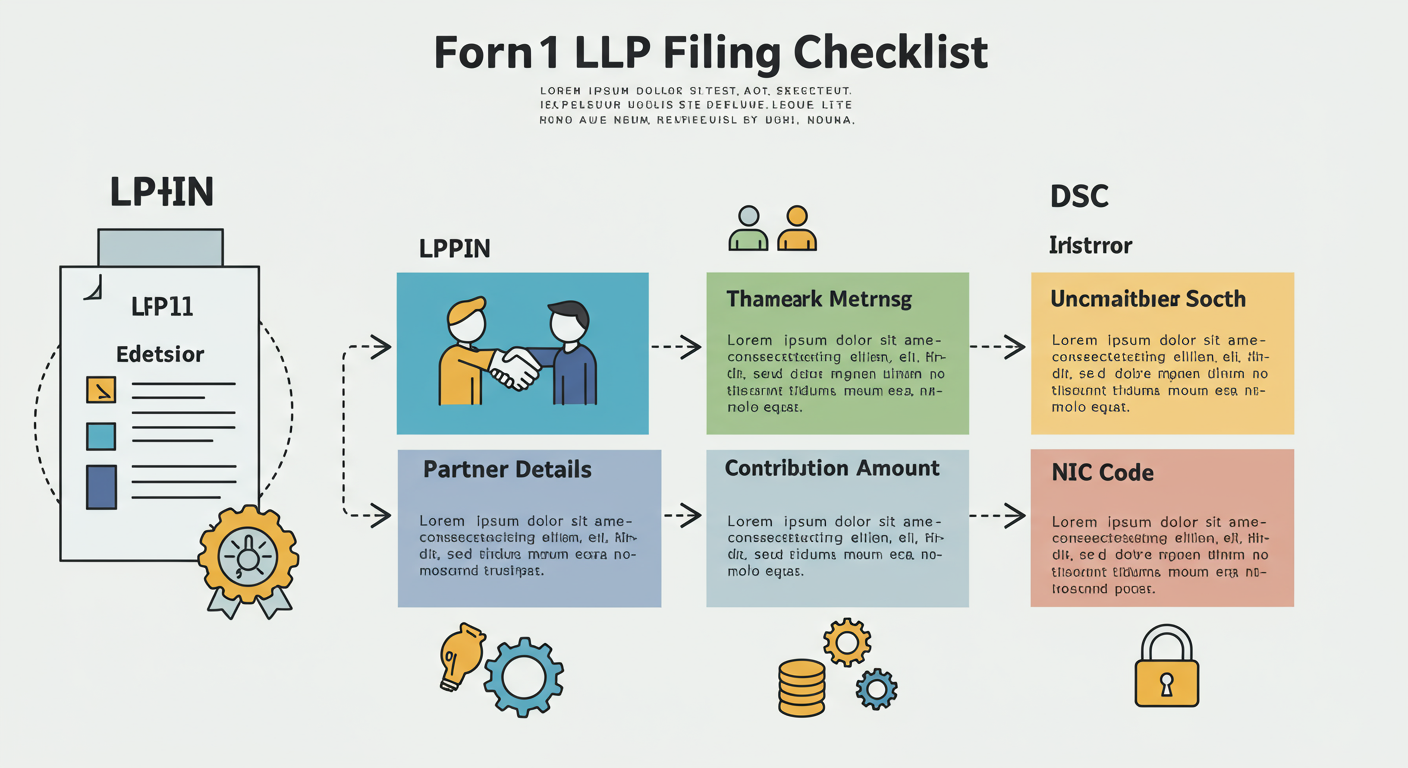
- LLP Identification Number (LLPIN): Your LLP’s unique registration number.
- Registered Office Details: The full, correct address as per MCA records.
- Business Classification (NIC Code): The National Industrial Classification code for your LLP’s primary business activity. You can find the official list on government portals like the Ministry of Statistics and Programme Implementation website.
- Total Contribution of Partners: The total amount of money or other assets contributed by all partners as of March 31, 2026.
- Details of All Partners: Names, addresses, and designation (Designated Partner or Partner).
- Details of Other Directorships/Partnerships: A list of other companies or LLPs where your Designated Partners also serve as Directors or Partners. This needs to be compiled into a PDF attachment.
- Penalty & Compounding Details: Information on any penalties paid or offenses compounded under the LLP Act during the financial year.
- Valid Digital Signature Certificates (DSCs): Ensure the DSCs for at least two Designated Partners are valid and registered on the MCA V3 portal.
💡 Pro Tip
Create a dedicated “LLP Compliance 2026” folder on your computer in April. Save a draft of the partner details attachment and a text file with your LLPIN and NIC code. This simple habit makes the actual filing process a 15-minute job instead of a 2-hour treasure hunt.
The Ultimate Step-by-Step Guide to Filing Form 11 in 2026
Ready to file? Let’s walk through the process on the current MCA V3 portal. It’s more user-friendly than its predecessor, but you still need to be careful.
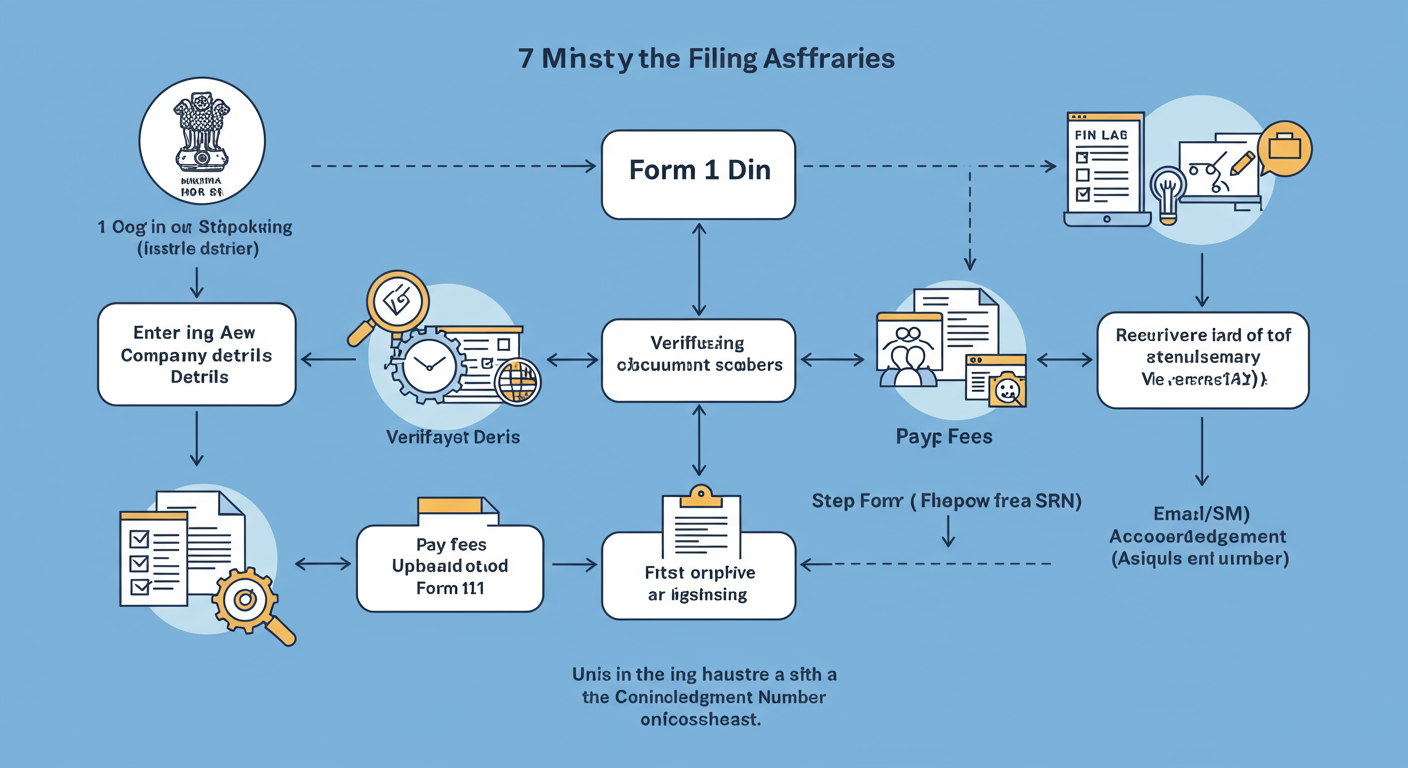
- Login and Navigate: Head to the official Ministry of Corporate Affairs (MCA) website. Log in with your credentials (for a Designated Partner or a professional). Go to MCA Services → LLP E-Filing → Form 11 – Annual Return of LLP.
- Enter LLPIN & Pre-fill: Enter your LLP’s Identification Number. The portal will auto-populate key details like the name and address. Always double-check this pre-filled data for accuracy.
- Fill in the Blanks: Now, you’ll need to enter the information for the financial year ending March 31, 2026. This includes the total partner contribution and details about penalties, if any. This is where your pre-filing checklist comes in handy.
- Attach Your Document: The form will prompt you to attach the mandatory document: the list of other companies/LLPs where your partners hold positions. Make sure this is a clear, legible PDF.
- The Certification Check: This is a crucial fork in the road. The system will ask about your turnover and contribution. Based on your input, it will determine if a professional’s certification is needed. (More on this in the next section).
- Affix Digital Signatures (DSC): The form must be digitally signed by at least two Designated Partners. If professional certification is required, the practicing CA, CS, or CMA will also need to affix their DSC. Trust me on this one: ensure your DSC software is running before you get to this step.
- Pre-scrutiny, Submit, and Pay: Click the ‘Pre-scrutiny’ button. The system will flag any errors. Once it’s error-free, submit the form. You’ll be taken to the payment gateway to pay the government fees (which vary based on contribution). After payment, an SRN (Service Request Number) is generated. Your filing is complete!
🎯 Key Takeaway
Form 11 LLP filing is a mandatory annual compliance task due by May 30th. The penalty for late filing is a steep, uncapped ₹100 per day. Preparation and timeliness are your best defense against significant financial and legal trouble.
The Certification Crossroads: Who Needs to Sign Your Form 11?
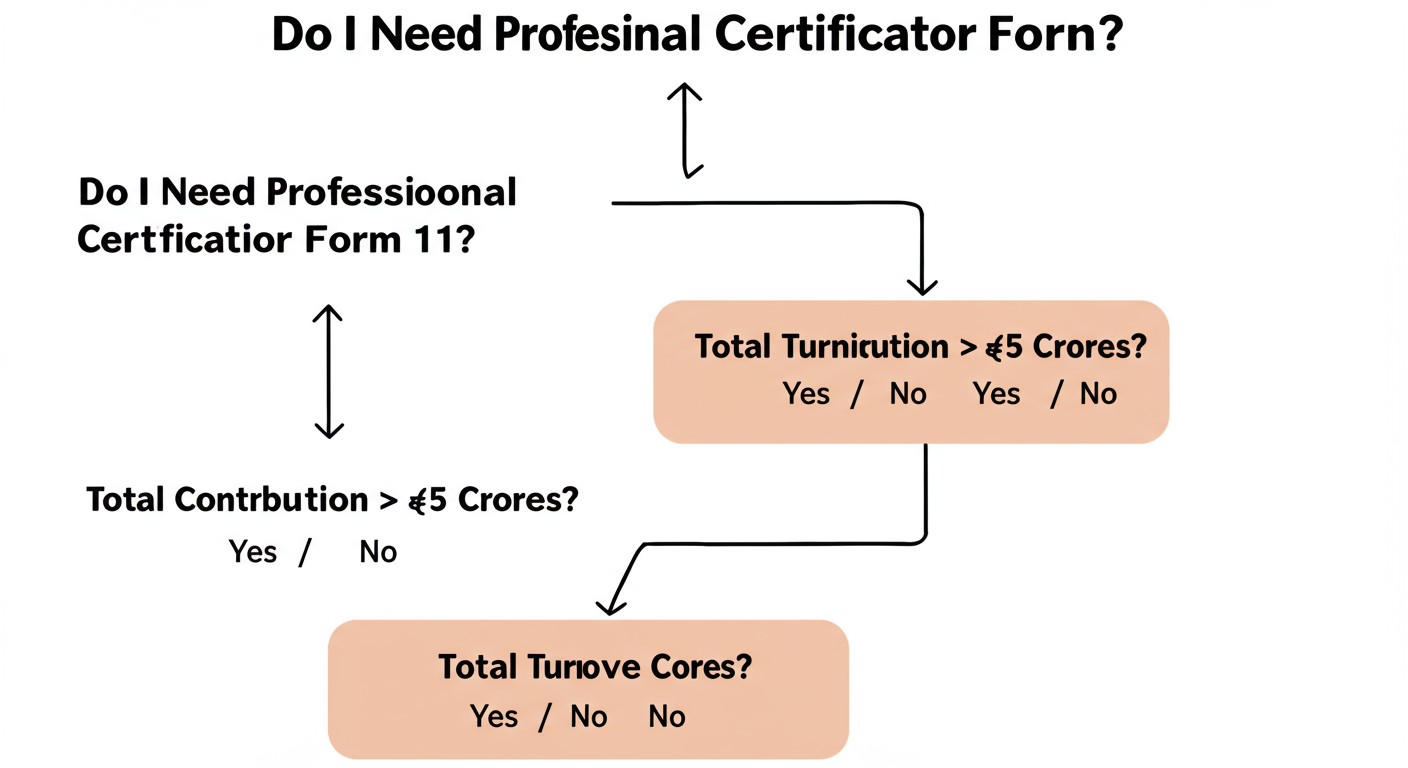
One of the most common questions we get is: “Do I need a Chartered Accountant to file my Form 11?” The answer depends on the scale of your LLP’s operations. The LLP Act sets clear financial thresholds.
Here’s the breakdown:
| Scenario | Total Contribution | Total Turnover | Certification Requirement |
|---|---|---|---|
| Scenario A: Smaller LLP | Does NOT exceed ₹50 Lakhs | Does NOT exceed ₹5 Crores | No professional certification needed. Only requires DSCs of two Designated Partners. |
| Scenario B: Larger LLP | Exceeds ₹50 Lakhs | (Turnover is irrelevant in this case) | Mandatory certification by a practicing Company Secretary (CS), Chartered Accountant (CA), or Cost Accountant (CMA). |
| Scenario C: High-Turnover LLP | (Contribution is irrelevant in this case) | Exceeds ₹5 Crores | Mandatory certification by a practicing Company Secretary (CS), Chartered Accountant (CA), or Cost Accountant (CMA). |
Essentially, if your LLP crosses either the contribution threshold or the turnover threshold, you must have the form certified by a professional. If you stay below both, the signatures of two Designated Partners are sufficient.
⚠️ Watch Out
A common filing error is using an expired or unregistered Digital Signature Certificate (DSC). Before you even start, log in to the MCA portal and check the status of your DSC under ‘Profile Update’. An invalid DSC will halt your filing process at the final step.
💡 Pro Tip
Don’t rely on memory. As soon as you read this, open your calendar and set two reminders for next year: one for April 15th, 2027 (“Start gathering Form 11 docs”) and another for May 20th, 2027 (“FINAL WEEK: File Form 11 LLP”). This simple system has saved our clients thousands in penalties.
Your Next Step: From Knowledge to Action
You now have the expert-level knowledge to conquer Form 11 LLP filing. You understand it’s not just bureaucratic paperwork but a vital health check for your business. You know the stakes—that unforgiving ₹100 daily penalty—and you have the exact playbook to avoid it.
Remember the three keys to success:
- Prepare Early: Gather your documents and details well before the May 30th deadline.
- Know Your Numbers: Understand your contribution and turnover to determine if you need professional certification.
- Execute Flawlessly: Follow the step-by-step guide and double-check everything before you submit.
Don’t let compliance be an afterthought. A well-run business is a compliant business. Take action today. Block out time in your calendar, gather your documents, and file with confidence. Your future self—and your company’s bank account—will thank you.
❓ Frequently Asked Questions
What is the absolute deadline for Form 11 LLP filing in 2026?
The due date is May 30, 2026. This is exactly 60 days after the financial year ends on March 31, 2026. It’s a fixed date, so don’t assume it will be extended unless there’s an official circular from the MCA.
My LLP had no income this year. Do I still need to file Form 11?
Yes, absolutely. Every single LLP registered in India must file Form 11, regardless of its business activity or turnover. In this case, you would file a ‘Nil’ return to confirm your LLP is still in existence and to avoid penalties.
What’s the difference between a Designated Partner and a regular Partner?
A Designated Partner has specific responsibilities and liabilities under the LLP Act, including ensuring all compliance filings like Form 11 are completed. A regular partner is more like a shareholder with no direct compliance duties. Every LLP must have at least two Designated Partners.
Can I revise Form 11 after filing if I made a mistake?
Yes, the MCA portal allows for the filing of a revised Form 11. However, it’s always best to get it right the first time. From real-world campaigns, we’ve seen that filing a revised form can sometimes invite closer scrutiny, so double-check all details before your initial submission.
What happens if I miss both the Form 11 and Form 8 deadlines?
Missing both deadlines puts your LLP in serious non-compliance. You will face separate daily penalties for each form (₹100/day for Form 11 and ₹100/day for Form 8). This means you’d be accumulating a ₹200 daily penalty, and the RoC is much more likely to flag your LLP for strike-off.