
Picture this: Your company just passed a critical resolution to change its entire business direction. The board is thrilled. But a month later, a notice from the Registrar of Companies (RoC) lands on your desk with a five-figure penalty. Why? Because someone forgot to file a single form.
That form is MGT-14. And it’s the single biggest tripwire in Indian corporate compliance.
Look, MGT-14 isn’t just bureaucratic paperwork. It’s the official, public record of your company’s most significant decisions. Getting it right is non-negotiable for maintaining investor trust, avoiding crippling fines, and ensuring your company’s governance is rock-solid. This isn’t another dry, legal-jargon-filled post. This is your battle-tested playbook, built from years of hands-on experience navigating the MCA maze. You’re about to learn not just the ‘what’ and ‘how’, but the ‘why’ and ‘what-if’ of Form MGT-14 filing, turning compliance from a headache into a strategic advantage.
What is Form MGT-14, Really? (Beyond the Textbook Definition)
At its heart, Form MGT-14 is the communication channel between your company and the Ministry of Corporate Affairs (MCA). Think of it as the official minutes of your company’s life, submitted to the government for public record. Whenever your board or shareholders make a major move—like altering your company’s constitution or taking on significant debt—Section 117 of the Companies Act, 2013, mandates that you report it.
It’s simple. You have 30 days from the moment the resolution is passed to file it. No excuses.
In our experience, companies that treat this as a mere administrative task are the ones that get burned. They see it as a box to tick. But savvy leaders understand it’s a fundamental part of corporate transparency. It tells investors, lenders, and regulators that you operate with integrity. Failing to file isn’t just a mistake; it’s a red flag that can derail funding rounds, mergers, and your company’s reputation.
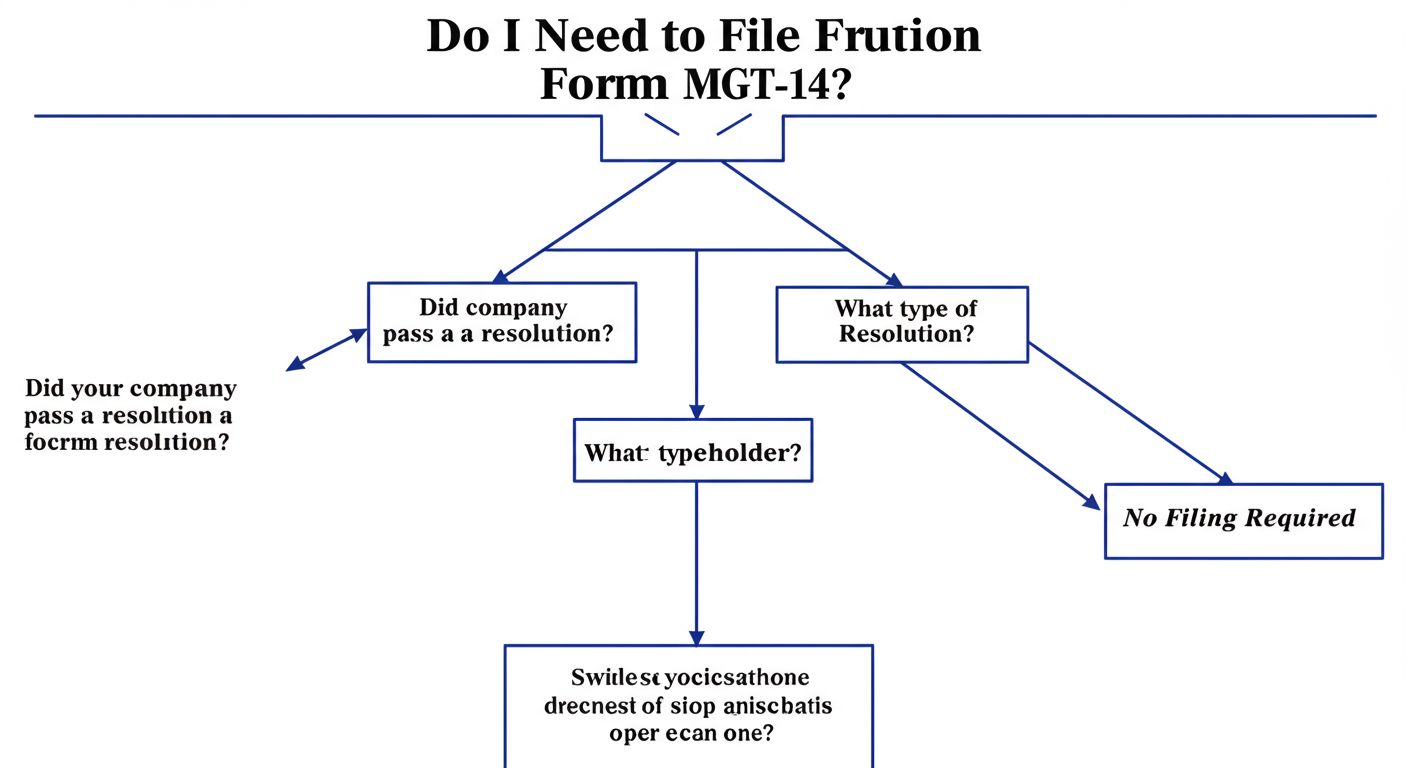
The MGT-14 Litmus Test: When Do You Absolutely Need to File?
Not every boardroom decision triggers an MGT-14 filing. So, how do you know when the clock starts ticking? The law specifies three main categories of resolutions that demand a filing. We’ve broken them down here to give you absolute clarity.
| Resolution Type | Common Triggers & Examples | Who Passes It? |
|---|---|---|
| Special Resolutions | These are the big ones. Altering the Memorandum (MoA) or Articles of Association (AoA), changing the company name, reducing share capital, or authorizing a share buy-back. | Shareholders (Requires ≥75% majority vote) |
| Ordinary Resolutions | Less common for MGT-14, but still critical. The main trigger is when the company accepts deposits from the public. | Shareholders (Requires >50% majority vote) |
| Board Resolutions | Key strategic decisions made by directors. This includes borrowing money beyond certain limits, investing company funds, approving mergers or takeovers, making political contributions, or appointing/removing Key Managerial Personnel (KMP). | Board of Directors |
⚠️ Watch Out
The Private Company “Exemption” Trap. Many private companies mistakenly believe they are exempt from all MGT-14 filings. This is false. While there is an exemption for board resolutions passed under Section 179(3), it does not apply to Special Resolutions. If your private company changes its name or alters its AoA, you absolutely must file Form MGT-14. Assuming a blanket exemption is a fast track to penalties.
The Definitive 7-Step MGT-14 Filing Workflow for 2026
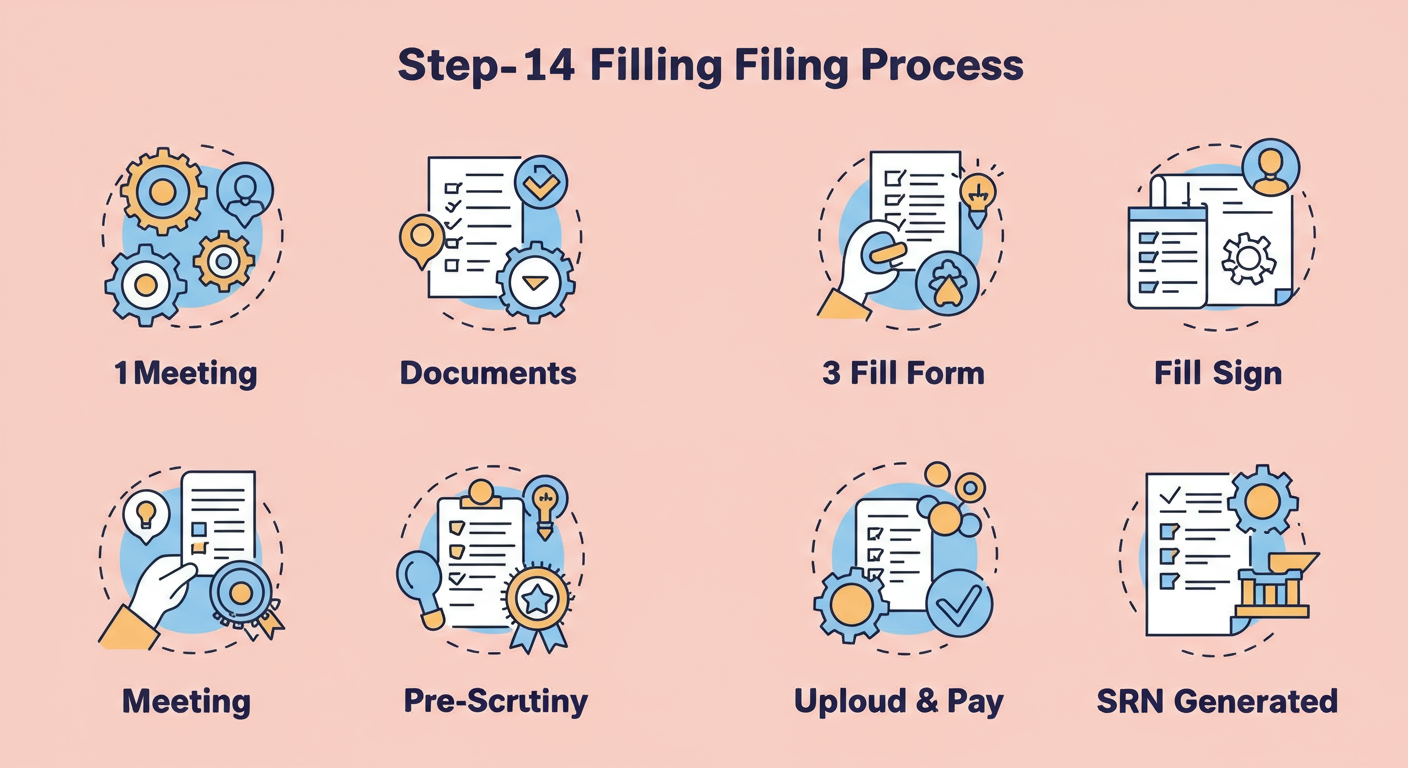
Filing Form MGT-14 can feel intimidating, but it’s a straightforward process if you’re systematic. After guiding countless companies through this, we’ve refined it into a foolproof 7-step workflow. Follow it precisely to ensure a smooth, compliant submission every time.
- Step 1: Nail the Meeting & Draft the Resolution
Everything starts here. Ensure your Board Meeting or General Meeting (AGM/EGM) is properly convened with the correct notice period and quorum. The resolution itself must be drafted with surgical precision. Don’t just state the decision; include the ‘why’. This is your explanatory statement (mandatory for special business), and it provides crucial context. - Step 2: Assemble Your Document Arsenal
Before you even think about the MCA portal, get your attachments ready. This is where most delays happen. You’ll need:- Certified true copy of the resolution(s) passed.
- A copy of the notice of the meeting and the explanatory statement.
- If applicable, a copy of the altered MoA or AoA.
- Consent letters from directors or auditors if the resolution relates to their appointment or terms.
- Step 3: Download and Populate the E-Form
Head to the official Ministry of Corporate Affairs (MCA) portal and grab the latest version of e-Form MGT-14. Enter your Company Identification Number (CIN), and many details will auto-populate. Fill in the rest, including the date of the meeting and the specific purpose of the filing. Be meticulous. - Step 4: The Digital Handshake (Affixing DSCs)
The form needs to be digitally signed using a valid Digital Signature Certificate (DSC). Who signs depends on your company structure. Typically, it’s one Director and the Company Secretary (if appointed). If you don’t have a CS, two Directors can sign. Trust me on this one: ensure the DSCs are registered on the MCA V3 portal beforehand to avoid last-minute validation errors. - Step 5: The All-Important “Check Form”
Once the form is filled and signed, click the ‘Check Form’ button. This is the MCA system’s pre-scrutiny function. It will flag any basic errors or inconsistencies. Do not skip this. Fixing an error here takes seconds; fixing it after submission can be a nightmare. - Step 6: Upload and Pay
Log in to your MCA portal account, navigate to ‘Upload e-Forms’, and select your saved MGT-14 file. Once uploaded, the system will calculate the filing fee based on your company’s authorized share capital. Pay the fee online. - Step 7: Secure Your Proof: The SRN
Upon successful payment, a Service Request Number (SRN) is generated. This is your golden ticket. It’s your official proof of filing. Save the SRN and the payment challan immediately. You’ll need it to track the form’s approval status and for your internal compliance records.
💡 Pro Tip
Create a “Filing Packet” for every MGT-14. This should be a digital folder containing the final form, the SRN challan, all attachments, and the original board/shareholder minutes. When auditors or investors ask for proof of compliance during due diligence, you’ll have everything ready in seconds. This simple habit signals a high level of professionalism.
The High Cost of Delay: MGT-14 Penalties & Deadlines Dissected
Let’s be blunt. The 30-day deadline for Form MGT-14 filing is absolute. The countdown begins the day the resolution is passed. Miss it by one day, and the penalty meter starts running. And it runs fast.
The penalties under Section 117(2) are not trivial; they are designed to hurt. They apply to both the company and the individual officers responsible. Here’s how the damage breaks down:
Imagine a simple oversight. A resolution is passed, but the filing is forgotten amidst a busy quarter. 90 days later, the default is discovered. The penalty isn’t just a slap on the wrist; it’s a significant financial hit that must be disclosed in the company’s financial statements. Comprehensive Form 27EQ Filing Guide 2024: TCS Return Basics and Due Dates
| Entity in Default | Initial Penalty | Continuing Penalty (Per Day) | Maximum Penalty |
|---|---|---|---|
| The Company | ₹10,000 | ₹100 | ₹2,00,000 |
| Officer in Default (Director, KMP, etc.) | ₹10,000 | ₹100 | ₹50,000 |
⚠️ Watch Out
The penalties are just the beginning. A history of non-compliance can get your company flagged as “high-risk” by the RoC. We’ve seen this directly impact a company’s ability to secure loans, as lenders pull compliance reports. For directors, it can even lead to issues with their Director Identification Number (DIN) and reputation. Partnership Firm Registration India: The 2025 Expert Guide
🎯 Key Takeaway
Form MGT-14 is a critical pillar of corporate governance, not just a procedural task. Mastering the triggers, adhering to the strict 30-day deadline, and maintaining meticulous records are essential to avoid severe financial penalties and protect your company’s reputation.
💡 Pro Tip
Don’t wait for the 29th day. Based on hands-on testing of the MCA portal, we recommend a best practice of filing within 15 days of the resolution. This buffer gives you ample time to correct any unexpected issues, like a DSC expiring or a portal glitch, without risking the deadline.
❓ Frequently Asked Questions
What is the absolute deadline for filing Form MGT-14?
You must file Form MGT-14 with the Registrar of Companies (RoC) within 30 days of the date the resolution was passed in the board or shareholder meeting. This deadline is strict and legally mandated.
Can the 30-day filing period for MGT-14 be extended?
No, the 30-day period cannot be extended. If you miss the deadline, the only recourse is to file the form with the applicable additional fees (penalties). For significant delays, you may need to go through a complex and costly process called “condonation of delay,” which requires separate approval from the regional director.
Is MGT-14 filing required for appointing a director?
Generally, no. The appointment of a director is typically filed using Form DIR-12. However, if the appointment is for a Managing Director or Whole-Time Director (who are Key Managerial Personnel), it requires a board resolution under Section 179, which in turn mandates a Form MGT-14 filing (unless you are an exempt private company).
What’s the difference between a Special Resolution and an Ordinary Resolution?
An Ordinary Resolution requires a simple majority (more than 50%) of votes to pass. A Special Resolution is for more significant matters and requires a supermajority of at least 75% of the votes. Most MGT-14 filings are triggered by Special Resolutions.
Do I need a professional to file MGT-14?
While it’s possible to file it yourself, industry best practice recommends having it handled or reviewed by a Company Secretary (CS) or a chartered accountant. Their expertise ensures accuracy, proper documentation, and helps you avoid common pitfalls that can lead to rejection or penalties. For more details on legal frameworks, the India Code digital repository is an excellent resource for the original text of the Companies Act.
Conclusion: Make Compliance Your Competitive Edge
We’ve covered a lot of ground, from the legal triggers to the step-by-step filing process and the painful consequences of getting it wrong. The message is clear: Form MGT-14 filing is a non-negotiable aspect of running a company in India.
Don’t view it as a burden. See it as an opportunity. Flawless compliance is a powerful signal to the market. It shows you’re a well-run, transparent, and trustworthy organization—the kind that attracts top talent and serious investors.
So, what’s your next step? Don’t just file this article away. Go and review your company’s compliance calendar right now. Set up an internal process to flag MGT-14-triggering resolutions the moment they are passed. A few hours of proactive system-building today will save you from thousands in penalties and weeks of stress tomorrow. Make governance your DNA.