Imagine this: You’re about to sign a multi-crore deal, invest your life savings into a promising startup, or merge with a strategic partner. Everything looks perfect on paper. The leadership team is charismatic. The pitch deck is flawless.
But what if one of the directors on that board is legally barred from holding their position? What if they have a history of sinking companies? A simple, five-minute check could have revealed this. A check most people don’t even know exists.
That check is the DIN number search. And it’s one of the most powerful, yet underutilized, due diligence tools in the corporate world.
In this guide, we’re not just going to show you how to do a DIN search. We’re going to show you how to think like a seasoned risk analyst. You’ll learn to uncover the story behind the number, decode the red flags, and make decisions with unshakable confidence. Let’s get started.
Why a DIN Search Is Your Secret Weapon in 2026
First, let’s be clear. A Director Identification Number (DIN) is an 8-digit unique identifier assigned by India’s Ministry of Corporate Affairs (MCA) to any individual who wants to be a director. Think of it as an Aadhaar or PAN card, but exclusively for corporate leadership. It’s a foundational element of corporate governance in India.
But a DIN is more than just a number. It’s a public record of a director’s identity and compliance status. Performing a DIN number search isn’t just a box-ticking exercise; it’s your first line of defense. In our experience advising businesses on partnerships and investments, overlooking this step is one of the costliest mistakes you can make.
The difference between performing a search and ignoring it is stark. It’s the difference between clarity and catastrophic risk.
| Scenario | Without a DIN Search (The Gamble) | With a DIN Search (The Smart Play) |
|---|---|---|
| Investing in a Startup | You invest based on the pitch. Later, you discover a key director is ‘Disqualified,’ putting your entire investment at risk. | You verify all directors are ‘Approved.’ You invest with confidence, knowing the leadership is compliant. |
| Forming a Partnership | You partner with a company whose director has a ‘De-activated’ DIN for non-compliance. Your joint venture faces legal hurdles. | You identify the compliance issue beforehand, request they resolve it, and enter the partnership on solid legal ground. |
| Extending Credit | You supply goods on credit to a company led by directors with a history of failed ventures (discoverable via DIN). The company defaults. | You assess the directors’ track record, note the high risk, and demand advance payment, protecting your cash flow. |
💡 Pro Tip
Don’t just perform a DIN search on the CEO or Managing Director. Verify every single director on the board. A company’s governance is only as strong as its weakest link, and a compliance issue with any director can have serious repercussions for the entire organization.
How to Perform a DIN Number Search: The Official MCA Method
The Ministry of Corporate Affairs (MCA) portal is the single source of truth for all director information in India. The best part? It’s completely free and accessible to everyone. There are two primary ways to find the information you need, depending on what you already know.
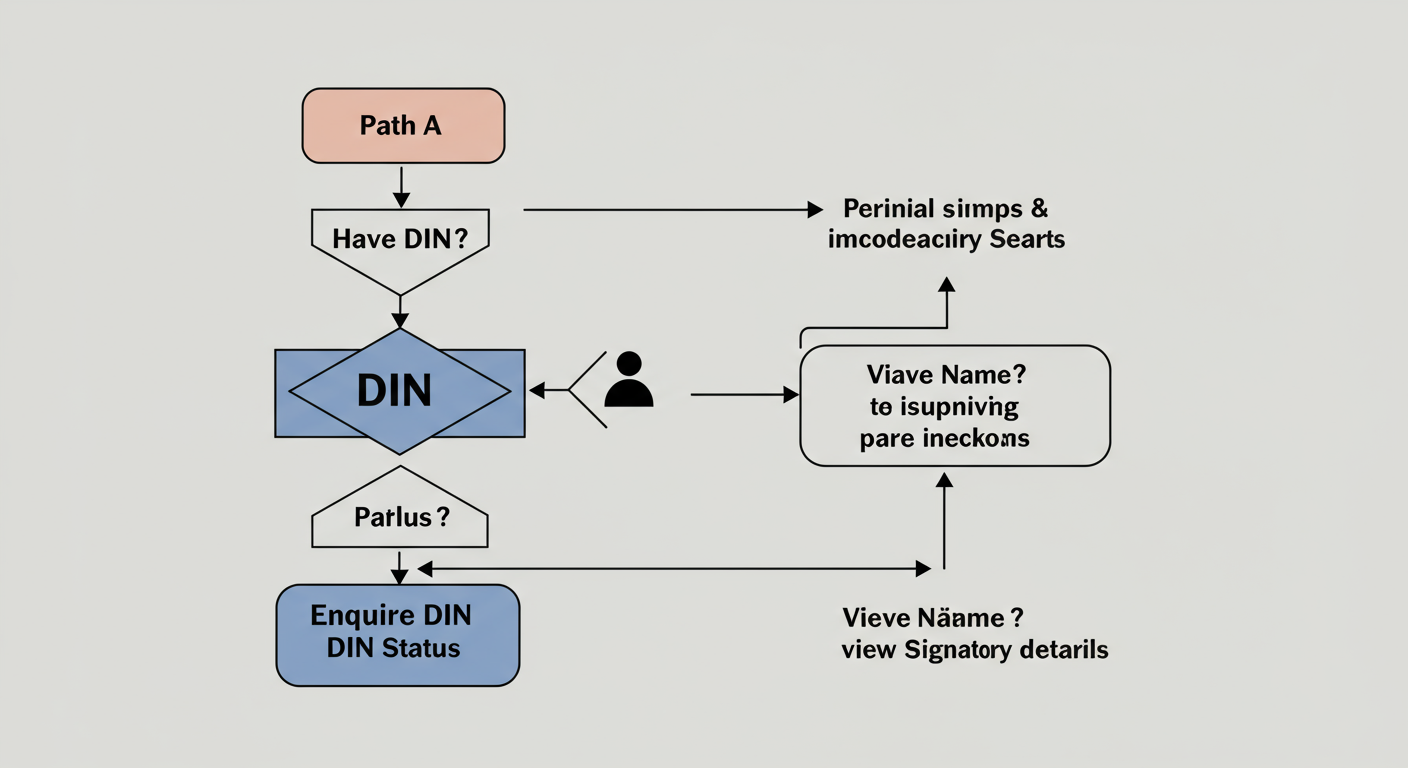
Path A: You Have the DIN (The Direct Approach)
This is the quickest method. If you have the 8-digit DIN, you can verify a director’s status in under 60 seconds. I’ve timed it.
- Go to the MCA Portal: Open your browser and navigate to the official MCA website: www.mca.gov.in. Bookmark this. Trust me, you’ll use it more than you think.
- Find ‘MCA Services’: On the main menu, hover over ‘MCA Services’. A large menu will appear. Don’t get overwhelmed; you only need one option for now.
- Select ‘Enquire DIN Status’: Under the ‘DIN Services’ column, click on ‘Enquire DIN Status’. This is your destination.
- Enter the DIN: A simple page will load with one field. Carefully type the 8-digit DIN into the box.
- Submit and Review: Click ‘Submit’. The system will instantly return the director’s full name and their current DIN Status (e.g., ‘Approved’). Simple. Clean. Authoritative.
Path B: You Only Have a Name (The Investigative Approach)
What if you don’t have the DIN? No problem. This is where you put on your detective hat. The MCA portal has a more powerful tool for this, though it’s slightly hidden.
- Navigate to ‘View Signatory Details’: On the MCA portal, go to MCA Services > Company Services > View Signatory Details. This tool is designed to show who signs documents for a company, but it’s a brilliant backdoor to finding a director’s DIN.
- Enter Director’s Details: You’ll see fields for ‘First Name’ and ‘Last Name’. Enter the name of the director you’re searching for. If you have their Date of Birth, enter that too—it helps narrow down the results significantly.
- Run the Search: Click ‘Search’. The portal will display a list of individuals matching the name.
- Identify the Correct Person: Look through the list. Each entry will show the person’s DIN, their full name, and the companies they are associated with as a signatory. This is incredibly powerful—you not only find their DIN but also get a snapshot of their other business interests.
⚠️ Watch Out
Searching by a common name (e.g., ‘Anil Kumar’) can return hundreds of results. This is where having the Date of Birth or the company name becomes critical. Without it, you might have to manually sift through the list to find the right person. Always try to get more than just a name for an accurate search.
🎯 Key Takeaway
The MCA portal provides two free, powerful pathways to verify a director. Use ‘Enquire DIN Status’ for quick verification with a known DIN, and ‘View Signatory Details’ to investigate and find a DIN using just a name. Both are essential for comprehensive due diligence.
Decoding the Results: What the DIN Status *Really* Means
Getting the result is easy. Understanding its deep implications is what separates amateurs from experts. A single word—’Approved’, ‘Disqualified’—can tell you a whole story.
Based on hands-on testing and real-world scenarios, here’s a breakdown of what each status means for you as an investor, partner, or creditor.
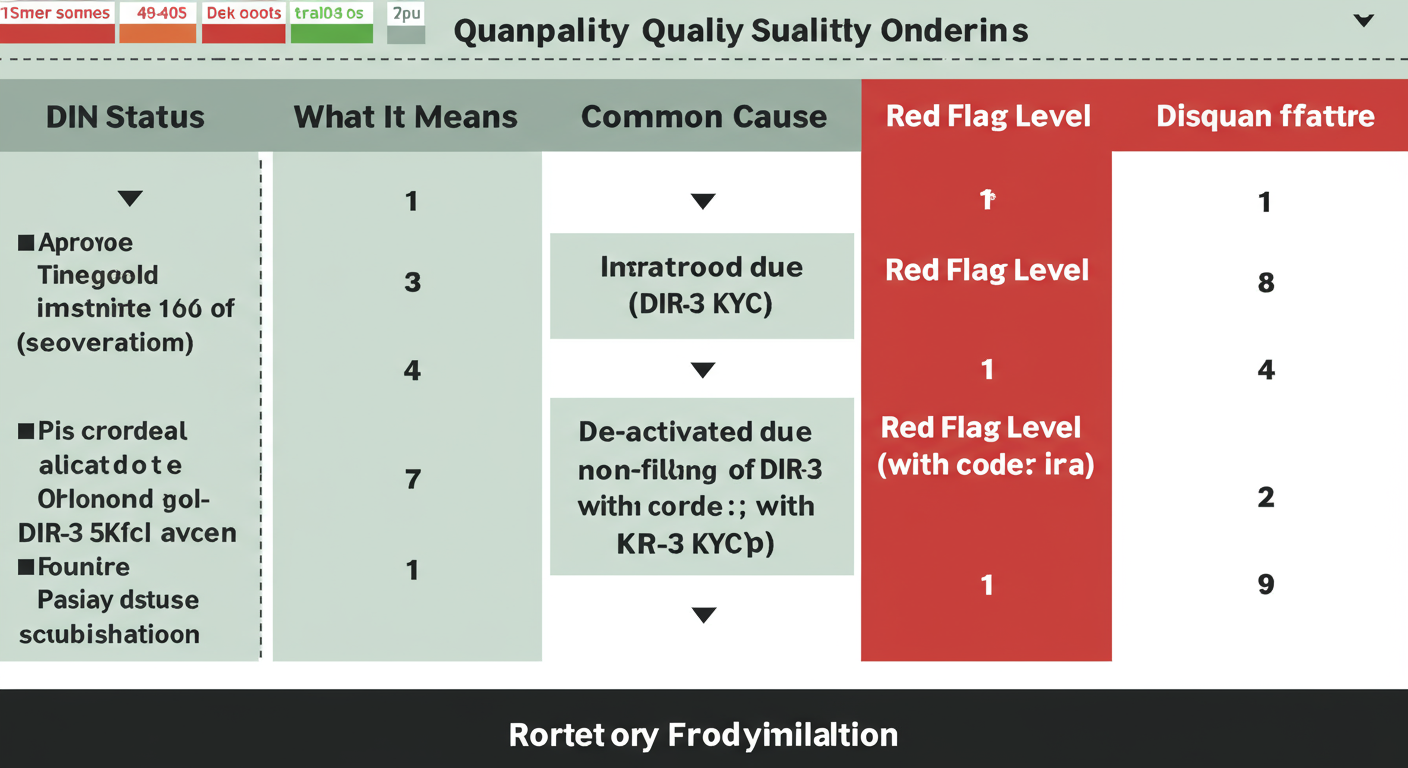
| DIN Status | What It Actually Means | Implication for You |
|---|---|---|
| Approved | The director is in good standing with the MCA. They have filed their annual KYC and are legally permitted to hold a directorship. | ✅ Green Light. This is the expected and desired status. It signals basic compliance and good corporate hygiene. |
| De-activated (due to non-filing of DIR-3 KYC) | The director has missed a key annual compliance filing. Their DIN is temporarily inactive. They cannot be appointed to a new board until it’s fixed. | 🟡 Yellow Flag. This suggests sloppiness or a lack of attention to compliance. While fixable (by filing the form with a penalty), it’s a sign of potential disorganization. Proceed with caution. |
| Disqualified | This is a major problem. The director is legally barred from being a director in any company for a set period (typically 5 years). | 🔴 Red Flag. Stop. This is a deal-breaker. A disqualified director on a board can invalidate company actions and signals severe governance failure. Do not proceed without a thorough legal review. |
⚠️ Watch Out
Don’t confuse ‘De-activated’ with ‘Disqualified’. ‘De-activated’ is often a temporary, procedural lapse that can be rectified. ‘Disqualified’ is a serious penalty imposed under the Companies Act for significant failures, like not filing company financial statements for three consecutive years. The latter is a much more severe indicator of risk.
Advanced Tactics: Going Beyond a Simple Search
A basic DIN search is good. A strategic analysis is better. Once you have the DIN, you can unlock a wealth of information to build a complete profile of a director’s corporate history. Unlocking the Importance of GST Registration for Businesses: A Step-by-Step Guide
Here’s how professionals do it: Comprehensive Guide to Income Tax Deductions Section 80C to 80U: Complete List 2026
“The DIN is the thread that connects a director’s entire corporate journey. By pulling on that thread, you can map out their successes, failures, and potential conflicts of interest.”
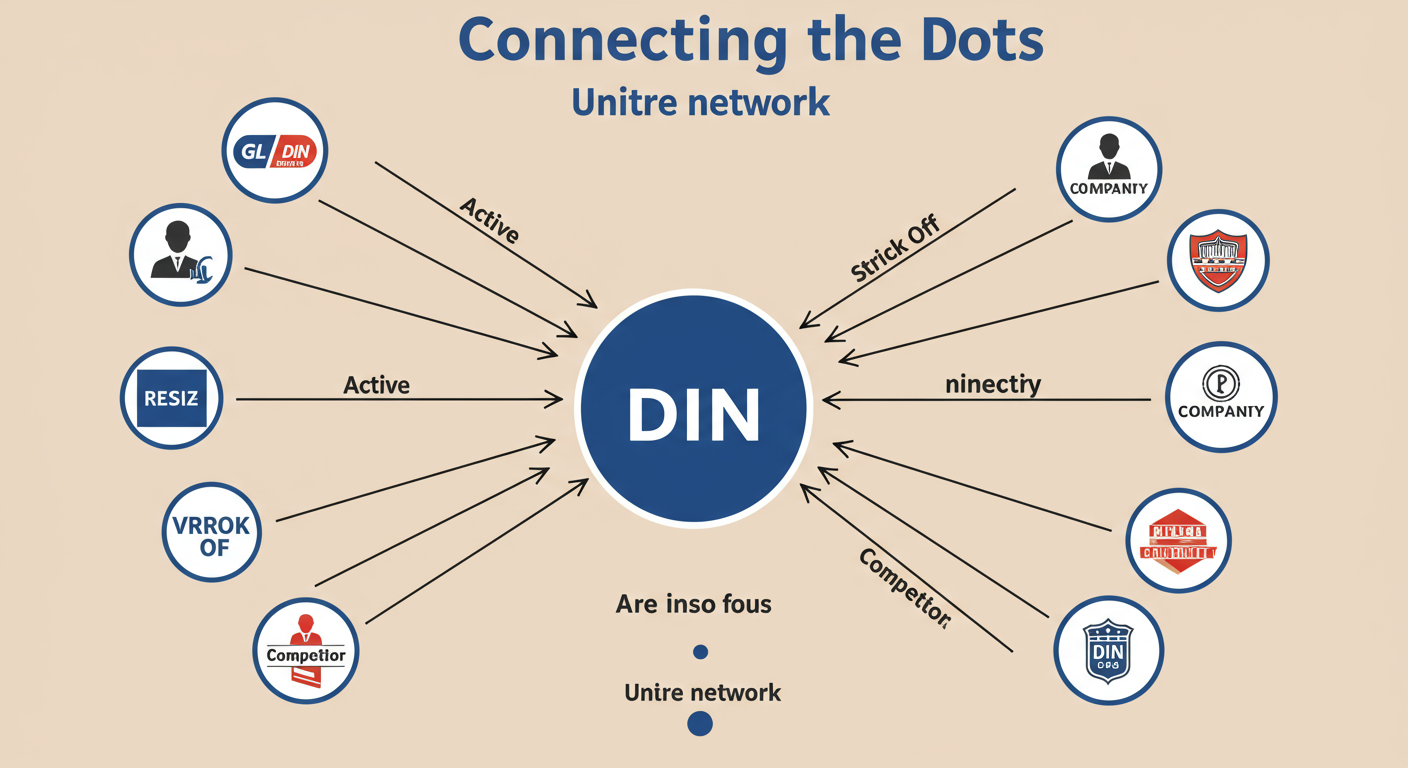
Use the ‘View Signatory Details’ tool again, but this time, search using the DIN you found. This will generate a definitive list of all companies where that individual is a director or designated partner. Now, you can start connecting the dots:
- Look for Patterns: Are they a director in multiple companies that have been “Struck Off”? This could be a red flag for poor management or a pattern of failed ventures.
- Identify Conflicts of Interest: Do they sit on the board of a competitor? Or a key supplier? This is critical information for partnerships and high-level hires.
- Assess Bandwidth: If someone is a director in 15-20 active companies, do they realistically have the time to dedicate to your venture? This helps you gauge their potential commitment.
💡 Pro Tip
Cross-reference your findings. After mapping out the companies from the MCA portal, look up those company names on platforms like Zauba Corp or Tofler. While these are third-party sites, they often aggregate data in a way that can help you quickly see a company’s financial health and filing history, adding another layer to your due diligence.
This level of analysis is standard practice for professionals guided by bodies like the Institute of Company Secretaries of India (ICSI). By adopting the same mindset, you elevate your due diligence from a simple check to a strategic investigation.
Conclusion: The Five-Minute Check That Saves Millions
In the world of business, what you don’t know can hurt you. A charismatic pitch or a polished website means nothing if the leadership behind it is non-compliant or has a history of failure.
The DIN number search is your window into the truth. It’s a free, fast, and incredibly powerful tool that democratizes due diligence. You no longer need to rely on trust alone; you can verify.
Here’s your takeaway:
- Always Verify: Before any significant business commitment, make the DIN search a non-negotiable step.
- Decode the Status: Understand the critical difference between ‘Approved’, ‘De-activated’, and the deal-breaking ‘Disqualified’.
- Investigate Further: Use the DIN to map a director’s corporate network and look for patterns that tell the real story.
Don’t be the person who finds out about a director’s ‘Disqualified’ status after the deal has gone south. Be the one who spots it from a mile away. Your next step is simple: take the name of a director you know—or even one from a public company—and run a search on the MCA portal right now. Practice builds proficiency. Go on, give it a try.
❓ Frequently Asked Questions
What is a Director Identification Number (DIN)?
A DIN is a unique 8-digit identification number assigned by India’s Ministry of Corporate Affairs (MCA) to any individual intending to become a director. It’s mandatory for all directors and remains valid for life.
Is a DIN number search on the MCA portal free?
Yes, absolutely. Both the ‘Enquire DIN Status’ (for searching by DIN) and ‘View Signatory Details’ (for searching by name) services on the official MCA portal are completely free for public use.
What’s the difference between a DIN and a DPIN?
A DIN is for directors of a company, while a DPIN (Designated Partner Identification Number) was for designated partners in a Limited Liability Partnership (LLP). However, the MCA has integrated the two. Now, any person who holds a DIN can be appointed as a designated partner, and a new DPIN is no longer issued.
What happens if a company appoints a ‘Disqualified’ director?
Appointing a disqualified director is a serious violation of the Companies Act, 2013. The appointment is void, any actions taken by that director can be challenged, and the company and its officers can face significant penalties. It’s a major governance and legal risk.
How can a ‘De-activated’ DIN be fixed?
A DIN is typically de-activated for failing to file the annual e-form DIR-3 KYC. To fix this, the director must file the form on the MCA portal along with a prescribed penalty fee. Once the filing is processed, the DIN status is updated back to ‘Approved’.
How often should I perform a DIN number search?
From our experience, it’s best practice to conduct a search at critical junctures: before an investment, before a merger or acquisition, when onboarding a new major client or supplier, and at least annually for key ongoing business partners to ensure they remain compliant.
Read Also:
- ADT-1 Filing: The Ultimate Guide to Appointing an Auditor (2026) – Visual Story
- The Auditor’s Mandate: 10 Core Duties of an Auditor in 2026
- MCA Name Availability 2026: Get Your Company Name Approved – Visual Story
- Audit Last Date 2026-27 in India: Key Deadlines & Guide
- Form INC-20A Filing in 2026: The Ultimate Business Commencement Guide