
What if closing your company was the most strategic move you could make? Most entrepreneurs focus on the launch, the growth, the dizzying climb. But the final chapter—the winding up—is just as critical. Get it wrong, and you could face years of legal battles and personal liability. Get it right, and you ensure a clean, compliant, and dignified end to your corporate journey.
This isn’t about planning for failure. It’s about responsible governance.
In India, the process of closing a company isn’t a one-size-fits-all affair. The law provides three distinct pathways, each designed for a different scenario. In this guide, we’ll cut through the legal jargon and give you the unvarnished truth about each of the modes of winding up of a company. You’ll learn exactly when and how to use each method, what traps to avoid, and how to protect yourself as a director. Let’s get started.
The Three Paths to Corporate Closure: A 2026 Snapshot
Before we dive deep, let’s get a bird’s-eye view. Winding up, or liquidation, is the formal process of ending a company’s legal existence. Its assets are sold, debts are paid, and any leftover funds are returned to shareholders. The path you take depends almost entirely on one question: is the company solvent, and who is making the decision?
The Companies Act, 2013, and the game-changing Insolvency and Bankruptcy Code (IBC), 2016, lay out these three routes.
| Mode of Winding Up | Primary Trigger | Who’s in Control? | Primary Goal |
|---|---|---|---|
| Compulsory Winding Up | Insolvency, fraud, or non-compliance | NCLT-appointed Official Liquidator | Protect creditors & public interest |
| Voluntary Winding Up | Company is solvent; members decide to close | Company-appointed Liquidator | Orderly closure & asset distribution |
| Liquidation under IBC, 2016 | Failure to resolve insolvency (default ≥ ₹1 crore) | Resolution Professional / Liquidator | Resolution first, then creditor-focused liquidation |
Path 1: Compulsory Winding Up – The Forced Exit
Think of this as the court-ordered demolition of a company. Compulsory winding up isn’t a choice; it’s an order handed down by the National Company Law Tribunal (NCLT). It’s a drastic measure, typically seen as a last resort when a company can’t pay its bills or has engaged in serious misconduct. It’s an adversarial process initiated by outsiders to protect their interests.
When Does the NCLT Step In?
The NCLT doesn’t act on a whim. A petition must be filed based on specific grounds laid out in the Companies Act, 2013. In our experience, the most common trigger is the first one on this list:
- Inability to Pay Debts: This is the big one. If your company fails to pay a debt over ₹1 lakh within 21 days of receiving a formal demand notice, it’s legally presumed to be insolvent. This is the fastest way to land in front of the NCLT.
- Special Resolution: In a rare move, a company can pass a special resolution to ask the Tribunal to wind it up. This usually happens when there’s a complete breakdown of trust among management.
- Fraudulent Conduct: If the company was formed for illegal purposes or its affairs are being run fraudulently, the NCLT can shut it down to protect the public.
- Acting Against National Interest: Actions that threaten the sovereignty and integrity of India can lead to a swift winding-up order.
- Chronic Non-Compliance: If a company fails to file its financial statements or annual returns with the Registrar of Companies (ROC) for five straight years, the ROC can petition for its closure. It screams that something is fundamentally broken.
- Just and Equitable Grounds: This is a catch-all clause. The NCLT can use it in situations like a complete deadlock between directors, where the company can no longer function.
⚠️ Watch Out
Never, ever ignore a statutory demand notice from a creditor. Many directors treat it like any other letter. It’s not. It’s a legal time bomb. Failing to respond or settle the debt within 21 days gives the creditor a direct ticket to file a winding-up petition against your company.
A petition can be filed by creditors, shareholders (contributories), the company itself, the ROC, or even the Central Government. Once the NCLT issues the order, an Official Liquidator is appointed, and the board of directors loses all its powers. You’re no longer in control.
Path 2: Voluntary Winding Up – The Controlled Dismantling
This is the polar opposite of the compulsory route. Voluntary winding up is a proactive, strategic decision made by a solvent company’s members. Think of it as a planned and honorable retirement. It’s the right path when the business has served its purpose, the market has shifted, or the founders simply want to move on, all while having the funds to pay off every single liability.
It’s a smoother, more controlled process because you’re not under the gun from creditors or the court.
The Declaration of Solvency: Your Most Critical Document
Before you can even start, you need to prove you can pay your bills. This is done through a Declaration of Solvency. A majority of the directors must sign a sworn affidavit stating two things:
- The company has no outstanding debts.
- OR, the company will be able to pay all its debts in full from the sale of its assets within a specified period (not exceeding 12 months).
This isn’t just a piece of paper. It must be backed by audited financial statements for the last two years and a valuation report of the company’s assets. Lying on this declaration can lead to severe personal penalties. Trust me on this one, you want this document to be bulletproof.
💡 Pro Tip
When preparing the Declaration of Solvency, be conservative with your asset valuations and liberal with your liability estimates. Include a buffer for unforeseen costs like legal fees or employee settlements. A well-prepared declaration smooths the entire process with the authorities, including the Insolvency and Bankruptcy Board of India (IBBI), which oversees liquidators.
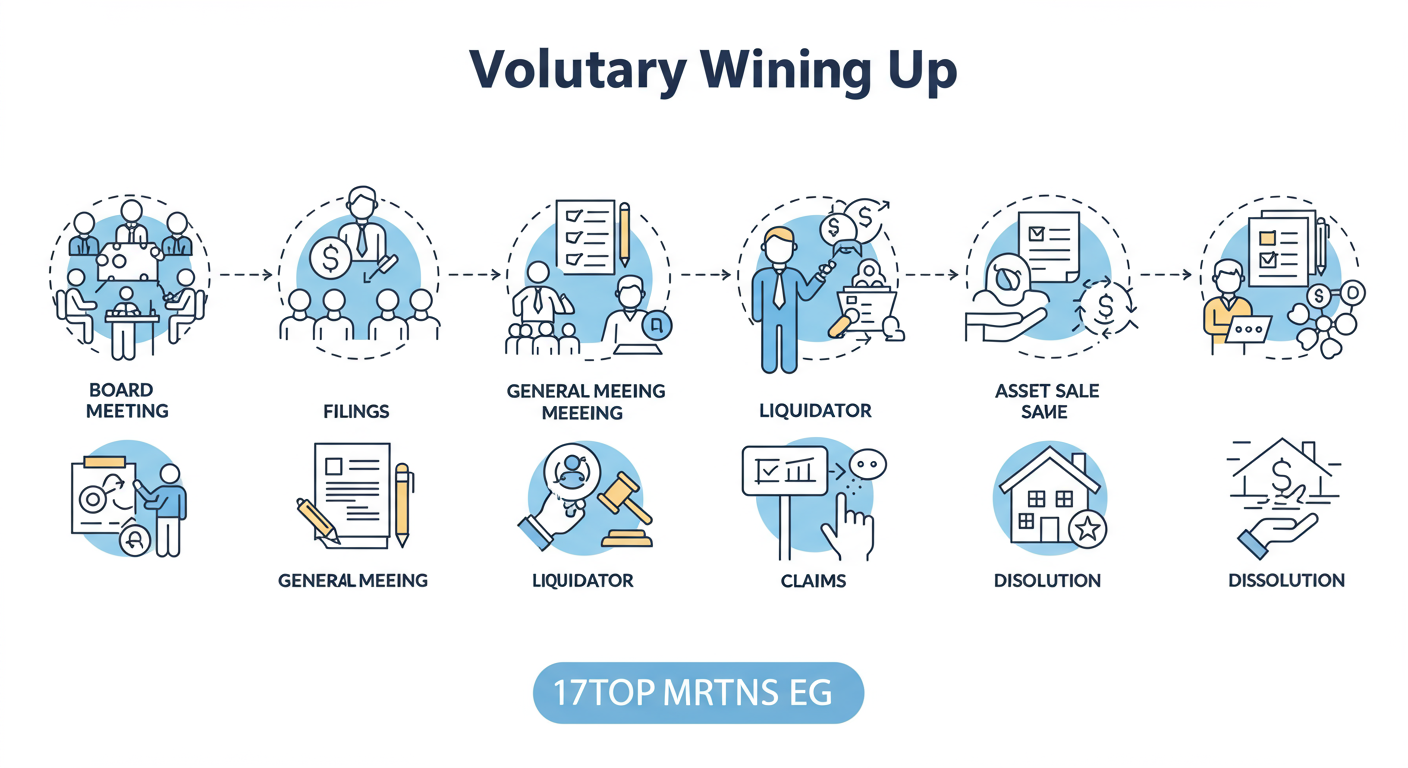
A Step-by-Step Guide to Voluntary Winding Up
Here’s a simplified roadmap of the process. Each step involves precise filings and timelines.
- Board Meeting: The Board of Directors approves the proposal for winding up and prepares the Declaration of Solvency.
- General Meeting: A general meeting of shareholders is called. A special resolution (75% majority) is passed to approve the winding up and appoint a liquidator.
- Public Announcement & Filings: The resolution is filed with the ROC and the IBBI within 7 days. A public announcement of the liquidation is made in newspapers and on the company website.
- Liquidator Takes Charge: The appointed liquidator takes control of the company’s assets, finances, and operations.
- Claims & Verification: The liquidator invites and verifies claims from all creditors.
- Asset Sale & Debt Payment: The liquidator sells the company’s assets and pays off all liabilities in full.
- Final Distribution & Dissolution: Any surplus funds are distributed to the shareholders. The liquidator prepares a final report and applies to the NCLT for the company’s formal dissolution.
🎯 Key Takeaway
The choice between these first two modes is simple. If your company is solvent and you want a controlled exit, choose Voluntary Winding Up. If your company is insolvent and creditors are knocking, you’re likely heading for a Compulsory Winding Up or the IBC process.
Path 3: The IBC Framework – A Modern Approach to Insolvency
The Insolvency and Bankruptcy Code (IBC), 2016, completely revolutionized how India deals with corporate distress. Its core philosophy is radically different: resolution first, liquidation last. How to Check GST Return Filed or Not by Vendor – Detailed Guide
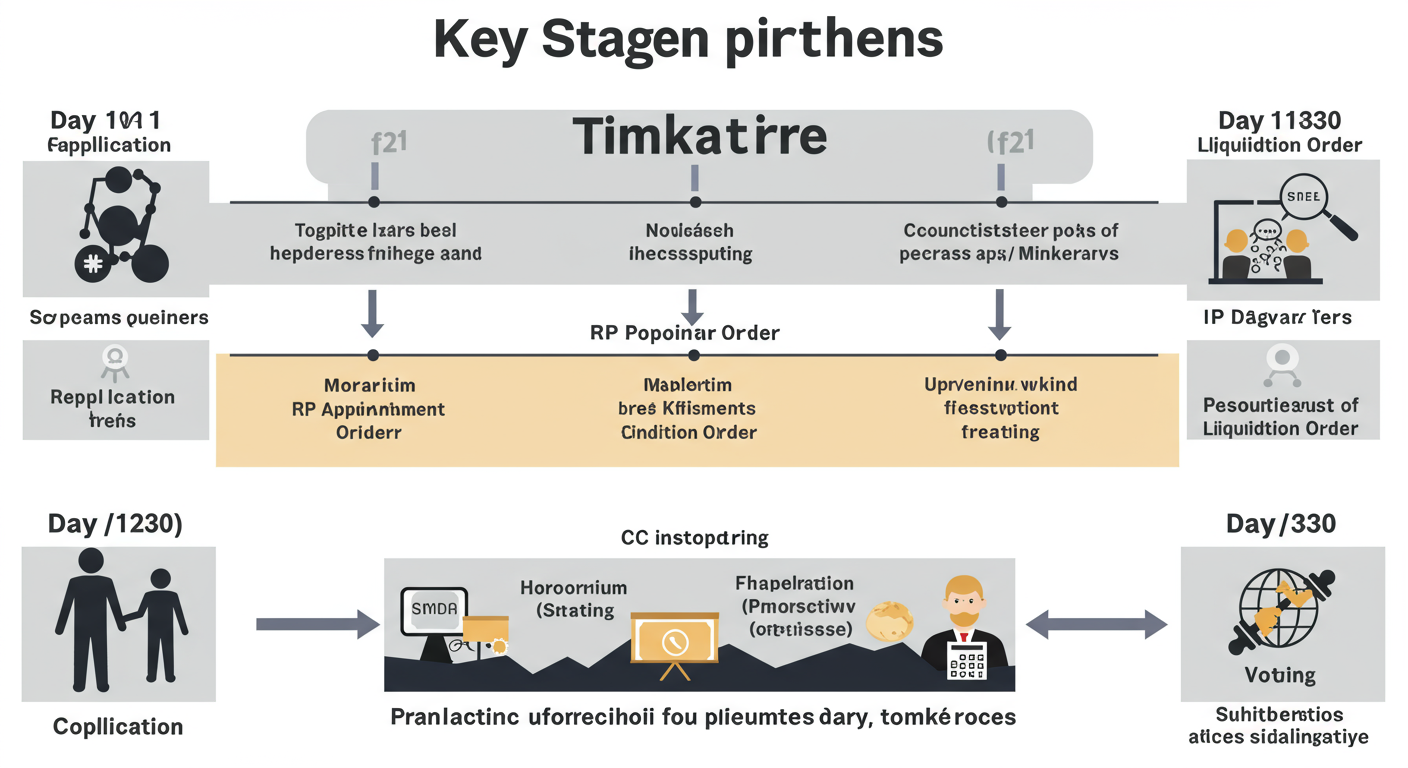
For companies that have defaulted on debts of ₹1 crore or more, the IBC is now the primary law. The process, known as the Corporate Insolvency Resolution Process (CIRP), is a time-bound marathon (180-330 days) designed to find a way to save the company. Liquidation only happens if this rescue mission fails. MGT-7 Due Date 2026: The Definitive Guide to Annual Filing
Understanding the CIRP Rollercoaster
Once an application is admitted by the NCLT, the clock starts ticking, and the original management loses all control. It’s a shock to the system for many directors.
- Moratorium Declared: The NCLT declares a “calm period.” All lawsuits, recovery actions, and even asset sales are frozen. This gives the company breathing room.
- Resolution Professional (RP) Takes Over: An independent insolvency professional is appointed. They take over the company’s management, lock, stock, and barrel. The board is suspended.
- Creditors in the Driver’s Seat: The RP forms a Committee of Creditors (CoC), made up of the company’s financial creditors. This CoC calls all the shots.
- The Hunt for a Savior: The RP invites resolution plans from potential investors to revive the company.
- The Verdict: The CoC votes on the submitted plans. If a plan gets 66% of the votes, the NCLT approves it, and the company is saved under new ownership. If no viable plan is approved in time, the NCLT orders the company into liquidation.
⚠️ Watch Out
The biggest shock for promoters under the IBC is the absolute loss of control. The moment a CIRP application is admitted, the board is sidelined. Your company is no longer yours to run. This creditor-in-control model is a fundamental shift from the old regime and a powerful incentive for promoters to avoid defaults.
Choosing Your Path: A Strategic Comparison
Making the right choice, or understanding the path you’re being forced down, is crucial. Here’s a more detailed breakdown to help you distinguish between the different modes of winding up of a company.
| Factor | Compulsory Winding Up | Voluntary Winding Up | Liquidation under IBC |
|---|---|---|---|
| Solvency Status | Insolvent | Solvent | Insolvent |
| Initiated By | Creditors, ROC, NCLT, etc. | Company Members/Shareholders | Financial or Operational Creditors |
| Key Authority | National Company Law Tribunal (NCLT) | Company Members & Liquidator | Committee of Creditors (CoC) & NCLT |
| Primary Goal | Pay off creditors by any means | Orderly closure and asset distribution | Attempt resolution first; liquidate as last resort |
| Director Control | Lost immediately upon order | Maintained until liquidator is appointed | Lost immediately upon CIRP admission |
💡 Pro Tip
If your business is struggling but not yet insolvent, act decisively. Don’t wait for creditors to force you into the IBC or compulsory winding up. Proactively exploring a Voluntary Winding Up while you’re still solvent gives you far more control over the outcome and preserves value for shareholders.
The Liquidator: Captain of the Ship
In every winding-up scenario, the liquidator is the central figure. Their job is to professionally and ethically manage the company’s dissolution. Their duties are extensive and bound by law, as outlined by authorities like the Ministry of Corporate Affairs (MCA).
A liquidator’s primary duty is to collect all assets, settle all liabilities according to a legally defined priority, and distribute any remaining surplus to the owners. Their goal is to maximize value for all stakeholders, not just one group.
They are responsible for everything from preparing an inventory of assets and verifying creditor claims to selling off property and filing the final dissolution papers with the NCLT. Understanding their role is key to understanding the process itself. For a broader view of the legal landscape, the history of Indian corporate law provides valuable context for these modern regulations.
❓ Frequently Asked Questions
What’s the difference between ‘winding up’ and ‘striking off’?
Winding up is a formal, legal process involving a liquidator to sell assets and pay liabilities before dissolving the company. Striking off is a much simpler method used by the ROC to remove a defunct company (one with no activity, assets, or liabilities) from the official register. Winding up is a full burial; striking off is just removing a name from a list.
Can a director be held personally liable during winding up?
Absolutely. If a director is found to have engaged in fraudulent trading or knowingly incurred debts when the company was already insolvent, the “corporate veil” can be lifted. This means they can be forced to use their personal assets to cover the company’s debts.
What happens to employees when a company is wound up?
Employment contracts are generally terminated. However, employees are considered preferential creditors. Under the law, their unpaid wages and dues (up to certain limits) must be paid before most other unsecured creditors receive anything.
Is it possible to stop a winding-up process once it starts?
It’s very difficult but not impossible. In a compulsory winding up, one can appeal to the NCLT to stay the order, but you need strong grounds. Under the IBC, the entire goal of the CIRP is to stop the liquidation by finding a resolution plan. Once a final dissolution order is passed, however, the company legally ceases to exist.
What is the ‘waterfall mechanism’ under the IBC?
The waterfall mechanism is the strict order of priority for paying off debts during liquidation. It starts with the costs of the insolvency process itself, followed by secured creditors and employee dues. After them come unsecured financial creditors, government dues, and finally, any remaining surplus goes to equity shareholders.
Conclusion: A Dignified End to Your Corporate Story
Closing a company is a complex and emotionally charged process. But it doesn’t have to be a disaster. By understanding the three distinct modes of winding up of a company in India, you can navigate this final stage with clarity and control.
Remember the key distinction:
- Voluntary Winding Up is your proactive choice for a solvent company.
- Compulsory Winding Up and Liquidation under IBC are reactive, creditor-driven processes for insolvent companies.
A well-managed closure is the final act of responsible entrepreneurship. It protects your reputation, minimizes personal risk, and ensures you meet all your legal obligations. Before you take any action, your next step should be clear: consult with an experienced corporate lawyer and a chartered accountant. They can help you assess your unique situation and choose the path that best protects the interests of everyone involved.