Imagine this: you meticulously record all your business purchases, only to have the tax officer disallow 30% of them as an expense. Suddenly, your taxable income skyrockets, and you’re facing a massive, unexpected tax bill.
This isn’t a hypothetical nightmare. It’s the very real penalty for ignoring one of India’s most critical tax provisions for businesses: Section 194Q of the Income Tax Act.
Since its introduction, this rule on Tax Deducted at Source (TDS) for high-value goods purchases has become a major compliance checkpoint. Yet, so many businesses are still getting it wrong. They’re confused about when it applies, how it interacts with TCS rules, and what steps they actually need to take.
This guide cuts through the noise. Forget dense legal jargon. We’re going to break down exactly what you need to know and do to master Section 194Q, protect your profits, and stay compliant in 2026. You’ll learn the simple checks, the exact calculations, and the systems you can implement today.
What is Section 194Q, Really? (The Plain English Version)
Let’s keep it simple. Section 194Q is a rule that puts the responsibility on large buyers to deduct a small amount of tax when they purchase goods from a resident seller. It was introduced to bring high-value transactions into the tax net earlier and improve transparency.
Think of it like this: if your business is a significant player (based on turnover) and you’re buying a lot from a single supplier, the government wants you to act as a tax collection agent. You simply hold back a tiny fraction of the payment (0.1%) and deposit it with the government on your seller’s behalf.
The seller then gets full credit for this amount when they file their own taxes. It’s not an extra tax; it’s just an earlier payment of the tax they would likely owe anyway. The real trick is knowing when you’re the one who has to do the deducting.
The 3-Point Checklist: Does 194Q TDS Apply to You?
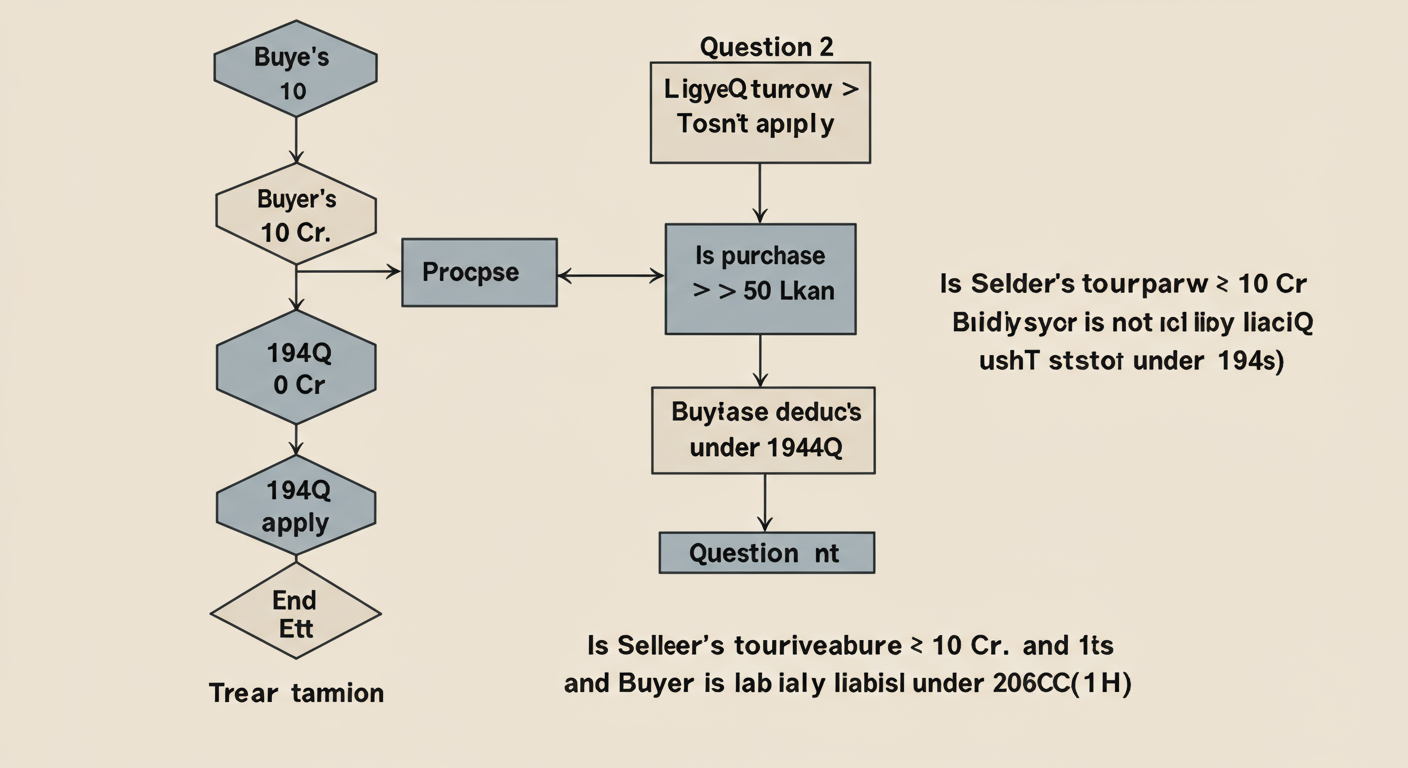
Before you start changing your payment processes, you need to know if you’re even liable. It’s not as complicated as it sounds. From our experience helping hundreds of businesses navigate this, it boils down to three simple questions. If you answer “Yes” to all three for a specific supplier, then you must deduct TDS.
| Criteria | Condition | Your Answer (Yes/No) |
|---|---|---|
| 1. The Buyer Test | Was your business’s total turnover, sales, or gross receipts more than ₹10 crore in the previous financial year (i.e., FY 2024-25 for purchases in FY 2025-26)? | |
| 2. The Seller Test | Are you purchasing goods from a resident of India? (This rule doesn’t apply to imports). | |
| 3. The Transaction Test | Have your total purchases from this single seller exceeded ₹50 lakh in the current financial year? |
If you hit ‘Yes’ on all three, congratulations—you’re officially on the hook for Section 194Q TDS for that seller. If you answered ‘No’ to any of them, you don’t need to deduct TDS under this section for that particular supplier.
💡 Pro Tip
Don’t wait until a single invoice crosses the ₹50 lakh mark. Set up alerts in your accounting software (or even a simple spreadsheet) to track the cumulative purchase value for each major supplier throughout the financial year. This proactive tracking prevents you from missing the threshold and failing to deduct TDS on subsequent payments.
Calculating the TDS: The Math Made Simple
Once you’ve confirmed 194Q applies, the calculation is straightforward. The key is to remember you only deduct TDS on the amount exceeding the ₹50 lakh threshold.
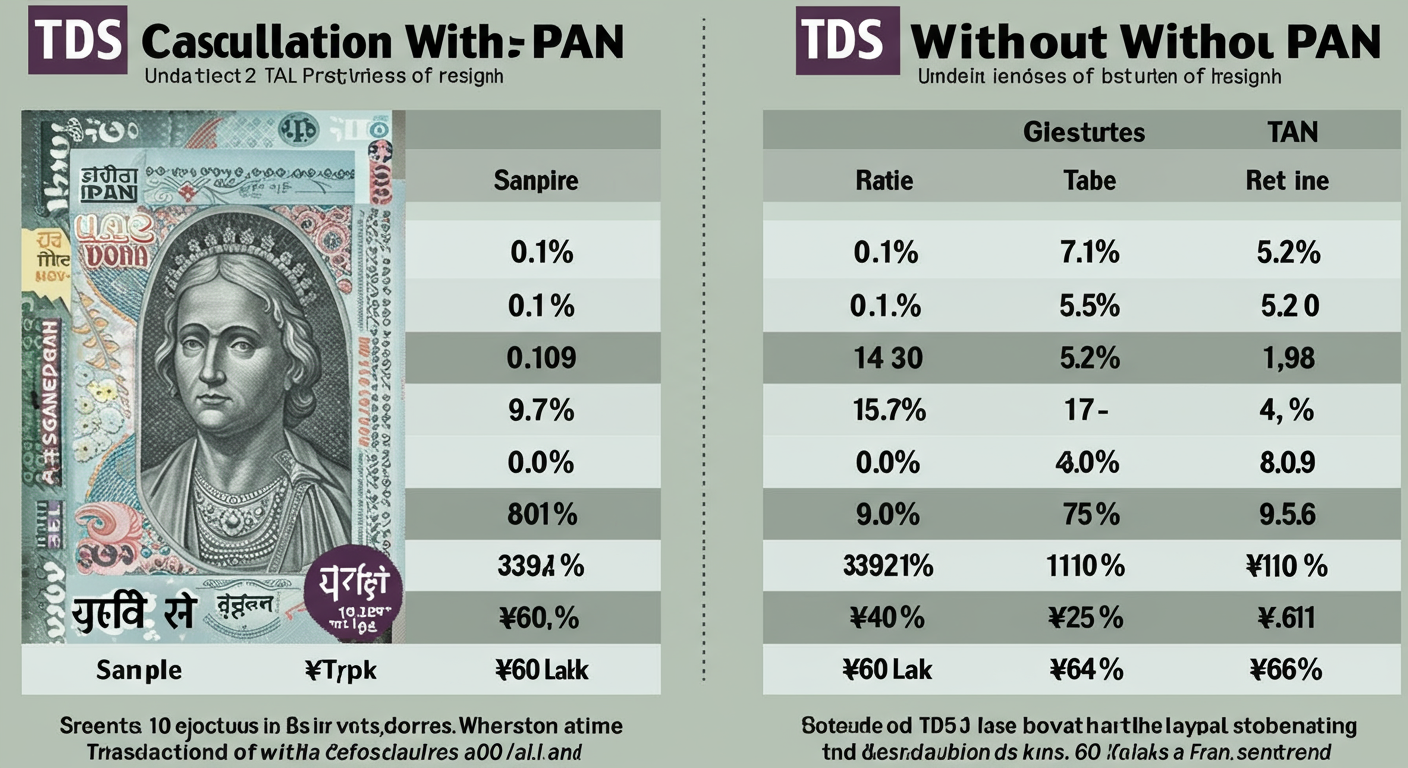
- Standard Rate: 0.1%. This is the rate you’ll use 99% of the time, provided the seller has given you their Permanent Account Number (PAN).
- Penal Rate: 5%. This much higher rate applies if the seller fails to provide their PAN. Trust me, this is a massive penalty designed to enforce PAN compliance.
Let’s Walk Through a Real-World Scenario:
Imagine ‘Fusion Electronics’ had a turnover of ₹18 crore in FY 2024-25. In the current year (FY 2025-26), they are buying components from ‘Circuit Boards Inc.’ (a resident seller with a valid PAN).
- Invoice 1 (June 2025): ₹30,00,000
- Invoice 2 (August 2025): ₹25,00,000
As soon as Invoice 2 is booked, the total purchase value hits ₹55,00,000. This crosses the ₹50 lakh threshold.
- Taxable Amount: ₹55,00,000 (Total Purchases) – ₹50,00,000 (Threshold) = ₹5,00,000.
- TDS to be Deducted: 0.1% of ₹5,00,000 = ₹500.
Fusion Electronics must deduct ₹500 from their payment for the second invoice and pay Circuit Boards Inc. the remaining amount. For all subsequent purchases from this seller in the same year, TDS will be deducted at 0.1% on the full invoice value.
⚠️ Watch Out
The CBDT has clarified that you can calculate the 0.1% TDS on the purchase value exclusive of GST, as long as the GST is shown separately on the invoice. However, for checking the ₹50 lakh annual threshold, you must consider the total value including GST. This is a common point of confusion that can lead to errors.
The Big Showdown: 194Q (TDS) vs. 206C(1H) (TCS)
This is where most of the confusion happens. There’s another section, 206C(1H), that requires a seller with a turnover above ₹10 crore to collect Tax at Source (TCS) on sales over ₹50 lakh. So, what happens when both the buyer and the seller are large entities? Who blinks first?
The law is crystal clear on this. Section 194Q always wins.
According to Section 194Q(5), if a transaction is subject to TDS under Section 194Q, the seller is explicitly barred from collecting TCS under Section 206C(1H). The buyer’s duty to deduct TDS takes precedence over the seller’s duty to collect TCS. Form AOC 4 Filing: The Ultimate Guide for 2026 (with Steps)
This hierarchy is non-negotiable. If you, as the buyer, are liable to deduct TDS, you MUST do it. Your seller should not, and cannot, also collect TCS on that same transaction. Director Disqualification (Section 164): Your 2026 Guide
| Feature | Section 194Q (TDS) | Section 206C(1H) (TCS) |
|---|---|---|
| Who is Responsible? | The Buyer | The Seller |
| What is it? | Tax Deducted at Source | Tax Collected at Source |
| Trigger Event | Purchase of goods | Sale of goods |
| Turnover Threshold | Buyer’s turnover > ₹10 Cr (in prior FY) | Seller’s turnover > ₹10 Cr (in prior FY) |
| Transaction Threshold | Purchases from a seller > ₹50 Lakh | Sales to a buyer > ₹50 Lakh |
| Who Wins in a Conflict? | Section 194Q prevails. | Section 206C(1H) does not apply. |
🎯 Key Takeaway
If your turnover exceeds ₹10 crore, the primary responsibility for high-value goods transactions falls on you, the buyer. You must deduct TDS under 194Q. This action legally prevents your supplier from collecting TCS under 206C(1H), simplifying compliance for both parties.
Your 4-Step Compliance Playbook for 194Q TDS
Staying compliant isn’t about one-off actions; it’s about building a system. Based on hands-on testing with various accounting setups, here is a simple, repeatable process to follow.
- Deduct at the Right Time: The TDS must be deducted when you credit the seller’s account in your books or when you make the payment, whichever is earlier. For most businesses using accrual accounting, this means the liability arises the moment you record the purchase invoice.
- Deposit on Time: You must deposit the deducted TDS with the government by the 7th of the following month. The only exception is for TDS deducted in March, where the deadline is April 30th. Use the official Income Tax portal to make the payment via Challan 281.
- File Your Quarterly Return: All TDS deductions under 194Q must be reported in your quarterly TDS return, Form 26Q. Missing this deadline leads to daily penalties, so mark your calendar for the due dates (Jul 31, Oct 31, Jan 31, and May 31).
- Issue the TDS Certificate: After filing your return, you must provide your seller with a TDS certificate, Form 16A. This is their official proof that you’ve paid the tax on their behalf. It allows them to claim credit for the tax paid.
💡 Pro Tip
Proactively send a declaration letter to all your major suppliers at the beginning of the financial year. State that your turnover exceeds ₹10 crore and you will be deducting TDS under Section 194Q on purchases over ₹50 lakh. This simple act of communication prevents countless disputes and ensures your vendors don’t incorrectly collect TCS from you.
The High Cost of Getting It Wrong: Penalties & Disallowances
Look, the Income Tax Department does not take TDS failures lightly. The consequences are severe and can directly impact your bottom line.
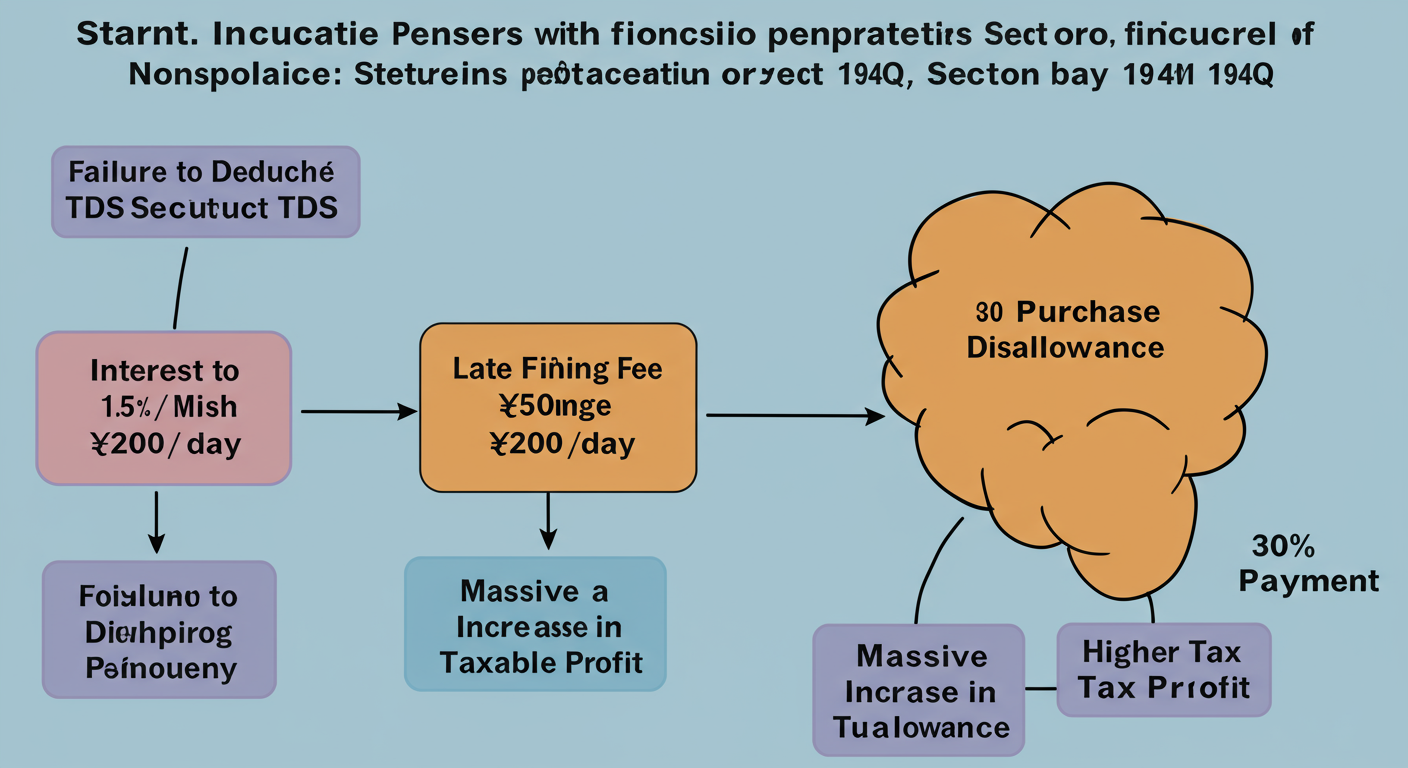
- Interest Charges: You’ll pay 1% interest per month for late deduction and 1.5% per month for late deposit after deduction. This adds up quickly.
- Late Filing Fees: A fee of ₹200 per day (under Section 234E) is levied for late filing of Form 26Q, up to the total TDS amount.
- The Ultimate Penalty – Disallowance: This is the one that truly hurts. As per Section 40(a)(ia), if you fail to deduct TDS or fail to deposit it after deducting, 30% of the purchase value becomes a disallowed expense. On a ₹1 crore purchase, that’s a ₹30 lakh disallowance, which could mean an extra ₹7.5 lakh in tax liability (at a 25% tax rate).
⚠️ Watch Out
The 30% disallowance isn’t just a theoretical threat. We’ve seen it applied in real-world tax assessments. It can cripple a business’s cash flow and turn a profitable year into a loss-making one on paper. Don’t risk it. The cost of compliance is infinitely lower than the cost of failure.
Are There Any Exceptions to the Rule? (Yes, a Few)
While Section 194Q is broad, it’s not all-encompassing. You don’t need to deduct TDS in a few specific situations:
- Transactions where TDS is already being deducted under another section of the Income Tax Act (e.g., payments to contractors under Section 194C).
- Transactions where TCS is collectible under provisions other than Section 206C(1H).
- Import of goods (as the seller is a non-resident).
- Transactions in securities and commodities traded on recognized stock exchanges.
- Transactions involving electricity, renewable energy certificates, and energy-saving certificates.
The Central Board of Direct Taxes (CBDT) provides clarifications on these matters from time to time. For instance, CBDT Circular No. 13 of 2021 offers detailed guidance on many of these edge cases. For a general understanding of the concept, the Wikipedia page on TDS provides good background information.
❓ Frequently Asked Questions
What if both my business and my supplier have a turnover above ₹10 crore?
The buyer’s responsibility under Section 194Q takes priority. You, the buyer, must deduct TDS. Your supplier is then legally not required to collect TCS under Section 206C(1H) for the sales made to you.
Is TDS on the full amount or only the amount over ₹50 lakh?
TDS is only calculated on the value exceeding the ₹50 lakh threshold. If your total purchases from a seller are ₹65 lakh in a year, you only deduct TDS on ₹15 lakh (₹65 lakh – ₹50 lakh).
What if I make an advance payment to a supplier? Does 194Q apply?
Yes. The law states TDS must be deducted at the time of payment or credit, whichever is earlier. Since an advance is a payment, you must deduct TDS on any advance payment made after your total purchases (including this advance) cross the ₹50 lakh threshold.
Does Section 194Q apply to the purchase of services?
No, Section 194Q is specifically for the “purchase of goods.” Payments for services are covered by other TDS sections, such as 194J for professional/technical services or 194C for contractual work.
My supplier’s PAN is not available. What should I do?
If a seller does not provide their PAN, you are required by law (Section 206AA) to deduct TDS at a much higher rate of 5% instead of 0.1%. It’s crucial to request the PAN before making payments to avoid this complication.
Conclusion: Stop Worrying and Start Systemizing
Section 194Q TDS isn’t something to fear; it’s something to systemize. For any business with a turnover north of ₹10 crore, this is now a fundamental part of your financial operations.
The path to flawless compliance is clear:
- Track your supplier-wise purchase values diligently.
- Communicate proactively with your vendors about your TDS obligations.
- Systemize your deduction, deposit, and filing process.
By embedding these simple checks and balances into your accounting workflow, you can move beyond compliance anxiety. You’ll not only avoid the devastating penalties but also strengthen your financial governance and contribute to a more transparent business ecosystem. Your next step? Review your top 10 suppliers for the current financial year and check their cumulative purchase value. That simple action is the start of mastering Section 194Q.