
Have you ever felt that rush of IPO fever? A hot new company is going public, the buzz is deafening, and you’re tempted to jump in. But how do you separate genuine opportunity from pure hype? The answer lies in one of the most powerful—and often overlooked—documents in the financial world.
It’s not a flashy ad or a CEO’s tweet. It’s the prospectus.
Think of it as the company’s legally-binding confession. It’s where all the secrets, risks, and unvarnished truths are laid bare. In this guide, we’re not just going to define what a prospectus in company law is. We’re going to show you how to read it like a seasoned pro, spot the red flags, and use it to make investment decisions with confidence. Forget the legal jargon; this is your practical playbook for 2026.
What Is a Prospectus, Really? (Beyond the Textbook Definition)
Legally speaking, Section 2(70) of the Companies Act, 2013, defines a prospectus as any document that invites offers from the public to buy a company’s securities. This includes notices, circulars, and advertisements. But that’s the dry, legal answer. What does it actually do?
Imagine a company is interviewing for a job. The “job” is to be a worthy steward of your investment capital. The prospectus is its resume, background check, and interview answers all rolled into one. It’s the single source of truth, designed to level the playing field between the company (which knows everything) and you, the potential investor (who knows only what they’re told).
Its core purpose is radical transparency. By forcing companies to disclose everything from their financial health and business strategy to pending lawsuits and what keeps the CEO up at night, the law protects you. It’s your primary shield against misinformation and your sharpest tool for due diligence.
A prospectus isn’t a marketing brochure. It’s a disclosure document. The moment you start reading it with that mindset, you gain an immediate edge.
The Four Flavors of a Prospectus: Choosing the Right Tool
The term ‘prospectus’ isn’t a monolith. Depending on the situation, companies use different types. Understanding these distinctions is crucial because it tells you a lot about the company’s fundraising strategy and the stage of the offering. From our experience analyzing hundreds of public offerings, knowing the type of document you’re reading sets the entire context.
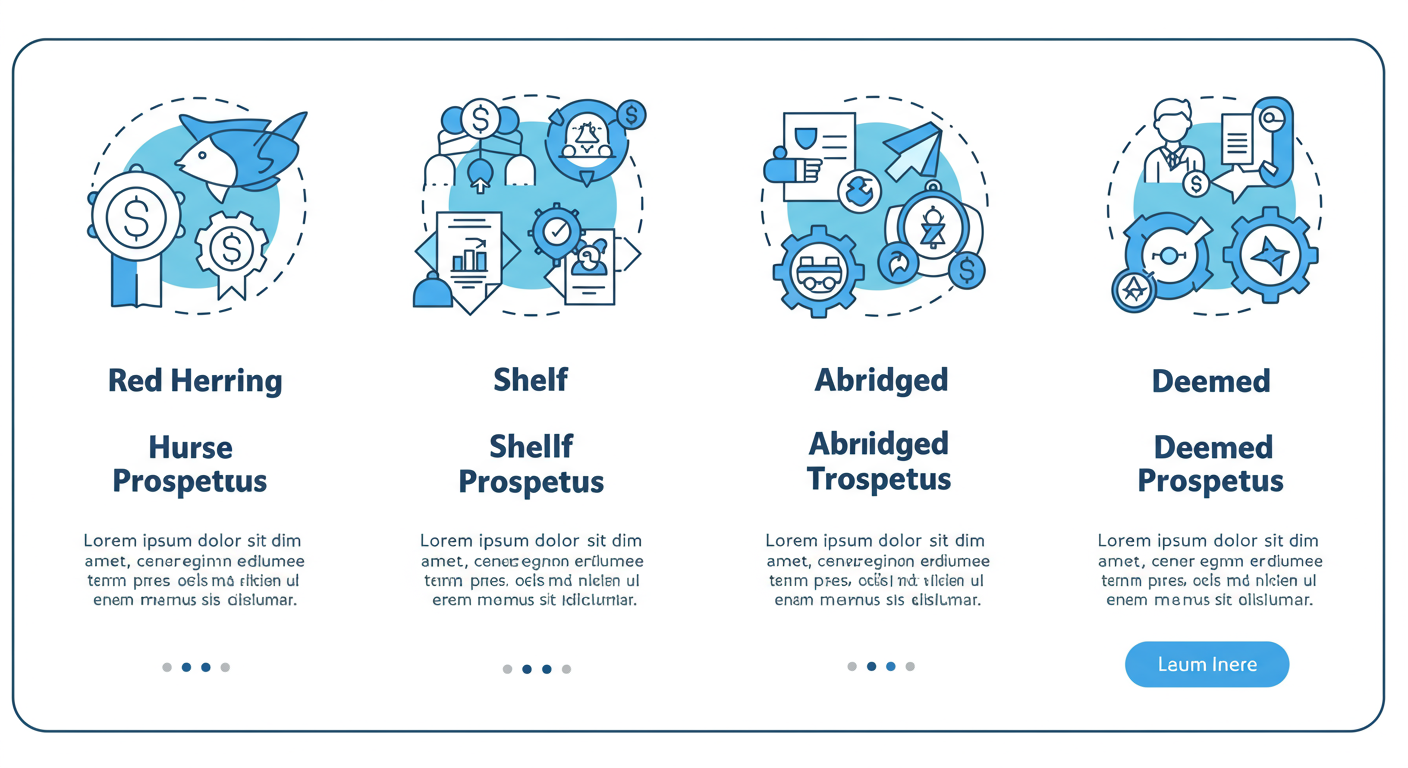
Here are the four main types of prospectus in company law:
- Red Herring Prospectus (RHP): This is the big one for IPOs. It’s a preliminary prospectus filed before the final price is set. It contains almost everything *except* the exact issue price and the total number of shares. Its job is to help the company and its bankers gauge investor demand and discover the right price—a process called “book building.”
- Shelf Prospectus: Think of this as a “master prospectus” for frequent fundraisers. Companies like banks or large financial institutions that need to raise capital multiple times a year file a Shelf Prospectus. It’s valid for up to one year, saving them from drafting a massive new document for every single offering. For each subsequent issue, they just file a smaller, updated “Information Memorandum.”
- Abridged Prospectus: Let’s be honest, a full prospectus can be hundreds of pages long. The Abridged Prospectus is the “executive summary.” The law mandates that every share application form must be accompanied by this summary, ensuring investors get the key highlights without being buried in paper.
- Deemed Prospectus: This is a clever legal provision to close a loophole. What if a company sells its shares to a middleman (like an investment bank), who then sells them to the public? To avoid disclosure rules, right? Wrong. Section 25 says the document the middleman uses to sell the shares is “deemed” to be a prospectus from the company itself, making the company fully liable for its contents.
| Type of Prospectus | Primary Purpose | When It’s Used | Key Feature |
|---|---|---|---|
| Red Herring (RHP) | Price discovery and gauging investor demand | During the book-building phase of an IPO | Omits final price and issue size |
| Shelf Prospectus | Enable multiple fundraises within one year | By frequent issuers like banks and NBFCs | Valid for 1 year; supplemented by an Info Memo |
| Abridged Prospectus | Provide a concise summary to investors | Attached to every share application form | Contains only the most salient features |
| Deemed Prospectus | Prevent circumvention of disclosure laws | When an intermediary offers shares to the public | Holds the original company liable for disclosures |
💡 Pro Tip
When you get an IPO application form, always read the Abridged Prospectus attached. It’s designed to give you the critical facts in minutes. If something smells fishy there, you’ve just saved yourself hours of digging through the full document.
Anatomy of a Prospectus: What to Actually Look For
Okay, you’ve got a 300-page prospectus in front of you. Where do you even start? Don’t just read it front to back. You need a strategy. Based on real-world campaign analysis, we’ve found that focusing on a few key areas yields the best insights. We’ll break down the contents into three battlegrounds: The Business, The Numbers, and The Deal.
Part 1: The Business & The People
This is the qualitative part. Who are these people, and what are they building?
- Objects of the Issue: This is arguably the most important section. Why do they need your money? Is it for expansion, debt repayment, or just to give early investors an exit? Clear, growth-oriented goals are a green flag. Vague plans are a major red flag.
- Management & Promoters: Who’s running the show? Look at their experience, track record, and remuneration. Are there any conflicts of interest mentioned?
- Management’s Discussion and Analysis (MD&A) / Risk Factors: Read this section first. Seriously. The company is legally required to list all potential risks—internal (e.g., dependency on one supplier) and external (e.g., regulatory changes). This is where the company tells you how it could fail. Listen carefully.
⚠️ Watch Out
Pay close attention to the “Litigation” section. Every company has some legal disputes. But are they against the company, its promoters, or its directors? Are the amounts involved significant? A pattern of regulatory action or major lawsuits against the promoters is a serious warning sign.
Part 2: The Numbers (The Unvarnished Truth)
Numbers don’t lie. This is where you validate the story the management is telling.
- Financial Statements: Look at the profit and loss statements and balance sheets for the last 3-5 years. You’re looking for trends. Is revenue growing consistently? Are profits growing with it, or are margins shrinking? Is debt piling up?
- Auditor’s Report: Is it a “clean” report, or did the auditors raise any concerns or qualifications? An auditor’s qualification is a massive red flag that requires immediate investigation.
- Capital Structure: Who owns what? How much equity do the promoters hold, and how much will they hold after the IPO? Significant “promoter pledge” (using their shares as collateral for loans) can be a risk.
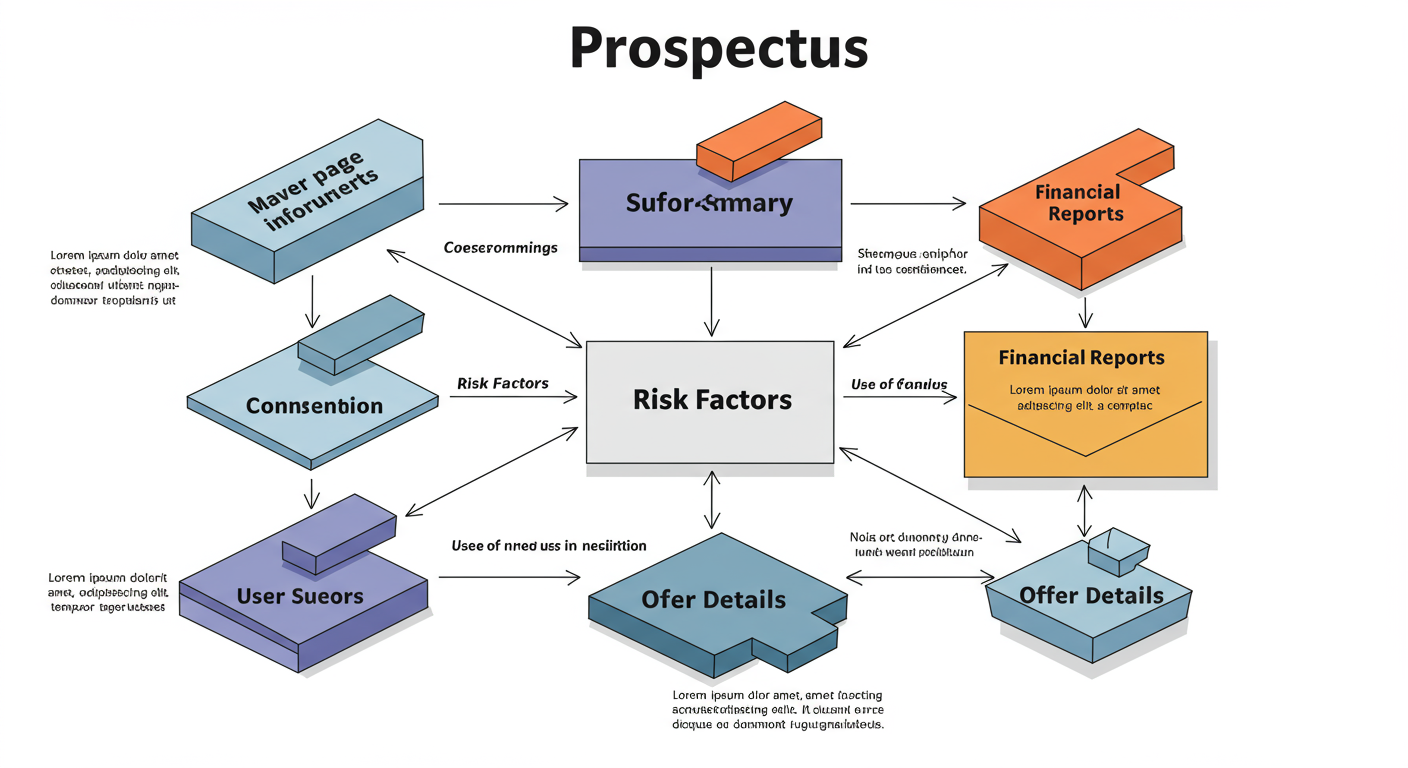
Part 3: The Deal Itself
This section covers the mechanics of the offering.
- Terms of the Issue: What’s the minimum investment? When does the offer open and close? Who are the underwriters?
- Issue Price: In a fixed-price issue, the price is set. In a book-built issue (common for IPOs), the RHP will provide a “price band.” The final price is determined by demand. Comparing the company’s valuation to its peers is critical here.
🎯 Key Takeaway
A prospectus is your most powerful tool for investment due diligence. Don’t just skim it. Learn to dissect its key sections—Objects of the Issue, Risk Factors, and Financials—to uncover the real story behind the hype.
The Golden Rule: The Brutal Cost of a Lie
The entire legal framework for a prospectus in company law rests on one simple, powerful principle often called the “Golden Rule of Disclosure”: tell the truth, the whole truth, and nothing but the truth. Any misstatement or deceptive omission isn’t just bad form—it can lead to financial ruin and even jail time for the people responsible.
The law provides two types of recourse: civil and criminal. GST Invoice Format: 16 Mandatory Fields in India (2026)
Civil Liability (Section 35): Hitting Them in the Wallet
If you lose money because you invested based on a misleading statement in a prospectus, you can sue for damages. It’s that simple. The people on the hook include: 11 Proven Strategies for Tax Planning for Freelancers in India (2025 Guide)
- The company itself.
- Every director and promoter.
- Any expert (like an appraiser or engineer) who consented to their statement being included.
The remedy is compensation for your losses. In some cases, you can even rescind the contract entirely, getting your original investment back. Trust me, the threat of personal liability makes directors read every single word of that document with extreme care.
Criminal Liability (Section 34): The Fraud Charge
This is where things get serious. If a prospectus is issued with an intent to defraud investors, it triggers Section 447 of the Companies Act. This isn’t about a simple mistake; it’s about a deliberate lie.
The penalties are severe:
- Prison: A minimum of 6 months, extending up to 10 years.
- Fines: An amount equal to the fraud, potentially extending to three times the amount of the fraud.
This is why the prospectus filing process, managed through the Ministry of Corporate Affairs (MCA) portal and scrutinized by the Securities and Exchange Board of India (SEBI), is so rigorous. The stakes are incredibly high.

⚠️ Watch Out
A common defense for a director is claiming they had “reasonable grounds to believe” a statement was true. This is why it’s crucial for investors to see if the prospectus relies on vague third-party reports or expert opinions without solid backing. A weak foundation for a claim is a red flag.
A Quick Step-by-Step Guide for Issuing Companies
For business owners looking to go public, the process can seem daunting. Here’s a simplified, high-level overview of the key steps involved in preparing and issuing a prospectus.
- Appoint Intermediaries: Your first step is to hire a team of experts. This includes Merchant Bankers (Lead Managers), legal counsel, auditors, and a Registrar and Transfer Agent.
- Conduct Due Diligence: Your legal team and merchant bankers will conduct exhaustive due diligence on every aspect of your company—financial, legal, and operational. This is to ensure all disclosures are accurate.
- Draft the Prospectus (DRHP/RHP): You’ll prepare a Draft Red Herring Prospectus (DRHP). This is a collaborative effort involving management and all appointed intermediaries.
- File with SEBI & Stock Exchanges: The DRHP is filed with SEBI for review and comments. You’ll also file it with the stock exchanges where you intend to list.
- Roadshows & Price Discovery: Once SEBI gives its observations, you’ll issue the Red Herring Prospectus (RHP). Your team will conduct “roadshows” to market the issue to institutional investors and determine the price band.
- File RHP/Prospectus with ROC: The RHP must be filed with the Registrar of Companies (ROC) at least three days before the offer opens. After the issue closes and the price is finalized, the final Prospectus is filed with the ROC and SEBI.
- Public Issue & Allotment: The IPO opens to the public. After it closes, the shares are allotted to investors, and the company gets listed on the stock exchange.
💡 Pro Tip
Start your compliance and documentation cleanup at least a year before you plan to file a DRHP. From hands-on experience with pre-IPO companies, messy records and unresolved legal issues are the biggest cause of delays and can even derail an offering.
❓ Frequently Asked Questions
Who needs to issue a prospectus?
Any public company that wants to raise money from the general public by issuing securities (like shares or debentures) must issue a prospectus. Private companies are legally barred from making public offers, so they don’t issue one. They use a different document called a Private Placement Offer Letter for raising capital privately.
What’s the main difference between a Red Herring Prospectus and the final one?
The key difference is information about the price. A Red Herring Prospectus (RHP) is used before the IPO opens to gauge interest and doesn’t contain the final issue price or the exact number of shares. The final prospectus is filed after this “price discovery” process and includes all the final, concrete details of the offer.
Can a private company issue a prospectus?
No, it can’t. A core feature of a private company, as defined by company law, is the restriction on inviting the public to subscribe to its securities. Therefore, the concept of a prospectus doesn’t apply to them.
What happens if I invest based on a misleading prospectus?
You have powerful legal rights. Under Section 35 of the Companies Act, 2013, you can sue the company, its directors, and promoters for damages if you’ve suffered a loss. In some situations, you might even be able to void the purchase and get your money back.
How long is a Shelf Prospectus valid for?
A Shelf Prospectus is valid for one year from the date of its first offer. This allows the company to make multiple public offerings during that year without having to file a full, new prospectus each time, which is a huge time and cost saver.
Conclusion: Your New Investment Superpower
In a world saturated with financial noise, the prospectus is your signal. It’s not just a legal requirement; it’s a strategic intelligence document. By moving past the intimidating length and legalistic language, you can learn to see it for what it is: a roadmap to the company’s past, present, and potential future.
We’ve covered the different types, dissected its anatomy, and highlighted the severe consequences of dishonesty. You now know to read the “Risk Factors” first, to scrutinize the “Objects of the Issue,” and to look for consistency in the financial data.
So, here’s your next step. The next time you hear about an exciting IPO, don’t just listen to the news. Go to the SEBI or company website, download the Red Herring Prospectus, and spend 30 minutes practicing what you’ve learned today. You’ll be amazed at the clarity and confidence it brings to your decision-making. That’s not just smart investing; it’s a superpower.
Read Also:
- Form DPT 3 Filing in 2026: Your Ultimate Guide to Avoid Penalties
- How to File DIR-12 Form in 2026: A Step-by-Step Expert Guide
- ROC Filing Due Dates 2026: The Definitive Guide for Directors
- MSME GST Mastery: Your 2026 Cheatsheet
- Nail Your MCA Name Search in 2026
- PAS 6 Due Date 2026: The Unlisted Company’s Guide to Flawless Filing