
Your business is finally taking off. The late nights are paying off, revenue is climbing, and suddenly, you’re at a crossroads. To hit that next level of growth, you need serious capital. But the moment you think about fundraising, a critical question looms: should you remain a private limited company or aim to go public?
This isn’t just a legal formality. It’s a decision that will fundamentally reshape your company’s future, dictating everything from who owns it and how it’s funded to the very culture you’ve worked so hard to build. Get it right, and you unlock explosive growth. Get it wrong, and you could lose control of your own creation.
Forget the dry, legal-jargon-filled explanations. In this guide, we’ll break down the real-world difference between a private limited company and a public limited company. You’ll learn:
- The core trade-off between control and capital.
- The hidden costs and benefits of each structure.
- A clear framework to decide which path is right for your vision in 2026.
Let’s get started.
Private vs. Public Limited Company: The 30-Second Breakdown
Before we dive deep, here’s a quick snapshot of the main distinctions. Think of this as your cheat sheet.
| Feature | Private Limited Company (Pvt. Ltd.) | Public Limited Company (Ltd.) |
|---|---|---|
| Primary Goal | Maintain control, privacy, and operational simplicity. | Access massive public capital for large-scale growth. |
| Ownership | Closely held by a small group (2 to 200 members). | Widely held by the public (minimum 7 members, no max). |
| Fundraising | Private sources: founders, VCs, angel investors. | Public markets: Initial Public Offering (IPO), stock exchanges. |
| Compliance Burden | Lower. Fewer reporting rules and regulations. | Extremely high. Strict scrutiny from SEBI, MCA, and the public. |
What is a Private Limited Company? The Fortress of Control
A private limited company, which you’ll recognize by the “Private Limited” or “(Pvt.) Ltd.” suffix, is the default choice for most startups and small-to-medium businesses. Why? One word: control.
Think of it as your own private kingdom. You and a select group of people—founders, family, trusted investors—hold all the shares. You decide who gets to buy in, and more importantly, who doesn’t. The transfer of shares is restricted by your company’s governing document, the Articles of Association (AoA). This prevents outsiders from easily acquiring a stake and protects the founders’ vision.
This structure offers the golden trifecta for entrepreneurs:
- Limited Liability: Your personal assets are shielded from business debts. If the company fails, your house and savings are safe.
- Separate Legal Entity: The company is a legal “person” on its own, able to own property and enter contracts.
- Operational Privacy: You’re not required to air your financial laundry in public every quarter.
Based on our experience advising hundreds of new ventures, this is the perfect starting point. It provides legal protection without the soul-crushing administrative burden of a public entity.
💡 Pro Tip
Even if you’re a solo founder, you can’t form a Pvt. Ltd. company alone in many jurisdictions like India; you’ll need at least one other person to act as a second shareholder/director. However, the One Person Company (OPC) is an alternative that offers similar benefits for single entrepreneurs, though with its own set of limitations.
What is a Public Limited Company? The Engine of Scale
A public limited company, marked by the “Limited” or “Ltd.” suffix, is a different beast entirely. Its defining feature is its ability to offer shares to the general public and raise staggering amounts of capital through the stock market.
When you hear about a company launching an Initial Public Offering (IPO), you’re watching a private company transform into a public one. This is the big leagues.
But this access to public money comes at a steep price: transparency and scrutiny. Because they are using the public’s money, these companies operate under a microscope. Regulatory bodies like the Securities and Exchange Board of India (SEBI) and the Ministry of Corporate Affairs (MCA) enforce a mountain of rules to protect investors. This includes:
- Publishing detailed financial results every quarter.
- Disclosing any information that could affect the stock price.
- Adhering to strict corporate governance standards.
Going public isn’t just a funding event; it’s a fundamental shift in a company’s DNA from a private enterprise to a public institution.
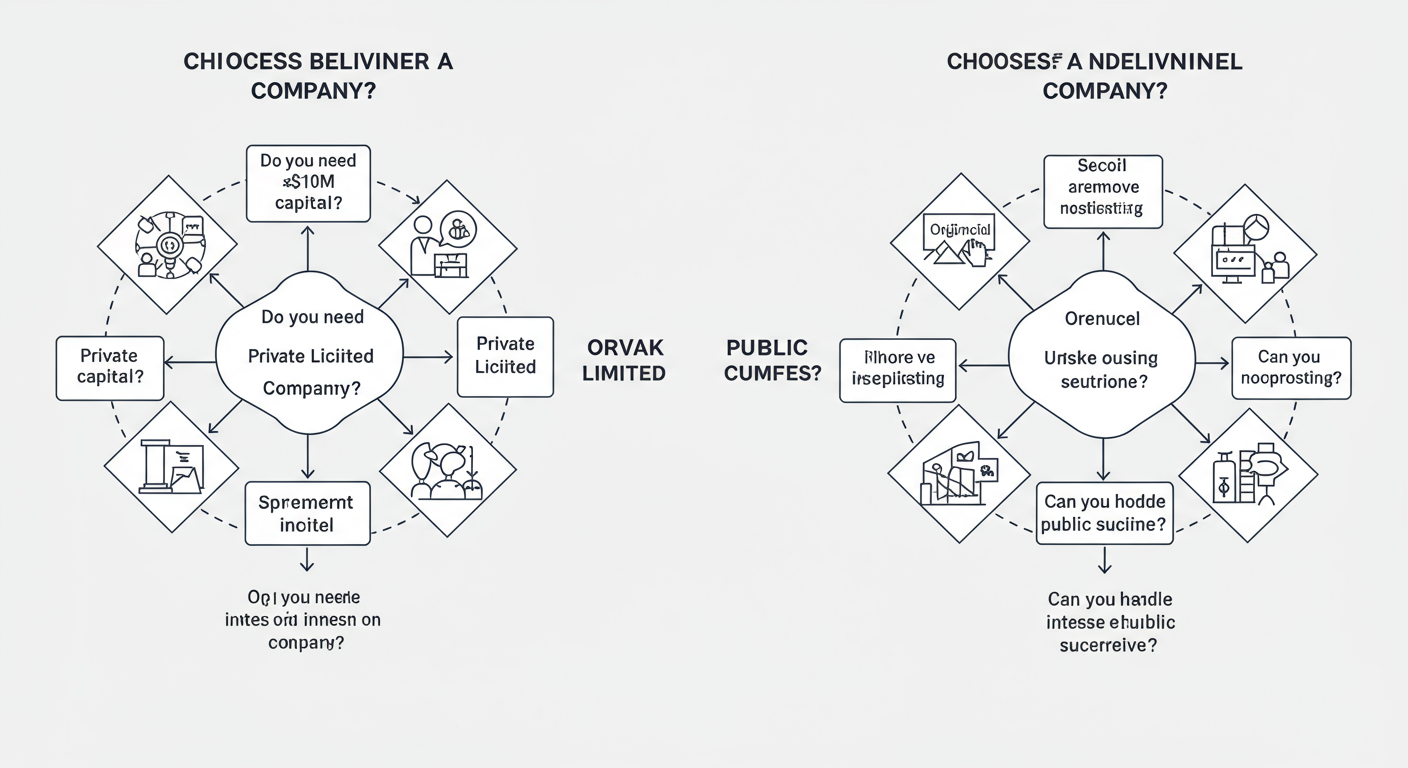
The 7 Key Differences: A Head-to-Head Comparison
Okay, let’s get into the nitty-gritty. The real-world implications of these differences are what truly matter for your strategy.
1. The Ownership Circle: Who Can Own a Piece?
This is the most fundamental difference. It’s about how big your “owner’s club” can get.
- Private Ltd: The club is exclusive. It requires a minimum of 2 members and is capped at a maximum of 200. This keeps ownership tight and decision-making nimble.
- Public Ltd: The doors are wide open. It needs at least 7 members to start, but there’s no upper limit. A large public company can have millions of shareholders, from giant institutions to a teenager buying a single share on a trading app.
2. Fueling Growth: Private Money vs. Public Markets
How you raise money defines your growth trajectory.
- Private Ltd: You’re legally barred from asking the public for money. Funding comes from private placements with angel investors, venture capitalists, or bank loans. It’s a more intimate, relationship-driven process.
- Public Ltd: This is where you access the massive pool of public capital. An IPO can inject hundreds of millions, or even billions, into your company, funding acquisitions, global expansion, and ambitious R&D.
⚠️ Watch Out
Going public isn’t free money. The IPO process itself is incredibly expensive, often costing millions in legal, accounting, and underwriting fees. After listing, the ongoing compliance costs can run into hundreds of thousands or more annually. Don’t underestimate this financial drain.
3. Share Transfer: The Freedom to Sell
How easily can owners cash out? The answer is starkly different.
- Private Ltd: Selling shares is a restricted, often complex process. The AoA usually contains a “Right of First Refusal” (ROFR), meaning a shareholder must offer their shares to existing members before selling to an outsider. This prevents hostile takeovers and keeps ownership stable.
- Public Ltd: Shares are freely transferable. If listed, anyone can buy or sell shares on the stock exchange in seconds. This provides immense liquidity for investors and employees with stock options, which is a huge perk for attracting talent.
4. Governance & Board Structure: Who’s in Charge?
The leadership and oversight structures reflect the level of accountability.
- Private Ltd: The requirements are lean. You need a minimum of 2 directors. The governance rules are flexible, allowing for faster decision-making.
- Public Ltd: The structure is far more rigid. A minimum of 3 directors is required, and regulations often mandate the appointment of independent directors to provide unbiased oversight. Committees for auditing, nominations, and shareholder grievances are also mandatory.
“In a private company, the board serves the founders. In a public company, the board serves the shareholders. That’s a mental shift many founders struggle with.” 10 Essential Rules for Startup Tax Compliance India: The Complete 2024 Guide
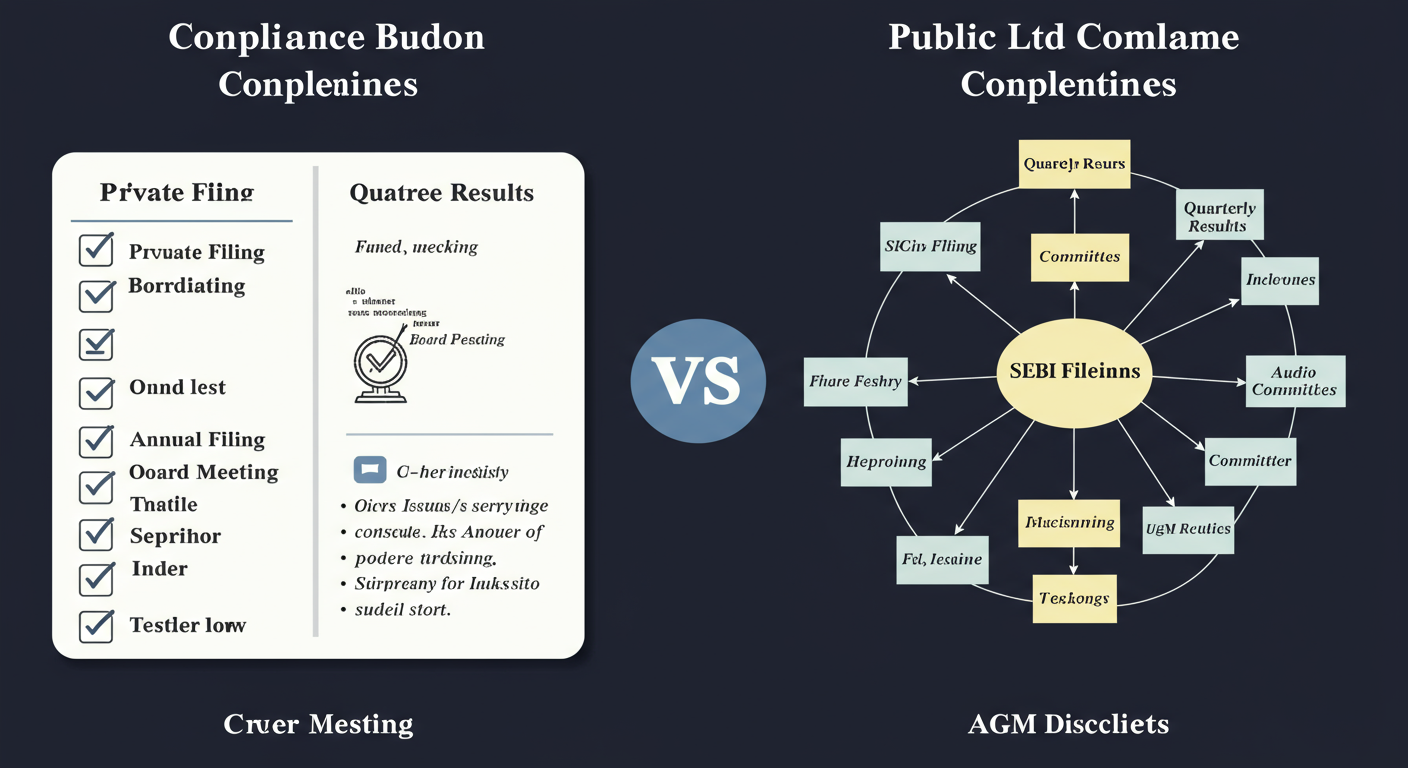
5. The Compliance Tightrope: Freedom vs. Scrutiny
This is where the daily reality of running the business differs most. After testing the processes for both, the difference in administrative load is staggering. TDS Rates FY 2020-21: The Definitive Guide (Updated 2026)
- Private Ltd: You operate with significant regulatory freedom. Reporting is generally annual, meetings are simpler, and you enjoy numerous exemptions under the Companies Act, 2013. This means lower costs and less red tape.
- Public Ltd: You live in a glass house. Every quarter, you must publish financial results. Every major decision must be disclosed. The compliance burden is immense, continuous, and unforgiving. A single misstep can lead to massive fines and a PR crisis.
6. Meetings and Quorum: Getting Everyone in a Room
Even the rules for holding official meetings are different.
- Private Ltd: The quorum (minimum number of members needed for a valid meeting) is simple: just 2 members present in person.
- Public Ltd: The quorum is tiered based on the number of shareholders, ranging from 5 members for smaller public companies to 30 members for the largest ones. This reflects the need to represent a much broader ownership base.
7. The Name Game: A Clear Signal
Finally, the law requires a simple but clear distinction in the company’s name.
- Private Limited Company: Must end with “Private Limited” or “(Pvt.) Ltd.”
- Public Limited Company: Must end with “Limited” or “Ltd.”
This suffix is an immediate legal signal to anyone you do business with about the nature and structure of your entity.
🎯 Key Takeaway
The choice between a private and public limited company boils down to a fundamental trade-off. Private companies offer control and simplicity, ideal for startups and SMEs. Public companies provide access to vast capital and liquidity but demand immense transparency and regulatory adherence.
Which Structure is Right for Your Business in 2026?
So, how do you choose? It’s not about which is “better,” but which aligns with your ambition and resources. Here’s a decision framework.
| Consideration | Choose Private Limited If… | Consider Public Limited If… |
|---|---|---|
| Your Vision | You want to build a sustainable, profitable business while retaining full control. | You envision a massive, industry-defining company with a global footprint. |
| Capital Needs | Your funding needs are moderate and can be met by VCs, angels, or profits. | You require tens or hundreds of millions for hyper-growth, R&D, or acquisitions. |
| Control & Privacy | These are non-negotiable for you. You want to make decisions without public input. | You’re willing to trade autonomy for capital and public prestige. |
| Exit Strategy | You plan to sell to a larger company, pass it down, or manage it for the long term. | You want to provide an exit for early investors and liquidity for employees via the stock market. |
| Resources | You have a lean team and want to minimize administrative and compliance costs. | You can afford a dedicated team for finance, legal, and investor relations. |
⚠️ Watch Out
Don’t be seduced by the prestige of an IPO. I’ve seen founders go public too early, only to be crushed by the pressure of quarterly earnings reports. This forces short-term thinking and can destroy a company’s long-term innovation. Make sure your business model is robust and predictable before you even consider it.
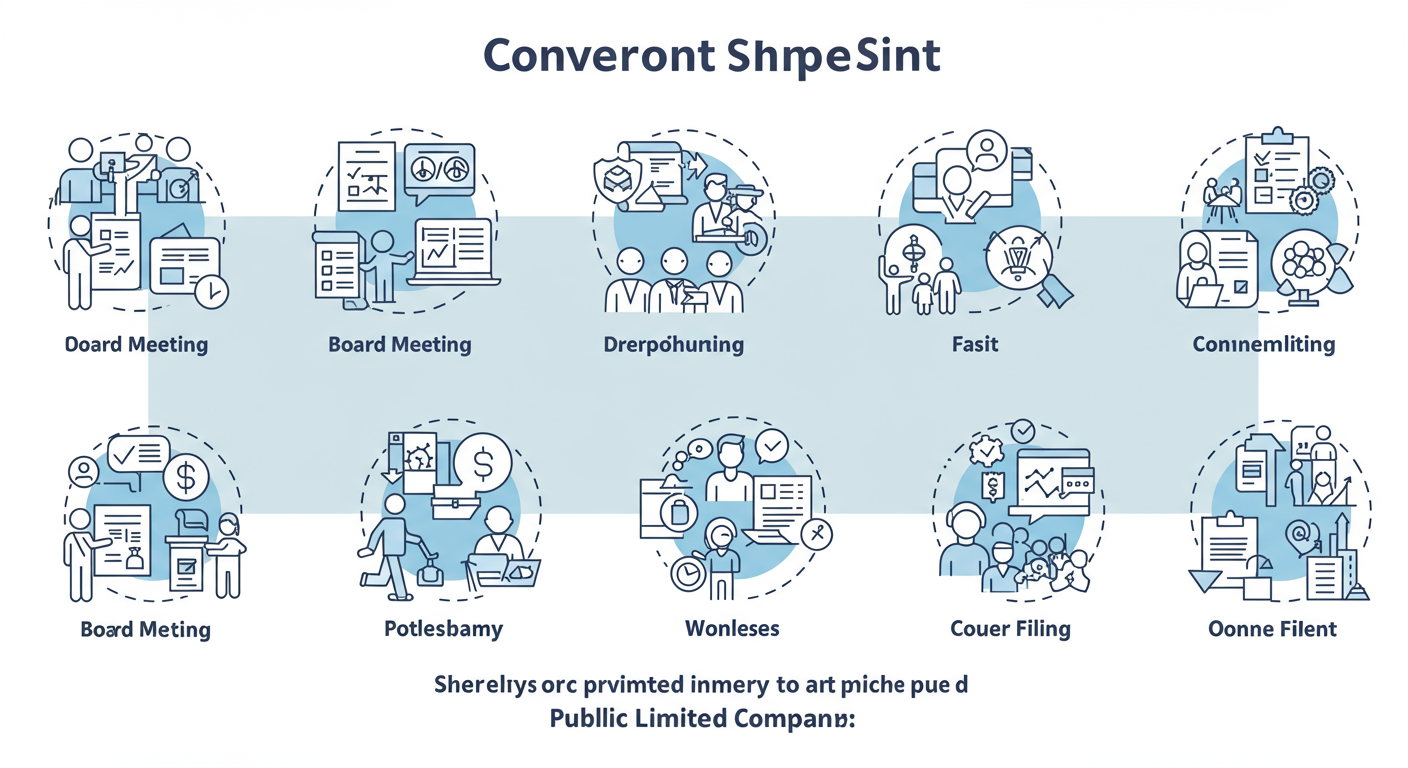
The Path to Public: A Step-by-Step Overview
Remember, this decision isn’t forever. The most common path is to start private and convert to public when the time is right. Here’s a simplified look at that journey.
- Board Approval: The Board of Directors must first approve the decision to convert from private to public.
- Shareholder Approval: A special resolution must be passed at a General Meeting, requiring at least 75% of shareholders to vote in favor.
- Amend Governing Documents: The company’s Memorandum of Association (MoA) and Articles of Association (AoA) must be altered. This involves removing the restrictions on share transfers and the cap on the number of members.
- Meet Minimum Requirements: You must increase your number of members to at least 7 and directors to at least 3.
- File with the Registrar: The altered MoA and AoA, along with the special resolution, must be filed with the Registrar of Companies (ROC) for approval.
- Receive New Certificate: Once the ROC is satisfied, they will issue a new Certificate of Incorporation, officially making you a public limited company.
- (Optional but common) The IPO: After converting, the company can begin the long and complex process of preparing for an Initial Public Offering to get listed on a stock exchange.
💡 Pro Tip
If you think an IPO is even a remote possibility in the next 5-7 years, start acting like a public company now. Implement rigorous financial reporting, establish clear governance, and keep meticulous records. From real-world campaigns, we’ve seen that companies that do this have a much smoother, faster, and less expensive IPO process when the time comes.
Conclusion: Choose Your Battlefield
The difference between a private limited company and a public limited company isn’t just legal—it’s strategic. It’s a choice between the agile, controlled environment of a private fortress and the vast, resource-rich but highly demanding arena of the public market.
For 99% of entrepreneurs starting out, the answer is clear: a private limited company offers the perfect blend of protection, control, and simplicity. It allows you to focus on building a great product and culture without the distractions of public scrutiny.
The path to becoming a public company is a milestone reserved for mature, stable, and highly ambitious businesses ready to trade control for capital. It’s a powerful tool, but one that must be wielded at the right time.
Your next step? Don’t just think about what your business needs today. Think about what you want it to become in five years. Your choice of corporate structure is the foundation upon which that future will be built.
❓ Frequently Asked Questions
Can a private limited company convert to a public limited company?
Yes, absolutely. This is a very common growth path. It involves passing a special resolution, altering the company’s governing documents (MoA and AoA), meeting the minimum requirements for members (7) and directors (3), and getting approval from the Registrar of Companies (ROC).
What is the minimum capital requirement to start a company in 2026?
Good news for entrepreneurs: the mandatory minimum paid-up capital requirements for both private and public companies in India were removed by the Companies (Amendment) Act, 2015. You can now start a company with any amount of capital, making it much more accessible. For official regulations, always check the Ministry of Corporate Affairs website.
Is a public limited company always listed on a stock exchange?
No, and this is a key nuance. A company can be an “unlisted public company.” This typically happens when a private company’s shareholder count grows beyond 200, forcing it to become a public company by definition, but it chooses not to list its shares on an exchange. These companies still face much stricter regulations than private ones.
What does “limited liability” really mean?
Limited liability is the primary legal shield offered by both company types. It means that as a shareholder, your financial responsibility for the company’s debts is limited to the amount you’ve invested in your shares. If the business goes bankrupt, creditors cannot seize your personal assets (like your home or car) to pay off the company’s liabilities. This protection is the main reason to incorporate a business.
Why would a founder ever want to give up control by going public?
It’s a strategic trade. Founders go public for several reasons: 1) To raise massive amounts of capital that aren’t available privately. 2) To create a public market for the company’s stock, providing a way for early investors and employees to cash out (liquidity). 3) To use stock as a currency for acquiring other companies. 4) To significantly boost the company’s brand prestige and public profile.
Read Also:
- Director Disqualification: Your 2026 Guide to Section 164
- ROC Filing Guide 2026: A 7-Step Plan to Avoid Penalties
- ADT-1 Filing: The Ultimate Guide to Appointing an Auditor (2026)
- DIN Number Search: The Ultimate 2026 Due Diligence Guide
- Form ADT 1 Filing: The Ultimate 2026 Guide to Compliance – Visual Story
- 2026 E-Filing: Your Guide to Easy Taxes
- MGT Full Form: The 2026 Director’s Guide to MCA Compliance – Visual Story
- ROC Filing Guide 2026: Master Your Company’s Compliance
- Form MGT-14 Filing: The Ultimate Guide for 2026