You’ve found it. The perfect property. You’ve negotiated the price, shaken hands, and the excitement is palpable. But then your lawyer mentions something about “TDS” and “Form 26QB.” Suddenly, a wave of anxiety hits. Is this another complicated tax hurdle designed to trip you up?
It doesn’t have to be. Look, thousands of property buyers navigate this every month. The problem isn’t the rule itself; it’s the dense, jargon-filled explanations that make it feel impossible.
This guide is different. We’re going to break down Form 26QB filing into simple, actionable steps. By the time you’re done reading, you’ll understand exactly what to do, when to do it, and how to avoid the costly mistakes that catch so many others. You’ll move forward with your purchase not just in compliance, but with total confidence.
What is Form 26QB, and Why Should You Care?
Let’s cut through the noise. Form 26QB is simply a government form you use to pay the 1% Tax Deducted at Source (TDS) when you buy a property worth ₹50 lakh or more. Think of it as a mandatory down payment on the seller’s potential capital gains tax, and the government makes you, the buyer, responsible for collecting and paying it.
This rule, outlined in Section 194-IA of the Income Tax Act, was introduced to create a transparent trail for high-value real estate deals. It helps curb the use of unaccounted money and ensures taxes are paid promptly.
Why does this matter so much to you? Simple. The responsibility is 100% on the buyer. If you fail to deduct this tax or don’t file Form 26QB on time, the penalties fall squarely on your shoulders, not the seller’s. Getting this right is non-negotiable for a smooth transaction.
🎯 Key Takeaway
If you buy an immovable property in India for ₹50 lakh or more, you are legally required to deduct 1% TDS from the sale price and deposit it with the government using Form 26QB. This is the buyer’s responsibility, and failure to comply results in significant penalties.
The ₹50 Lakh Rule: Do You Need to File?
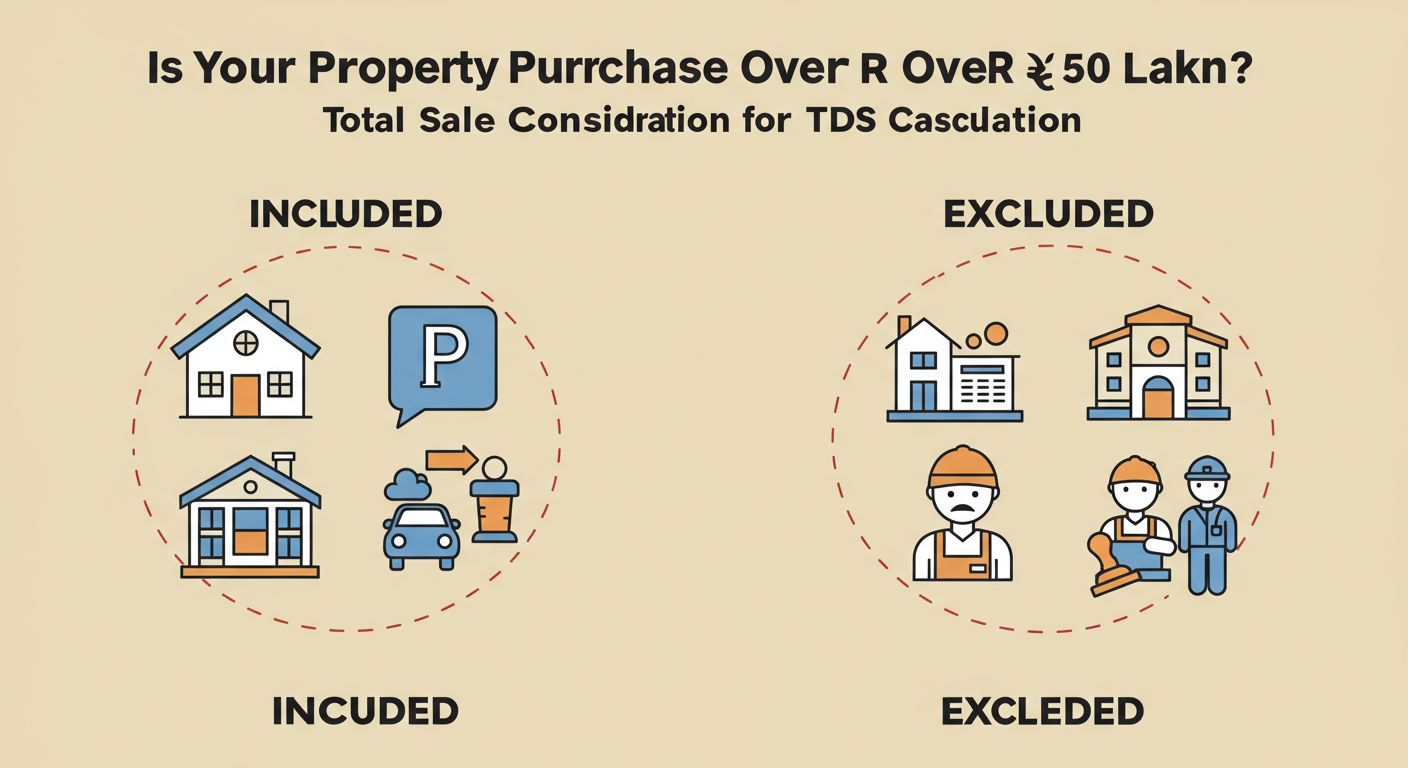
The threshold seems straightforward: ₹50 lakh. But here’s where many people get tripped up. The tax isn’t just on the base price of the property. According to tax regulations, TDS must be calculated on the total sale consideration.
What does that include? It covers all charges and fees mentioned in the sale agreement. Things you might consider “extras” are often part of the taxable amount.
Here’s a quick breakdown of what’s typically included versus what’s not.
| Included in Sale Consideration (TDS Applies) | Generally Excluded (If Billed Separately) |
|---|---|
| ✅ Basic Property Cost | ❌ GST on under-construction properties |
| ✅ Club Membership Fees | ❌ Stamp Duty & Registration Fees |
| ✅ Car Parking Fees | ❌ Post-possession maintenance charges |
| ✅ Water & Electricity Facility Fees | |
| ✅ Preferential Location Charges (PLC) |
In our experience, the safest approach is to deduct TDS on the entire amount payable to the seller as per the builder-buyer or sale agreement. If in doubt, it’s better to include a charge than to face a notice from the tax department later.
Step-by-Step Guide to Form 26QB Filing in 2026
Ready to get it done? The online process is surprisingly logical once you know the steps. Grab a coffee, get your documents ready, and let’s walk through it.
Before you start, you’ll need:
- Your PAN card details
- The seller’s PAN card details (absolutely critical!)
- Full addresses for both you and the seller
- The property’s full address
- The sale agreement with the total value and date of agreement
- Your net banking details for payment
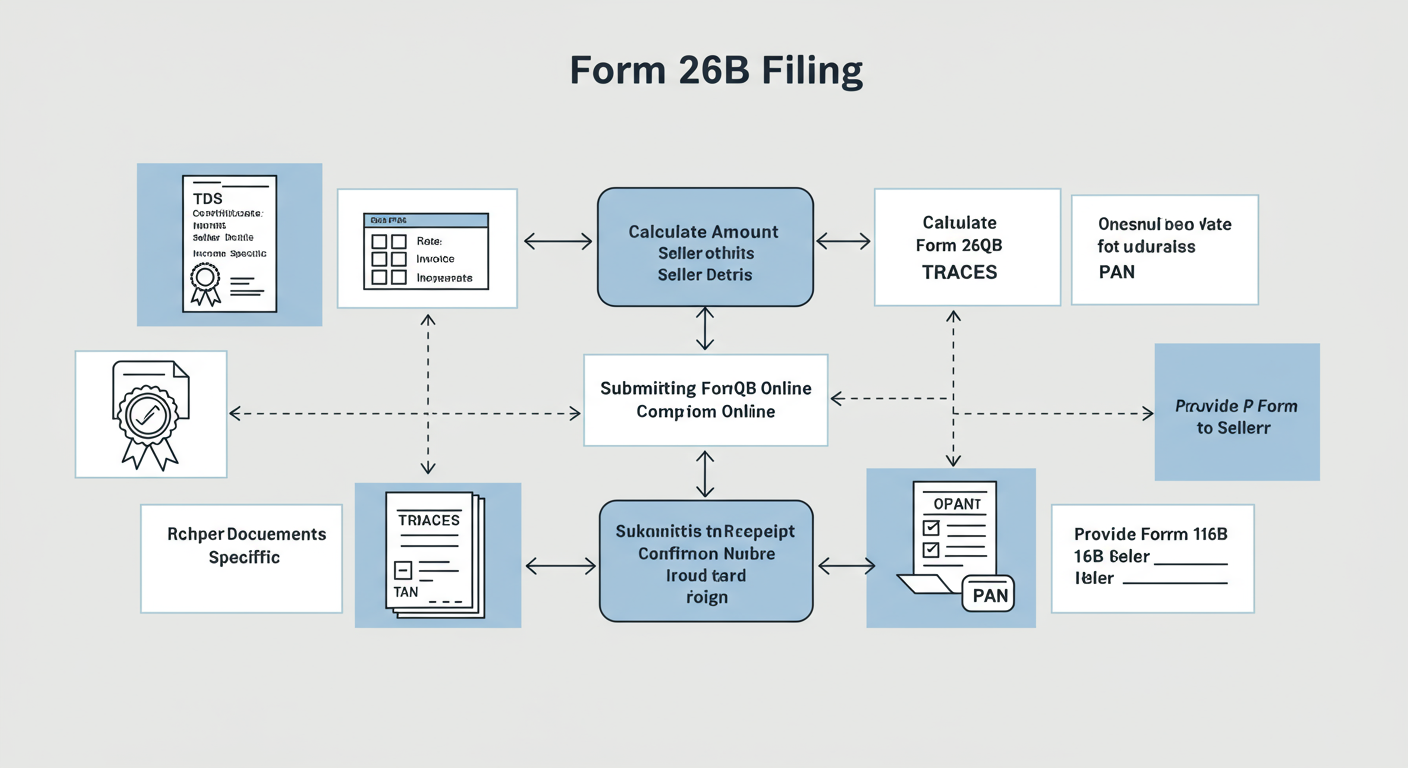
- Go to the Official Portal: Your starting point is the TIN NSDL portal. Navigate directly to the e-payment page for taxes. On this page, find and click on “TDS on Sale of Property (Form 26QB).”
- Fill in the Taxpayer Info: This is the core of the form. You’ll be asked to select your taxpayer category and then fill out the details with extreme care.
- PANs: Enter the PAN for both the buyer and the seller. The system will auto-populate some details if the PAN is valid. Double-check the names.
- Addresses: Provide the complete contact details and addresses for both parties.
- Property Details: Enter the full address of the property you’re buying. Select the property type (e.g., ‘Building with Land’).
- Transaction Details: Input the date of agreement, total sale consideration, and the date you paid the seller. If paying in installments, this form is for a single installment.
- Submit and Verify: Once every field is filled, take a moment. Review every single detail. A wrong PAN can create a massive headache. After confirming, submit the form. A confirmation screen will appear.
- Make the Payment: You’ll be redirected to the payment page. You have two choices:
- Net Banking (Immediate): This is the fastest and best option. Choose your bank and complete the payment.
- Bank Branch (Later): You can opt to pay later. The portal will generate a challan with an Acknowledgment Number. You must print this and visit an authorized bank branch to make the payment. You have 10 days from the date of generation to do this.
- Save Your Proof: After a successful payment, the bank provides a challan counterfoil containing the Challan Identification Number (CIN) and payment details. Save this PDF. It’s your proof of payment.
- Download Form 16B for the Seller: This is the final, crucial step. Wait about 5-7 days after payment. Then, log in to the TRACES portal (you’ll need to register as a taxpayer if you haven’t already). From your dashboard, you can request and download Form 16B. This is the official TDS certificate you must give to the seller.
💡 Pro Tip
Before starting, open a notepad and type out all the required details: PANs, addresses, amounts. Then, copy and paste them into the form. This minimizes the risk of typos and allows you to double-check everything in one place before you begin.
Handling Complex Scenarios: What the Standard Guides Miss
Real estate deals aren’t always one buyer, one seller. Here’s how to handle common complexities based on real-world transactions.
Scenario 1: Multiple Buyers or Sellers
What if you and your spouse are buying from a pair of siblings? The rule is simple: one Form 26QB per unique buyer-seller pair.
Example:
- 2 Buyers (B1, B2) and 1 Seller (S1): Two forms are needed. B1 files a form for their share of the payment to S1, and B2 files a separate form for their share.
- 1 Buyer (B1) and 2 Sellers (S1, S2): Two forms are needed. B1 files one form for the payment made to S1 and a second form for the payment to S2.
Mastering TDS Return Due Dates: A Comprehensive Guide for Timely Compliance in India
Scenario 2: Paying in Installments
This is common for under-construction properties. You must deduct 1% TDS from each installment and file a separate Form 26QB within 30 days from the end of the month of each payment. Don’t wait until the final payment to deduct the full TDS. That’s a compliance violation. जीएसटीआर-3बी कैसे फाइल करे: आसान और विस्तारित गाइड
⚠️ Watch Out
The seller’s PAN is non-negotiable. If the seller refuses to provide their PAN or provides an invalid one, the TDS rate jumps from 1% to a staggering 20%. It is your duty as the buyer to obtain and verify the seller’s PAN before making the payment.
The High Cost of Getting It Wrong: A Breakdown of Penalties
Ignoring or delaying your Form 26QB duties is a costly mistake. The Income Tax Department is very strict, and the penalties are calculated automatically. Trust me on this one, you don’t want to be on the receiving end of these notices.
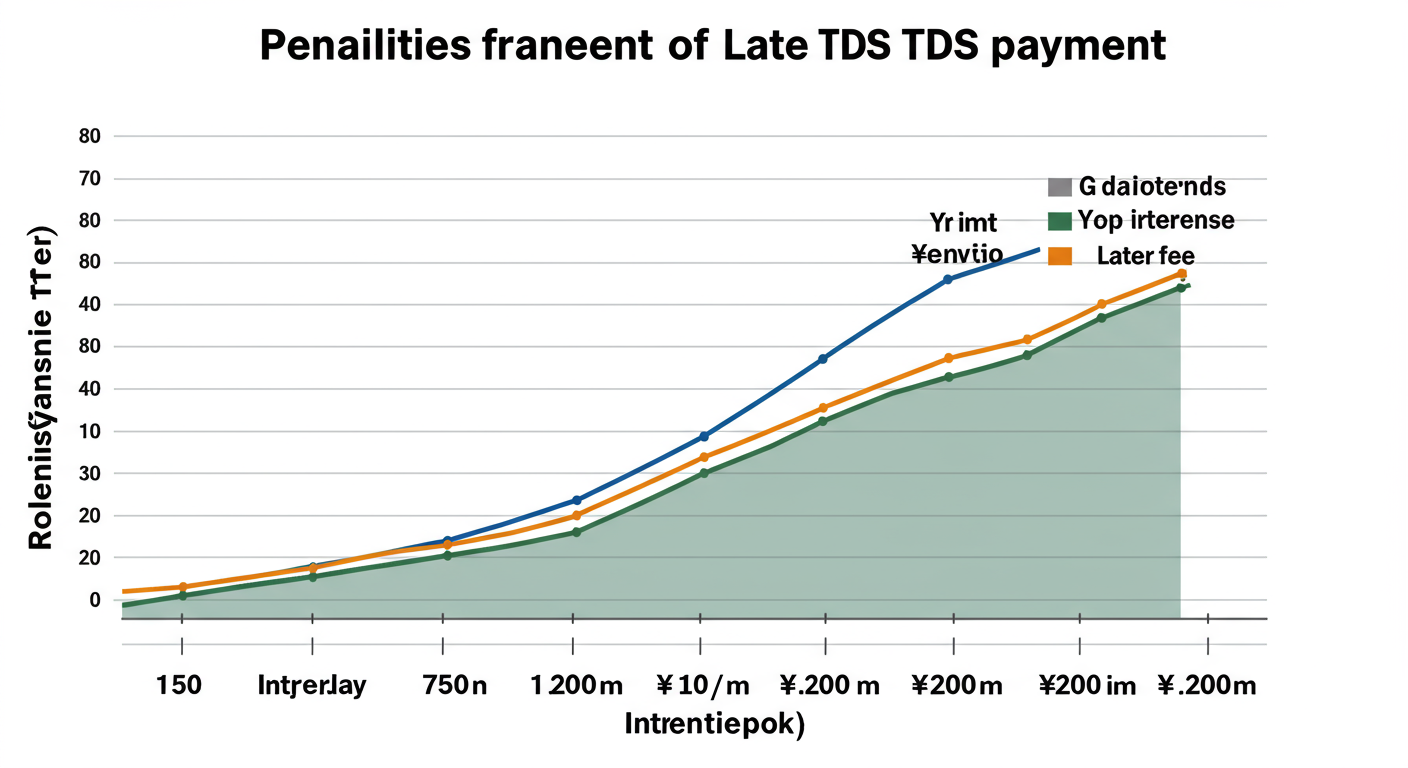
| Violation | Penalty / Interest Charge | Example Scenario |
|---|---|---|
| Late Deduction of TDS | Interest at 1% per month (or part of a month) | You paid the seller on June 10 but only deducted the TDS on August 5. You’ll owe interest for 3 months (June, July, August). |
| Late Payment of TDS | Interest at 1.5% per month (or part of a month) | You deducted TDS on June 10 but only paid it to the government on September 20. You’ll owe interest for 4 months (June, July, Aug, Sept). |
| Late Filing of Form 26QB | Fee of ₹200 per day (under Sec 234E) | Your due date was July 30, but you filed on August 15. That’s a 16-day delay, resulting in a ₹3,200 late fee (capped at the total TDS amount). |
These penalties can compound quickly, turning a simple compliance task into a significant financial burden. The rules are clearly defined in the Income Tax Act, 1961, and “I didn’t know” is never an accepted excuse.
⚠️ Watch Out
The due date for filing Form 26QB and paying the tax is 30 days from the end of the month in which you made the payment to the seller. For a payment made on April 20th, the deadline is May 30th. Mark this date on your calendar!
💡 Pro Tip
If you realize you’ve made a mistake on a filed Form 26QB (like an incorrect amount or date), don’t panic. You can file a correction request online through the TRACES portal. It’s better to proactively fix an error than to wait for the tax department to find it.
❓ Frequently Asked Questions
Do I need a TAN to file Form 26QB?
No, you don’t. A Tax Deduction and Collection Account Number (TAN) is not required for deducting TDS on property. The entire process is done using the PAN of the buyer and the seller.
Is Form 26QB required for buying agricultural land?
It depends. The TDS rule under Section 194-IA does not apply to the purchase of rural agricultural land. However, if the land is classified as urban agricultural land (e.g., within certain municipal limits), TDS will be applicable. It’s crucial to verify the land’s official classification.
What if the seller is an NRI (Non-Resident Indian)?
If the seller is an NRI, Form 26QB does not apply. Instead, a different section of the Income Tax Act (Section 195) comes into play, which has higher TDS rates (20% + surcharges) and requires the buyer to obtain a TAN. This is a more complex process, and we strongly recommend consulting a tax professional.
My property value is exactly ₹50 lakh. Do I have to deduct TDS?
Yes. The law states “₹50 lakh or more.” So, if the sale consideration is exactly ₹50,00,000, you are required to deduct TDS and file Form 26QB.
What happens after I give Form 16B to the seller?
Your job is done! The seller will use Form 16B as proof of tax paid. When they file their income tax return, they can claim credit for the TDS amount you deposited, reducing their final capital gains tax liability.
Conclusion: From Confused Buyer to Compliant Homeowner
Congratulations on making it this far. That feeling of tax-induced anxiety you started with? It should be gone, replaced by a clear understanding of your responsibilities.
Let’s boil it all down. Buying a property over ₹50 lakh in 2026 involves a simple, four-step tax duty for you, the buyer:
- Confirm the total sale consideration and obtain the seller’s PAN.
- Deduct 1% TDS from the payment you make to the seller.
- File Form 26QB and pay the TDS online within 30 days from the end of the payment month.
- Provide the downloaded Form 16B (TDS certificate) to your seller.
That’s it. By following this process, you’re not just ticking a box; you’re ensuring your major life investment starts on a solid, stress-free, and legally compliant foundation. Now, you can get back to the exciting part—planning life in your new home.