
What’s the price of a 15-day delay? For one company we know, it was over ₹1,00,000 in penalties. All because of a single, misunderstood compliance form. That form was ADT-1.
Look, in the world of Indian corporate law, some paperwork feels like a formality. This isn’t one of them. Filing Form ADT-1—the official notice of your auditor’s appointment—is a non-negotiable task. Getting it wrong, or worse, ignoring it, doesn’t just attract fines. It signals poor governance to regulators, investors, and banks.
But here’s the good news: it’s a straightforward process once you know the rules. This isn’t another dry, legal-jargon-filled article. This is your battle-tested playbook. We’ll walk you through the entire Form ADT 1 filing process, from the crucial deadlines you absolutely cannot miss to the common pitfalls that trip up even seasoned directors. You’ll leave here knowing exactly what to do, how to do it, and why it’s so critical for your company’s health.
🎯 Key Takeaway
Filing Form ADT-1 is the company’s responsibility, not the auditor’s. It must be filed with the Registrar of Companies (ROC) within 15 days of the auditor’s appointment. Missing this deadline triggers significant, escalating penalties for both the company and its directors.
What Exactly is Form ADT-1 (And What It’s NOT)
Let’s clear this up right away. Form ADT-1 is an e-form filed on the Ministry of Corporate Affairs (MCA) portal. Its sole purpose is to inform the ROC that you have appointed an auditor. That’s it. It’s the official announcement.
It is NOT:
- The appointment letter itself.
- A contract with your auditor.
- A substitute for a board or shareholder resolution.
The legal muscle behind this form comes from Section 139(1) of the Companies Act, 2013. Think of it this way: the resolution passed in your Annual General Meeting (AGM) or board meeting is the internal decision. Filing Form ADT-1 is the external, public declaration of that decision. Both are mandatory.
In our experience advising hundreds of companies, the biggest confusion arises from this distinction. Directors assume that once the AGM minutes are signed, the job is done. It’s not. The 15-day clock for filing starts ticking the moment that resolution is passed.
The Ticking Clock: Critical ADT-1 Filing Deadlines for 2026
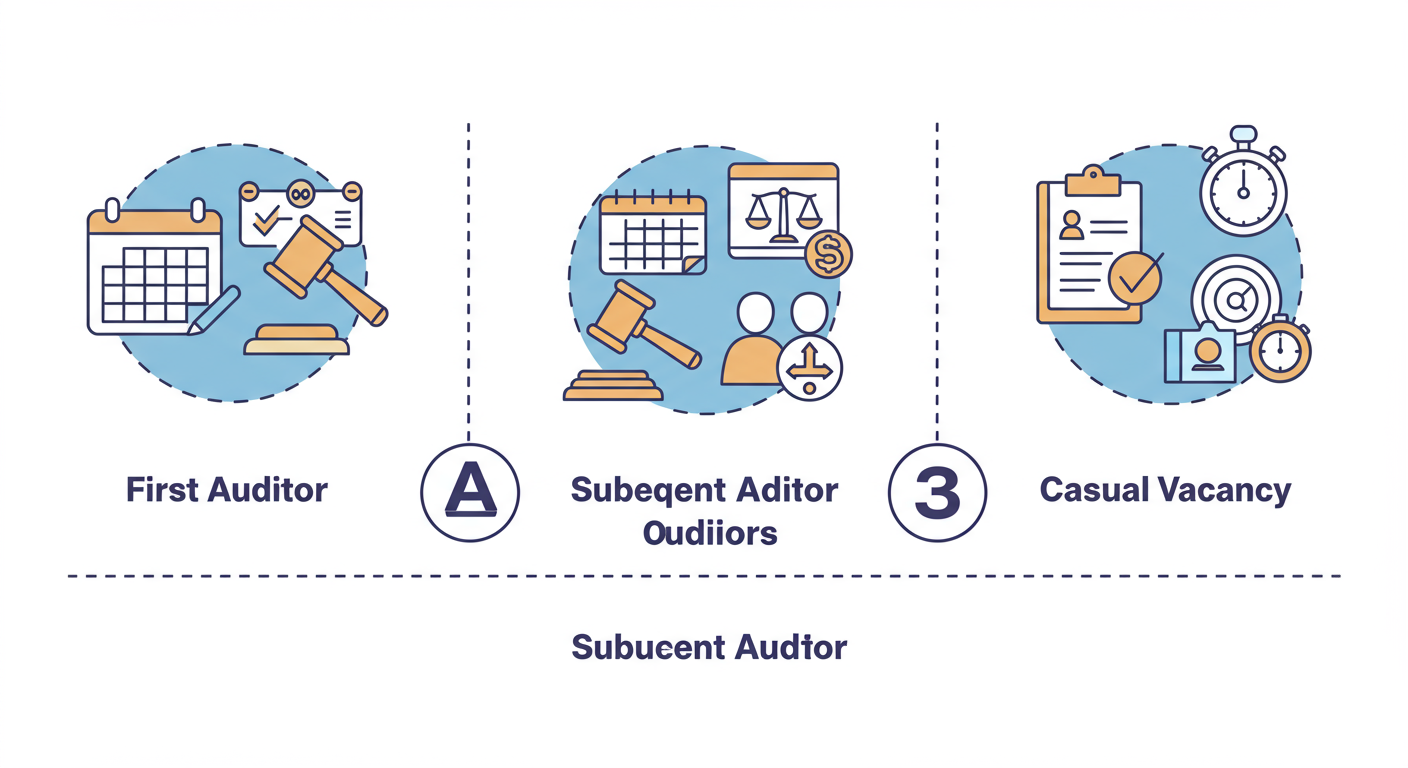
Time is everything in compliance. The due date for your Form ADT 1 filing depends entirely on when and why the auditor was appointed. There are three main scenarios, and the 15-day rule is the common thread.
| Appointment Scenario | Appointed By | Timeline for Appointment | Form ADT-1 Filing Deadline |
|---|---|---|---|
| First Auditor (New Company) | Board of Directors | Within 30 days of incorporation | Within 15 days of the Board Meeting |
| Subsequent Auditor (At AGM) | Shareholders | At the AGM (for a 5-year term) | Within 15 days of the AGM |
| Casual Vacancy (e.g., Auditor Resigns) | Board of Directors | Within 30 days of the vacancy | Within 15 days of the Board Meeting |
⚠️ Watch Out
The 15-day countdown begins from the date of the meeting (Board Meeting or AGM), not the date you receive the auditor’s consent letter or the date you decide to start the filing process. This is a classic mistake that leads directly to late fees.
Your Step-by-Step Guide to a Flawless ADT-1 Filing
Ready to get this done? The process is entirely digital on the MCA V3 portal. Follow these steps precisely to ensure a smooth, one-shot filing.
Step 1: Secure the Auditor’s Consent (Before the Meeting!)
This is the groundwork. Before you even propose an auditor’s name in a meeting, you must obtain two documents from them:
- Written Consent Letter: A simple letter from the auditor (or audit firm) stating they agree to be appointed.
- Eligibility Certificate: A certificate under Section 141 of the Companies Act, 2013, confirming they are not disqualified for the appointment. Your proposed auditor will know exactly what this is.
Having these documents in hand before the appointment meeting is a sign of good governance and prevents last-minute scrambles.
💡 Pro Tip
Create a standardized email template for requesting the consent and certificate from your auditor. This ensures you get the correct documents in the right format every time and creates a clear paper trail for your records.
Step 2: Pass the Appointment Resolution
Now, make it official. The auditor’s appointment must be formalized by passing a resolution.
- For the First Auditor: This is done via a resolution at a Board of Directors meeting.
- For Subsequent Auditors: This requires an ordinary resolution passed by shareholders at the Annual General Meeting (AGM).
Document this resolution carefully. You’ll need a copy of it for the filing.
Step 3: Download and Prepare Form ADT-1
Head over to the official MCA portal. Navigate to ‘MCA Services’ -> ‘Company e-Filing’ -> ‘Company Forms Download’. Find and download the latest version of e-form ADT-1. Don’t use an old version saved on your computer; forms are updated periodically.
Step 4: Fill the Form with 100% Accuracy
This is where precision matters. Open the PDF form and fill in the details. Double-check everything.
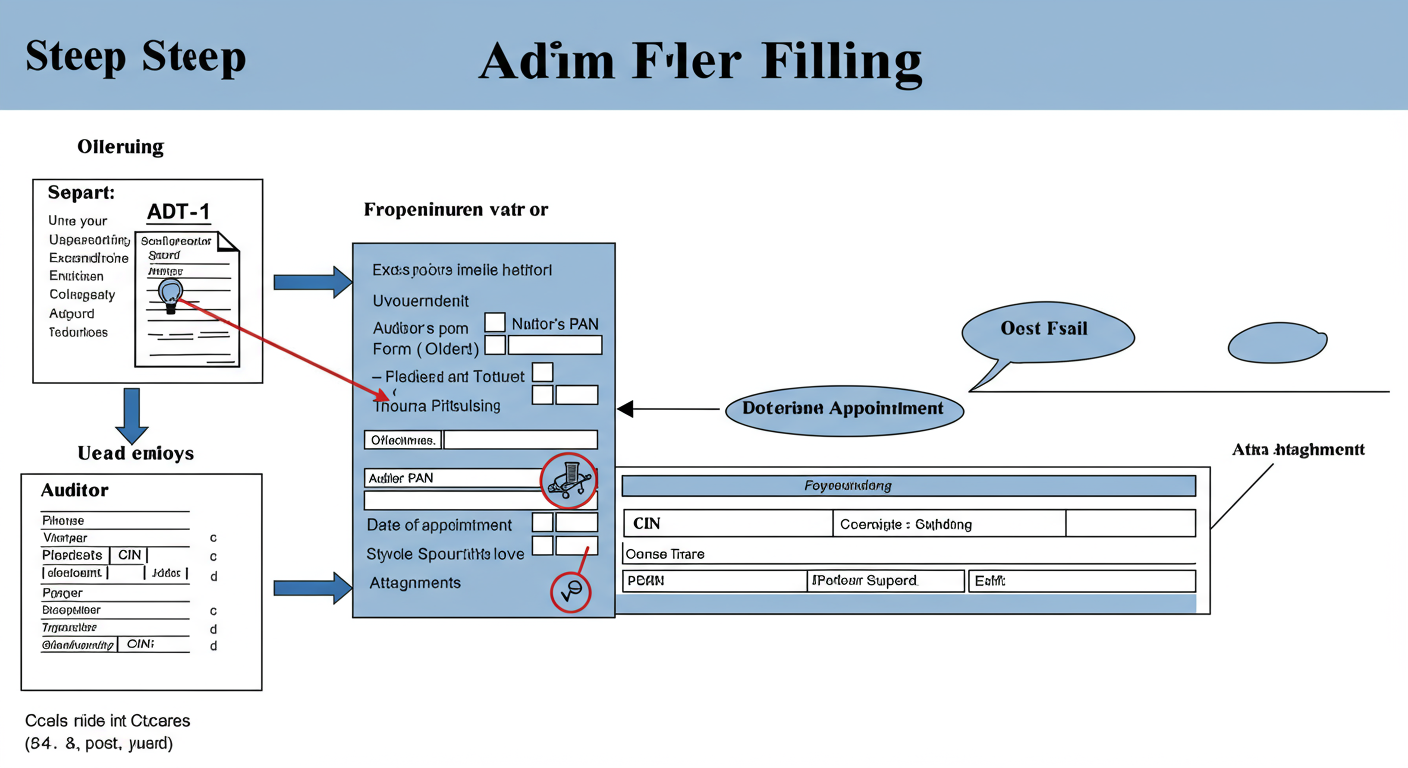
- Part I – Company Information: Enter your Corporate Identification Number (CIN) and click ‘Pre-fill’. This will auto-populate the company’s name, address, and email.
- Part II – Auditor Details:
- Category of Auditor: Individual or Auditor’s Firm?
- Income Tax PAN: Enter the PAN of the individual auditor or the firm.
- Membership Number: The auditor’s membership number from the Institute of Chartered Accountants of India (ICAI).
- Auditor’s Address & Email.
- Part III – Appointment Details:
- Period of Account: The financial years the audit covers (e.g., from 01/04/2026 to 31/03/2031 for a 5-year term).
- Date of Appointment: This is the critical date of the Board Meeting or AGM.
Step 5: Attach the Mandatory Documents
The e-form has an ‘Attachments’ button. You must attach scanned copies of the following:
- Copy of the Board/AGM resolution for the appointment.
- The auditor’s written consent letter.
- The auditor’s eligibility certificate.
Ensure these are clear, legible PDFs. Unreadable attachments are a common reason for rejection. The Complete Guide to Seamless Section 8 Registration Online
Step 6: Digitally Sign and Pre-Scrutinize
The form must be digitally signed by a Director using their valid DSC (Digital Signature Certificate). The Director’s DIN (Director Identification Number) must be entered in the form’s declaration section. After signing, click the ‘Pre-scrutiny’ button. This checks the form for basic errors before you upload it.
Step 7: Upload, Pay, and Save the SRN
You’re at the finish line. Log in to the MCA portal using your credentials. Upload the signed ADT-1 form. The system will guide you to the payment gateway. The fees are based on your company’s authorized share capital.
Once payment is successful, a Service Request Number (SRN) is generated. Save this SRN immediately. It’s your official proof of filing. You can use it to track the status of your form.
The True Cost of Negligence: Penalties and Hidden Dangers
Thinking of letting this slide? Think again. The penalties for failing to file Form ADT-1 are severe and are laid out in Section 147 of the Companies Act. It’s not just a slap on the wrist.
Here’s how the financial damage breaks down:
| Entity | Penalty as per Section 147 | Additional Late Fees (MCA) |
|---|---|---|
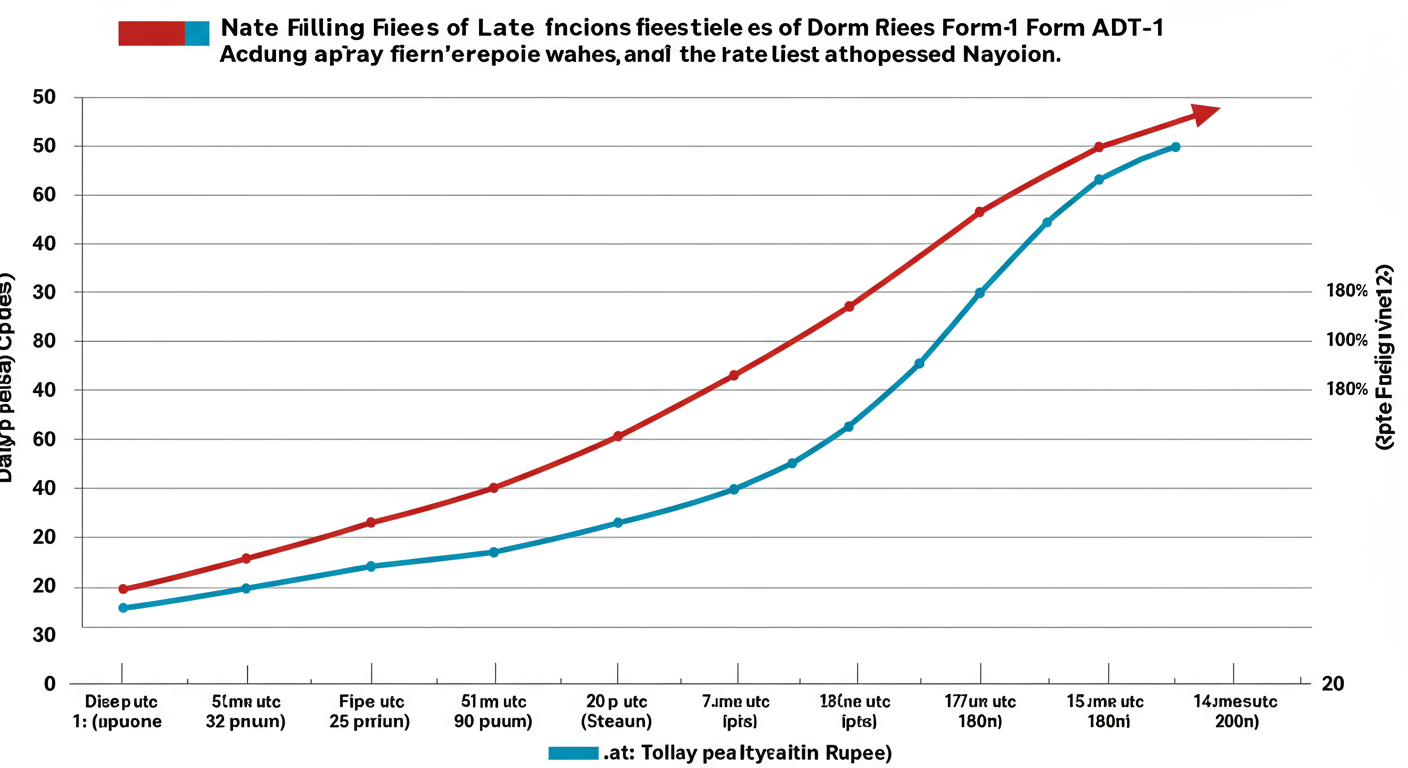
| The Company | Fine of ₹25,000 to ₹5,00,000 | An additional daily fee that can quickly add up to thousands or even lakhs, depending on the delay. |
| Every Officer in Default (Directors, etc.) | Fine of ₹10,000 to ₹1,00,000 |
⚠️ Watch Out
The “officer in default” clause is crucial. It means the penalty isn’t just on the company’s books; it can be a personal liability for the directors. This is a serious risk that many founders overlook.
But the damage goes beyond fines. A history of late filings is a red flag for:
- Investors: It suggests sloppy management and poor internal controls.
- Lenders: Banks may question your company’s reliability and governance during loan applications.
- Regulators: It puts you on the ROC’s radar for increased scrutiny.
Trust me on this one, the cost of timely compliance is always, always cheaper than the price of non-compliance.
💡 Pro Tip
Set a recurring calendar reminder for 15 days after your scheduled AGM date every year. Title it “File Form ADT-1 NOW”. This simple habit can save you a fortune in penalties and stress.
❓ Frequently Asked Questions
Who is actually responsible for filing Form ADT-1, the company or the auditor?
The company, 100%. While the auditor provides consent, the legal obligation to fill, sign, and file Form ADT-1 rests solely with the company through its directors. Never assume your auditor will do this for you unless it’s explicitly part of their engagement terms.
Do we need to file ADT-1 if we reappoint the same auditor?
Yes, absolutely. Every appointment, even a reappointment of the incumbent auditor for a new five-year term at an AGM, is considered a new appointment event. A fresh Form ADT-1 must be filed within 15 days of that AGM.
What happens if the auditor resigns? Is ADT-1 still required?
When an auditor resigns, they must file Form ADT-3 to notify the ROC. When your company appoints a new auditor to fill that casual vacancy, you must then file Form ADT-1 within 15 days of the board meeting where the new appointment was made.
Can we file ADT-1 after the 15-day deadline?
Yes, you can and you must. The MCA portal will allow you to file the form after the due date, but it will automatically calculate and charge the applicable late filing fees. You cannot proceed without paying these additional fees. The statutory penalties under Section 147 are separate and can be levied by the ROC later.
What is the difference between Form ADT-1 and Form ADT-2?
Form ADT-1 is for the appointment of an auditor. Form ADT-2 is filed by the company when it seeks approval from the Central Government for the removal of an auditor before the expiry of their term. They serve completely different purposes.
Conclusion: From Compliance Task to Corporate Strength
So, there you have it. Form ADT-1 filing isn’t just another box to tick. It’s a fundamental pillar of good corporate governance. It’s a public statement about your company’s commitment to financial transparency and regulatory discipline.
By now, you understand the stakes, the deadlines, and the exact steps to take. You know the difference between the appointment and the filing, the cost of delay, and the common traps to avoid. You’re no longer in the dark.
Your next step is simple. Review your company’s status. Was an auditor appointed recently? Check the date of the meeting. Is your 15-day window still open? If so, use this guide and get it filed today. If not, file it anyway and handle the late fees. Proactive compliance isn’t just about avoiding penalties; it’s about building a resilient, trustworthy, and valuable business for the long term.