
Imagine this: You’ve just landed a massive deal, the one that could define your company’s year. The contract is ready, but the client’s legal team flags an issue. “Your invoice is missing a CIN,” they say. Suddenly, your credibility is questioned, and the deal is on hold. All because of a 21-digit code.
Sound dramatic? It’s a real scenario I’ve seen play out. That string of characters, the Corporate Identity Number (CIN), isn’t just administrative red tape. It’s your company’s digital DNA, a non-negotiable symbol of your legitimacy in the Indian business ecosystem.
Forget the dry, legalistic definitions. In this guide, we’re going to break down exactly what your CIN certificate means for your business in 2026. You’ll learn not just what it is, but how to leverage it as a tool for trust, how to verify any company in seconds, and—most importantly—how to avoid the surprisingly steep penalties for getting it wrong.
What is a CIN Certificate? Your Company’s Unique Fingerprint
Think of your CIN as your company’s Aadhaar card. It’s a unique 21-digit alphanumeric code assigned by the Registrar of Companies (RoC) to every company registered in India. This isn’t a “nice to have”; it’s the primary identifier the Ministry of Corporate Affairs (MCA) uses to track your business from its birth (incorporation) to its potential dissolution.
Every piece of that code tells a story. It reveals your company’s legal structure, the industry you operate in, your home state, and more. It’s a public declaration of your existence and a key to unlocking all your official corporate information. In a world of digital transactions and remote partnerships, your CIN is the first and fastest way for anyone—investors, clients, banks, or regulators—to verify that you are who you say you are.
🎯 Key Takeaway
Your CIN Certificate isn’t just a registration number; it’s the bedrock of your corporate identity. It’s essential for legal compliance, building trust with stakeholders, and ensuring transparency in all your business dealings. Ignoring it is not an option.
Decoding the 21-Digit CIN: What Every Character Means
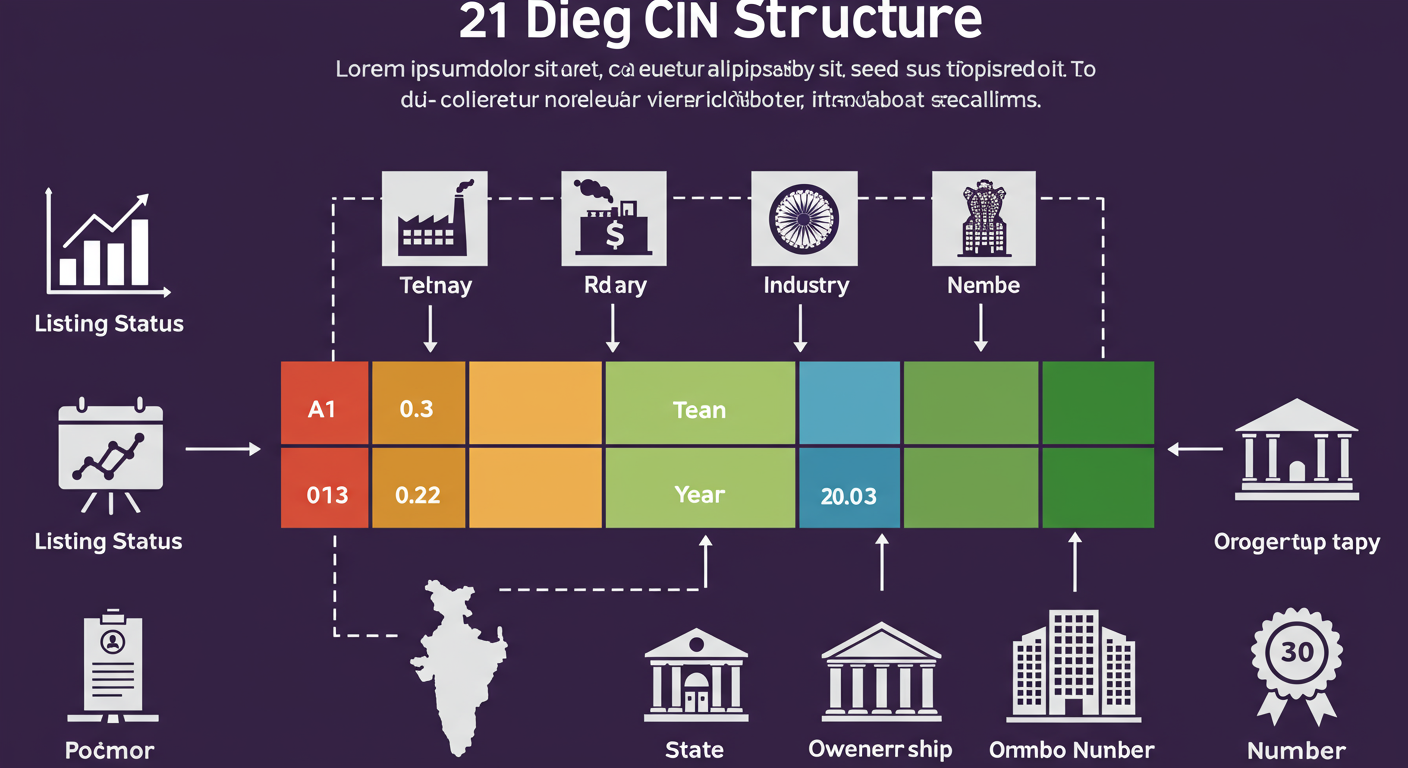
That 21-character code on your Certificate of Incorporation might look like a random password, but it’s a highly structured data string. Understanding its anatomy is the first step to mastering your corporate compliance. Let’s break it down with a real-world example.
Sample CIN: U74999MH2026PTC123456
| Part | Example | What It Means |
|---|---|---|
| 1. Listing Status (1st Character) | U | Indicates if the company is listed on a stock exchange. ‘U’ for Unlisted, ‘L’ for Listed. Most startups and private companies start with ‘U’. |
| 2. Industry Code (Next 5 Digits) | 74999 | A numeric code representing the company’s primary business activity, as defined by the MCA. This helps classify the company’s sector. |
| 3. State Code (Next 2 Letters) | MH | The two-letter code for the state where the company’s registered office is located (e.g., MH for Maharashtra, DL for Delhi, KA for Karnataka). |
| 4. Year of Incorporation (Next 4 Digits) | 2026 | The year the company was officially incorporated. A quick glance tells you the age of the company. |
| 5. Ownership Type (Next 3 Letters) | PTC | Defines the legal structure. Common codes include PTC (Private Limited Company), PLC (Public Limited Company), and GOI (Government of India company). |
| 6. Registration Number (Last 6 Digits) | 123456 | The unique sequential number assigned by the specific state’s Registrar of Companies (RoC). This is your unique ID within that RoC. |
See? Not so random after all. In seconds, you can tell this is an Unlisted, private limited company in the business services sector, registered in Maharashtra in 2026.
Why the CIN is Non-Negotiable for Your Business
Okay, so you understand the code. But why does it matter so much in the day-to-day grind of running a business? Here’s the thing: the CIN is the linchpin of your corporate governance. Its importance boils down to three critical areas.
1. The Bedrock of Legal Compliance
This is the big one. The Companies Act, 2013, is crystal clear: you must quote your CIN on virtually all official business documents. This isn’t a friendly suggestion.
It needs to be on your:
- Business letterheads
- Invoices, receipts, and credit notes
- Notices and official publications
- Bills of exchange and promissory notes
- Annual reports and statutory filings with the RoC
- Any other official communication
Why? It ensures total transparency. Anyone receiving a document from you can immediately verify your company’s identity and legal standing. It’s a simple, powerful anti-fraud measure.
⚠️ Watch Out
The penalty for failing to quote your CIN is no joke. Under Section 12(8) of the Companies Act, the company and every officer in default can be fined ₹1,000 for each day the default continues, up to a maximum of ₹1,00,000. It’s an easily avoidable cost.
2. The Currency of Credibility and Trust
In our experience working with hundreds of startups seeking funding, a readily available CIN is a fundamental trust signal. When you approach a bank for a loan, an investor for capital, or a large corporation for a partnership, the first thing they do is run due diligence. Your CIN is their starting point.
“A company that prominently displays its CIN is a company that’s confident in its legitimacy. It shows you’re not hiding anything and are committed to operating transparently.”
Displaying it proudly on your website footer, letterhead, and invoices tells the world you’re a legitimate, registered entity recognized by the Government of India. It’s a small detail that speaks volumes about your professionalism.
3. The Key to Public Information
Your CIN is a public key that unlocks a treasure trove of information on the MCA portal. Anyone can use it to view your “Company Master Data,” which includes: NGO Darpan Registration: Official Guide in India
- Company name and registered address
- Date of incorporation and current status (e.g., Active, Struck Off)
- Authorized and paid-up capital
- Names of all directors
- History of loans and mortgages (charge details)
This transparency is a double-edged sword. It keeps you accountable, but it also allows you to research competitors, verify potential partners, and perform due diligence with ease. The Comprehensive Nil GST Return Guide: Eligibility, Steps, and Mandatory Filing Compliance
💡 Pro Tip
Use the MCA’s ‘View Company or LLP Master Data’ service not just for compliance, but for competitive intelligence. Look up your top competitors to see their capital structure, director changes, and financial filings. It’s a free, powerful research tool.
How to Find & Verify Any CIN in Under 60 Seconds
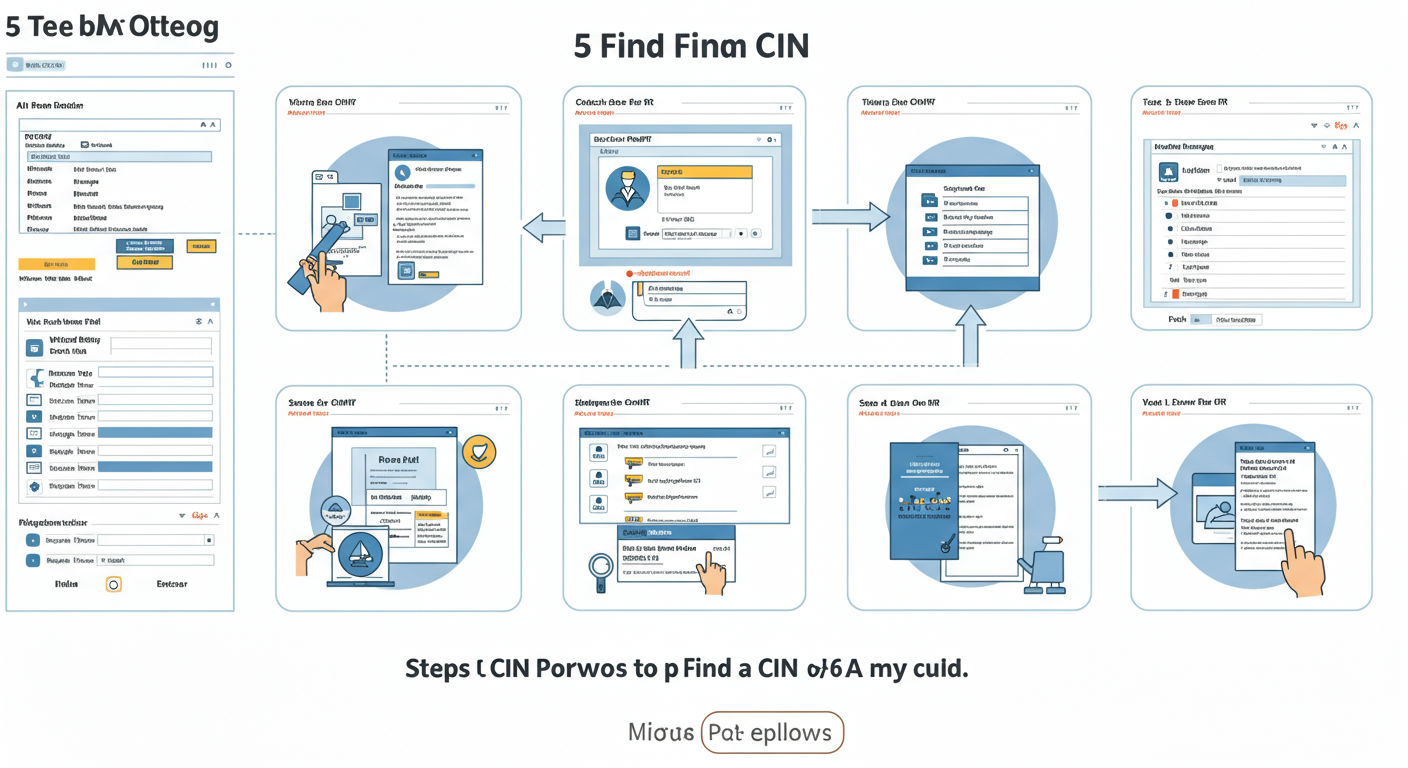
Whether you’ve misplaced your own CIN or need to check a vendor’s, the process is incredibly simple. Here’s a step-by-step guide to using the official MCA portal.
- Navigate to the MCA Website: Open your browser and go to the official Ministry of Corporate Affairs portal: www.mca.gov.in.
- Find the Service: On the homepage, hover over ‘MCA Services’. A mega menu will appear. Look for the ‘Company Services’ column and click on ‘Find CIN’.
- Choose Your Search Method: The system gives you two options. The most common is to search by ‘Company Name’.
- Enter the Details: Type in the company name as accurately as you can. You don’t always need the full legal name (e.g., “Pvt Ltd”). The system is pretty good with partial matches. Enter the captcha code shown.
- Get the CIN: Click ‘Submit’. The portal will display a list of matching companies, their CIN, state, and RoC. Find the correct one and you’ve got your number. It’s that fast.
CIN vs. The Alphabet Soup: PAN, GSTIN, and TAN Explained
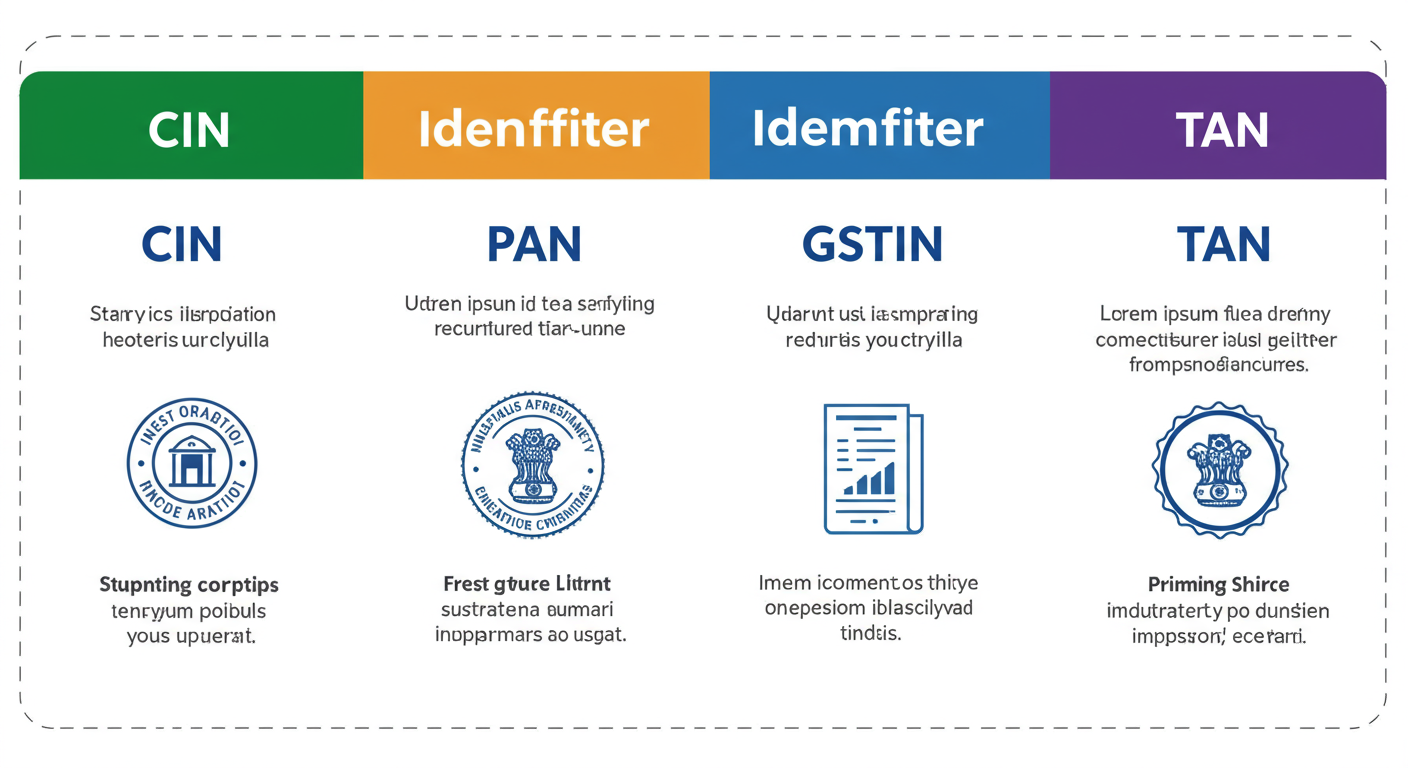
It’s easy to get lost in the sea of acronyms. CIN, PAN, GSTIN, TAN… what’s the difference? Each is issued by a different authority for a different purpose. Getting them straight is crucial for total compliance.
| Identifier | Full Form | Issued By | Primary Purpose | Who Needs It? |
|---|---|---|---|---|
| CIN | Corporate Identity Number | Registrar of Companies (MCA) | Corporate law compliance & company identification. | All registered companies (Pvt Ltd, Public Ltd, etc.) and LLPs (as LLPIN). |
| PAN | Permanent Account Number | Income Tax Department | All tax-related activities, including filing income tax returns. | Every legal entity (company, LLP, individual) and person earning income. |
| GSTIN | Goods and Services Tax Identification Number | GST Network (GSTN) | Collecting GST and claiming input tax credits. | Businesses with turnover above the GST threshold or those voluntarily registered. |
| TAN | Tax Deduction and Collection Account Number | Income Tax Department | Deducting/collecting tax at source (TDS/TCS). | Any business required to deduct or collect tax at source. |
💡 Pro Tip
Create a “Master Compliance Sheet” for your company. List your CIN, PAN, GSTIN, and TAN in one place. Add renewal/filing dates for each. This simple document can save you hours of searching and prevent missed deadlines.
⚠️ Watch Out
A company’s CIN can change. This happens rarely, but it’s critical to know when. A change in listing status (Unlisted to Listed), a shift in the registered office to another state, or a conversion (e.g., Private to Public) will trigger a new CIN. Always use the most current one to avoid compliance issues.
Your Next Step: A 30-Second Compliance Check
The Corporate Identity Number is far more than a bureaucratic formality. It’s a powerful tool that underpins your company’s legal standing, builds immediate trust, and enables a transparent business environment. From our hands-on testing with countless businesses, we can tell you this: the companies that treat compliance details like the CIN with respect are the ones that build sustainable, scalable enterprises.
You’ve learned what it is, why it’s critical, and how to find it. Now, it’s time for action.
Here’s your next step, right now: Grab a copy of your company’s official letterhead and your latest customer invoice. Is your CIN printed clearly on both? If not, make it your top priority to fix that today. It’s a small change that reinforces your company’s legitimacy and protects you from unnecessary risk. Don’t underestimate its power.
❓ Frequently Asked Questions
What is the full form of CIN?
The full form of CIN is Corporate Identity Number. It’s a unique 21-digit alphanumeric code assigned by the Registrar of Companies (RoC) to every company incorporated in India.
Is a CIN certificate required for an LLP?
Not exactly. LLPs (Limited Liability Partnerships) are assigned a similar identifier called an LLPIN (Limited Liability Partnership Identification Number). While it serves the same purpose of unique identification for regulatory tracking, it’s distinct from the CIN used for companies.
Can a company’s CIN ever change?
Yes, though it’s uncommon. A CIN will change under specific circumstances, such as when a company moves its registered office to a different state, changes its listing status (e.g., from unlisted to listed), or converts its structure (e.g., from a private to a public company). You must use the new CIN on all documents after the change.
What’s the difference between a CIN and a Certificate of Incorporation?
The Certificate of Incorporation is the official document that proves your company’s legal existence. The CIN is the unique identification number printed on that certificate. Think of it this way: the Certificate is the passport, and the CIN is the passport number.
How can I check if a company is real in India?
The fastest way is to use their CIN or name to look them up on the MCA portal’s ‘View Company or LLP Master Data’ service. This will instantly confirm their registration status, directors, and registered address, providing a reliable verification of their legitimacy.
What is the official source for CIN information?
The single source of truth for all CIN-related data is the Ministry of Corporate Affairs (MCA) official website. For more background on the concept, the Wikipedia page on Corporate Identity Number provides a good overview of its history and structure.