Ever stared at your payslip and wondered, “What on earth is this ‘Professional Tax’ deduction?” You’re not alone. For millions in Maharashtra, it’s a familiar line item that feels like just another tax. But here’s the thing: ignoring it, or getting it wrong, can lead to a cascade of penalties that are anything but small.
The good news? The days of wrestling with complex forms and standing in bank queues are over. The process for professional tax payment online in Maharashtra is now surprisingly straightforward—if you know the right steps.
This isn’t just another dry government guide. We’re going to break down everything you need to know in plain English. You’ll learn the critical difference between PTEC and PTRC, walk through the exact payment process for 2026, and discover how to stay compliant with zero stress. Let’s make this tax a task you can tick off in minutes, not hours.
What *Really* is Professional Tax (And Why It Matters)
Think of Professional Tax as your small, direct contribution to the state’s progress. It’s a state-level tax levied on anyone earning a livelihood—whether you’re a salaried employee, a doctor running your own clinic, a freelance creative, or a company director.
In Maharashtra, this is governed by the Maharashtra State Tax on Professions, Trades, Callings and Employments Act, 1975. The funds collected don’t disappear into a black hole; they’re earmarked for local municipal bodies to fund essential public services. The smooth road you drove on this morning? The local park your kids play in? Professional tax helps fund them. It’s a small price for a functioning state.
But here’s where people get tripped up. It’s not a one-size-fits-all tax. The way you pay depends entirely on how you earn your income. This brings us to the most crucial distinction you need to understand: PTEC vs. PTRC.
The PTEC vs. PTRC Showdown: Which Certificate Do You Need?
Getting this wrong is the single most common mistake we see. Choosing the wrong certificate is like trying to use a train ticket to board a plane—it just won’t work and will cause major headaches. Let’s clear this up once and for all.
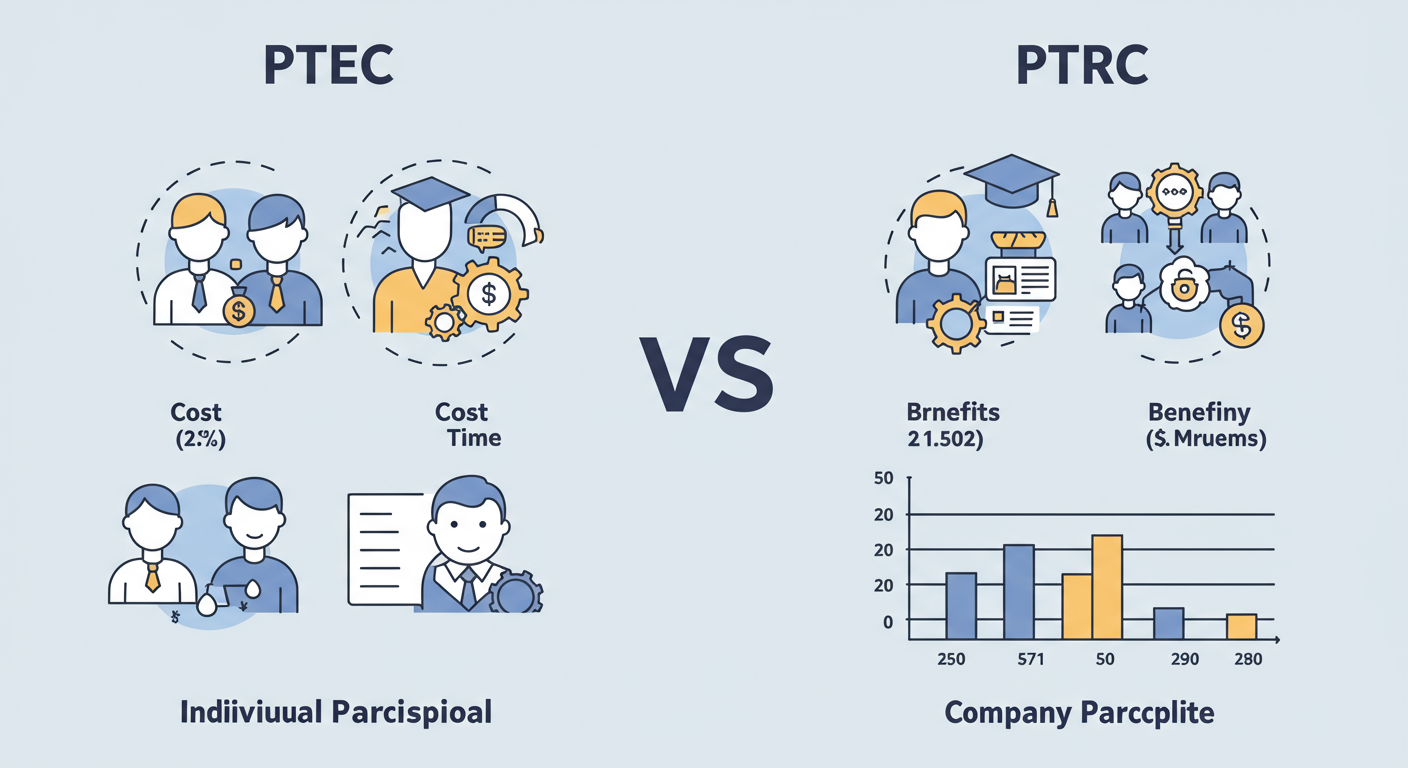
PTEC (Professional Tax Enrollment Certificate) is for the individual. It’s for you, the professional.
PTRC (Professional Tax Registration Certificate) is for the employer. It’s for the business that pays professionals.
Here’s a simple breakdown:
| Feature | PTEC (Enrollment Certificate) | PTRC (Registration Certificate) |
|---|---|---|
| Who Needs It? | Self-employed individuals & professionals. Think freelancers, doctors, lawyers, CAs, consultants, and company directors. | Employers. Any business (sole proprietorship, partnership, company) that pays salaries to employees. |
| Purpose | To enroll yourself as a professional liable to pay tax. | To register your business as an entity responsible for deducting and remitting tax on behalf of employees. |
| Tax Amount | Fixed at ₹2,500 per year. | Variable, based on each employee’s gross salary slab. Deducted monthly from their pay. |
| Payment Frequency | Annually. | Monthly (or annually if prior year’s liability was under ₹1,00,000). |
| Due Date | 30th June of every financial year. | Last day of the month for which salary is paid. |
💡 Pro Tip
Are you a director of a company, even if you also draw a salary from it? You need both! The company needs a PTRC to deduct tax from your salary, and you, in your capacity as a director, need a personal PTEC. It’s a dual responsibility that many overlook.
Your 2026 Step-by-Step Guide to Professional Tax Payment Online Maharashtra
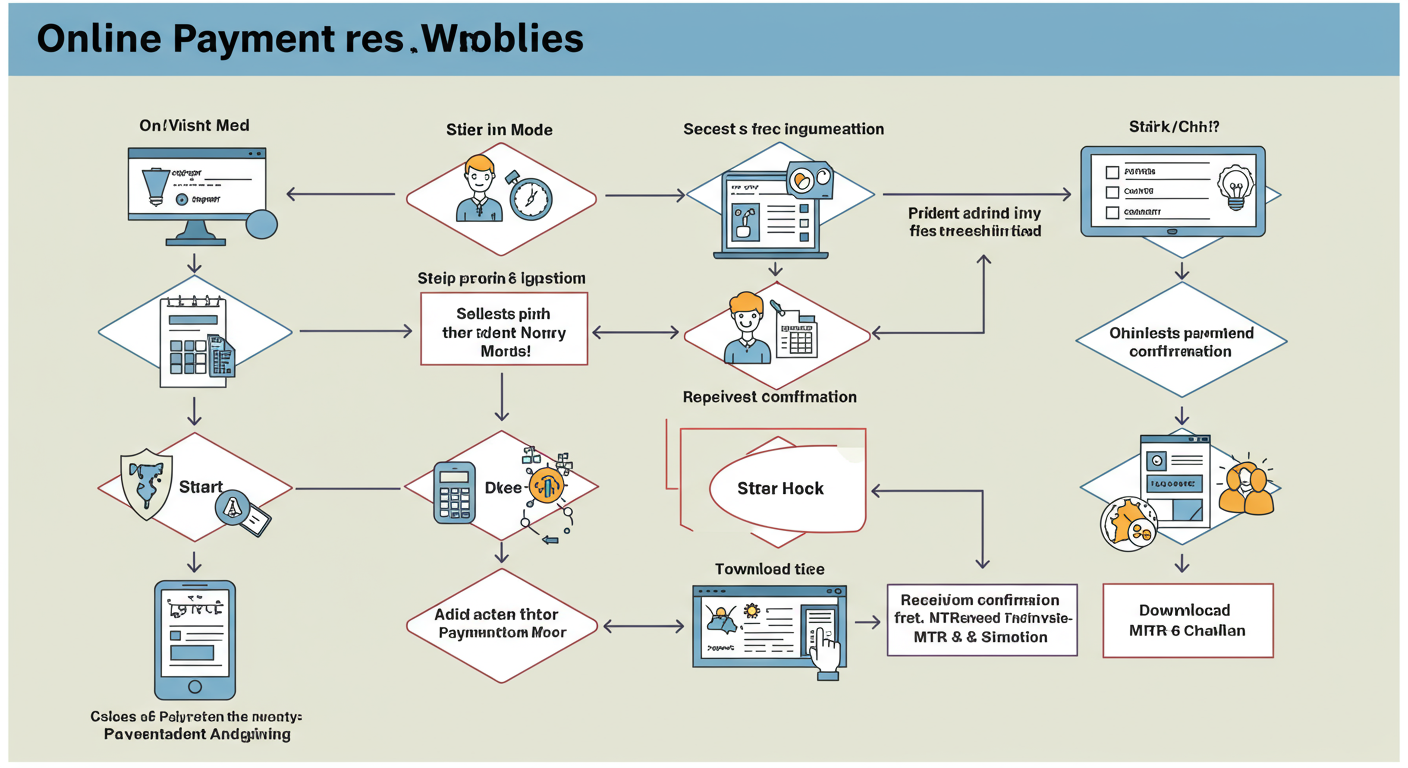
Ready to get this done? The Maharashtra Goods and Services Tax Department (MGSTD) portal is your destination. Grab your 12-digit TIN (Taxpayer Identification Number) for your PTEC or PTRC, and let’s walk through it. The whole process shouldn’t take more than 10 minutes.
- Head to the Official Portal: Open your browser and go directly to the Maharashtra GST Department website. Bookmark this page. It’s the only official source.
- Find the e-Payments Section: On the top menu, hover over ‘e-Services’ and then click on ‘e-Payment’. This is your gateway.
- Select the Right Act: This is the most critical step. You’ll see a dropdown menu for ‘Act’.
- If you’re paying for yourself (as a freelancer, director, etc.), choose ‘PTEC’.
- If you’re an employer paying for your employees, choose ‘PTRC’.
- Enter Your Details:
- TIN: Enter your 12-digit PTEC or PTRC number. Don’t include the ‘P’ or ‘R’ at the end.
- Financial Year: Select the correct year you’re paying for (e.g., ‘2025-2026’).
- Period: For PTEC, this will be an annual option. For PTRC, you’ll select the specific month (e.g., ‘April 2026’).
- Amount: Enter the tax amount. For PTEC, it’s a flat ₹2,500. For PTRC, it’s the total tax deducted from all employees for that month.
- Contact Info: Provide your mobile number and email. This is where your confirmation will be sent.
- Proceed to Payment: Double-check everything, then click ‘Proceed’. The system will take you to the Government Receipt Accounting System (GRAS) portal.
- Authorize the Payment: On the GRAS page, confirm the details one last time. Choose your payment method—Net Banking is usually the smoothest, but UPI and cards are also available. Follow your bank’s prompts to complete the transaction.
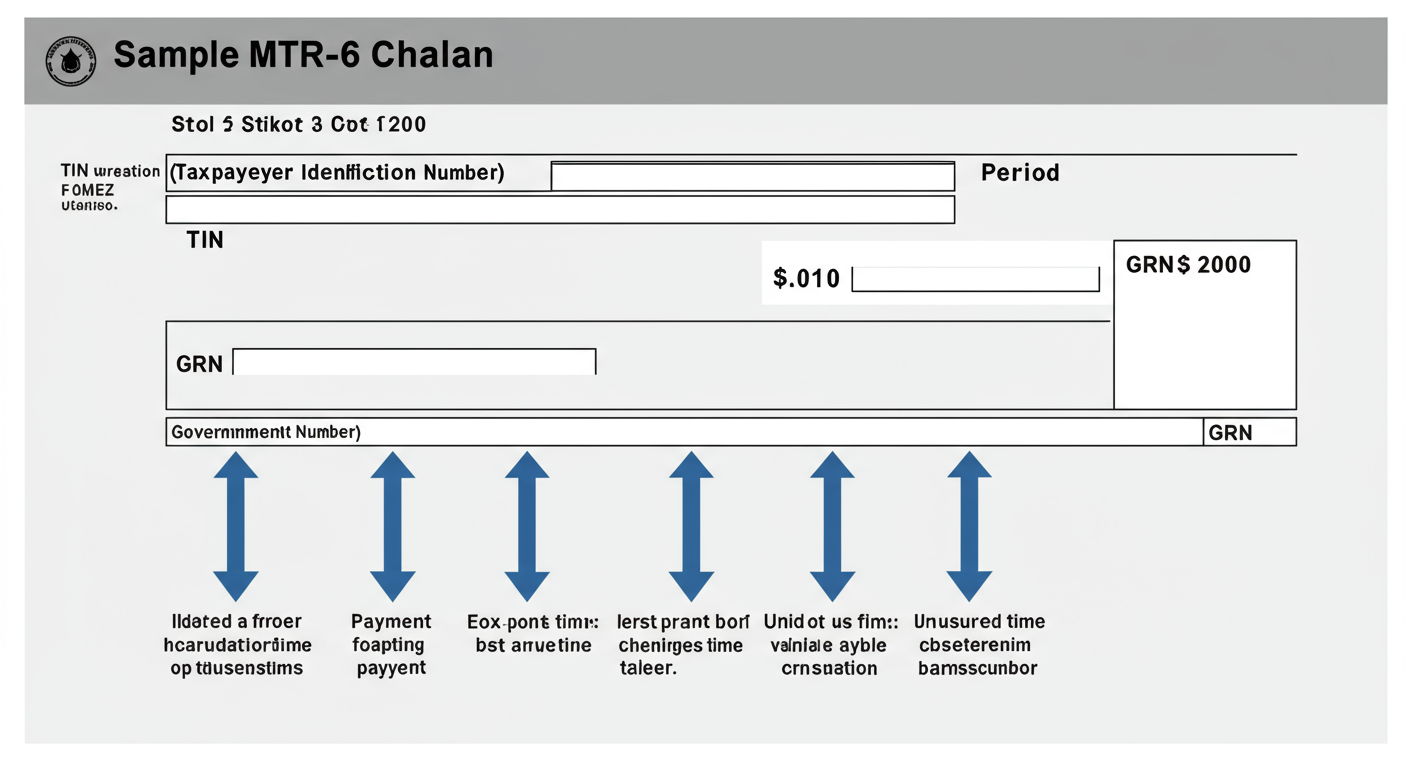
- Download Your Proof: Success! The portal will generate a challan (Form MTR-6). Do not close this window. Download and save this PDF immediately. This is your official receipt and proof of compliance. Email it to yourself for safekeeping.
⚠️ Watch Out
The MGSTD portal can sometimes be slow during peak times, especially near the end of the month or the June 30th PTEC deadline. Based on our experience, it’s best to make your payment at least 3-4 days before the due date to avoid any last-minute technical glitches or payment gateway failures.
The Numbers Game: Due Dates, Tax Slabs, and Penalties
Compliance is all about timing. Missing a deadline isn’t just a minor slip-up; it triggers automatic penalties. Here’s what you need to burn into your memory.
| Certificate Type | Due Date | Penalty for Late Payment/Filing |
|---|---|---|
| PTEC (Individual) | 30th June of the financial year. | Interest at 1.25% per month on the unpaid tax amount. A flat penalty may also be levied for late filing. |
| PTRC (Employer) | Last day of the month for which salaries are paid. | Interest at 1.25% per month + a penalty of up to ₹1,000 for late filing of the monthly return. |
For employers (PTRC), the tax you deduct depends on the employee’s gross salary. Here are the slabs for 2026:
- Up to ₹7,500/month: No tax.
- ₹7,501 to ₹10,000/month: ₹175 per month.
- Above ₹10,000/month: ₹200 per month for 11 months, and ₹300 in the last month (usually February), totaling ₹2,500 annually.
The maximum professional tax any individual can pay in a year is capped at ₹2,500, a limit set by the Constitution of India. The monthly deductions simply spread this liability out for salaried employees.
⚠️ Watch Out
The 1.25% monthly interest might not sound like much, but it compounds. A delay of a few months can quickly add up. More importantly, consistent non-compliance flags your business for scrutiny from the tax department, which can lead to much bigger problems than a small interest payment. It’s just not worth the risk.
🎯 Key Takeaway
The two most important things are knowing your certificate type (PTEC for individuals, PTRC for employers) and meeting your deadlines (June 30th for PTEC, month-end for PTRC). Get these two things right, and you’ve won 90% of the battle.
Who Gets a Pass? Understanding Professional Tax Exemptions
Not everyone is required to pay. The Maharashtra Professional Tax Act provides specific exemptions. You are exempt from paying professional tax if you are:
- A member of the armed forces.
- An individual with a permanent physical disability (including blindness) of 40% or more.
- A parent or guardian of a child with a significant physical or mental disability.
- A senior citizen over the age of 65 years (this exemption applies to PTEC, not necessarily if they are still employed).
💡 Pro Tip
If you qualify for an exemption, you don’t just get to stop paying. You typically need to submit the required documentation (like a disability certificate) to the relevant professional tax authority to have the exemption officially recorded. For employees, this is handled through the HR department.
Trust me on this one, staying on top of this simple tax is one of the easiest ways to keep your financial house in order and ensure you’re in good standing with state authorities. It’s a small task with big implications for your peace of mind.
❓ Frequently Asked Questions
I’m a freelancer in Maharashtra. Do I really need to pay this?
Yes, absolutely. As a freelancer, you’re a self-employed professional. You must obtain a Professional Tax Enrollment Certificate (PTEC) and pay the annual tax of ₹2,500. The due date is June 30th each year. It’s a mandatory cost of doing business in the state.
What’s the difference between PTEC and PTRC again, in simple terms?
Think of it this way: PTEC is your personal “Professional ID” that you pay for yourself. PTRC is your company’s “Employer ID” that allows you to handle tax for your staff. If you work for yourself, you need a PTEC. If you employ others, you need a PTRC.
What happens if I overpay or pay into the wrong category?
Mistakes happen. If you overpay, you can apply for a refund through the MGSTD portal, though the process can be bureaucratic. Paying into the wrong category (e.g., using a PTEC number for a PTRC payment) is more problematic and will likely require contacting the department to get it rectified. This is why double-checking the ‘Act’ selection is so important.
Can I pay professional tax for multiple years at once?
The online portal is designed for payments for specific periods (e.g., a single month for PTRC or a single year for PTEC). While you can make separate payments for past due periods, paying for future years in advance isn’t a standard option. It’s best to stick to the designated payment cycle.
Is the ₹2,500 tax the same for a CEO and a junior professional?
For PTEC holders (self-employed), yes. The enrollment tax is a flat ₹2,500 per year, regardless of income. For salaried employees under PTRC, the total annual tax is also capped at ₹2,500, but it’s deducted monthly based on salary slabs, so the impact is spread out over the year.
Conclusion: Master Your Tax Duty in Minutes
Professional tax in Maharashtra is a non-negotiable part of your financial responsibilities. But it doesn’t have to be a source of confusion or dread. As we’ve seen, the online payment system has made compliance a simple, ten-minute task.
By now, you should have a rock-solid understanding of:
- The crucial difference between PTEC (for you) and PTRC (for your business).
- The exact, step-by-step process to make your professional tax payment online in Maharashtra for 2026.
- The critical due dates and salary slabs to keep you penalty-free.
Your next step is simple. If your due date is approaching, block 15 minutes on your calendar right now. Use this guide, log in to the portal, and get it done. Embracing this digital process saves you time, gives you an instant record of compliance, and grants you the confidence that comes from knowing your obligations are met.