Imagine this: you’re about to close a massive funding round, but the deal stalls. Why? The investor’s due diligence team found a glaring red flag—your company’s list of directors on the official government portal is months out of date. It’s a compliance nightmare that screams disorganization.
This isn’t just a hypothetical scenario. I’ve seen it play out, and it’s a costly, embarrassing mistake that’s entirely avoidable. The culprit? A simple, yet critical, piece of paperwork known as the DIR-12 form.
Look, corporate compliance can feel like navigating a minefield. But mastering this one form is your key to maintaining a clean record and building unwavering trust with investors, banks, and regulators. In this guide, we’re ditching the dense legal jargon. You’ll get a battle-tested, step-by-step walkthrough to file the DIR-12 form flawlessly, every single time. No more confusion, no more late fees, no more compliance anxiety.
What is the DIR-12 Form, Really?
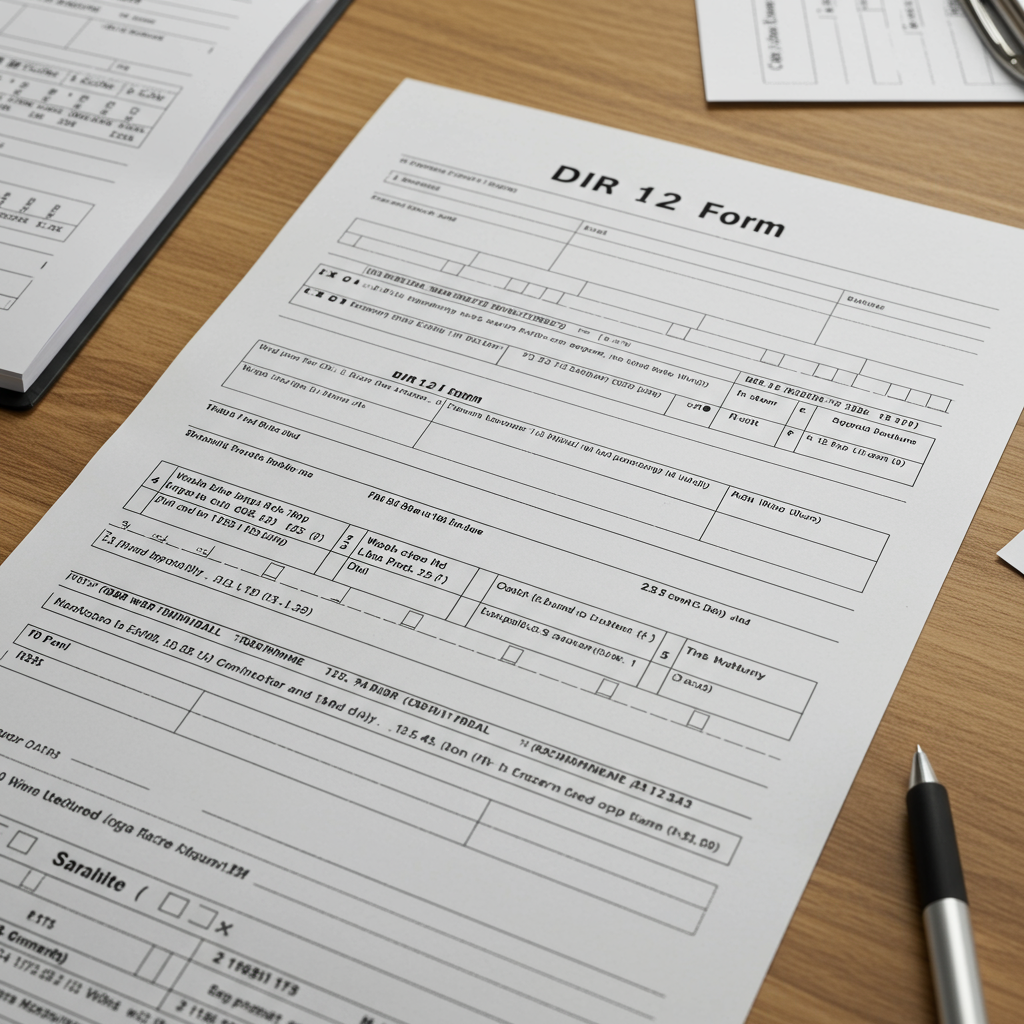
Think of the DIR-12 form as your company’s official handshake with the government. It’s the mandatory e-form you file on the Ministry of Corporate Affairs (MCA) portal to report any changes to your leadership team. It’s the single source of truth for who is officially in charge.
Under the Companies Act, 2013, every registered company in India must use this form to notify the Registrar of Companies (ROC) about:
- The appointment of a new Director or Key Managerial Personnel (KMP) like a CEO, CFO, or Company Secretary.
- The resignation or cessation of an existing Director or KMP.
- A change in designation for an existing director (e.g., promoting a Director to Managing Director).
Why is this so critical? Because it ensures the public record is accurate. This transparency is the bedrock of corporate governance, giving stakeholders confidence that your company is managed professionally and legally. Getting this wrong isn’t just bad practice; it’s a direct violation of the law.
When to File DIR-12: The 30-Day Countdown You Can’t Ignore
Here’s the most important rule: you have exactly 30 days to file the DIR-12 form from the “date of effect.” This isn’t a suggestion; it’s a hard deadline. The clock starts ticking from the moment the change officially happens.
Missing this 30-day window triggers an automatic cascade of late fees that grow exponentially. Trust me on this one, you don’t want to explain to your board why a simple filing now costs 12 times the original fee.
| Event Trigger | “Date of Effect” (When the 30-Day Clock Starts) | Common Scenario |
|---|---|---|
| Appointment | The date the appointment is approved in the Board or General Meeting. | You hire a new CFO. The board passes a resolution on June 10th. You must file DIR-12 by July 10th. |
| Resignation | The effective date of resignation mentioned in the notice and accepted by the board. | A director submits their resignation on March 5th, effective March 31st. The clock starts from March 31st. |
| Change in Designation | The date the change in designation becomes effective, as per the board resolution. | The board promotes a Director to Whole-Time Director on August 1st. The filing deadline is August 31st. |
⚠️ Watch Out
The “date of the event” is not the date you decide to file the form. It’s the date the resolution was passed or the resignation became effective. Miscalculating this is one of the most common and costly mistakes we see.
🎯 Key Takeaway
The DIR-12 form is the official record of your company’s leadership changes, filed with the MCA. You have a strict 30-day deadline from the date of appointment, resignation, or designation change to file it, or you’ll face significant penalties.
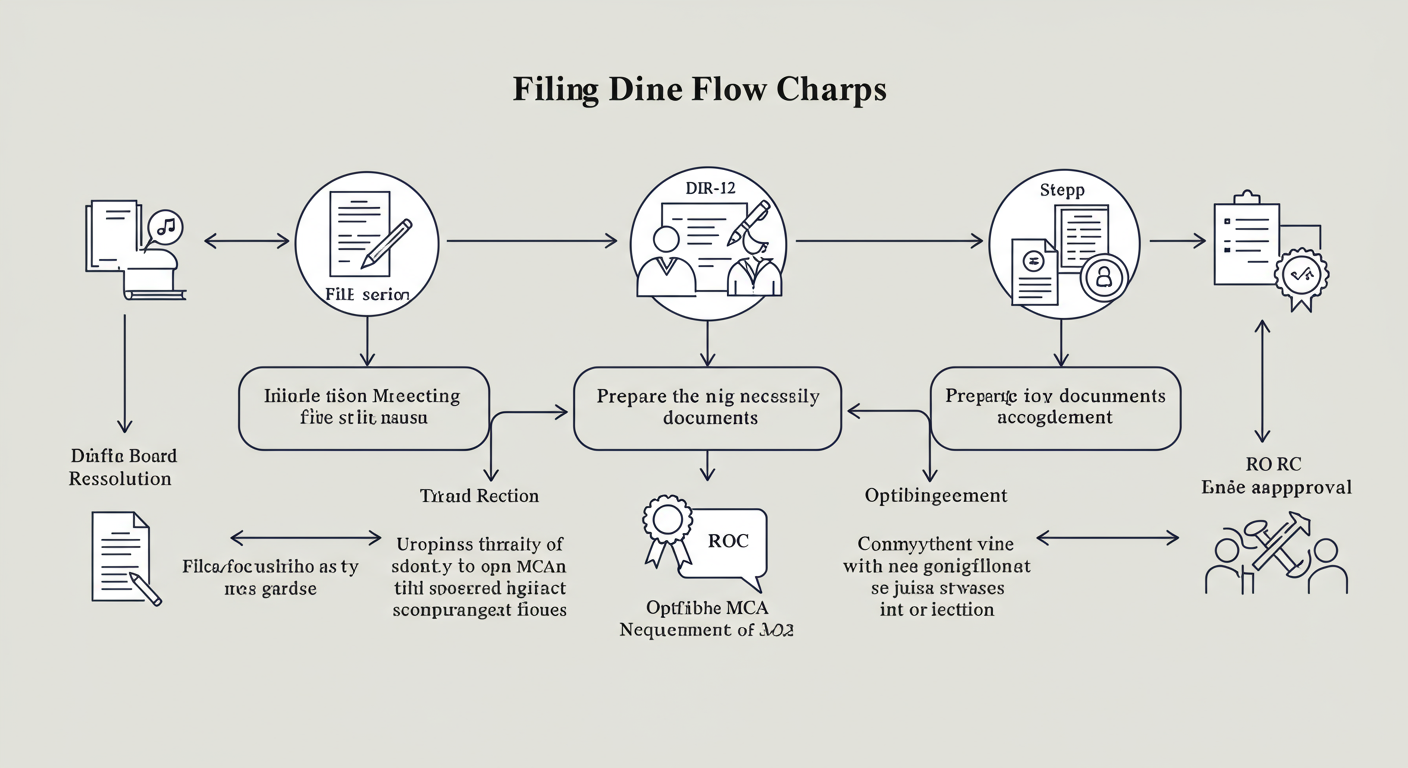
How to File the DIR-12 Form in 2026: A 7-Step Battle Plan
Filing the e-form can feel intimidating, but it’s a process. Follow these steps precisely, and you’ll navigate it like a pro. Let’s walk through a real-world scenario: your company, “Innovatech Solutions,” is appointing a new independent director.
Step 1: Convene a Board Meeting & Pass a Resolution
Everything starts here. You can’t just update a name on a list. You must hold a formal Board of Directors meeting. In this meeting, the board will officially pass a resolution to appoint the new director. This resolution must be meticulously recorded in the meeting’s minutes—it’s your primary piece of evidence.
Step 2: Gather Your Document Arsenal
Before you even think about opening the form, get your paperwork in order. This is the single best way to avoid last-minute panic. For Innovatech’s new director, you’ll need:
- Letter of Appointment: The formal offer letter.
- Consent to Act (Form DIR-2): A signed declaration from the new director confirming they agree to the role.
- Declaration of No Disqualification: A statement from the director confirming they are not disqualified from being a director.
- Identity & Address Proof: Self-attested copies of their PAN card and Aadhaar card/Passport.
- Board Resolution: A certified true copy of the resolution passed in Step 1.
💡 Pro Tip
Create a standardized “New Director Onboarding Kit” with a checklist of all required documents. Send this to the candidate as soon as they accept the offer. This puts the onus on them to provide everything correctly and saves you from chasing them down later.
Step 3: Download and Fill the DIR-12 E-Form
Head over to the MCA V3 Portal and download the latest version of the DIR-12 e-form. Open it and start filling it out carefully.
- Enter your Company Identification Number (CIN). The form will auto-populate the company details.
- Select the purpose: “Appointment.”
- Enter the new director’s details, including their approved Director Identification Number (DIN). Double-check every letter and number.
- Enter the date of appointment, which must match the date on your board resolution.
Step 4: Attach All Supporting Documents
Now, attach the scanned copies of the documents you collected in Step 2. The form has specific attachment slots. Ensure your scans are clear, legible, and in PDF format. A blurry or incomplete document is a guaranteed reason for rejection.
Step 5: Affix Digital Signature Certificates (DSC)
The form needs to be digitally signed to be valid. Here’s who signs:
- A Continuing Director: One of the existing directors of Innovatech must sign the form.
- A Practicing Professional: The form must also be certified and signed by a practicing Company Secretary (CS), Chartered Accountant (CA), or Cost Accountant (CMA). This professional certification adds a layer of verification and trust.
The new appointee does not sign the DIR-12 form itself; their consent is proven by the attached DIR-2.
Step 6: Pre-Scrutiny, Payment, and Upload
Use the “Check Form” button on the e-form. This runs a basic validation to catch any obvious errors. Once it’s clear, log in to the MCA portal, upload the signed form, and proceed to the payment gateway. The fee depends on your company’s authorized capital (typically ₹200-₹600). Revised MSME Classification 2025: New Investment and Turnover Limits Explained
Step 7: Acknowledgment and SRN Generation
Success! Once you pay, the system generates a Service Request Number (SRN). Save this number immediately. It’s your tracking ID to check the status of your filing. The ROC will review the form. If everything is in order, it gets approved, and the new director’s name will officially appear in your company’s master data on the MCA website. Declare Charitable Trust as Business Trust: Key Points
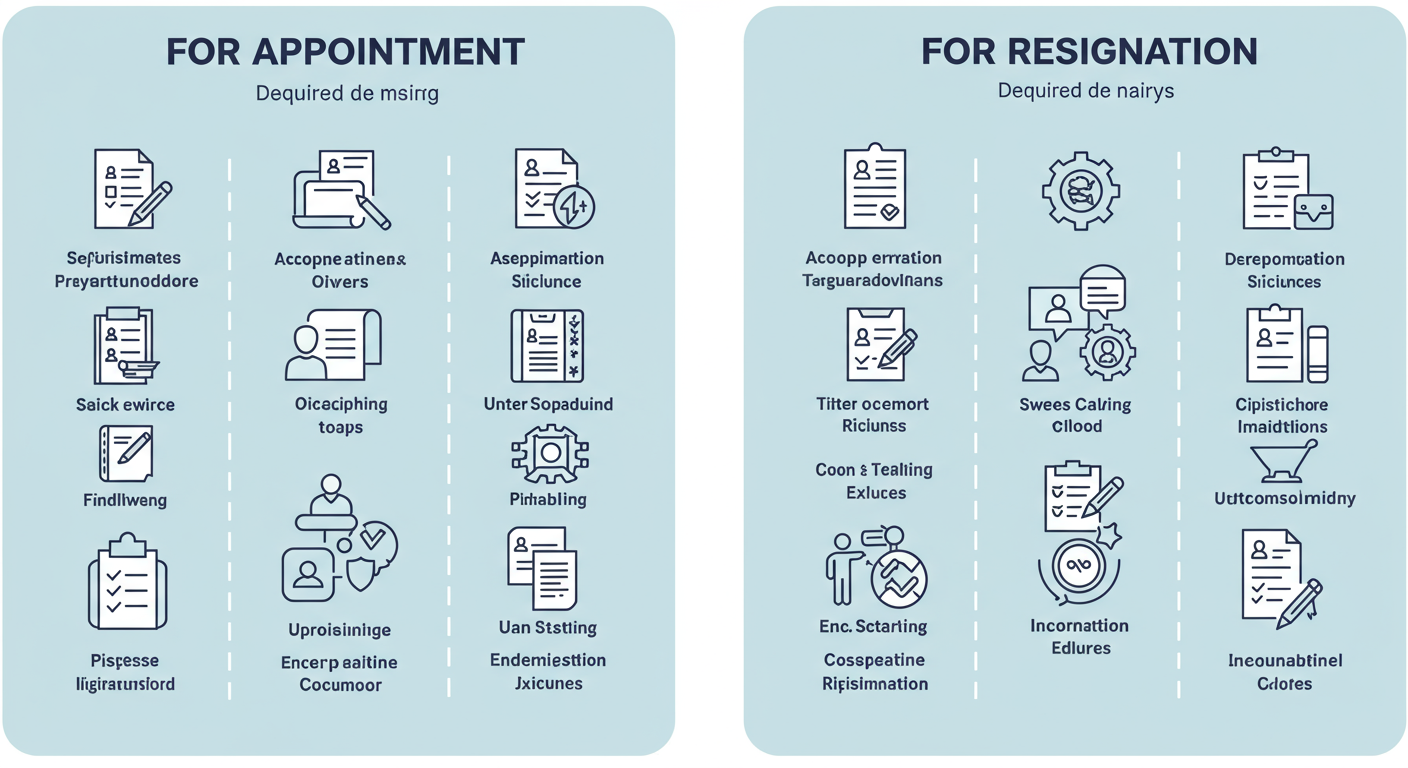
The Ultimate DIR-12 Document Checklist: Appointment vs. Resignation
The documents you need change based on the event. Having the wrong ones is a common point of failure. Here’s a clear comparison based on our hands-on testing of the MCA portal.
| Document | Required for Appointment? | Required for Resignation? | Expert Note |
|---|---|---|---|
| Board Resolution | ✅ Yes | ✅ Yes | The cornerstone document. Must be a certified true copy. |
| Consent to Act (Form DIR-2) | ✅ Yes | ❌ No | Proves the new director willingly accepts the position. |
| Letter of Appointment | ✅ Yes | ❌ No | The formal offer and terms of appointment. |
| Notice of Resignation | ❌ No | ✅ Yes | The formal letter from the director stating their intent to resign. |
| Evidence of Cessation | ❌ No | ✅ Yes | This is often the board resolution accepting the resignation. |
| Identity & Address Proof | ✅ Yes | ❌ No | Required for KYC of the new appointee. |
⚠️ Watch Out
For resignations, a director also has the option to file Form DIR-11 to notify the ROC themselves. While this is the director’s responsibility, the company’s obligation to file DIR-12 remains mandatory. Don’t assume a DIR-11 filing absolves the company of its duty.
The Real Cost of Getting It Wrong: Penalties & Consequences
Let’s be blunt: non-compliance is expensive. The Companies Act, 2013, has zero tolerance for delays or errors in this filing. The consequences aren’t just financial; they damage your company’s reputation.
According to Section 172 of the Act, if a company fails to comply, both the company and every officer in default are liable for a penalty. This means you, as a director or key officer, could be personally on the hook.
The late filing fees are brutal. They are calculated as a multiple of the normal fee:
- Up to 30 days delay: 2 times the normal fee
- More than 30 and up to 60 days: 4 times the normal fee
- More than 60 and up to 90 days: 6 times the normal fee
- More than 180 days delay: 12 times the normal fee
A simple ₹300 filing can quickly balloon into a ₹3,600 problem, and that’s per form. More importantly, a history of late filings puts a target on your back for increased scrutiny from the ROC.
💡 Pro Tip
Set up a compliance calendar with automated reminders 15 days and 5 days before the 30-day deadline for any board change. Assign a specific person as the “owner” for each filing. This simple system, based on real-world campaign management, prevents things from slipping through the cracks.
Conclusion: From Compliance Chore to Strategic Advantage
Mastering the DIR-12 form isn’t just about ticking a box. It’s about operational excellence. It’s a signal to the world that your company is well-managed, transparent, and trustworthy. A clean compliance record is a powerful asset during fundraising, audits, or strategic partnerships.
By following the 7-step plan, using the document checklists, and heeding the warnings in this guide, you can transform this process from a source of anxiety into a smooth, efficient part of your corporate governance. You’re not just filing a form; you’re building a foundation of trust that will pay dividends for years to come.
Your next step? Review your company’s current director list on the MCA portal. Does it perfectly match your internal records? If not, it’s time to take action. For deeper insights into corporate secretarial standards, the resources provided by The Institute of Company Secretaries of India (ICSI) are an excellent starting point.
❓ Frequently Asked Questions
Can I file one DIR-12 for multiple director changes?
Yes, you can. A single DIR-12 form can be used to report changes for multiple directors (up to 15). For instance, you can report the appointment of two new directors and the resignation of one, all in the same form, as long as the event dates are within a close range.
What’s the difference between a Director and Key Managerial Personnel (KMP)?
A Director is a member of the board, responsible for overall strategy and governance. A KMP, as defined by the Companies Act, includes the CEO, Managing Director, CFO, Whole-time Director, and Company Secretary. They are responsible for the day-to-day management. The DIR-12 form is used for changes related to both.
My DIR-12 form was sent for “Resubmission.” What do I do?
This means the ROC found an error (like a mismatched date or a missing document). You’ll get a chance to correct the form and re-upload it without paying the fee again, but you must do so within the specified timeframe (usually 15 days). Check the remarks from the officer to see exactly what needs to be fixed.
What is a DIN and why is it so important for the DIR-12 form?
A DIN, or Director Identification Number, is a unique 8-digit number required for any person who wants to be a director of a company in India. You cannot appoint someone as a director if they don’t have an approved DIN. Always verify the DIN’s status on the MCA portal before filing.
How long does it take for the DIR-12 to get approved?
In our experience, if the form is filed correctly with all attachments, it’s often auto-approved within 24-48 hours (Straight Through Process). However, if it’s flagged for manual review by an ROC officer, it can take anywhere from a few days to a couple of weeks, depending on their workload and the complexity of the filing.
Read Also:
- Unlock Your 2026 MSME Superpowers
- MCA Company Name Search 2026: Get Approved on Your First Try
- MoA vs AoA: The Definitive Guide for Founders in 2026
- 7 Essential Steps for TDS Compliance India: The Complete Business Guide (2025) – Visual Story
- Small Company Definition in India (2026 Criteria): A Guide – Visual Story
- Nail Your MCA Name Search in 2026
- MCA21 Company Master Data: Your 2026 Due Diligence Guide
- Form DPT-3 Filing Guide 2026: Avoid Penalties & Master Compliance