
Picture this: Your startup just landed its first major funding round. The board decides to bring on a seasoned industry veteran to guide the next phase of growth. Champagne pops. Press releases are drafted. It’s a huge win.
Then, 45 days later, an official-looking email from the Ministry of Corporate Affairs (MCA) lands in your inbox. The subject: “Show Cause Notice for Non-Compliance.” The celebration grinds to a halt. Panic sets in. Why? Because in the whirlwind of excitement, you forgot one crucial step: filing Form DIR-12.
This isn’t just a hypothetical scenario; I’ve seen this exact situation play out with promising companies. Form DIR-12 isn’t just bureaucratic red tape. It’s the bedrock of corporate transparency in India. Getting it right is non-negotiable. Getting it wrong can be surprisingly expensive.
In this masterclass, we’re going beyond a simple “how-to.” You’ll learn the ‘why’ behind the ‘what,’ gain insider strategies from our hands-on experience, and discover how to transform this compliance task from a chore into a cornerstone of good governance.
What is Form DIR-12, Really? (And Why It Matters)
At its core, Form DIR-12 is an e-form used to notify the Registrar of Companies (RoC) about any changes to your company’s board of directors or Key Managerial Personnel (KMP). Think of it as updating the official public record of who is steering your company.
This is mandated by Section 170(2) of the Companies Act, 2013. But look, let’s move past the legal jargon. Why does the government care so much?
- Accountability: It establishes a clear, public record of who is legally responsible for the company’s actions.
- Stakeholder Trust: For investors, lenders, and even customers, knowing the leadership team is stable and properly documented is a massive trust signal.
- Legal Standing: It ensures that the individuals signing contracts and making decisions on behalf of the company are legally authorized to do so.
In short, a promptly filed DIR-12 tells the world your house is in order. A delayed or incorrect filing screams chaos.
The Triggers: When You Absolutely MUST File Form DIR-12
The requirement to file Form DIR-12 is triggered by four specific events. The clock starts ticking from the “effective date” of the event, which is typically the date of the board meeting or the date specified in a resignation letter. You have exactly 30 days from this date to file.
Here’s a breakdown of the triggers and the common pitfalls we see in our practice.
| Triggering Event | Key Consideration | Common Pitfall to Avoid |
|---|---|---|
| Appointment of a Director/KMP | This includes new directors, alternate directors, additional directors, and KMPs (CEO, CFO, CS, etc.). | Using the date of joining instead of the date the board resolution was passed. The resolution date is often the correct effective date. |
| Resignation of a Director/KMP | The effective date is the date the company receives the resignation notice, unless the notice specifies a later date. | Failing to get a signed, dated acknowledgement of the resignation letter. This proof is your defense if timelines are questioned. |
| Change in Designation | Promoting an ‘Additional Director’ to ‘Director’ at an AGM or changing a ‘Director’ to ‘Managing Director’. | Thinking it’s just an internal title change. To the RoC, it’s a material change that requires a new filing. |
| Cessation for Other Reasons | This covers removal, disqualification, or death of a director. | Delaying the filing in sensitive situations like a director’s passing. The 30-day rule is strict and applies regardless of the circumstances. |
⚠️ Watch Out
The most common mistake is miscalculating the 30-day deadline. It’s not “one month.” It’s 30 calendar days. If the effective date is October 1st, your deadline is October 31st. Don’t get caught out by a day.
The DIR-12 Filing Masterclass: A Step-by-Step Walkthrough
Filing the form itself is the last step of a careful process. Based on hands-on testing and hundreds of filings, here’s the workflow that ensures success every time.
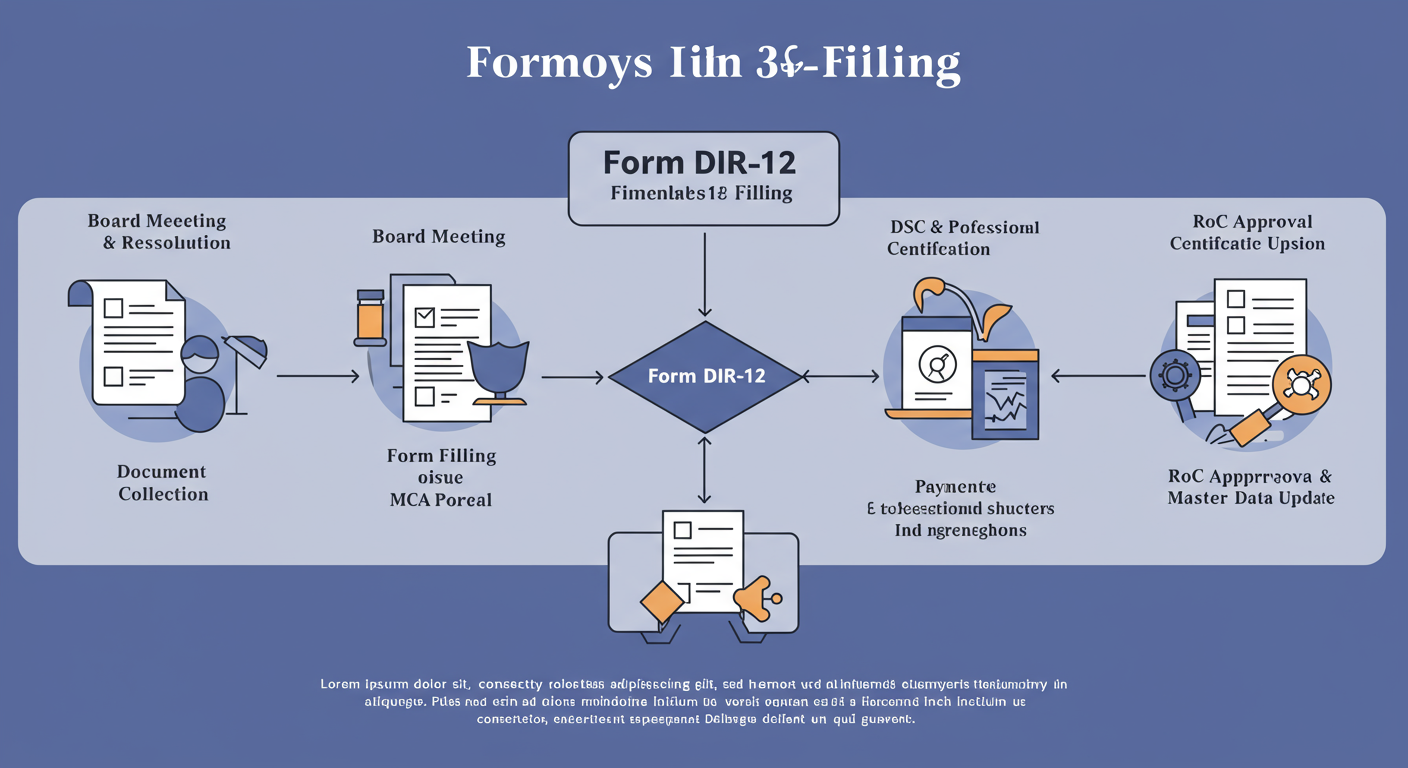
- Step 1: The Pre-Filing Foundation (The Real Work). Before you even think about the MCA portal, get your internal governance right.
- Conduct a formal Board Meeting to pass the necessary resolution for the appointment, resignation, or designation change.
- Document the minutes of the meeting meticulously. This is your primary evidence.
- Start collecting all required documents from the director(s) involved immediately. Don’t wait.
- Step 2: Download and Fill the e-Form. Go to the MCA V3 Portal and download the latest version of Form DIR-12. Fill in the company’s CIN, director details (DIN is crucial), and the event date. Be precise.
- Step 3: Attach the Document Arsenal. Scan and attach all supporting documents (we’ll cover the full list next). Ensure every scan is clear, legible, and in PDF format. Corrupted or blurry attachments are a common reason for rejection.
- Step 4: Digital Signatures (The Handshake). This is critical. The form needs to be digitally signed with a valid Class 2 or Class 3 Digital Signature Certificate (DSC).
- It must be signed by a current director of the company.
- For appointments, it must also be signed by the director being appointed.
- Crucially, it must be certified by a practicing professional: a Company Secretary (CS), Chartered Accountant (CA), or Cost Accountant (CMA).
- Step 5: Pre-Scrutiny and Submission. Use the ‘Check Form’ button. This is your free spell-check. Fix any errors it flags. Once it’s clean, click ‘Pre-scrutiny.’ If it passes, you’re ready to upload, pay the fees, and submit.
- Step 6: Track and Confirm. After submission, you’ll get a Service Request Number (SRN). Save it! You can use this to track the form’s status. Once approved, double-check the company’s master data on the MCA portal to confirm the changes are reflected.
💡 Pro Tip
For appointments, collect all necessary documents and the new director’s DSC before the board meeting. This way, you can file the same day the resolution is passed. It shows incredible efficiency and ensures you never miss the deadline.
Your Document Arsenal: Preparing for a Flawless Filing
Walking into this process unprepared is like trying to cook a gourmet meal without ingredients. Your success depends entirely on having the right documents ready. The requirements differ slightly for appointments versus resignations.
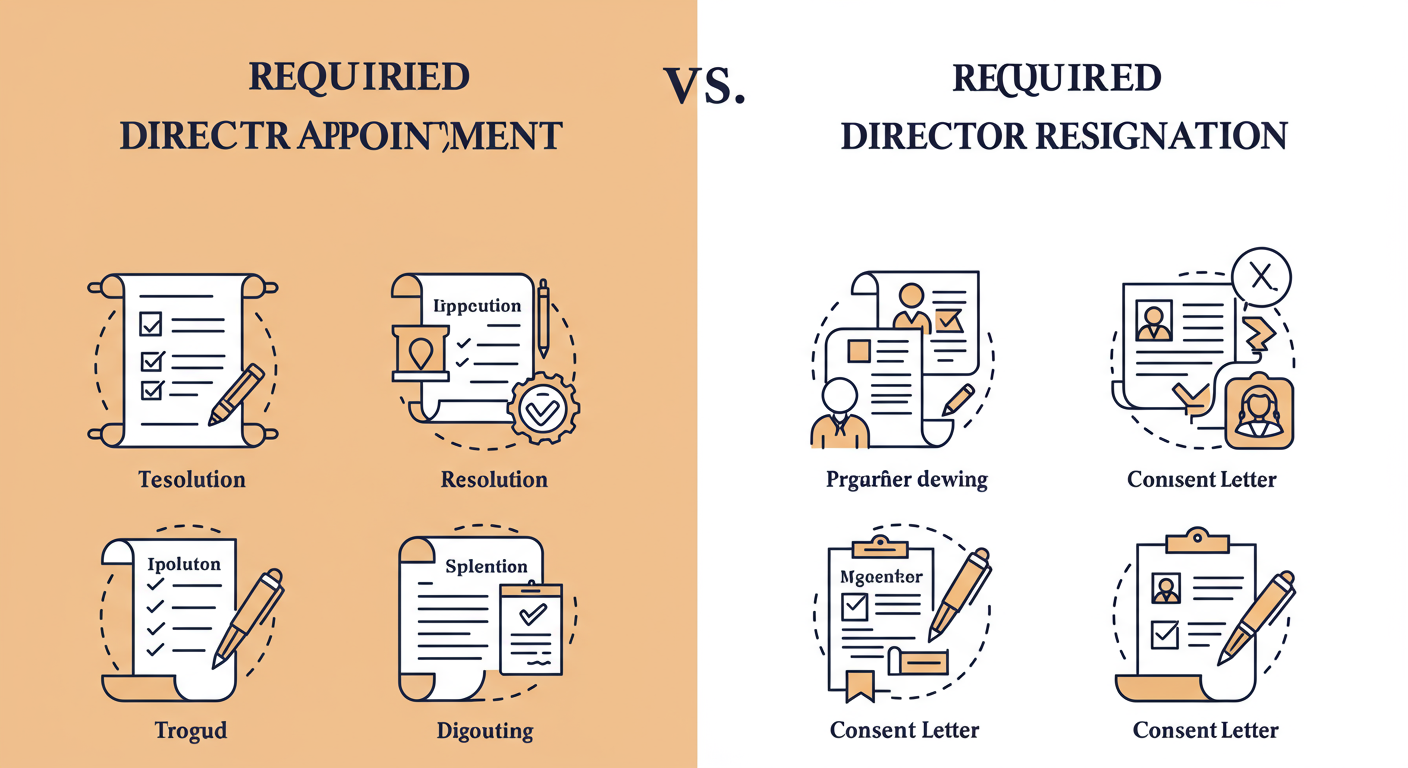
For the Appointment of a Director/KMP:
- Letter of Appointment: The official contract or offer letter.
- Board Resolution: A certified true copy of the resolution passed for the appointment.
- Consent to Act (Form DIR-2): A signed declaration from the appointee. This is their formal “I accept.”
- Declaration of No Disqualification: A simple declaration stating they are eligible to be a director under the Companies Act.
- Identity & Address Proof: Self-attested copies of PAN and Aadhaar/Passport. For foreign nationals, a passport is mandatory.
For the Resignation of a Director:
- Notice of Resignation: The director’s formal resignation letter.
- Board Resolution: A certified true copy of the resolution where the board “takes note” of the resignation.
- Proof of Dispatch: Evidence that the company received the letter (e.g., an email receipt, a signed acknowledgement). This is crucial.
Note: A resigning director should also file Form DIR-11 themselves. While it’s their personal responsibility, it provides a clean break and protects them from future company liabilities.
🎯 Key Takeaway
Form DIR-12 is not just a compliance task; it’s a public statement about your company’s governance. Proactive, timely, and accurate filing avoids severe penalties and builds immense trust with investors, partners, and regulators.
The Cost of Compliance (and Non-Compliance) in 2026
Let’s talk money. The standard filing fee for DIR-12 is nominal. The penalty for getting it wrong is not. This is where a small oversight becomes a major financial headache. Avoiding the Pitfalls: Identifying the common mistakes in GST registration India
The normal fee is based on your company’s authorized capital, ranging from ₹200 to ₹600. But the real story is in the late fees.
⚠️ Watch Out
The MCA’s late fee system is automated and unforgiving. There’s no one to plead your case to. The penalty is calculated automatically upon submission, and it’s non-negotiable. The system is designed to enforce discipline, not to be flexible.
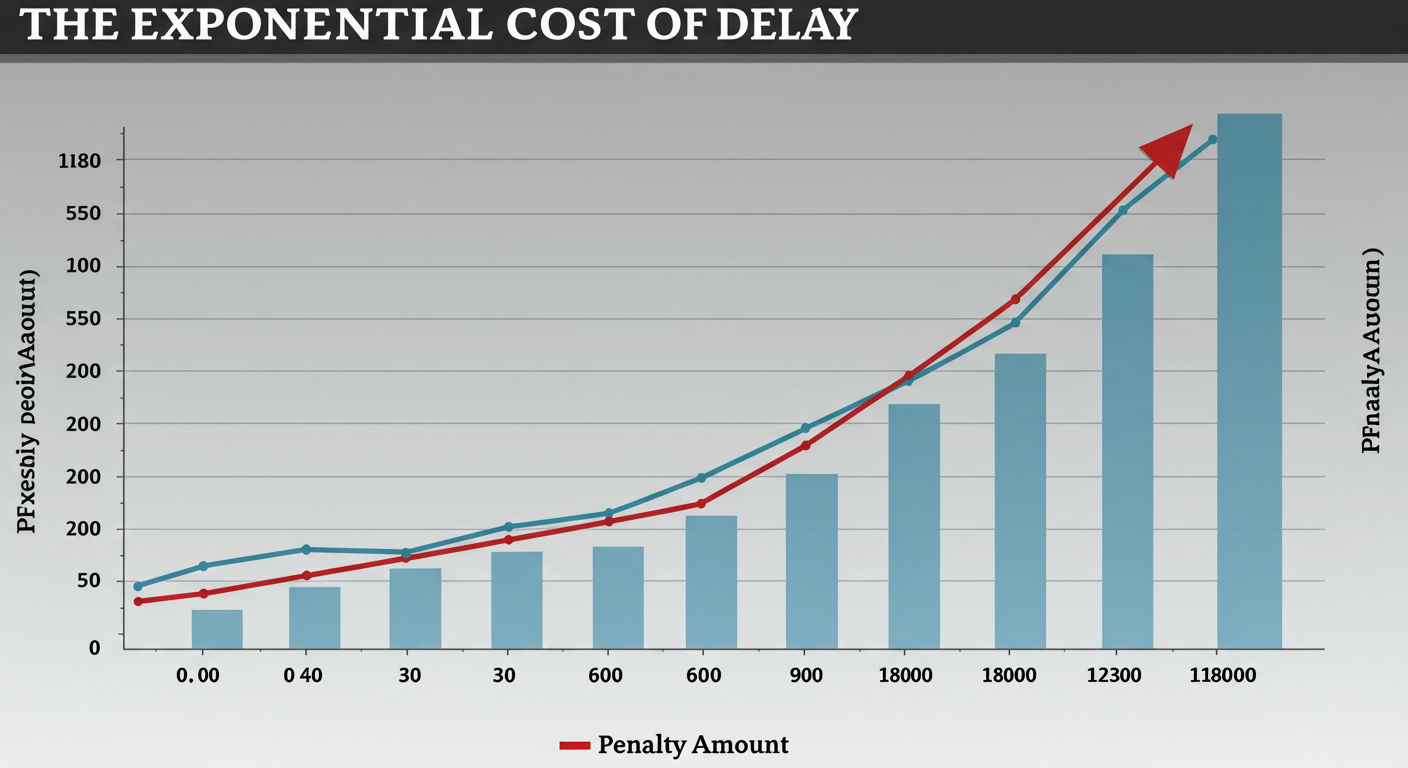
The additional fee is a multiplier of the normal fee, and it escalates quickly. After 180 days, you’re looking at a staggering 12x penalty.
| Period of Delay | Additional Fee Multiplier | Example Total Fee (on ₹400 base) |
|---|---|---|
| Up to 30 days | 2 times normal fee | ₹400 + (2 x ₹400) = ₹1,200 |
| More than 30 and up to 60 days | 4 times normal fee | ₹400 + (4 x ₹400) = ₹2,000 |
| More than 60 and up to 90 days | 6 times normal fee | ₹400 + (6 x ₹400) = ₹2,800 |
| More than 90 and up to 180 days | 10 times normal fee | ₹400 + (10 x ₹400) = ₹4,400 |
| More than 180 days | 12 times normal fee | ₹400 + (12 x ₹400) = ₹5,200 |
💡 Pro Tip
For companies with frequent board changes, consider a compliance retainer with a professional firm. The annual cost is often less than the penalty for a single missed filing and provides complete peace of mind. It’s an investment in good corporate governance.
Conclusion: From Compliance Chore to Strategic Advantage
We started with a story of panic, but the goal is to ensure that never becomes your story. Mastering Form DIR-12 filing is a fundamental skill in today’s corporate world. It’s a process that demands precision, proactivity, and a deep respect for deadlines.
But don’t view it as a burden. View it as an opportunity.
Every timely, accurate filing reinforces your company’s reputation for professionalism and integrity. It tells investors their money is in a well-managed entity. It assures regulators you take your responsibilities seriously. It builds a foundation of trust that is, frankly, priceless.
So, here’s your next step: Don’t wait for a trigger. Pull up your company’s master data on the MCA portal right now. Does it accurately reflect your current leadership? If not, you know what to do. The 30-day clock is always waiting to start ticking.
❓ Frequently Asked Questions
What is the absolute deadline for filing Form DIR-12?
The form must be filed within 30 calendar days from the effective date of the event (appointment, resignation, etc.). This is a strict, non-negotiable deadline.
Can I file for an appointment and a resignation in the same DIR-12 form?
No. You can report multiple appointments or multiple resignations in one form if they share the same effective date. However, you cannot mix event types (e.g., one appointment and one resignation) in a single form. They require separate filings.
Is a professional’s signature (CS/CA) always needed?
In almost all cases for private and public limited companies, yes. According to the rules, Form DIR-12 must be certified by a practicing Company Secretary, Chartered Accountant, or Cost Accountant. This is a key part of the verification process. The professionals at the Institute of Company Secretaries of India (ICSI) are experts in this domain.
What happens if the RoC rejects my DIR-12 form?
If your form is marked for “Resubmission,” you’ll receive an email explaining the defects. You typically have 15 days to correct the errors and resubmit the form without additional fees. If you fail to do so, you’ll have to file a new form and pay the fees (and any applicable late fees) all over again.
My director’s residential address changed. Do I file DIR-12?
No. Form DIR-12 is only for changes in appointment, resignation, or designation. For changes in a director’s personal details like address or phone number, the director must personally file Form DIR-6 to update their information in the Director Identification Number (DIN) database.
Read Also:
- MGT-7 Due Date 2026: The Definitive Guide to Annual Filing
- Director Alert: Your 2026 Survival Guide
- Small Company Definition India (2026): Your Guide to Slashing Compliance
- MOA vs. AOA: The Key Differences for Founders in 2026
- Internal Audit Applicability in India (2026): Is It Mandatory?
- Pvt Ltd Company Registration in India: The 2026 Founder’s Playbook
- Launch Your Social Impact Business in 2026
- 7 Essential Startup India Tax Benefits You Must Know in 2025 – Visual Story
- MCA 21 Master Data: Your 2026 Guide to Vetting Any Indian Company
- Who is a Promoter? The 7 Roles of a Company’s Architect (2026)
- ROC Filing Guide 2026: Master Your Company’s Compliance
- MCA Name Availability 2026: Get Your Company Name Approved – Visual Story
- Limitation of Liability Clause: A 2026 Guide to Finding It
- MCA21 Company Master Data: Your 2026 Due Diligence Guide