Remember the sheer dread of tax season? The frantic search for that one missing document, the long, soul-crushing queues, and the agonizing wait for a simple acknowledgment receipt. It felt like a battle against a mountain of paper. Well, that battle is over. And you won.
Welcome to the era of E-filing. It’s not just a digital version of the old system; it’s a complete overhaul that puts speed, accuracy, and control directly into your hands. But here’s the thing: many people still treat it like a simple submission tool, missing out on the strategic advantages it offers.
This isn’t just another “how-to” list. This is your 2026 playbook. By the time you’re done reading, you’ll understand the e-filing ecosystem like a seasoned pro. You’ll know how to avoid the common traps that cost others time and money, and you’ll have a clear, actionable blueprint to make every filing—from income tax to corporate returns—a smooth, stress-free process. Let’s get started.
What is E-Filing? (It’s More Than Just Clicking ‘Submit’)
On the surface, e-filing is simple: it’s the process of submitting compliance documents like tax returns to government agencies online. But that definition misses the magic. Think of it less like mailing a letter and more like a secure, digital handshake with the government.
When you file electronically, you’re not just sending data; you’re interacting with a smart system. This system, built on secure portals like the Income Tax Department’s website, instantly checks your data for common errors, pre-fills information it already knows about you, and provides an immediate, verifiable confirmation. It’s a dynamic conversation, not a one-way message into the void.
This digital ecosystem covers a vast range of compliance needs:
- Income Tax Returns (ITR): For individuals and businesses declaring their annual income.
- Goods and Services Tax (GST) Returns: For businesses reporting their sales and purchases.
- Registrar of Companies (ROC) Filings: For companies submitting annual financial statements and compliance forms.
- TDS/TCS Returns: For entities that deduct or collect tax at the source.
The difference between the old way and the new way is stark. Based on our hands-on experience managing thousands of filings, the shift is non-negotiable for anyone serious about efficiency.
| Metric | Traditional Paper Filing | Modern E-Filing (2026) |
|---|---|---|
| Processing Time | Weeks, sometimes months | Instant acknowledgment; days for processing |
| Accuracy | Prone to manual calculation & data entry errors | High, with automated validations and pre-filled data |
| Refund Speed | 3-6 months (or longer) | 7-21 days on average |
| Record Keeping | Physical files, prone to loss or damage | Secure digital archive, accessible 24/7 |
| Cost | Paper, printing, postage, travel | Minimal to none (internet connection) |
Why E-Filing is Your Secret Weapon in 2026
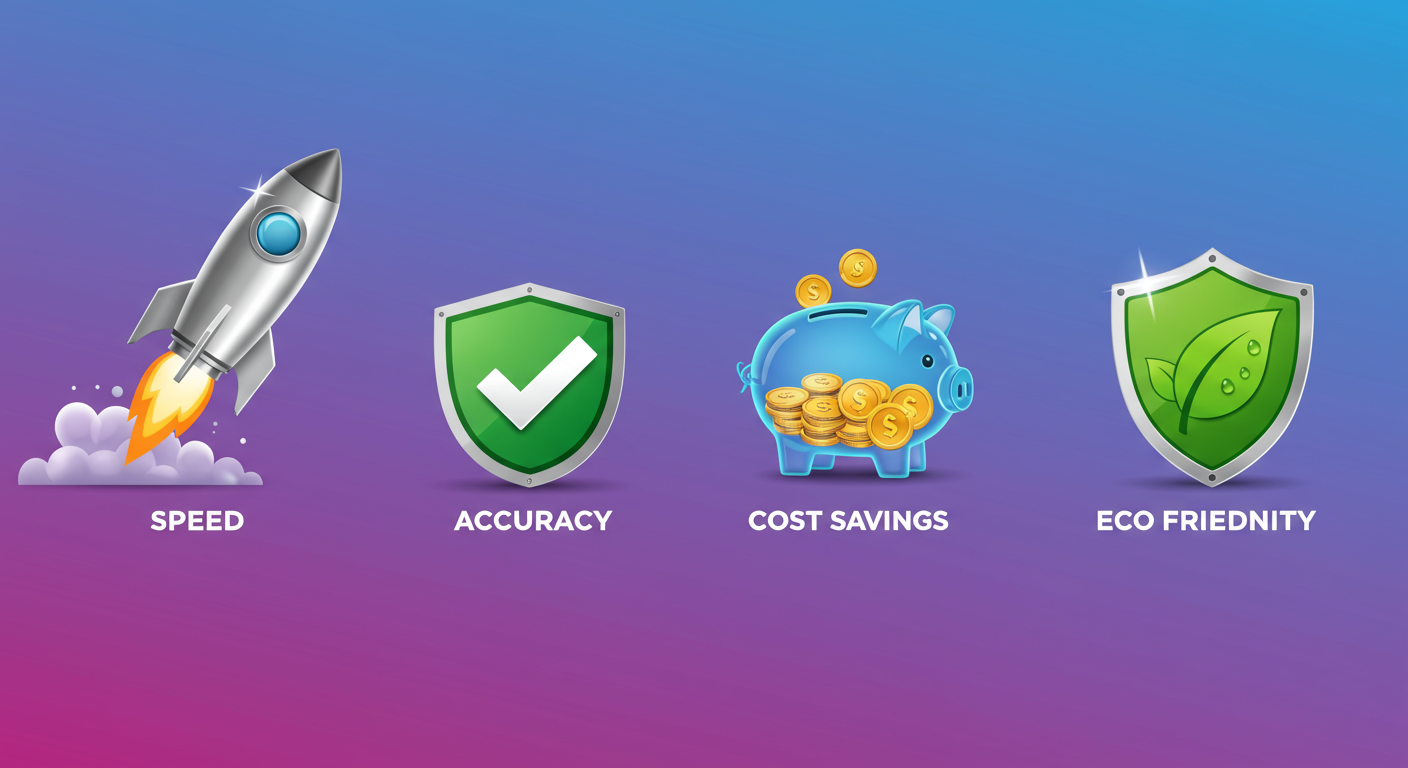
Calling e-filing “convenient” is an understatement. It’s a strategic advantage. In a world where time is money and data is king, mastering this process gives you an edge. Here’s why you can’t afford to get it wrong.
1. Unbelievable Speed and Instant Gratification
Forget waiting. The moment you hit submit, you get an electronic acknowledgment. This is your proof of filing. For those expecting a tax refund, this speed is everything. We’ve seen refund times shrink from months to just a couple of weeks for clean, accurately e-filed returns.
2. Radically Reduced Errors
The e-filing portals are your first line of defense against mistakes. They have built-in validation rules that flag errors—like a calculation mistake or a missing mandatory field—before you can submit. This single feature prevents the vast majority of issues that lead to tax notices.
⚠️ Watch Out
Don’t blindly trust pre-filled data. The Annual Information Statement (AIS) is incredibly helpful, but it can sometimes be incomplete or contain errors. Always cross-reference the pre-filled information with your own documents (like bank statements and Form 16) to ensure 100% accuracy.
3. A Perfect Digital Paper Trail
Every return you file is stored securely in your account on the government portal. Need a copy of your 2022 tax return for a loan application? It’s just a few clicks away. This digital archive is a lifesaver, creating an impeccable and easily accessible record for audits or future reference.
4. It’s Secure. Seriously.
People sometimes worry about financial data online. But let’s be clear: government e-filing portals use bank-grade security. With multi-layer encryption and secure login protocols (like OTP verification), your data is often safer than it would be in a physical file folder or traveling through the postal system.
The Main E-Filing Arenas: A Quick Guide
“E-filing” isn’t one single thing; it’s an umbrella term for several distinct systems. Knowing which one applies to you is the first step. Here’s a breakdown of the big three.
Income Tax (ITR) E-Filing
This is the one most people are familiar with. It’s for individuals, families (HUFs), and businesses to report their income to the Income Tax Department. The official Income Tax e-Filing portal is the central hub for this.
Goods & Services Tax (GST) E-Filing
If you run a business with a turnover above the specified threshold, you’re in the GST world. This involves filing monthly or quarterly returns (like GSTR-1 and GSTR-3B) to report your sales, purchases, and resulting tax liability. It’s the backbone of the entire GST framework.
Registrar of Companies (ROC) E-Filing
This is for incorporated entities—Private Limited Companies, LLPs, etc. They must file annual returns (Form MGT-7) and financial statements (Form AOC-4) with the Ministry of Corporate Affairs (MCA). ROC compliance is notoriously strict, and non-compliance leads to heavy penalties.
💡 Pro Tip
Bookmark the official portals! Don’t rely on search engines every time, as they can sometimes show ads for third-party services that look like official sites. Go directly to the source: incometax.gov.in, gst.gov.in, and mca.gov.in.
| System | Who It’s For | Key Forms | Typical Frequency |
|---|---|---|---|
| Income Tax (ITR) | Individuals, HUFs, Businesses | ITR-1 to ITR-7 | Annually |
| GST | Businesses (above threshold) | GSTR-1, GSTR-3B, GSTR-9 | Monthly/Quarterly/Annually |
| ROC/MCA | Companies & LLPs | AOC-4, MGT-7, DPT-3 | Annually & Event-Based |
🎯 Key Takeaway
E-filing isn’t a single task but a set of skills for managing different compliance systems (ITR, GST, ROC). Understanding the specific rules, forms, and deadlines for each system is crucial for avoiding penalties and staying in good standing. Master AOC 4 Filing: The Ultimate 7-Step Guide (2026 Edition)
The E-Filing Blueprint: Your 5-Step Process for 2026
Feeling overwhelmed? Don’t be. While the details vary, the core process is remarkably consistent. After guiding thousands of clients, we’ve refined it into this 5-step blueprint. Follow it, and you can’t go wrong. 7 Critical Impacts of Startup Valuation Tax on Fundraising and Growth
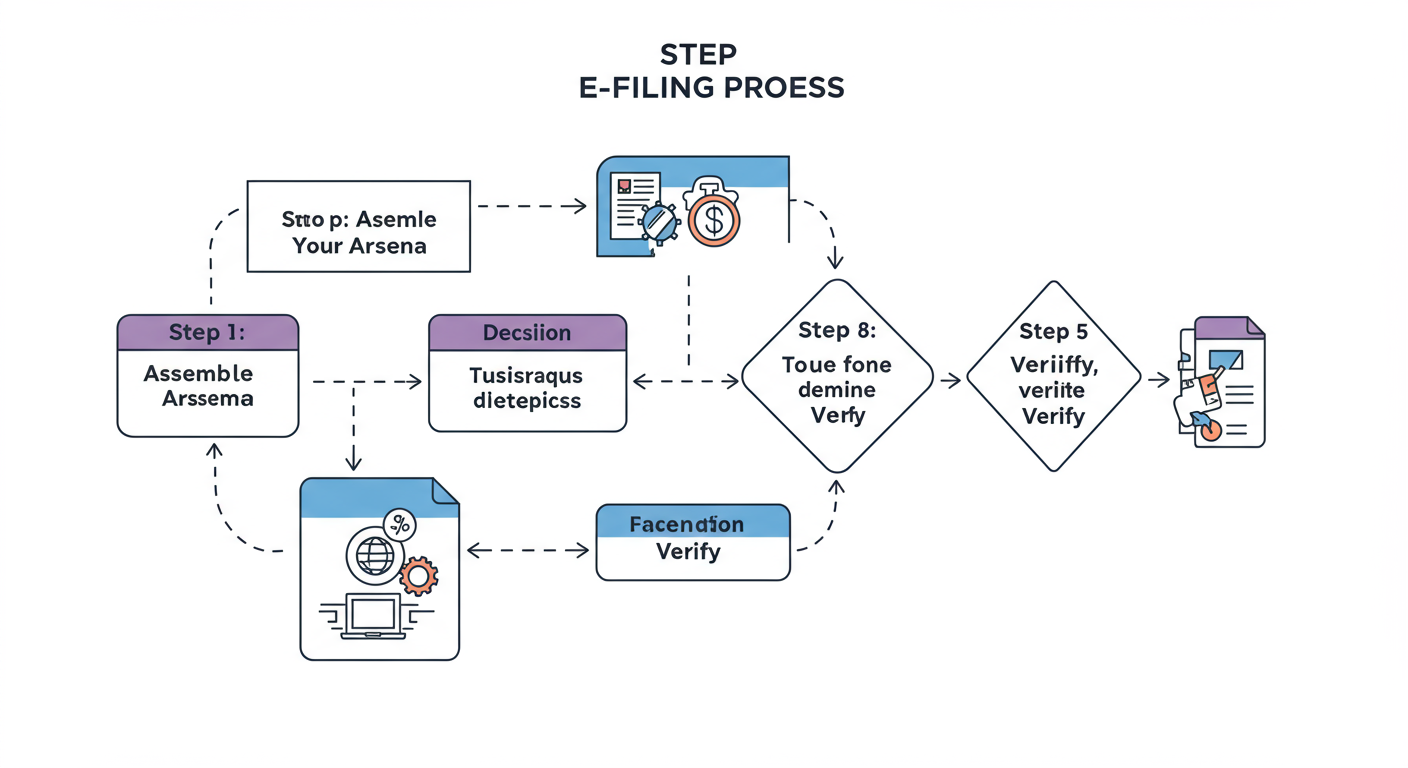
Step 1: Assemble Your Arsenal (Document Gathering)
You can’t build a house without materials. Before you even open your laptop, gather everything. This is the most crucial step.
- For ITR: PAN, Aadhaar, bank statements, Form 16/16A, capital gains statements, proof of investments (for deductions), and your Annual Information Statement (AIS).
- For GST: Sales register, purchase register, and details of input tax credit.
- For ROC: Board resolutions, financial statements (Balance Sheet, P&L), and list of directors/shareholders.
Step 2: Choose Your Platform & Log In
Go to the correct official portal. If you’re a first-timer, you’ll need to register. This is a one-time setup that involves linking your PAN (for ITR) or CIN (for ROC) and creating a secure password. Keep these credentials safe!
Step 3: Select the Right Form & Input Data
This is where most errors happen. Choosing the wrong ITR form, for example, will get your return rejected. The system will guide you, but you need to know your situation. Once you select the form, the magic of pre-fill begins. The portal will populate known data. Your job is to:
- Verify the pre-filled data against your documents.
- Fill in the remaining empty fields.
- Double-check everything. Then check it again. Especially bank account numbers for refunds.
⚠️ Watch Out
A single wrong digit in your bank account number can send your refund into a black hole. The portal will validate the IFSC code, but it can’t know if the account number is truly yours. This is one detail you must get right.
Step 4: Calculate, Pay (if needed), and Submit
The online utility will automatically calculate your tax liability or refund based on the data you entered. If you owe taxes, you must pay them online before you can submit the return. Once your tax is paid (or if you have a refund), you can proceed to the final submission.
Step 5: Verify, Verify, Verify! (The Final Handshake)
This is the most overlooked step. An unverified return is an un-filed return. You have 30 days to complete this. The government needs to know it was really you who filed. The easiest methods are:
- Aadhaar OTP: The fastest and most common method. Your mobile number must be linked to your Aadhaar card.
- Net Banking EVC: Log in to your bank account and use their “e-verify” option.
- Bank Account EVC: A code is sent to your pre-validated bank account.
Once you get that “Successfully e-Verified” message, you can relax. You’re done.
💡 Pro Tip
Set a calendar reminder for 25 days after you file your return with the note “E-VERIFY MY RETURN!” This gives you a buffer before the 30-day deadline expires, saving you from the headache of having to file all over again.
Conclusion: Your Next Move
E-filing has transformed compliance from a dreaded chore into a streamlined, manageable task. It’s a system that rewards preparation and precision with speed and peace of mind. You no longer need to be a tax expert to file, but you do need to be diligent.
By following the blueprint in this guide, you’re not just filing a return; you’re engaging with a system designed to help you succeed. You’re leveraging technology to save time, ensure accuracy, and maintain perfect records. That isn’t just smart compliance—it’s smart business.
So, your next step is simple. Don’t wait for the deadline. Start with Step 1 today: assemble your documents. When the time comes, you’ll be ready to execute the process with the confidence of a pro.
❓ Frequently Asked Questions
Is e-filing mandatory for everyone in 2026?
For most, yes. For individuals, e-filing is mandatory if your income is above the basic exemption limit. For all companies and LLPs, 100% of MCA filings are electronic. Given the massive benefits, we recommend e-filing even if you technically fall into a category that still allows paper filing.
What happens if I forget to e-verify my return?
If you don’t e-verify within 30 days, your return is treated as ‘invalid’—as if you never filed it at all. This can lead to penalties for non-filing. You would have to file the return again and ensure you verify it promptly.
Can I fix a mistake after I’ve e-filed?
Absolutely. You can file a ‘Revised Return’ to correct any error or omission. According to tax laws, you can do this any time before the end of the relevant assessment year. The process is done through the same e-filing portal and replaces your original return.
How safe is my financial data on the e-filing portal?
It’s extremely safe. Government portals use high-level encryption (like TLS 1.2), secure data centers, and multi-factor authentication. In our experience, it’s far more secure than sending sensitive documents via courier or post.
Do I still need a professional if I can e-file myself?
It depends on complexity. For a simple salaried return (ITR-1), you can likely do it yourself. But if you have business income, capital gains, or multiple income sources, a professional’s expertise is invaluable. They can ensure you’re using all eligible deductions and are fully compliant, which often saves you more money than their fee.
Read Also:
- Your 2026 ROC Compliance Survival Guide
- LLP vs Pvt Ltd in 2026: The Definitive Guide for Indian Startups
- Form 11 LLP Filing 2026: A Guide to Avoiding Crippling Penalties
- Company Registration in India 2026: A Founder’s Guide
- One Person Company (OPC) Registration 2026: The Ultimate Guide
- TDS Rates FY 2020-21: The Definitive Guide (Updated 2026)
- Section 194Q TDS: The Ultimate Guide for Businesses (2026)
- MCA Name Availability 2026: Get Your Company Name Approved
- Partnership Firm Registration: The Ultimate 2026 Guide
- Trademark Certificate Download: Your 2026 Post-Registration Guide
- Big Four Companies in India: The Ultimate 2026 Insider’s Guide
- Form MGT-14 Filing: The Ultimate Guide for 2026