
Your heart sinks. The subject line in your inbox reads: “Intimation u/s 143(2) of the Income Tax Act.” It’s the official-looking email every taxpayer dreads. Instantly, your mind races. Did I make a mistake? Am I in trouble? Is this going to be a nightmare?
Relax. Take a deep breath. An income tax scrutiny assessment notice isn’t an accusation; it’s a request for clarification. Think of it less as a police interrogation and more as a routine quality check. In our experience helping hundreds of taxpayers navigate this, the biggest mistake isn’t the one on the tax return—it’s panicking.
This isn’t just another guide. This is your step-by-step playbook, forged from real-world cases, to transform that initial fear into a clear, confident, and successful response. You’ll learn exactly why you were selected, how to dismantle the notice, what documents you need, and how to communicate effectively with the tax authorities in 2026. Let’s get you prepared.
What is an Income Tax Scrutiny Assessment (and Why You Shouldn’t Panic)
At its core, an income tax scrutiny assessment is a detailed review of your Income Tax Return (ITR) by an Assessing Officer (AO). The goal is simple: to verify that the income, expenses, deductions, and losses you’ve reported are accurate and backed by proof. It’s conducted under Section 143(3) of the Income Tax Act, 1961.
Here’s the thing: getting selected for scrutiny doesn’t mean you’re a suspected tax evader. The system is now largely automated. A sophisticated algorithm called Computer-Assisted Scrutiny Selection (CASS) flags returns based on predefined risk parameters. You might have just tripped a digital wire. It’s an impersonal process, so don’t take it personally.
The entire process is now faceless, meaning you won’t be visiting a dusty tax office. All communication, document submission, and hearings happen online through the official portal. This is a huge advantage, as it ensures transparency and creates a clear digital trail. Your job is to provide that trail with clear, concise, and honest information.
The Digital Detective: Top Reasons Your ITR Got Flagged in 2026
So, why you? The CASS system is constantly cross-referencing your ITR with a vast ocean of financial data collected from banks, mutual funds, property registrars, and more. A mismatch is the most common trigger. Based on hands-on testing and analysis of recent notices, here are the primary red flags.
| Scrutiny Trigger | Why It’s a Red Flag | How to Mitigate in the Future |
|---|---|---|
| AIS/Form 26AS Mismatch | Your declared income or TDS doesn’t match the data the government already has. This is the #1 trigger. | Always download and reconcile your AIS and Form 26AS before filing your ITR. Report every single income source. |
| High-Value Transactions | Large cash deposits, property purchases, or stock market trades that seem out of sync with your reported income. | Ensure you have a clear, documented source for all major transactions. Don’t rely on memory. |
| Unusually High Deductions/Refunds | Claiming a massive refund or unusually high deductions (e.g., huge donations, house property loss) compared to previous years. | Keep meticulous proof for every deduction. For large, one-off claims, consider adding an explanatory note in your ITR. |
| Non-Disclosure of Income | Forgetting to report interest from savings accounts, capital gains, or income from foreign assets. | Treat your Annual Information Statement (AIS) as your minimum income checklist. If it’s in the AIS, it must be in your ITR. |
⚠️ Watch Out
The Annual Information Statement (AIS) is a game-changer. The tax department now has visibility into everything from your savings account interest to your mutual fund transactions. Ignoring the AIS is the fastest way to get a scrutiny notice. Always, always check it.
Limited vs. Complete Scrutiny: Knowing Your Battlefield
Not all scrutiny notices are created equal. The notice you receive under Section 143(2) will specify the type of scrutiny. Understanding the difference is critical because it defines the scope of the investigation and the level of preparation required from your side.
Limited Scrutiny: This is the most common type. It’s like a sniper’s shot, not a cannonball. The AO is focused on one or two specific issues mentioned in the notice, such as a mismatch in house rent allowance claims or a question about a specific capital gain transaction. They cannot, by rule, expand the investigation beyond these points without escalating the case.
Complete Scrutiny: This is a full-blown financial audit. The AO has the authority to examine every single item in your ITR—every income source, every expense, every asset, and every liability. These are typically reserved for cases with significant red flags or where there’s a suspicion of substantial tax concealment.
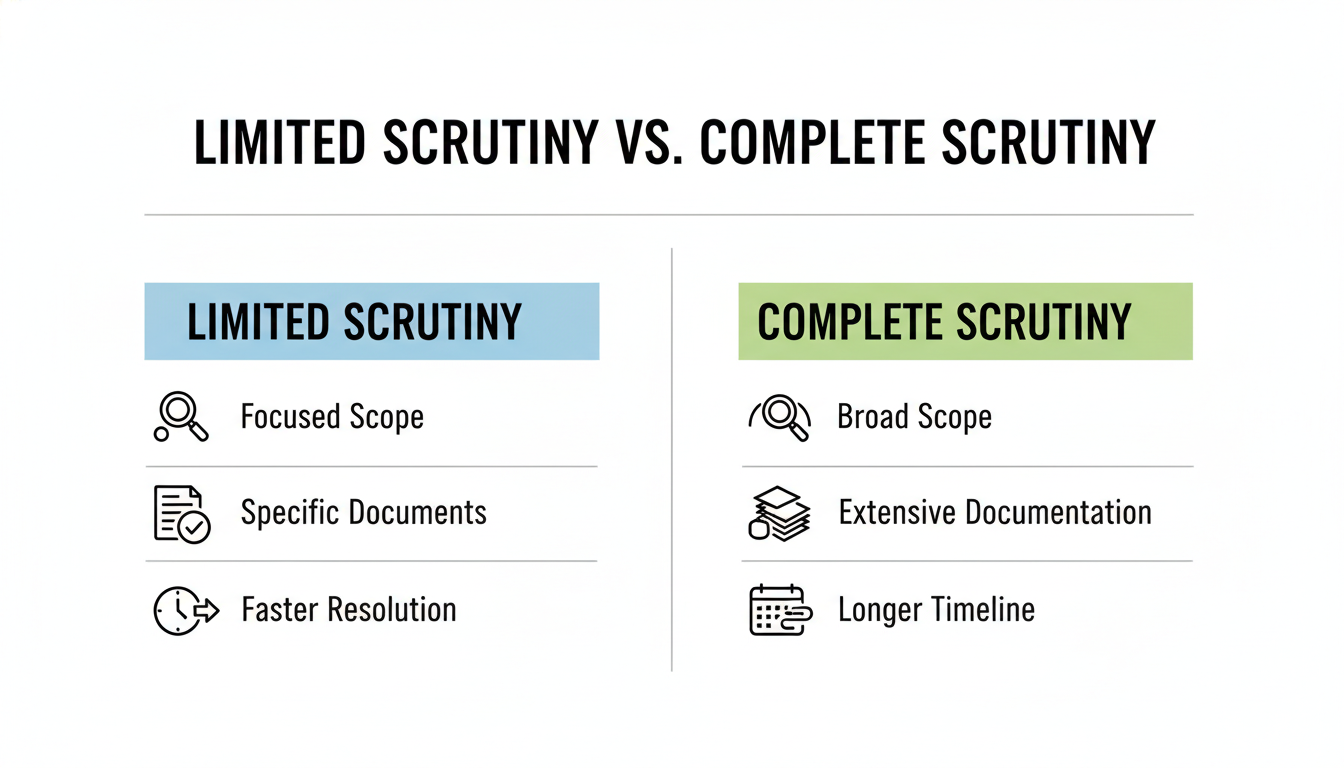
| Attribute | Limited Scrutiny | Complete Scrutiny |
|---|---|---|
| Scope | Confined to specific issues mentioned in the notice. | Comprehensive review of the entire ITR and financial history. |
| Intensity | Lower. Focused on resolving specific queries. | High. A deep dive into all your financial affairs. |
| Documentation | Provide proofs only for the points raised. | Requires extensive documentation for all claims and declarations. |
| Typical Outcome | Quick resolution if documents are in order. | Can be a lengthy process, often resulting in tax adjustments. |
Your 7-Step Playbook for Navigating a Scrutiny Notice
Okay, you’ve got the notice. You know what type it is. Now what? Follow this proven, step-by-step process. Don’t skip a single step.
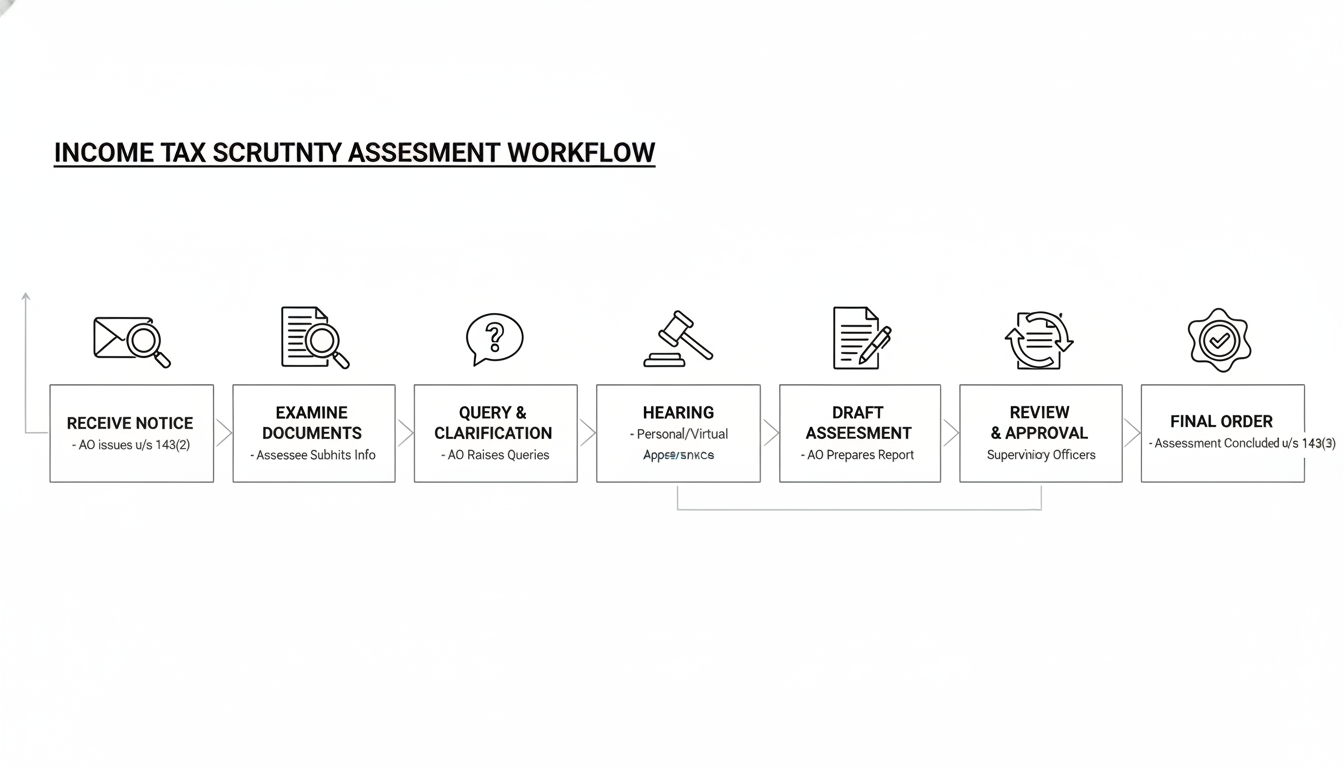
- Step 1: Decode the Notice (Don’t Just Read It). Carefully analyze the notice. Identify the Assessment Year in question, the specific points raised (for limited scrutiny), and most importantly, the deadline for your response. The deadline is non-negotiable.
- Step 2: Acknowledge Receipt Immediately. Log in to the Income Tax e-filing portal and formally acknowledge that you’ve received the notice. This is a small but crucial step that shows the department you are cooperative from day one.
- Step 3: Assemble Your “Digital War Room.” This is where preparation pays off. Create a dedicated folder on your computer. Gather every relevant document: bank statements, salary slips (Form 16), investment proofs, capital gains statements, loan documents, rent receipts, donation receipts, and a copy of your ITR, Form 26AS, and AIS.
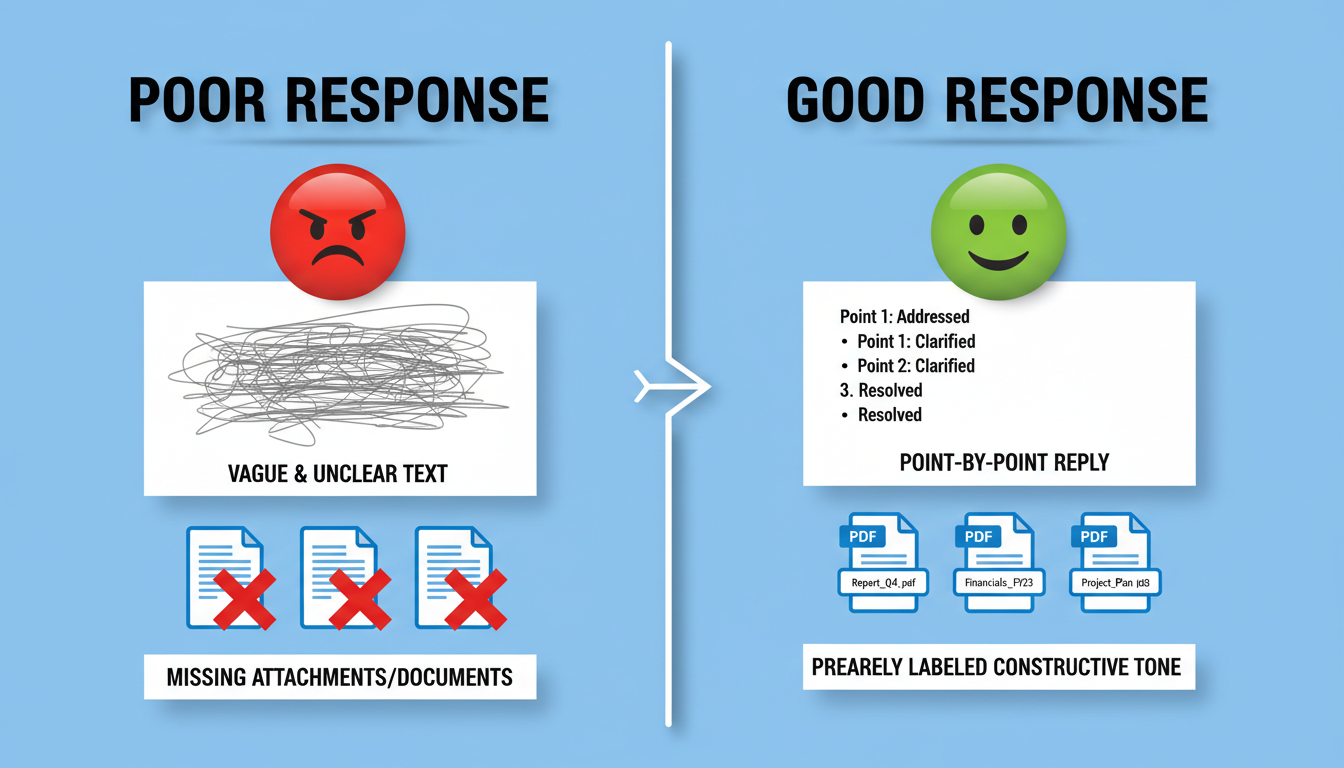
- Step 4: Draft a Point-by-Point Response. Create a clear, concise written submission. Address each query from the notice separately. Use headings like “Response to Query 1,” “Response to Query 2,” etc. State your fact, and then mention the supporting document you are attaching. No stories, no excuses. Just facts and proof.
- Step 5: Submit via the Portal (With Precision). Scan and upload your response and all supporting documents to the e-filing portal before the deadline. Name your files logically (e.g., “Bank_Statement_HDFC_FY25-26.pdf”). Double-check that everything has been uploaded correctly.
- Step 6: Prepare for the (Virtual) Hearing. The AO will review your submission. If they need more clarification, they will schedule an online hearing. Prepare for this like a meeting. Have all your documents open, be ready to explain your case calmly, and let your tax consultant (if you have one) do most of the talking.
- Step 7: Review the Final Assessment Order. After the process is complete, the AO will issue a final order under Section 143(3). This order will state whether your ITR is accepted, if you’re due a refund, or if there’s an additional tax demand. Review it carefully.
💡 Pro Tip
Engage a professional early. Don’t wait until you’re overwhelmed. A good Chartered Accountant (CA) or tax consultant has been through this process hundreds of times. Their expertise in drafting responses and representing you can be the difference between a quick resolution and a prolonged, stressful ordeal.
🎯 Key Takeaway
Your response to a scrutiny notice is a test of your record-keeping. The strength of your case lies not in arguments, but in organized, verifiable proof for every single claim made in your ITR. Meticulous documentation is your best defense.
Pro-Level Strategies to Handle Your Assessment with Confidence
Beyond the basic steps, a few insider strategies can make the process smoother and signal to the AO that you’re organized and transparent. Mastering the GST Amendment Online Process: A Comprehensive Step-by-Step Guide
Be Honest and Proactive
If you’ve genuinely made a mistake, own it. It’s far better to voluntarily state that an error occurred and offer to pay the due tax than to be caught trying to hide it. According to The Income-tax Act, 1961, penalties for concealment are far more severe than for an honest error. Honesty builds trust and often leads to a more lenient outcome.
Communicate Professionally
In all your written submissions and during the video hearing, maintain a formal and respectful tone.
- Do: Be concise, stick to the facts, and address the AO as “Sir/Madam.”
- Don’t: Get emotional, make personal appeals, or complain about the system.
This isn’t a negotiation; it’s a verification process.
Keep Impeccable Records
Maintain a master file of all communication. Save a copy of the notice, your submitted response, every document you uploaded, and the final order. This digital paper trail is crucial, especially if you need to file an appeal later.
💡 Pro Tip
When submitting documents, create a single PDF file with a cover letter that serves as an index. List each query from the notice, your response, and the page number of the corresponding proof within the PDF. This makes the AO’s job easier, and a happy AO is always good for you.
⚠️ Watch Out
Never provide unsolicited information. Only answer the specific questions asked in the notice. Volunteering extra details or documents can inadvertently open up new lines of inquiry, potentially converting a simple Limited Scrutiny into a much broader investigation. Stick to the script.
❓ Frequently Asked Questions
What is the time limit for the tax department to issue a scrutiny notice?
A notice under Section 143(2) must be served within three months from the end of the financial year in which the return was filed. For example, if you filed your ITR for FY 2025-26 (AY 2026-27) on July 30, 2026, the department has until September 30, 2027, to issue the notice.
What happens if I miss the deadline to respond to a scrutiny notice?
Ignoring a notice is the worst thing you can do. The AO is empowered to conduct a ‘Best Judgement Assessment’ under Section 144. They will assess your tax liability based on the information they have, which almost always results in a high-pitched assessment with maximum tax and penalties.
Is the entire income tax scrutiny process online?
Yes. As of 2026, almost all assessments are handled under the Faceless Assessment Scheme. All notices, submissions, and hearings are conducted electronically through the official Income Tax e-filing portal. This is designed to increase transparency and reduce corruption.
Can I appeal the final assessment order if I disagree with it?
Absolutely. If you believe the AO’s final order is incorrect, you have the right to appeal. The first appeal is filed with the Commissioner of Income Tax (Appeals) [CIT(A)] within 30 days of receiving the order. Strong documentation from the initial scrutiny process is vital for a successful appeal.
Does using a tax professional reduce my chances of getting a notice?
While a professional can’t guarantee you won’t be selected (as it’s system-driven), they drastically reduce the chances by ensuring your ITR is filed accurately, with proper disclosures and reconciliation against your AIS/26AS. Their real value, as many financial experts point out, shines when a notice does arrive, as they can manage the entire process for you.
Conclusion: Be Prepared, Not Scared
An income tax scrutiny assessment can feel intimidating, but it’s a manageable, structured process. The power dynamic shifts dramatically from fear to control the moment you become organized. It’s not about being a tax expert; it’s about being a diligent record-keeper.
Remember the core principles:
- Act Promptly: Never ignore a notice or its deadline.
- Be Organized: Your documentation is your strongest weapon.
- Be Honest: Transparency is always the best policy.
- Seek Help: Don’t hesitate to engage a professional.
By following the playbook outlined above, you can navigate the scrutiny process not as a victim, but as a prepared, compliant, and confident taxpayer. Your next step? Don’t wait for a notice. Start organizing your financial documents for the current year today. Future you will thank you for it.