Imagine spending a decade pouring your heart, soul, and capital into building a beloved brand. Your logo is instantly recognizable. Your name is trusted. Then, overnight, it’s gone. Legally, it’s up for grabs. A competitor could swoop in and start using a confusingly similar name, and you’d have little power to stop them.
Sounds like a nightmare, right? It happens more often than you think. And it almost always starts with one missed deadline: the trademark renewal.
Your trademark registration in India isn’t a one-and-done deal. It’s a powerful asset with a 10-year lifespan that requires your attention to keep it alive. But what happens if that expiry date sneaks up on you? Is it game over?
Not necessarily. The law provides a few safety nets, but they get progressively more expensive and riskier. This article is your definitive 2026 roadmap. We’ll break down the three critical timelines for renewal, show you the real-world costs of delay, and give you the exact steps to protect your brand, even after the clock has run out.
The Three Critical Timelines for Trademark Renewal: An Overview
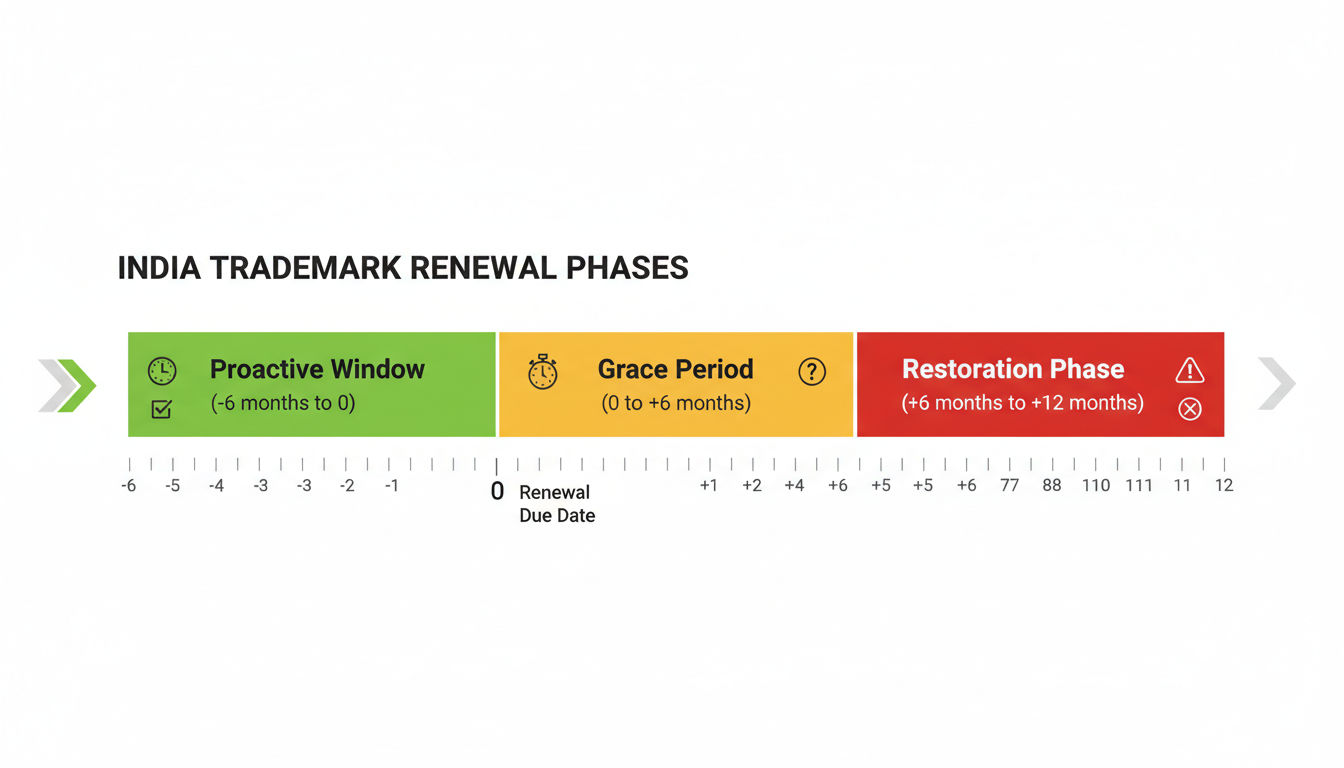
First, let’s get a bird’s-eye view. Your entire trademark renewal journey falls into one of three distinct phases, each with its own rules, costs, and level of urgency. Understanding these is the first step to avoiding disaster.
Based on our hands-on experience managing hundreds of intellectual property portfolios, thinking in these three “zones” helps clarify the stakes at each stage.
| Renewal Phase | Timeline | Cost Level | Risk Level |
|---|---|---|---|
| 1. The Proactive Window | Up to 6 months before expiry | Standard Fee (1x) | Very Low |
| 2. The Grace Period | Up to 6 months after expiry | Standard Fee + Surcharge (~1.5x) | Medium |
| 3. The Restoration Phase | From 6 to 12 months after expiry | Standard Fee + Restoration Fee (~3x+) | High |
Phase 1: The Proactive Window (The Gold Standard)
This is where you want to be. Always.
The Indian Trade Marks Act, 1999, allows you to file for renewal anytime within the six months leading up to your trademark’s expiry date. It’s the simplest, cheapest, and safest way to extend your brand’s legal protection for another ten years.
Think of it like renewing your car insurance before it lapses. You handle the paperwork, pay the standard fee, and enjoy uninterrupted coverage. No stress, no penalties, no gaps in protection.
The process is straightforward:
- File Form TM-R: This is the official application for renewal.
- Pay the Prescribed Fee: You pay the standard government fee without any penalties.
- Ensure Continuity: Once processed, your trademark is renewed for another 10 years from the original expiry date, ensuring your rights remain seamless.
The Trade Marks Registry may send a reminder notice (Form O-3), but don’t count on it. I’ve seen these notices get lost, sent to old addresses, or simply ignored. The responsibility for tracking this deadline rests squarely on you, the trademark owner.
💡 Pro Tip
The moment your trademark is registered, go into your calendar and set three reminders for its expiry: 6 months out, 3 months out, and 1 month out. Use a system that won’t fail, like a shared company calendar or a project management tool. Treat it like a critical tax deadline, because for your brand, it is.
Phase 2: The Grace Period (The Costly Safety Net)
Okay, so life happened. You missed the deadline. Now what?
You’ve now entered the “grace period.” This is a six-month window immediately following your trademark’s expiry date. During this time, you can still renew your trademark, but it’s going to cost you. This process is officially called “renewal with surcharge.”
You’ll still file Form TM-R, but you must now pay the standard renewal fee plus a late fee (the surcharge). While your mark isn’t immediately struck from the Register, it enters a precarious state. It’s technically expired but eligible for late renewal.
This period is a crucial safety net designed to prevent the catastrophic loss of IP rights due to simple administrative oversight. However, relying on it is a poor business practice that introduces unnecessary risk and cost.
⚠️ Watch Out
During the grace period, your trademark is in a vulnerable “limbo.” While you can still technically claim ownership, initiating new infringement lawsuits can be complicated until the renewal is fully processed and the status is updated. From a practical standpoint, your enforcement power is weakened.
Phase 3: The Restoration Phase (The Last-Ditch Effort)
If you’ve missed both the proactive window and the six-month grace period, the situation is now critical. The Registrar will officially remove your trademark from the Register of Trade Marks. Your legal protection is gone.
But there’s one final, desperate chance: Restoration. LEI Registration Process: Quick Guide & Requirements
The law provides a final window, from six months to one year after the original expiry date, to petition the Registrar to restore your mark to the Register. This is not a simple renewal. It’s a formal request to undo the removal, and it’s neither cheap nor guaranteed. 10 Crucial Facts About NRI Taxation in India: The 2025 Comprehensive Guide
The cost of delay becomes painfully clear here. As you can see, waiting is an expensive mistake.
| Action | Timeline | Associated Costs |
|---|---|---|
| Standard Renewal | Before Expiry | Official Govt. Fee |
| Late Renewal (Surcharge) | 0-6 Months After Expiry | Official Govt. Fee + Surcharge |
| Restoration | 6-12 Months After Expiry | Official Govt. Fee + Significant Restoration Fee |
The Step-by-Step Guide to Trademark Restoration
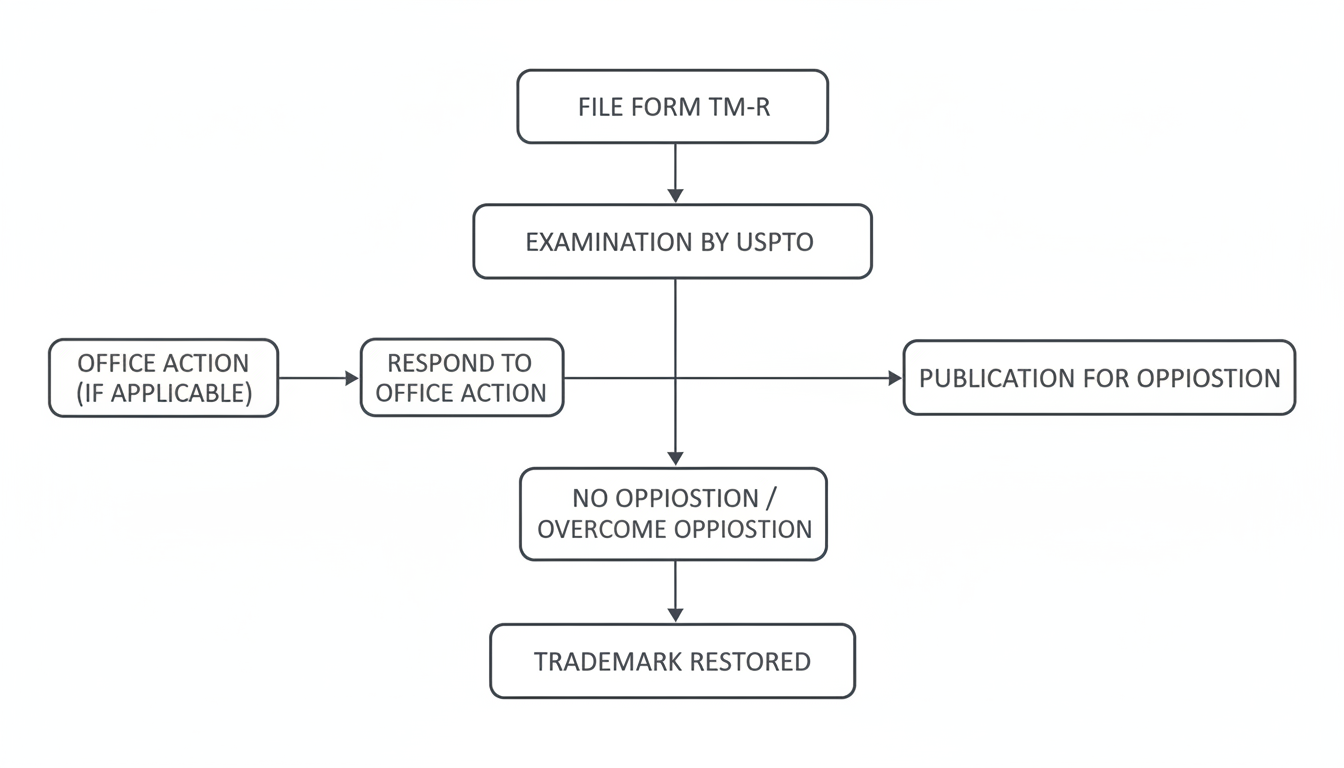
Restoring a removed trademark is a formal legal process. Success hinges on convincing the Registrar that the failure to renew was unintentional. Here’s a breakdown of the steps involved:
- File Form TM-R: You still use the same form, but it’s now for the purpose of restoration, not just renewal.
- Pay the Hefty Fees: You must pay the original renewal fee plus the substantial restoration fee. This is often several times the cost of a standard renewal.
- Submit a Statement of Case: This is the most critical part. You must submit a declaration explaining why you failed to renew on time. Vague excuses won’t cut it. You need to provide a compelling, genuine reason for the oversight.
- Registrar’s Discretionary Review: The Registrar will examine your application and your reasons. The decision to restore the mark is entirely at their discretion. If they believe the neglect was intentional or the reasons are insufficient, they can refuse the request.
- Publication in the Journal: If the Registrar is satisfied, they may order the restoration to be published in the Trade Marks Journal. This gives third parties a chance to oppose, though it’s rare.
- Restoration: If there’s no opposition, your trademark is restored to the Register with its original registration date, preserving its valuable seniority.
💡 Pro Tip
When drafting your “Statement of Case” for restoration, be specific and honest. For instance, instead of “We forgot,” a stronger reason would be, “The employee responsible for IP management left the company abruptly in Q3 2025, and the renewal deadline was missed during the subsequent departmental restructuring.” This provides a credible, unintentional context for the failure.
🎯 Key Takeaway
The three timelines offer a clear lesson: proactivity is cheap and safe, while delay is expensive and risky. The law provides safety nets in the form of a grace period and restoration, but they are last resorts, not strategies. Your brand’s continuity depends on treating the renewal deadline with absolute seriousness.
The Ultimate Consequence: What If You Miss Every Deadline?
If one year passes from the expiry date and you haven’t successfully restored your trademark, it’s over. The mark is considered abandoned. It’s permanently removed from the Register, and the consequences are severe:
- Total Loss of Rights: You lose all exclusive statutory rights to the mark. You can no longer sue for infringement under the Trade Marks Act.
- Open Season for Competitors: Anyone can now legally use or register your old brand name. Imagine a new, low-quality competitor using a name you spent a decade building trust in.
- Loss of Seniority: Your only option is to file a brand-new application. You’ll get a new filing date, losing all the history and legal priority of your original registration. If someone else registered a similar mark in the meantime, your new application will likely be rejected.
- Brand Value Evaporation: The goodwill and financial value tied to your registered trademark—a key asset on your balance sheet—vanishes.
This is the scenario every business must avoid. The official IP India portal provides the tools, but as leading experts and organizations like the World Intellectual Property Organization (WIPO) stress, proactive management is the cornerstone of effective brand protection.
⚠️ Watch Out
Don’t confuse “renewal” with “re-filing.” Renewing continues your existing registration, keeping its original date and history. Re-filing after abandonment means starting from scratch. You’re at the back of the line, and any rights established by others in the interim will take precedence. It’s a catastrophic loss of seniority.
Your Next Step: Securing Your Brand’s Future
Your trademark is one of your most valuable business assets. Protecting it isn’t a passive activity. The renewal process in India is designed to be manageable, but it demands diligence.
You now have a clear understanding of the three critical timelines. You know the gold standard is the proactive window. You know the grace period is a costly safety net. And you know restoration is a high-stakes, last-ditch effort.
So, what’s the next step? It’s simple. Right now, open your records, find the expiry date of your trademark registration, and put a reminder in your calendar. Don’t put it off. That single, five-minute action today could save your brand from a world of trouble tomorrow.
❓ Frequently Asked Questions
What is the official form for trademark renewal in India?
The one and only form you need for renewal, late renewal, or restoration is Form TM-R. The context and the fees you submit with it determine which process you’re initiating.
Can I change my logo or brand name during renewal?
Absolutely not. The renewal process is strictly for extending the life of your existing, registered trademark. If you’ve materially altered your logo or name, you must file a completely new trademark application to protect the new version. This is a common point of confusion that can lead to a false sense of security.
How much does trademark renewal in India cost in 2026?
The exact government fees can change, so it’s best to check the official IP India website for the current fee schedule. However, the principle remains constant: timely renewal has a standard fee, the grace period adds a surcharge, and restoration involves a much higher restoration fee. Professional fees for an attorney will be in addition to these government costs.
What’s the difference between a trademark being ‘abandoned’ vs. ‘removed’?
A trademark is ‘removed’ from the Register if it’s not renewed during the grace period. However, it can still be ‘restored’ for up to a year post-expiry. If it’s not restored within that window, it’s considered ‘abandoned,’ meaning the rights are extinguished permanently. At that point, your only option is to re-apply from scratch.
Do I really need a lawyer to file for renewal?
While you technically can file yourself, it’s highly inadvisable for most business owners. An experienced trademark attorney or agent manages these deadlines as a core part of their job. They ensure the filing is done correctly, handle any communications from the Registry, and prevent costly mistakes that could jeopardize your registration. The small investment in professional help far outweighs the risk of losing your entire brand. The legal framework is detailed in the Trade Marks Act, 1999, and navigating it is best left to a professional.