Imagine this: you’ve spent two years building your brand. Your logo is everywhere, customers love your name, and business is finally booming. Then, a cease-and-desist letter arrives. A competitor, who registered a similar name six months ago, now legally owns the identity you thought was yours. Everything grinds to a halt.
This isn’t a scare tactic. I’ve seen this exact scenario play out, and it’s devastating. It often happens because founders see the initial trademark fee, think “I’ll do it later,” and underestimate the true cost of inaction. The truth is, the price of registering your trademark is a tiny fraction of the cost of losing your brand.
So, what does it really cost to protect your brand in 2026? It’s more than just one government fee. This guide pulls back the curtain on the complete picture of trademark registration fees. We’ll break down every single cost—the mandatory, the optional, and the hidden—so you can budget with confidence and secure your brand’s future.
The Core Costs: Government vs. Professional Fees
When you start the trademark process, your costs will fall into two main buckets: the mandatory government fees paid to the Trade Marks Registry and the optional (but highly recommended) professional fees for expert help. Thinking you can skip the second to save money is often a costly mistake. Let’s break down why.
Government Filing Fees: The Non-Negotiable Cost
This is the fee you pay directly to the government to get your application in the queue. It’s non-refundable. If your application gets rejected for a simple mistake, you don’t get this money back. You just have to pay it all over again.
In India, the government has smartly created a two-tiered system to encourage small businesses. From our experience, this is one of the most founder-friendly policies out there. The fee depends entirely on who is applying.
| Applicant Type | Government Fee (per class) | Who Qualifies? |
|---|---|---|
| Individuals & Small Enterprises | ₹4,500 | This includes individual proprietors, startups, and any business with a valid Udyam Registration certificate. It’s a 50% discount designed to make brand protection accessible. |
| All Other Entities | ₹9,000 | This is the standard fee for entities like Private Limited Companies, LLPs, and Partnerships that don’t qualify as a ‘Small Enterprise’. |
💡 Pro Tip
If you’re a small business, get your Udyam Registration before you file your trademark application. We’ve seen entrepreneurs rush to file and pay the ₹9,000 fee, only to realize later they could have saved 50% with a simple certificate. Don’t leave that money on the table.
Professional Fees: An Investment in Success
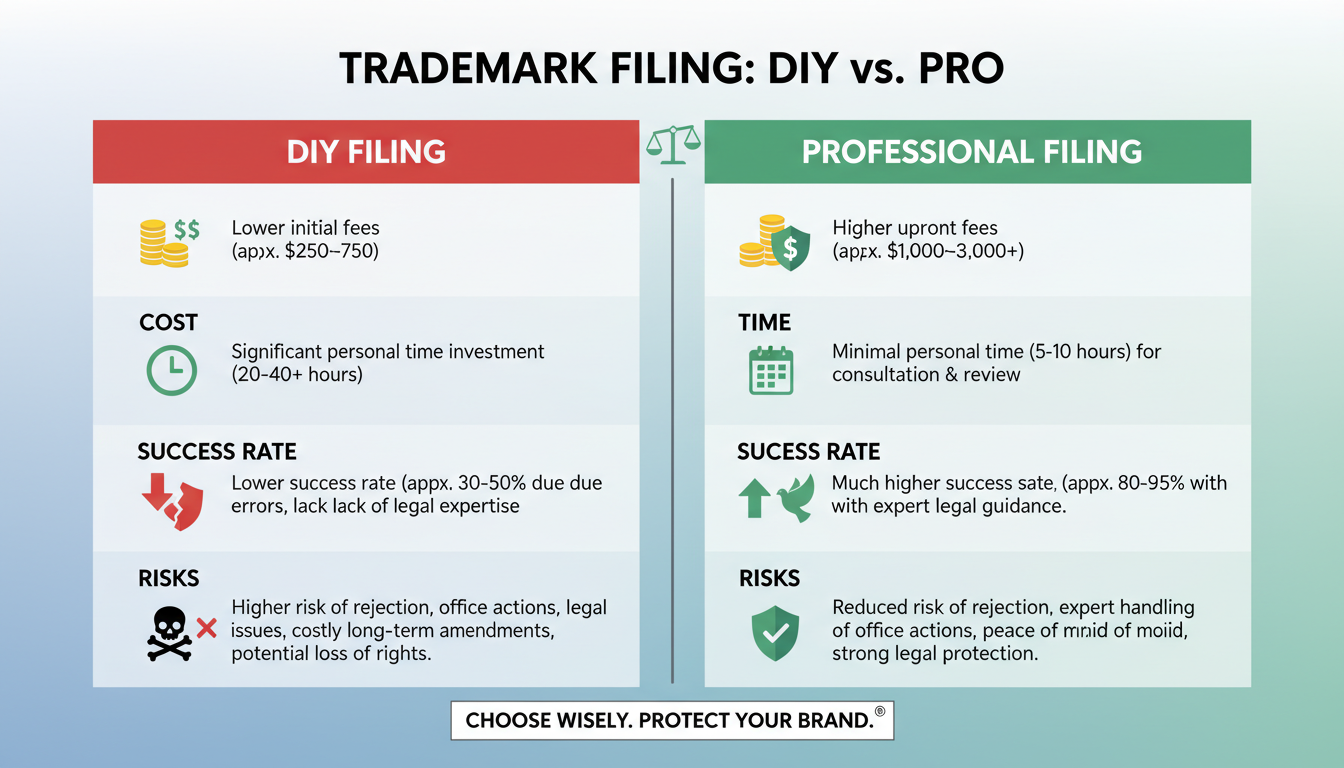
Can you file a trademark application yourself? Yes. Should you? Probably not. The trademark process is a legal minefield of specific classifications, descriptive language, and potential objections. A small error in your application can lead to months of delays and thousands in extra costs.
Hiring a trademark attorney or a reputable IP firm isn’t just paying someone to fill out a form. You’re paying for their expertise to navigate the system and dramatically increase your chances of a first-pass approval. Here’s what that fee (typically ₹4,000 to ₹15,000) actually covers:
- Comprehensive Search: They go far beyond a simple public search, using professional tools to find not just identical marks, but phonetically similar and conceptually related ones that an examiner would flag.
- Strategic Application Drafting: They know how to describe your goods and services in a way that is broad enough to protect you but specific enough to avoid objections. This is an art form.
- Class Selection: Choosing the right class (out of 45) is critical. Choosing the wrong one can invalidate your application. Experts ensure you’re protected where it counts without paying for unnecessary classes.
- Process Management: They handle all communication with the registry, respond to procedural queries, and manage every deadline so you can focus on your business.
The Hidden Trademark Fees Most People Don’t Budget For
The initial filing fees are just the beginning of the story. The real budget-busters are the “what if” costs that can pop up during the 6-12 month registration journey. A smart founder anticipates these potential hurdles.
⚠️ Watch Out
The single biggest cause of unexpected costs is choosing a weak, descriptive trademark. Naming your coffee shop “The Best Coffee” is an invitation for the examiner to object, claiming your name is too generic to function as a brand. This objection will cost you time and money to fight.
Here are the most common “hidden” costs you might face:
1. Responding to an Examination Report (Objection)
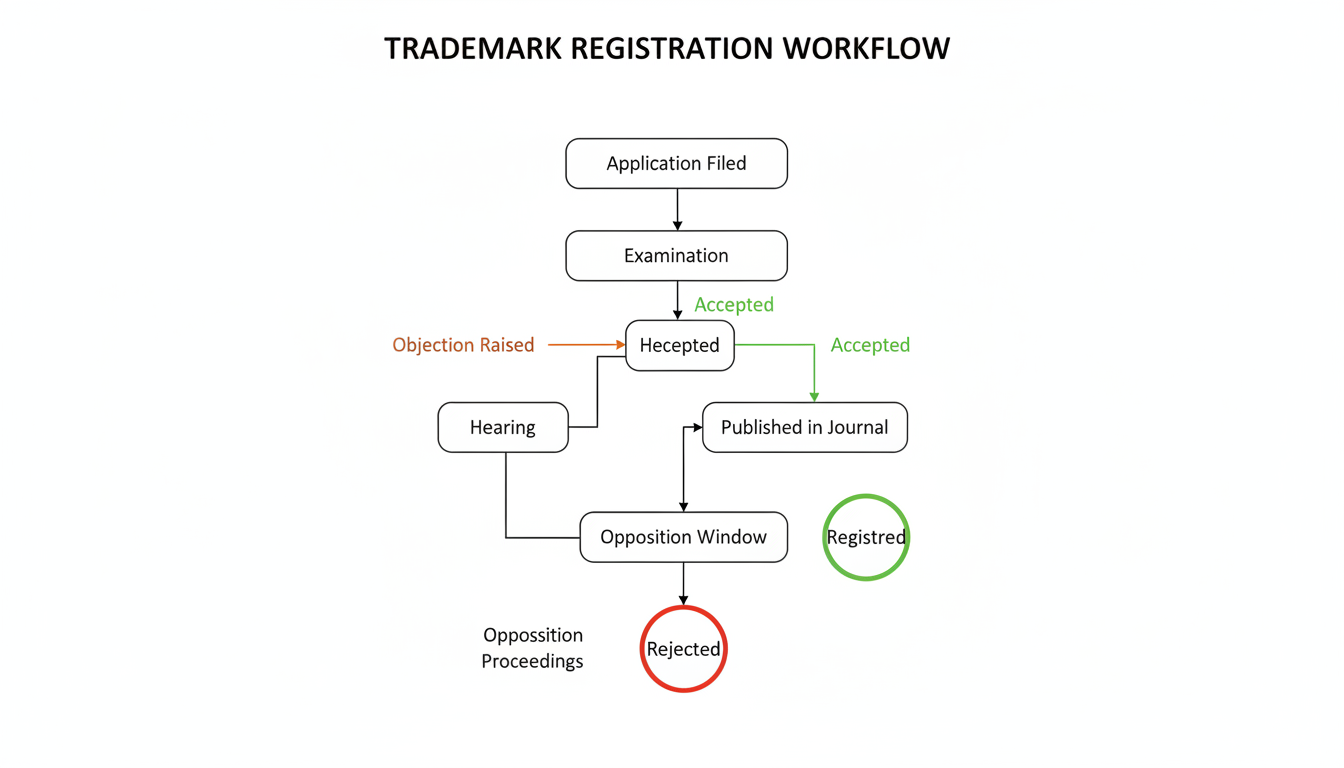
It’s very common for the trademark examiner to issue an objection. This isn’t a rejection, but a request for clarification or a legal argument as to why your mark should be registered. Responding requires a formal, written legal reply.
- Potential Cost: ₹3,000 – ₹8,000 in professional fees, depending on the complexity.
2. Attending a Show Cause Hearing
If the examiner isn’t convinced by your written response, they’ll schedule a hearing. Your attorney must then appear before the registrar to argue your case in person. This is a significant escalation.
- Potential Cost: ₹5,000 – ₹15,000+ in professional fees for preparation and appearance.
3. Defending Against an Opposition
Once your mark is accepted, it’s published in the Trademark Journal. This opens a four-month window for anyone to oppose your registration. If a third party believes your mark will harm their brand, they can file an opposition. This kicks off a legal proceeding that’s like a mini-lawsuit.
- Potential Cost: This is the most expensive part. Costs can easily run from ₹20,000 to well over ₹1,00,000, as it involves filing evidence, counter-statements, and potentially hearings.
4. Trademark Renewal
Your trademark registration isn’t for life. It’s valid for 10 years from the application date. To keep it, you must file for renewal. According to Intellectual Property India, this is a critical step to maintain your legal rights.
- Current Renewal Fee: ₹9,000 (government fee) + professional fees.
🎯 Key Takeaway
The true cost of a trademark isn’t the initial filing fee. It’s the total investment required to overcome potential obstacles. A strong, distinctive mark filed correctly by a professional is your best strategy for minimizing these “hidden” costs and ensuring a smooth journey to registration. How to File ITR-1 Online India: A Complete Step-by-Step Guide for Salaried Employees
A Step-by-Step Guide to Managing Your Trademark Budget
Feeling overwhelmed? Don’t be. You can control many of these costs with a smart, proactive approach. Here’s a battle-tested plan based on our hands-on testing with hundreds of applications. Ultimate Guide to GST for Service Providers: 9 Key Compliance Rules (2025)
- Step 1: Conduct a Deep Preliminary Search. Before you even pay a single rupee, do a thorough search. Use the public government portal, but also search Google, social media handles, and domain names. If your desired name is already in use, even unofficially, pivot now. It will save you a fortune.
- Step 2: Choose a Legally Strong Mark. The more unique and creative your name, the better. Avoid descriptive words. Fanciful marks (like “Kodak”) or suggestive marks (like “Netflix” for “internet flicks”) are the strongest. The World Intellectual Property Organization (WIPO) provides excellent resources on what makes a mark distinctive.
- Step 3: Identify Your Class(es) Correctly. Be precise. Are you selling coffee beans (Class 30) or running a café (Class 43)? They are different. Filing in the wrong class is a fatal, non-refundable error. If you have any doubt, this is where a professional’s advice is invaluable.
- Step 4: Prepare Your Documents in Advance. If you’re a small enterprise, have your Udyam certificate ready. Have a high-quality digital file of your logo. Ensure the applicant’s name and address are perfect. Simple clerical errors can trigger objections.
- Step 5: Budget for Contingencies. Best-case scenario? You pay the filing fee and professional fee, and that’s it. But you should set aside at least an additional 50-100% of the initial cost as a contingency fund, just in case you face a basic objection.
⚠️ Watch Out
Don’t fall for “guaranteed trademark registration” services. No one can guarantee a registration, as the final decision rests with the government examiner. Reputable firms will talk about maximizing your chances of success, not guaranteeing an outcome. Unrealistic promises are a major red flag.
Comparing Trademark Cost Scenarios: A Realistic Look
To make this tangible, let’s look at how costs can vary for a small enterprise filing in one class.
| Expense Item | Scenario A: Smooth Sailing | Scenario B: Minor Objection | Scenario C: Major Opposition |
|---|---|---|---|
| Government Filing Fee | ₹4,500 | ₹4,500 | ₹4,500 |
| Initial Professional Fee | ₹5,000 | ₹5,000 | ₹5,000 |
| Objection Response Fee | ₹0 | ₹4,000 | ₹4,000 |
| Opposition Defense Fee | ₹0 | ₹0 | ₹30,000+ |
| Estimated Total Cost | ₹9,500 | ₹13,500 | ₹43,500+ |
As you can see, the initial cost is predictable. The variables are what determine your final investment. A strong, well-researched application makes “Scenario A” far more likely.

💡 Pro Tip
Once your trademark is registered, consider a “trademark watch” service. These services monitor the Trademark Journal for new applications that might be confusingly similar to yours. This allows you to proactively oppose a potentially infringing mark before it becomes a major problem in the marketplace. It’s a small annual cost for long-term peace of mind.
Conclusion: It’s Not a Cost, It’s an Asset
Look, it’s easy to get sticker shock when you add up all the potential trademark registration fees. But it’s time to reframe your thinking. This isn’t an expense; it’s the purchase of a powerful business asset.
A registered trademark gives you the exclusive legal right to your brand identity across the country. It stops competitors in their tracks. It builds trust with customers. It becomes a valuable asset on your balance sheet that can be licensed, sold, or leveraged for investment. As detailed by legal scholars at institutions like Cornell Law School, these rights are the foundation of modern commerce.
By understanding the full cost spectrum and planning strategically, you’re not just navigating a bureaucratic process. You’re making a foundational investment in the long-term value and security of your business. Your next step? Don’t wait. Start with a comprehensive search today and take the first concrete step toward owning your brand, once and for all.
❓ Frequently Asked Questions
What is the government fee for trademark registration in India for 2026?
The government fee is determined by the applicant. For individuals, startups, and small enterprises holding an Udyam certificate, the fee is ₹4,500 per class. For all other entities, including larger companies and LLPs, the standard fee is ₹9,000 per class.
Are trademark registration fees a one-time payment?
No. The initial application fee is paid once at the time of filing. However, you may incur additional costs later for responding to objections, attending hearings, or defending against an opposition. Crucially, a trademark must be renewed every 10 years by paying a renewal fee to remain legally valid.
Can I get a refund if my trademark application is rejected?
Unfortunately, no. All government fees paid to the Trade Marks Registry are non-refundable, regardless of the application’s outcome. This is precisely why investing in a thorough search and professional application preparation is so critical—it minimizes the risk of losing your initial investment.
How much does it really cost to hire a lawyer for trademark registration?
For a straightforward filing, professional fees from a trademark lawyer or IP firm typically range from ₹4,000 to ₹15,000. This fee covers their expert services like the comprehensive search, application drafting, and initial filing. Be aware that this fee does not usually cover the costs of fighting objections or oppositions, which are billed separately.
Is it cheaper to register a logo or a brand name?
The cost is exactly the same. The government filing fee is based on the applicant type (e.g., small enterprise) and the number of classes, not the type of mark. You can file for a wordmark (the name), a device mark (the logo), or a composite mark (both together) for the same statutory fee.
What happens if I don’t register my trademark?
Without a registered trademark, you are operating on much weaker “common law” rights, which are geographically limited and harder to prove in court. A competitor could register a similar name and legally force you to rebrand, costing you your brand equity, customer recognition, and significant financial loss.
Read Also:
- Get Your 2026 GST Certificate Fast
- Restaurant GST in 2026: Decode Your Bill
- 12 Famous Trademark Examples & The Secrets to Their Success (2026)
- Trademark Renewal in India: The Ultimate 2026 Guide
- Proprietorship Firm Registration in 2026: A 5-Minute Guide – Visual Story
- Section 194Q: The Ultimate TDS Guide for Buyers (2026) – Visual Story