That browser refresh button is getting a workout, isn’t it? You’ve poured your soul, late nights, and significant capital into your invention. You’ve filed the application. And now… you wait. But waiting in the dark is a strategic mistake that can cost you everything.
Knowing your Indian patent application status isn’t just about satisfying curiosity. It’s about seizing control. It’s the difference between meeting a critical deadline and having your application abandoned; between making a savvy business pivot and flying blind.
In this definitive 2026 guide, we’re going beyond the basics. You’ll learn not just how to check your status, but how to interpret it like a seasoned patent pro. We’ll decode the cryptic messages from the Indian Patent Office (IPO), show you the exact steps to take for each status, and reveal the common traps that I’ve seen derail even the most brilliant inventors.
Let’s turn your anxiety into action.
Why Tracking Your Patent Status is a Strategic Imperative
Look, let’s be blunt. Ignoring your application’s progress is like flying a plane without an instrument panel. You might be on course, or you might be heading straight for a mountain. Proactive tracking is your dashboard, providing the critical data you need to navigate the entire process successfully.
Based on our experience managing hundreds of patent filings, the most successful inventors treat status tracking as a core business intelligence activity. Here’s why it’s non-negotiable:
- Dodge Deadly Deadlines: The IPO communicates through official actions, most notably the First Examination Report (FER). You typically have a strict six-month window to respond. Miss it, and your application is considered abandoned. No extensions, no second chances. It’s a brutal but simple rule.
- Make Smarter Business Moves: Is it time to seek Series A funding? Should you start manufacturing? The status of your patent application directly impacts these high-stakes decisions. A positive examination report can be a powerful signal to investors, while an objection might mean it’s time to rethink your commercialization strategy.
- Anticipate and Budget for Costs: The patent journey is paved with fees—examination, hearing, grant, and annual renewals. Knowing you’re about to move from “Under Examination” to “Application in order for grant” helps you forecast upcoming expenses and manage your cash flow effectively. Trust me, unexpected fee demands are a nasty surprise.
- Maintain Control and Verify Progress: Even if you’re working with a top-tier patent agent, the ultimate responsibility is yours. Regularly checking the status on the official portal provides total transparency. It allows you to verify that your agent is taking timely action and that nothing has slipped through the cracks.
⚠️ Watch Out
Never rely solely on email updates from your legal counsel or agent. While they are essential partners, clerical errors can happen. The official InPASS portal is the single source of truth. Verifying the status yourself takes five minutes and can save you from a catastrophic oversight.
The Patent Journey Demystified: From Filing to Grant
Before you can interpret a status update, you need to understand the map. The Indian patent process is a marathon, not a sprint, with several distinct stages. Each stage has its own timeline, purpose, and required actions from you, the applicant.
Here’s a high-level overview of the lifecycle. Think of it as your roadmap.
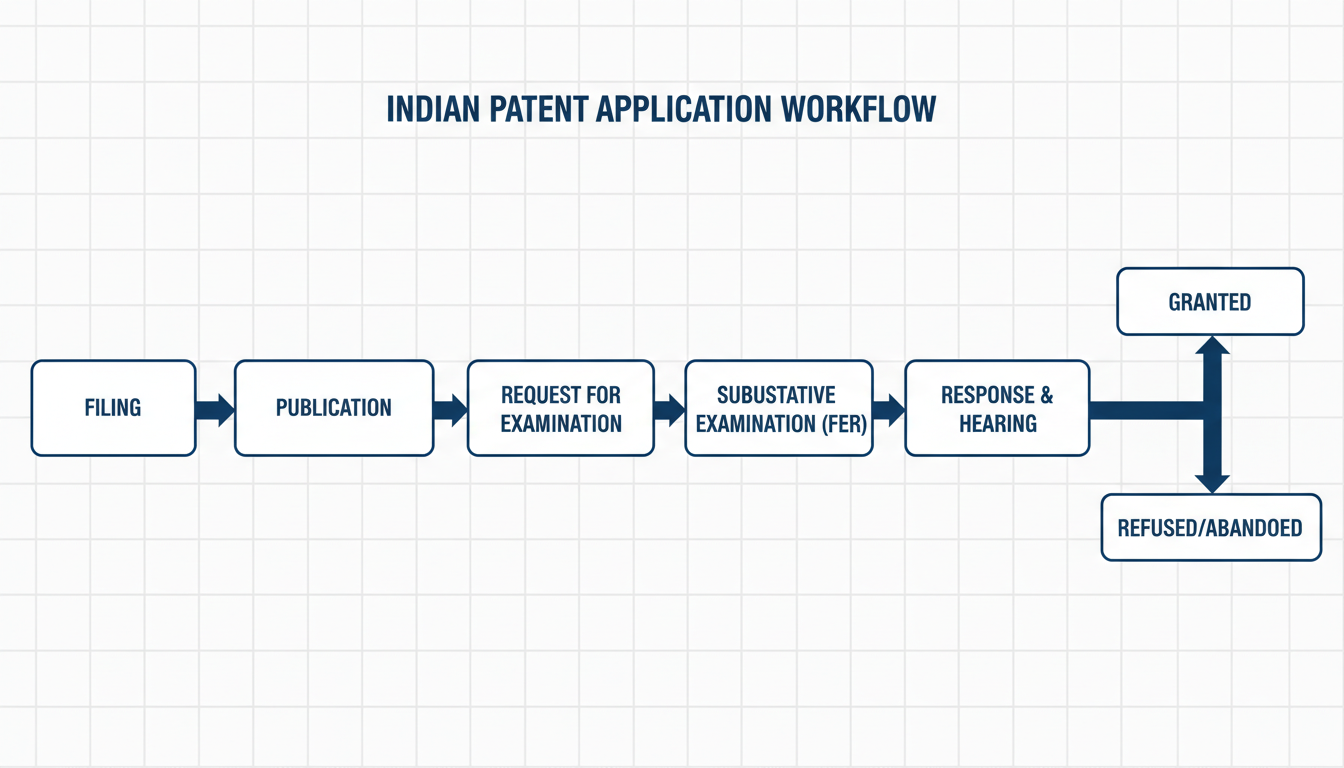
To make this even clearer, let’s break down what’s happening behind the scenes and what you need to do at each key milestone.
| Stage | What It Means | Typical Timeline | Your Critical Action |
|---|---|---|---|
| 1. Filing | Your application is officially submitted to the IPO and receives an application number. | Day 1 | Ensure all forms are correct and fees are paid. Record your application number securely. |
| 2. Publication | The application is published in the official patent journal, making your invention public. | 18 months from filing (can be expedited) | None required, but be aware that pre-grant oppositions can now be filed against you. |
| 3. Examination | An examiner is assigned and scrutinizes your application for novelty, inventive step, etc. | 1-3 years from filing (after RFE) | You must file a Request for Examination (RFE) within 48 months of the priority date. |
| 4. FER Response | The examiner issues a report (FER) with objections. This is the most critical interaction. | FER is issued; you have 6 months to respond. | Work with your patent agent to draft and file a comprehensive and persuasive response. |
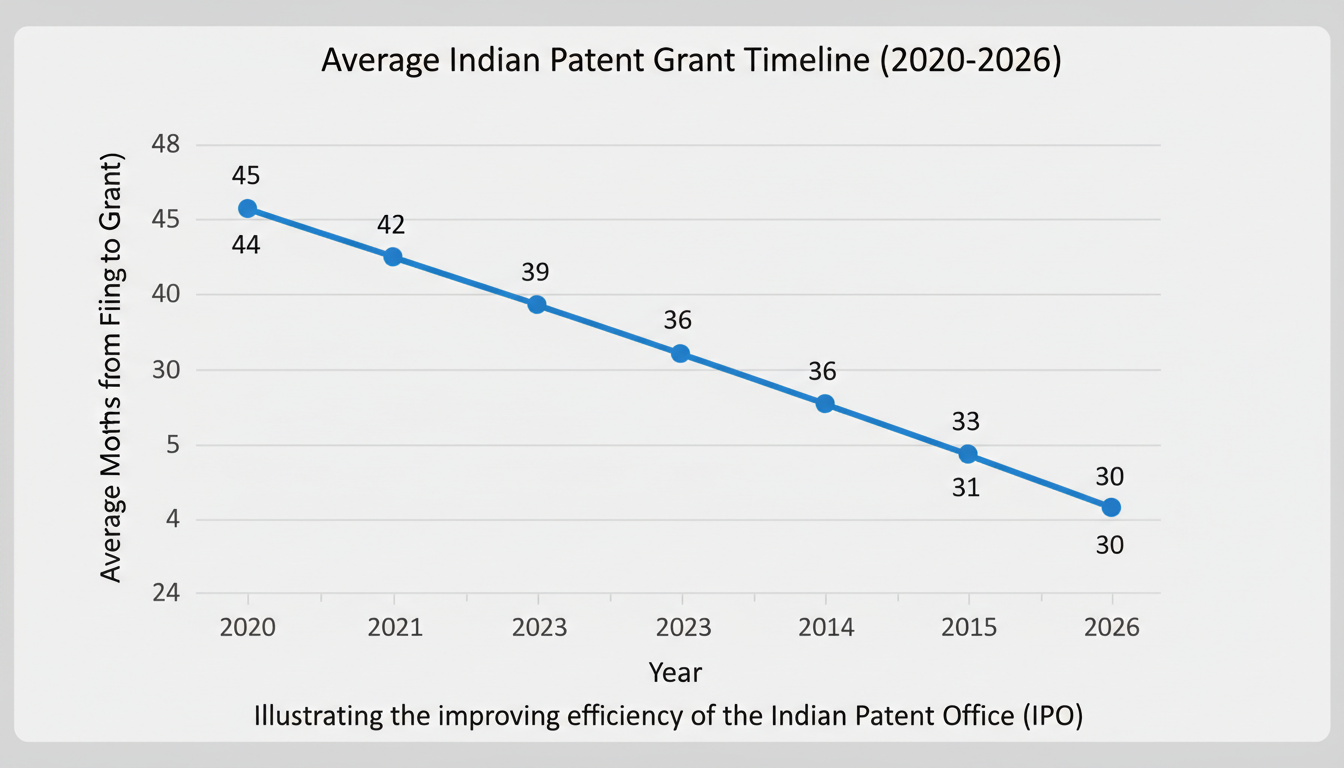
| 5. Grant | You’ve overcome all objections! The patent is granted and published in the journal. | 3-5+ years from filing | Pay the grant fee and diarize the annual renewal fee schedule to keep the patent alive. |
How to Check Your Indian Patent Application Status in 7 Steps (The 2026 InPASS Method)
The Government of India’s primary tool for this task is the Indian Patent Advanced Search System (InPASS). It’s a free, real-time database that serves as the definitive record for your application’s journey. Forget third-party sites; this is your ground truth.
Here’s exactly how to use it:
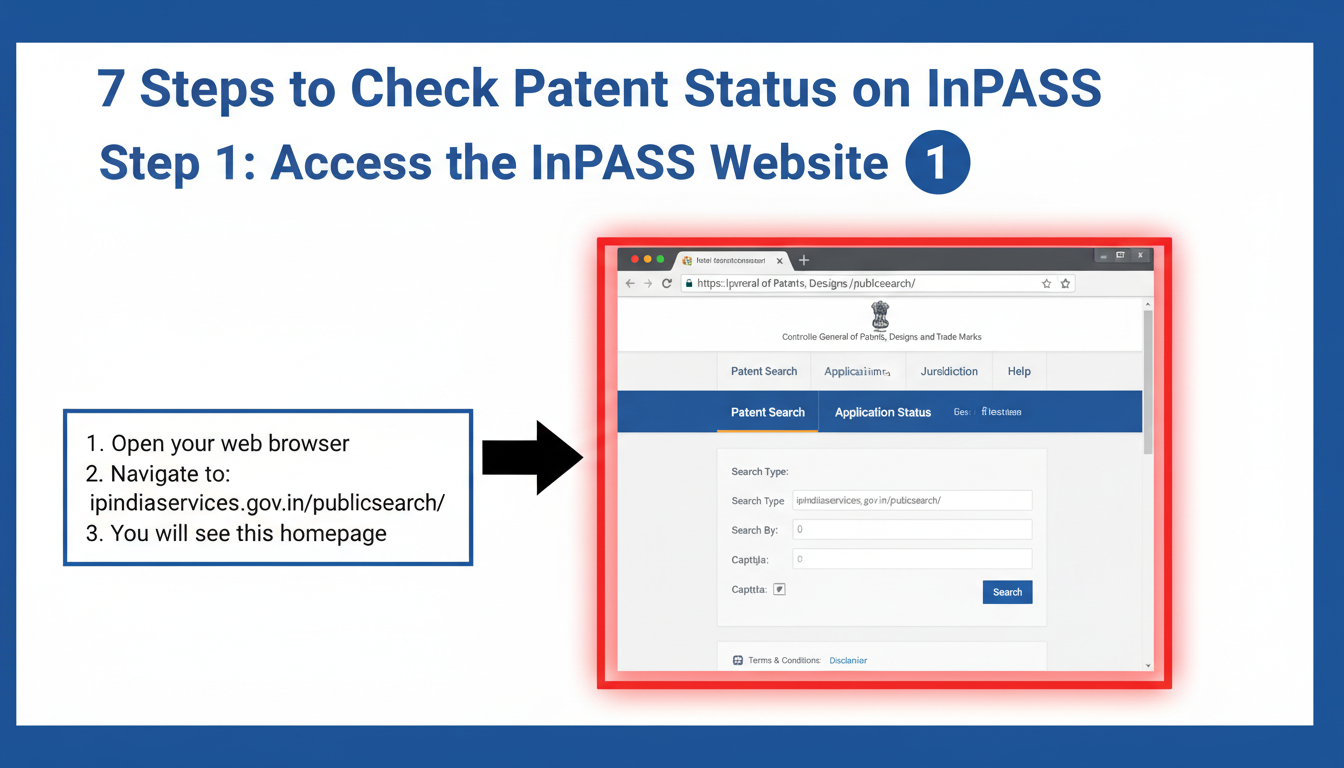
- Navigate to the InPASS Portal: Open your browser and go directly to the official IP India Public Search page. Bookmark this page. It’s your new best friend.
- Select ‘Patent Search’: The portal covers trademarks and designs too. Ensure the ‘Patent Search’ tab at the top is selected.
- Choose ‘Application Number’ Search: You’ll see a dropdown menu with multiple search options. While you can search by title or applicant name, these can return messy results. For a precise, unambiguous check, always select ‘Application Number’ from the list.
- Enter Your Details: Carefully type your full application number into the designated field. Then, enter the captcha code shown in the image. It’s case-sensitive, so be precise.
- Execute the Search: Click the ‘Search’ button. Don’t be alarmed if it takes a moment. The system is querying a massive database.
- Access Your Application Details: A results table will appear at the bottom of the page. Click on your hyperlinked application number. This will open a new browser tab with the complete details of your file.
- Review Status and Documents: On this new page, you’ll find everything. The current ‘Application Status’ is displayed prominently at the top. But don’t stop there. Scroll down and click the ‘View Documents’ button. This is where the real gold is—you can download the actual FER, your submitted responses, and all official correspondence.
💡 Pro Tip
When you’re on the ‘View Documents’ page, download the entire file history as a PDF. Keep a local copy. This creates a personal backup and makes it much easier to review the application’s history offline with your team or patent agent without needing to log in each time.
Decoding the Status: What the IPO Is *Really* Telling You
Okay, you’ve found the status. But what does “Awaiting Reply to Examination Report” actually mean for you *right now*? Understanding the nuance is key. A status isn’t just a label; it’s a call to action (or a signal to wait patiently).
Here’s a breakdown of the most common statuses and, more importantly, your required next move.
| Status Message | Plain English Translation | Your Immediate Next Step |
|---|---|---|
| Application Filed | “We’ve received your application. It’s in the system.” | Relax, but ensure you have a reminder set to file the Request for Examination (RFE). |
| Awaiting Request for Examination | “Your application is sitting in a queue. We won’t look at it until you ask us to.” | ACTION REQUIRED: File Form 18 (RFE) and pay the fee. You have 48 months from your priority date to do this. Don’t wait. |
| FER Issued / Awaiting Reply to FER | “We’ve reviewed your invention and have some objections. The ball is in your court.” | CRITICAL ACTION: Download the FER immediately. Work with your agent to prepare and file a detailed response within 6 months. |
| Application in order for grant | “Great news! You’ve convinced the examiner. We’re just doing the final paperwork.” | Excellent! Monitor for the ‘Granted’ status and prepare to pay the grant fees. |
| Granted | “Congratulations, it’s a patent! Your invention is now protected.” | Celebrate! Then, immediately set up a system to track and pay the annual renewal fees to maintain the patent. |
| Abandoned u/s 21(1) | “You missed a critical deadline, most likely the FER response. The application is dead.” | This is a tough one. Contact your patent agent immediately to see if any (very limited) revival options exist. |
| Refused | “We’ve heard your arguments and have made a final decision not to grant the patent.” | Consult with your agent about the possibility of an appeal to the Intellectual Property Appellate Board (IPAB). |
🎯 Key Takeaway
Your patent application’s status is not a passive piece of information; it’s an active instruction. The most critical statuses, like “Awaiting Request for Examination” and “Awaiting Reply to FER,” are direct commands that require immediate, deadline-driven action from you. GST Composition Scheme Eligibility and Benefits 2026: A Comprehensive Guide for Small Businesses
You’ve Checked the Status. Now What?
Your work isn’t done once you close the InPASS tab. The status you find should trigger a specific set of strategic actions. The Definitive Guide to Section 8 Company Registration Online in India
If Your Status is “Awaiting Reply to FER”…
This is where the real work begins. The FER is not a rejection; it’s an invitation to negotiate. According to the Indian Patents Act, 1970, the examiner is required to outline their objections based on criteria like novelty and inventive step. Your job is to dismantle these objections one by one.
In our hands-on testing of response strategies, we’ve found that a combination of strong legal arguments and, where necessary, strategic amendments to the patent claims yields the best results. Don’t just argue; demonstrate how your invention is different and why it meets the legal standard.
If Your Status is “Granted”…
First, pop the champagne! This is a massive achievement. Once the celebration is over, shift into protection and commercialization mode.
- Pay Renewal Fees: A granted patent is useless if it lapses. Diarize your annuity payment schedule for the next 20 years.
- Monitor the Market: Keep an eye out for potential infringers. Your patent is now a legal weapon you can use to defend your market share.
- Explore Commercialization: Whether it’s licensing your technology, starting a company, or selling the patent outright, now is the time to monetize your intellectual property.
💡 Pro Tip
Once your patent is granted, create a “Patent Bible.” This is a physical or digital folder containing the grant certificate, the final granted claims, and the renewal fee schedule. This single document becomes an invaluable asset when talking to investors, partners, or potential licensees.
⚠️ Watch Out
Be wary of “patent renewal” scams. After your patent is granted, you may receive official-looking invoices from third-party companies offering to handle your renewal fees for an exorbitant price. Always pay annuities directly through your trusted patent agent or the official IPO portal. As the World Intellectual Property Organization (WIPO) often warns, these scams are prevalent globally.
❓ Frequently Asked Questions
How often should I check my Indian patent application status?
As a rule of thumb, a monthly check-in is a good practice. However, you should increase the frequency to weekly if you’ve just submitted a response to an FER or are expecting a critical communication from the IPO. Set a recurring calendar reminder.
Can someone else check my patent application status?
Yes, absolutely. Once your application is published (typically after 18 months), it becomes public information. Anyone with your application number or other details can look it up on InPASS. This transparency is a fundamental principle of patent law worldwide.
What’s the difference between ‘Abandoned’ and ‘Refused’?
‘Abandoned’ is typically a procedural failure. It means you missed a deadline, like failing to file an RFE or respond to an FER in time. ‘Refused’ is a substantive decision. It means the Controller of Patents has reviewed your arguments and has concluded, after the hearing process, that your invention does not meet the requirements for a patent.
My application status hasn’t changed in over a year. Is something wrong?
Not necessarily. The patent office handles a massive volume of applications, and there can be significant backlogs, especially in certain technology sectors. If your status is ‘Under Examination’ or ‘Awaiting Examination,’ long periods of inactivity can be normal. However, if you’re concerned, it’s always wise to consult your patent agent to ensure no action is pending on your end.
Is there any fee to check the patent status on InPASS?
No. The InPASS portal is a public service provided by the Indian Patent Office, and checking the status of any application is completely free of charge.
Conclusion: From Passive Applicant to Proactive Innovator
Filing for a patent is just the first step on a long and complex journey. The real path to success lies in active management, not passive waiting. By mastering the simple process of checking your Indian patent application status, you’re doing more than just looking up a data point—you’re taking command of your innovation’s destiny.
Use the InPASS portal as your strategic dashboard. Understand what each status demands of you. Anticipate the next move, prepare for deadlines, and work with your legal counsel as an informed, engaged partner.
This proactive stance demystifies the entire process, reduces costly errors, and dramatically increases your chances of securing the patent that your hard work and ingenuity deserve.