
Here is the cold, hard truth: the Income Tax Department does not accept “I forgot” as a valid excuse. In the high-stakes world of Indian business compliance, missing a deadline isn’t just a minor administrative slip-up—it’s a trigger for automatic penalties, interest accumulation, and the kind of scrutiny that keeps CFOs awake at night.
If you are reading this, you are likely staring down the barrel of the Audit Last Date 2026. Whether you run a private limited company, work as a high-earning freelancer, or manage finances for a large turnover entity, the clock is ticking.
In this guide, we aren’t just listing dates. We are going to walk you through the exact timeline for Assessment Year 2026-27, explain the nuances between tax audits and statutory audits, and give you a battle-tested strategy to file on time, every time. Let’s get your books in order.
🎯 Key Takeaway
For the Assessment Year 2026-27, the critical Audit Last Date for filing the Tax Audit Report is September 30, 2026. However, your Income Tax Return (ITR) filing deadline extends to October 31, 2026. Do not confuse the two—filing the return without the audit report is a recipe for a “Defective Return” notice.
The 2026 Compliance Calendar: Dates You Cannot Ignore
Let’s cut through the noise. If you are navigating the financial year ending March 31, 2026, you are entering Assessment Year (AY) 2026-27. The deadlines are staggered to allow the tax department to process data systematically.
In our experience working with diverse business entities, confusion often arises between the Audit Report deadline and the ITR Filing deadline. They are not the same.
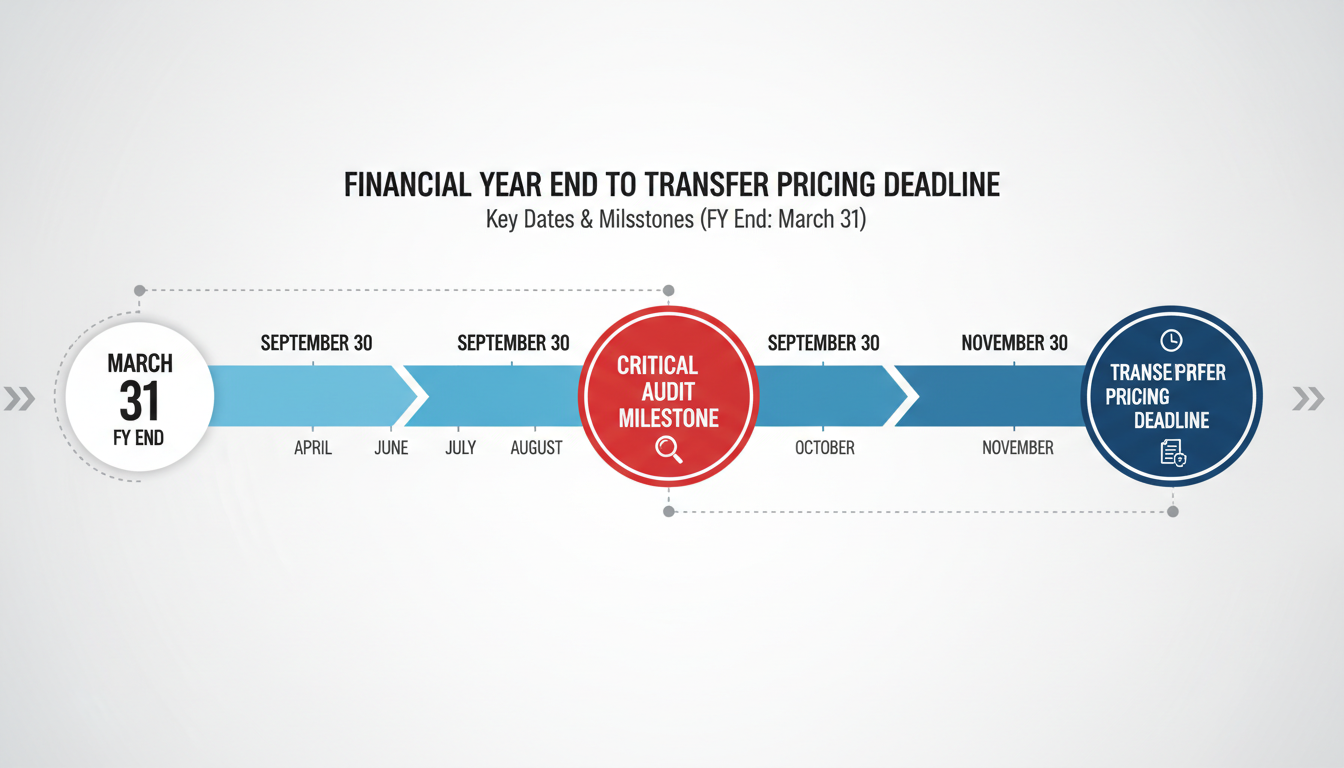
Here is the definitive schedule you need to mark on your calendar right now:
| Compliance Activity | Applicable Law | Deadline (AY 2026-27) |
|---|---|---|
| Tax Audit Report Filing | Income Tax Act (Sec 44AB) | September 30, 2026 |
| ITR Filing (Audit Cases) | Income Tax Act (Sec 139) | October 31, 2026 |
| Transfer Pricing Report (Form 3CEB) | Income Tax Act (Sec 92E) | October 31, 2026 |
| ITR Filing (Transfer Pricing Cases) | Income Tax Act | November 30, 2026 |
| Company AGM (Statutory Audit Completion) | Companies Act, 2013 | September 30, 2026 |
💡 Pro Tip
Don’t wait until September 30th to upload your Tax Audit Report. The e-filing portal historically experiences massive server loads and slowdowns during the last 48 hours of the month. Aim to file by September 20th to avoid technical glitches.
Income Tax Audit (Sec 44AB): Are You on the List?
Not every business needs a tax audit. The government has relaxed norms significantly over the last few years to promote digital transactions. However, if you cross specific thresholds, the audit last date 2026 becomes your most important deadline.
According to the Income Tax Department of India, you are mandated to get your accounts audited by a Chartered Accountant if:
- Business Turnover > ₹1 Crore: This is the standard limit.
- Business Turnover > ₹10 Crores (Digital): If your cash receipts and cash payments are both less than 5% of your total volume, your audit threshold jumps to ₹10 Crores. This is a massive relief for digital-first businesses.
- Professionals (Doctors, Architects, Tech, etc.): If your gross receipts exceed ₹50 Lakhs.
- Presumptive Scheme Opt-outs: If you previously opted for the presumptive taxation scheme (Section 44AD/44ADA) but are now declaring profit margins lower than the prescribed 8% (or 6%) and your income exceeds the basic exemption limit.
The “Presumptive” Trap
Here is a scenario we see often: A freelancer declares 50% of their income as profit for three years under Section 44ADA. In the fourth year, they have high expenses and want to declare only 20% profit. Because they dropped out of the scheme, they are suddenly liable for a mandatory audit, regardless of the ₹50 Lakh limit. Watch out for this.
The Cost of Non-Compliance: Why You Can’t Miss the Date
What happens if you miss the audit last date 2026? It’s not pretty. The penalties are designed to hurt, serving as a deterrent against lethargy.
Under Section 271B, the Assessing Officer may impose a penalty equal to:
- 0.5% of your total sales/turnover, OR
- ₹1,50,000
(Whichever is lower).
But wait, the financial penalty is actually the “good” news. The bad news is the collateral damage to your tax profile.
⚠️ Watch Out
Loss of Carry Forward: If you miss the ITR deadline because your audit wasn’t ready, you lose the right to carry forward business losses to future years. If you had a bad year in 2025-26 with a ₹10 Lakh loss, filing late means you cannot offset that loss against profits in 2027. That is a direct cash loss.
Compliance vs. Penalty: A Cost Analysis
Let’s look at the numbers. Is it worth rushing a sloppy audit or delaying it?
| Scenario | Immediate Cost | Long-Term Impact |
|---|---|---|
| Filing on Time | CA Fees (Standard) | Clean record, losses carried forward, no notices. |
| Filing Late (Audit Report) | CA Fees + up to ₹1.5L Penalty | High risk of scrutiny assessment. |
| Filing Late (ITR) | Late Fees (Sec 234F) + Interest (Sec 234A) | Losses lapse completely. Prosecution risk in extreme cases. |
Company Audit Deadlines: The MCA Angle
If you are running a Private Limited Company or an OPC, you have a dual master: The Income Tax Department and the Ministry of Corporate Affairs (MCA). While the tax audit date is September 30th, your statutory audit under the Companies Act, 2013, is tied to your Annual General Meeting (AGM).
Your AGM must be held within 6 months of the financial year-end (i.e., by September 30, 2026). Here is the catch: You cannot hold an AGM without audited financial statements.
This means your statutory audit must be signed off by your auditors before the AGM notices are sent out (usually 21 days prior). Practically, this moves your internal deadline to early September 2026.
For official regulations on AGM and statutory filings, always refer to the Ministry of Corporate Affairs.
Step-by-Step: How to Survive Audit Season 2026
Panic usually sets in around August. You can avoid that. Based on successful audit cycles we’ve managed, here is a step-by-step workflow to ensure you hit the audit last date 2026 with zero stress.
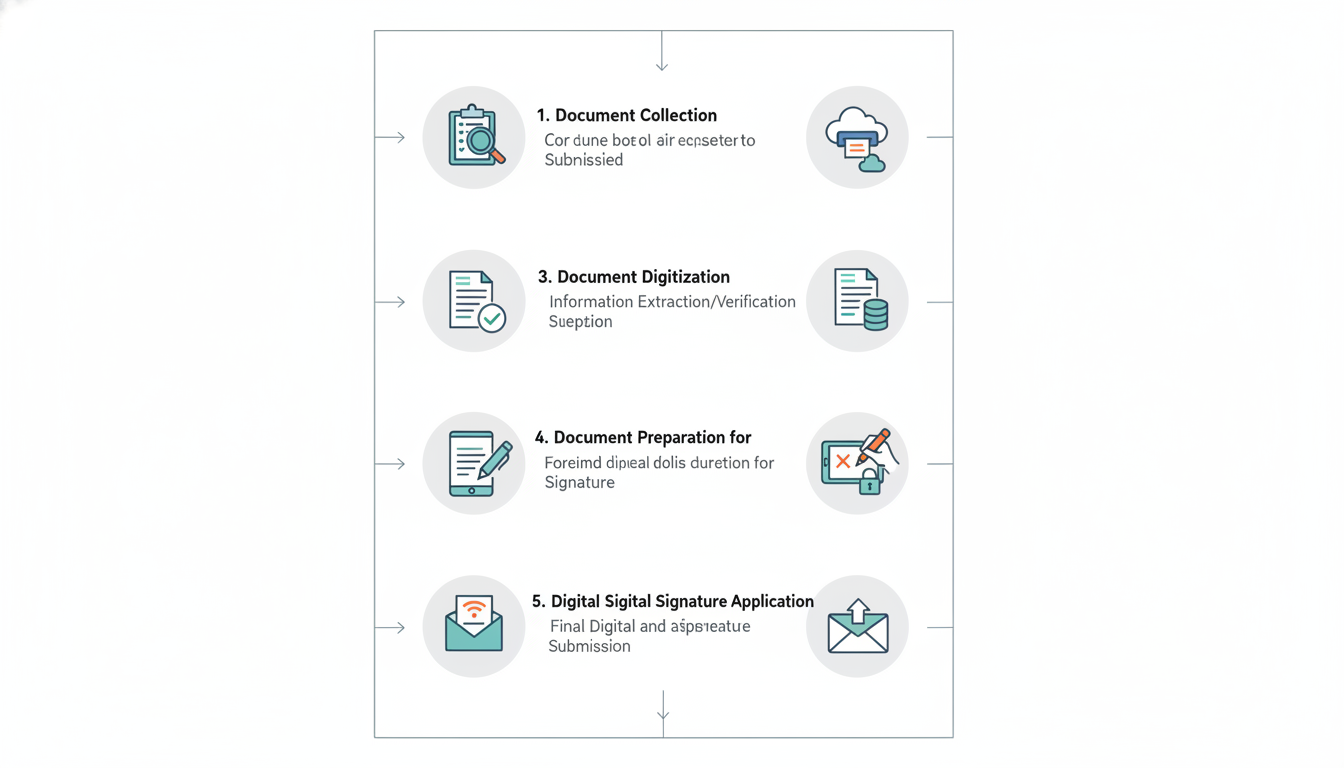
Step 1: The “April Clean-Up” (April – May 2026)
Don’t wait. As soon as March ends, close your books. Ensure all sales and purchase invoices for March are recorded. Reconcile your bank statements immediately. If there are uncleared cheques, identify them now.
Step 2: Third-Party Confirmations (June 2026)
Auditors love external evidence. Send out balance confirmation requests to your top 10 debtors and creditors. Getting these signed early prevents the frantic back-and-forth in September.
Step 3: The TDS & GST Reconciliation (July 2026)
This is where most audits get stuck.
TDS: Verify that TDS deducted matches the challans paid. Discrepancies here lead to expense disallowance (30% of the expense added back to your income!).
GST: Match your GSTR-3B turnover with your sales ledger. Any difference needs a reconciliation statement.
Step 4: Draft Financials (August 2026)
Hand over the draft balance sheet and P&L to your CA. Let them run their queries while you still have time to find missing vouchers.
Step 5: Digital Signatures (September 1-15, 2026)
Ensure your Digital Signature Certificate (DSC) hasn’t expired. You’d be surprised how many filings get delayed because a director’s DSC expired on September 28th.
💡 Pro Tip
Use cloud-based accounting software (like Zoho or Tally Prime on Cloud). It allows your auditor to check entries remotely in real-time, saving weeks of data transfer time.
Transfer Pricing & GST: The Other Deadlines
While the Tax Audit is the main event, don’t ignore the side quests.
Transfer Pricing (Form 3CEB): If you have international transactions with associated enterprises (like a parent company abroad), your audit last date extends to October 31, 2026. This is a highly specialized audit requiring a detailed study of “Arm’s Length Pricing.”
GST Reconciliation (GSTR-9C): While the requirement for a CA-certified GST audit was removed a few years ago, taxpayers with turnover above ₹5 Crores must still file a self-certified reconciliation statement (GSTR-9C). The deadline is usually December 31, 2026. However, the data for this comes from your Tax Audit, so accuracy in September is vital for December.
⚠️ Watch Out
The UDIN Requirement: Every audit report certified by a CA must have a Unique Document Identification Number (UDIN) generated by the ICAI. Ensure your CA generates and updates this UDIN within 60 days of signing, or your audit report will be treated as invalid by the Income Tax portal.
Conclusion: Stay Ahead of the Curve
The audit last date 2026 is a statutory boundary, but it shouldn’t be a finish line you cross gasping for breath. By understanding the timeline—September 30th for Tax Audits and October 31st for ITRs—you can plan your financial year with precision.
Remember, an audit is not just a compliance burden; it’s a health check. A clean audit report builds trust with banks, investors, and tax authorities. Start your preparation early, communicate clearly with your accountants, and treat the deadline as sacrosanct.
Don’t let a calendar date dictate your business’s fate. Get your books in order today.
❓ Frequently Asked Questions
What is the exact Audit Last Date for AY 2026-27?
For most businesses liable under Section 44AB, the audit report must be filed by September 30, 2026. If you have international related-party transactions (Transfer Pricing), the date is October 31, 2026.
Can I file my ITR after the audit deadline?
Yes. The ITR filing deadline for audit cases is October 31, 2026, which is one month after the audit report deadline. However, you must file the audit report first.
What is the penalty for missing the audit deadline in 2026?
Under Section 271B, the penalty is 0.5% of your total turnover or ₹1,50,000, whichever is lower. This is in addition to potential interest on tax dues.
Do private limited companies have a different audit date?
Private Limited companies must complete their statutory audit before their AGM. Since the AGM deadline is September 30, 2026, the audit is effectively due by then as well.
Is GST Audit still mandatory in 2026?
The mandatory GST audit by a CA was removed. However, if your turnover exceeds ₹5 Crores, you must file a self-certified reconciliation statement (GSTR-9C) by December 31, 2026.
Read Also:
- Unlock Your HRA Tax Savings in 2026
- Section 8 Company Registration: The Ultimate 2026 Guide
- 2026’s Most Important Business Role
- Winding Up a Company in India (2026): A Director’s Guide
- Limitation of Liability Clause: A 2026 Guide to Finding It
- Audit Last Date 2026-27 in India: Key Deadlines & Guide
- Verify Any Indian Company in 2026