The gig economy in India has witnessed an explosive boom over the last decade. From graphic designers and content writers to software developers and consultants, millions are ditching the traditional 9-to-5 for the freedom of self-employment. However, with great freedom comes the great responsibility of managing your own finances, specifically freelancer income tax India regulations.
Unlike salaried employees, whose taxes are deducted at the source and handled largely by their employers, freelancers must navigate the complex waters of the Income Tax Act themselves. Understanding the nuances of freelancer income tax India is not just about compliance; it is about smart financial planning that can save you a significant amount of money.
In this comprehensive guide, we will break down everything you need to know about taxation for freelancers, from choosing the right ITR form to leveraging presumptive taxation schemes.
Understanding the Basics of Freelancer Income Tax India
The first step in mastering your taxes is understanding how the Indian government views your income. Under the Income Tax Act, 1961, income earned by a freelancer is classified under the head “Profits and Gains of Business or Profession”. Essentially, you are treated as a micro-business owner.
When dealing with freelancer income tax India, your taxable income is not your gross revenue. It is your Net Income. This is calculated as:
Gross Receipts (Total Invoices Paid) – Business Expenses = Taxable Income
How Freelancer Income Tax India Differs from Salaried Tax
Salaried individuals file taxes based on the salary slips provided by their employers. They use Form ITR-1 or ITR-2. However, for freelancer income tax India, the process is distinct because you can claim business-related expenses to lower your tax liability. If you have both salary income (from a part-time job) and freelance income, you must report both, but your primary filing will shift towards business forms like ITR-3 or ITR-4.
For those familiar with filing for salary, you might want to review how to file ITR-1 online to understand the baseline, but remember, as a freelancer, your requirements are more extensive.
Section 44ADA: The Golden Rule for Freelancer Income Tax India
If you find the idea of maintaining detailed accounting books and auditing expenses daunting, the Government of India has a solution tailored for you: The Presumptive Taxation Scheme under Section 44ADA. This section is a cornerstone of freelancer income tax India planning.
This scheme is available to specific professionals (engineers, doctors, architects, interior decorators, technical consultants, etc.) whose total gross receipts are less than ₹50 Lakhs (limit increased to ₹75 Lakhs in Budget 2023 provided cash receipts are less than 5%).
Flat 50% Deduction
Under Section 44ADA, you can simply declare 50% of your gross receipts as your income. The remaining 50% is automatically assumed to be your business expense. You do not need to maintain detailed books of accounts.
Simplified Filing
Professionals opting for this scheme can file ITR-4, which is much shorter and simpler than ITR-3. This reduces the compliance burden significantly for freelancers.
Example: If you are a freelance web developer earning ₹20 Lakhs a year, under normal scrutiny, you would have to prove expenses. Under Section 44ADA, you declare ₹10 Lakhs as income and pay tax only on that ₹10 Lakhs. The other ₹10 Lakhs is tax-free allowance for expenses.
GST Registration and Freelancer Income Tax India
A common point of confusion regarding freelancer income tax India is the applicability of the Goods and Services Tax (GST). Income Tax and GST are two separate entities.
- The 20 Lakh Threshold: If your total turnover from services exceeds ₹20 Lakhs in a financial year (₹10 Lakhs for special category states), GST registration is mandatory.
- Inter-state Supply: Technically, inter-state service providers need GST regardless of turnover, but a notification provided relief exempting them up to the ₹20 Lakh limit.
- Export of Services: If you work with international clients, you must obtain a GST Letter of Undertaking (LUT) to export services without paying IGST. This is considered a “zero-rated supply.”
Once registered, you must file monthly or quarterly returns. For a detailed breakdown of these timelines, refer to this guide on monthly and quarterly GST filing.
Deductible Expenses to Reduce Freelancer Income Tax India
If you choose not to opt for the presumptive scheme (Section 44ADA) because your actual profit margin is lower than 50%, or you are ineligible, you must file ITR-3. In this scenario, lowering your freelancer income tax India liability depends on claiming legitimate business expenses.
Office Expenses
Rent for your workspace, electricity bills (proportionate if working from home), and office supplies are fully deductible.
Communication
Internet bills and mobile phone charges used for client communication are valid business expenses. Who is Eligible for GST Composition Scheme in India?
Depreciation
You can claim depreciation on capital assets like laptops, printers, cameras, and furniture used for your freelance work. 7 Critical Rules for Input Tax Credit GST Every Business Must Master in 2025
Professional Fees
Money paid to sub-contractors, domain hosting fees, and subscriptions to software (Adobe, Zoom, etc.) are deductible.
TDS: The Hidden Component of Freelancer Income Tax India
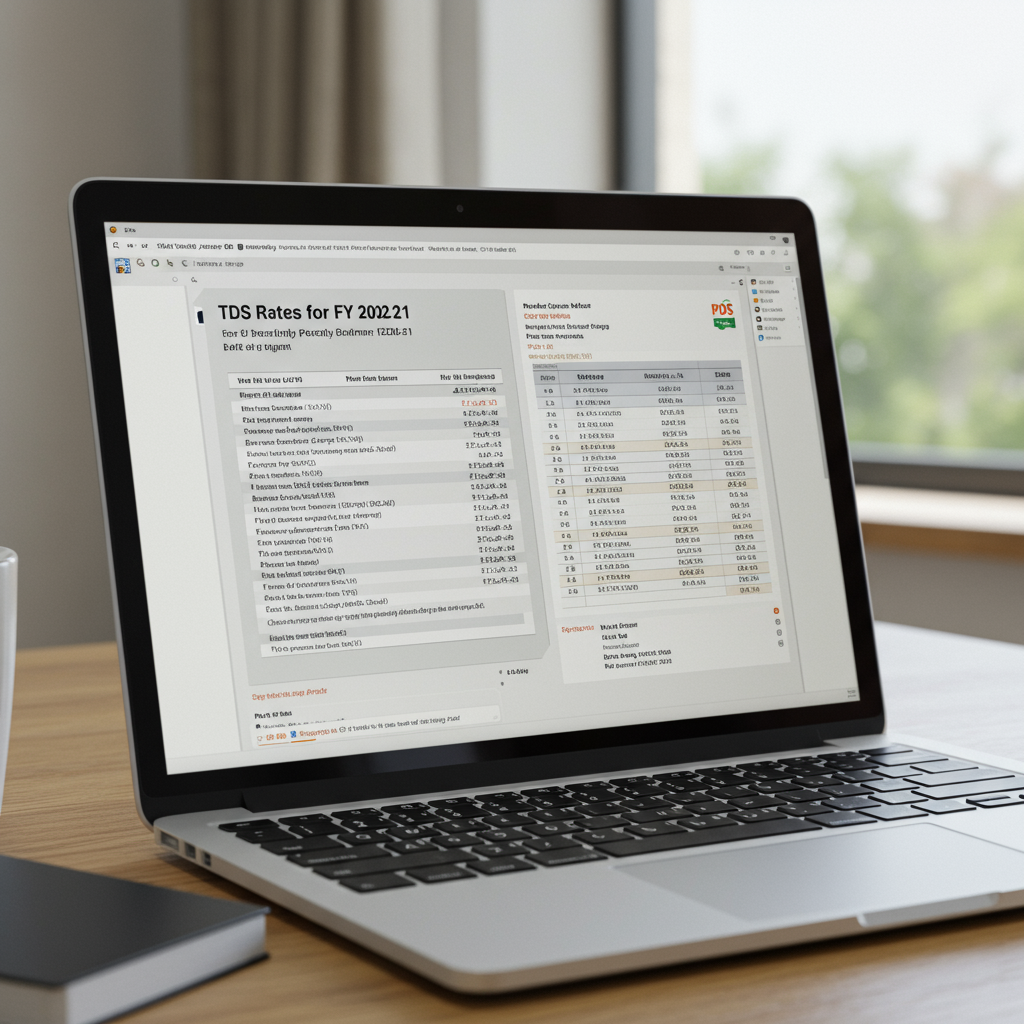
When you work with Indian clients, they are often required to deduct Tax Deducted at Source (TDS) before paying you. Usually, this is 10% under Section 194J for professional services (or 1% for technical services in some cases).
This deducted amount is not lost. It is tax you have already paid to the government. You can view these credits in your Form 26AS or the Annual Information Statement (AIS). When calculating your final freelancer income tax India liability, you subtract the TDS already paid. If your liability is lower than the TDS deducted, you are eligible for a tax refund.
Advance Tax: Deadlines You Cannot Miss
One of the most critical aspects of freelancer income tax India is Advance Tax. If your total tax liability for the year exceeds ₹10,000, you are required to pay tax in installments during the year, rather than a lump sum at the end.
Failure to pay Advance Tax results in interest penalties under Section 234B and 234C. The schedule is generally:
- 15th June: 15% of tax liability
- 15th September: 45% of tax liability
- 15th December: 75% of tax liability
- 15th March: 100% of tax liability
Note: If you opt for Section 44ADA (Presumptive Scheme), you can pay 100% of your advance tax by 15th March.
Choosing the Right ITR Form
Selecting the correct form is vital for proper freelancer income tax India filing. Using the wrong form can render your return defective.
- ITR-4 (Sugam): Best for freelancers opting for the Presumptive Taxation Scheme (Section 44ADA). It is simple and requires minimal data.
- ITR-3: Required if you do not opt for presumptive taxation (claiming actual expenses), have capital gains, or have turnover requiring an audit.
For a deeper understanding of business structures that might necessitate different filings, check out this guide on business structure selection in India.
Conclusion
Navigating freelancer income tax India might seem intimidating at first, but with the right knowledge, it becomes manageable. By leveraging Section 44ADA, claiming legitimate expenses, and staying on top of Advance Tax deadlines, you can ensure compliance while maximizing your take-home earnings. Remember, the goal isn’t just to pay taxes; it’s to optimize your financial health. Always consult a Chartered Accountant (CA) if your income streams are complex to avoid penalties.
Frequently Asked Questions (FAQs)
Yes, freelancers are liable to pay income tax if their total income exceeds the basic exemption limit (₹2.5 Lakhs under the old regime or ₹3 Lakhs under the new regime). Income is taxed under “Profits and Gains of Business or Profession.”
For most freelancers with an income up to ₹75 Lakhs, ITR-4 is the best option as it covers the Presumptive Taxation Scheme (Section 44ADA). If you want to claim detailed expenses or have capital gains, you must file ITR-3.
Yes, if you work from a rented property, you can claim the rent as a business expense. If you work from home, you can claim a proportionate part of the electricity and internet bills, provided you file ITR-3. Under ITR-4 (Presumptive Scheme), expenses are assumed to be covered in the 50% deduction.
No, GST registration is generally not mandatory if your turnover is below ₹20 Lakhs (₹10 Lakhs for specific states). However, if you provide services to clients outside your state (inter-state) or outside India (export), voluntary registration might be beneficial or required depending on specific notifications.
You can save tax by opting for the Presumptive Taxation Scheme (Section 44ADA) which offers a flat 50% deduction. Additionally, you can invest in Section 80C instruments (PPF, ELSS, LIC) and pay for health insurance (Section 80D) to further reduce your taxable income.
Read Also:
- 10 Essential Rules of GST for E-Commerce Sellers: The Ultimate Compliance Guide – Visual Story
- Contractor Payments? Avoid This 2026 Tax Trap
- Form 26QB Filing (2026): Your Guide to TDS on Property
- How to Register a Trademark Online in 2026 (A Pro’s Guide)
- ADT-1 Filing: The Ultimate Guide to Appointing an Auditor (2026) – Visual Story