You just got your payslip. You scan past the big numbers—gross salary, HRA, special allowance—and then your eyes land on a small but persistent deduction: “P-Tax.”
What is that, exactly? Is it a tax on being a “professional”? And why is your colleague in another city paying a different amount?
If you’ve ever felt a flicker of confusion about this line item, you’re not alone. For millions of salaried employees, freelancers, and business owners, professional tax in India is a financial mystery hiding in plain sight. It’s a tax you can’t ignore, but one that few truly understand.
This isn’t just another dry tax guide. We’re going to pull back the curtain. You’ll learn exactly who needs to pay it, how the rates differ dramatically from state to state, and—most importantly—how you can use this small tax to legally reduce your much larger income tax bill. Let’s get started.
What Exactly is Professional Tax? (And Why Does It Exist?)
Think of Professional Tax not as a tax on your income, but as a state-level fee for the privilege of practicing a profession, trade, or employment within that state’s borders. It’s a direct tax, but unlike income tax which goes to the Central Government, this one fills the coffers of your state government.
The authority for states to levy this tax comes directly from Article 276 of the Indian Constitution. It’s a long-standing mechanism for states to generate their own revenue to fund local development and welfare schemes.
But here’s the crucial part: there’s a ceiling. The Constitution caps the maximum amount any state can charge a single person at ₹2,500 per year. Not a rupee more. While this might seem small, the penalties for not paying it can be surprisingly steep. We’ll get to that later.
Who’s on the Hook? Salaried Employees vs. Business Owners
The responsibility for paying professional tax falls into two distinct camps: salaried individuals and self-employed entities. The “how” and “when” of payment are completely different for each. In our experience advising businesses, this is one of the most common points of confusion.
Here’s a clear breakdown of your obligations:
| Category | Who is Responsible? | Key Obligation | Registration Required |
|---|---|---|---|
| Salaried Employees | Your Employer | The employer deducts P-Tax from your monthly salary and remits it to the state government on your behalf. | Employer needs a Professional Tax Registration Certificate (PTRC). |
| Self-Employed & Businesses | You (The Individual or Business) | You are directly responsible for paying the tax to the state government, typically on an annual or quarterly basis. | You need a Professional Tax Enrolment Certificate (PTEC). |
So, if you’re an employee, your company handles the logistics. Your only job is to check your payslip to ensure it’s being deducted correctly. But if you’re a freelancer, a consultant, a doctor with a private practice, or a business owner, the buck stops with you. You must register, calculate, and pay the tax yourself.
💡 Pro Tip
For salaried employees, your Form 16 (issued by your employer) is your proof that professional tax was deducted and paid. Always cross-verify the amount shown on your Form 16 with your payslips. This document is critical when you file your income tax return.
The Great Divide: 2026 Professional Tax Rates Across Major Indian States
Here’s where things get complicated. Not all states in India levy professional tax. Major states like Delhi, Haryana, Rajasthan, and Uttar Pradesh currently have no such tax. For those that do, the rates and income slabs are all over the map.
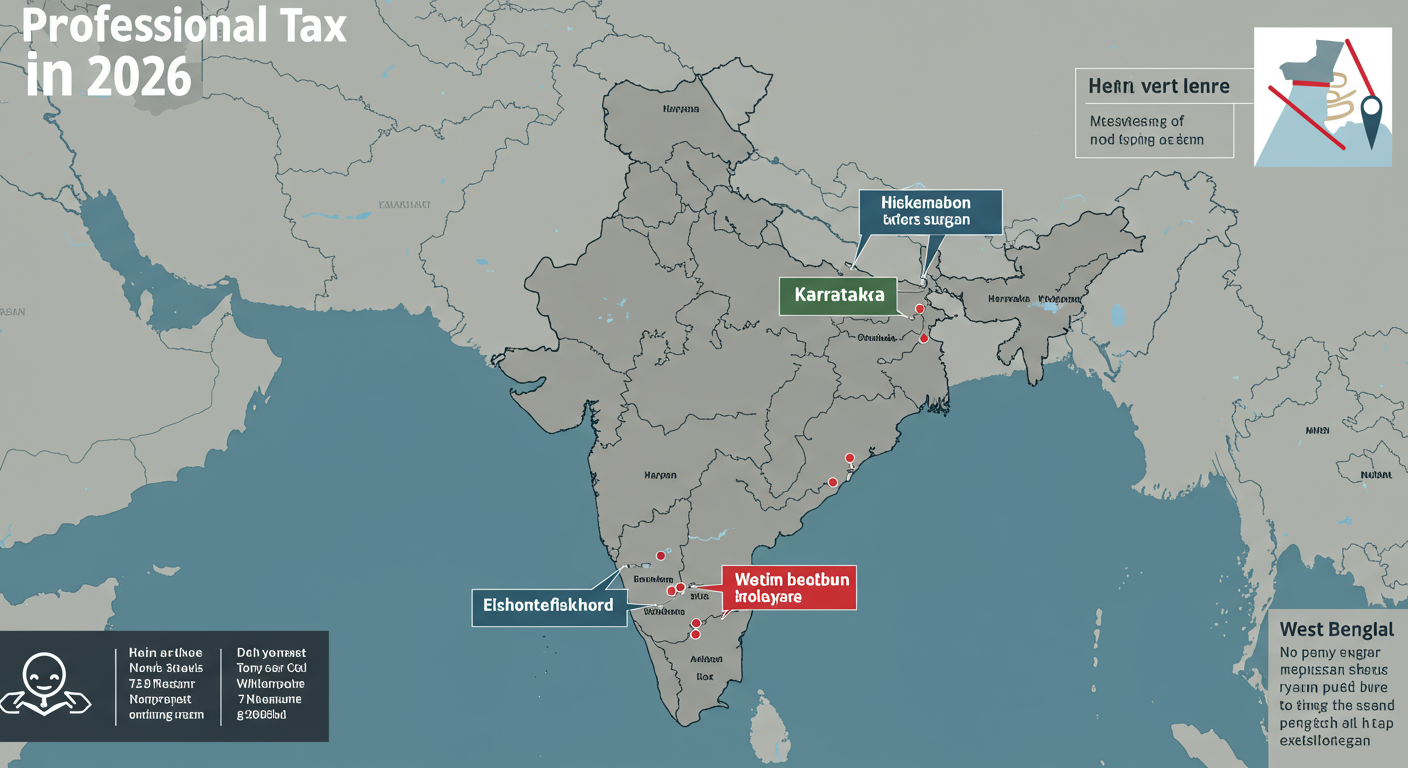
This is the most critical section to pay attention to. Below is a detailed comparison of the professional tax in India for key states as of 2026. These rates are subject to change based on state government notifications, so it’s always wise to double-check.
| State | Applicable To (Monthly Salary) | Monthly Tax Amount | Annual Total |
|---|---|---|---|
| Maharashtra | ₹7,501 to ₹10,000 (Men) ₹10,001+ (All) | ₹175 ₹200 for 11 months + ₹300 in Feb | ₹2,100 ₹2,500 |
| Karnataka | ₹25,000+ | ₹200 | ₹2,400 |
| West Bengal | ₹10,001 to ₹15,000 ₹15,001 to ₹25,000 ₹25,001 to ₹40,000 ₹40,001+ | ₹110 ₹130 ₹150 ₹200 | Up to ₹2,500 |
| Tamil Nadu | ₹21,001 to ₹30,000 (Half-Yearly) ₹30,001 to ₹45,000 (Half-Yearly) ₹45,001 to ₹60,000 (Half-Yearly) ₹60,001 to ₹75,000 (Half-Yearly) ₹75,001+ (Half-Yearly) | ₹135 ₹315 ₹690 ₹1,005 ₹1,250 | Up to ₹2,500 |
| Andhra Pradesh | ₹15,001 to ₹20,000 ₹20,001+ | ₹150 ₹200 | Up to ₹2,400 |
| Gujarat | ₹12,000+ | ₹200 | ₹2,400 |
⚠️ Watch Out
State governments can and do amend these tax slabs. Relying on outdated blog posts can lead to incorrect payments. Always verify the current rates on the official Commercial Tax Department website for your state before making a payment.
🎯 Key Takeaway
Professional Tax is not a uniform, nationwide tax. It’s a state-specific levy with wildly different rules and rates. Your location is the single most important factor in determining how much you pay, or if you pay at all.
The Silver Lining: How P-Tax Reduces Your Income Tax Bill
Okay, nobody likes paying taxes. But here’s some good news. The entire amount of professional tax you pay during the financial year is eligible for a deduction from your gross salary under Section 16(iii) of the Income Tax Act, 1961.
What does this mean in plain English? It directly reduces your taxable income. While the amount itself is small (max ₹2,500), it’s one of the few straightforward deductions available, especially if you opt for the New Tax Regime where most deductions are eliminated.
Let’s see it in action. Imagine an employee in Bengaluru, Karnataka:
- Gross Annual Salary: ₹12,00,000
- Professional Tax Paid (₹200/month): ₹2,400
Without the deduction, their taxable salary would be ₹12,00,000 (ignoring other deductions for simplicity). But with the P-Tax deduction:
Taxable Salary = Gross Salary – Professional Tax Deduction
Taxable Salary = ₹12,00,000 – ₹2,400 = ₹11,97,600 FSSAI Food Licence Renewal 2026: Your Guide to Avoiding Penalties
It might not seem like much, but why pay tax on money you’ve already paid to the state government? It’s your money—make sure you claim it. This is a key piece of information often overlooked in basic tax planning. 7 Crucial Rules of GST Audit Applicability Every Business Owner Must Know (2025 Update)
The Business Owner’s Compliance Playbook: A Step-by-Step Guide
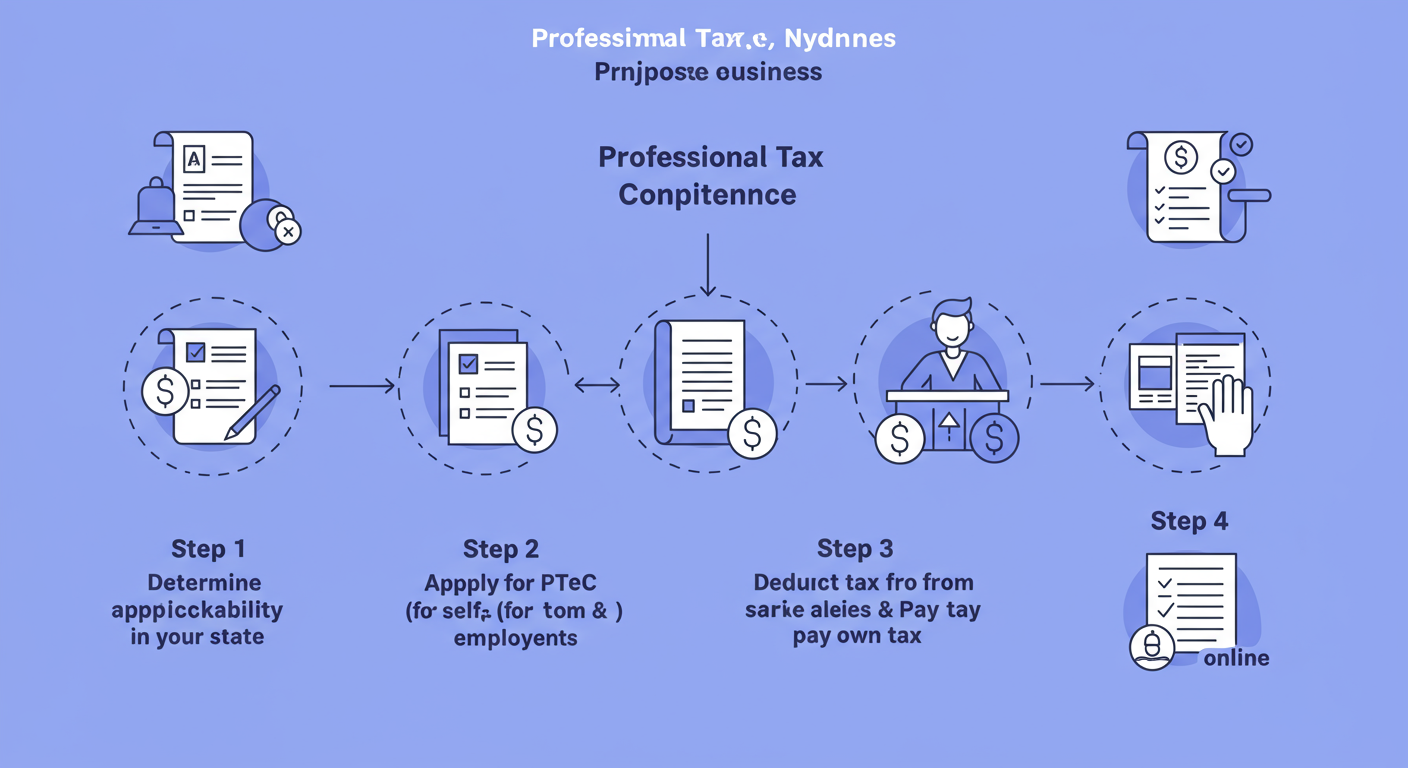
For entrepreneurs and freelancers, compliance is non-negotiable. Based on hands-on testing of various state portals, the process has become much more streamlined. Here’s your game plan:
- Step 1: Determine Your Liability. First, confirm if your state levies professional tax. If it does, you are liable to register. This applies even if you’re a one-person company or a freelancer working from home.
- Step 2: Obtain the Correct Certificate(s).
- PTEC (Professional Tax Enrolment Certificate): This is for the business entity itself (company, LLP, sole proprietor) or the practicing professional (doctor, lawyer, freelancer). You pay tax for your own “profession.”
- PTRC (Professional Tax Registration Certificate): This is mandatory if you have employees. It grants you the legal authority to deduct P-Tax from their salaries.
- Step 3: Navigate the State Portal. Visit the official Commercial Tax or GST department website of your state (e.g., `mahagst.gov.in` for Maharashtra). Look for “Professional Tax Registration” or “e-Services.”
- Step 4: Complete the Application. You’ll need your PAN, address proof, and business details. The process is almost entirely online now. After submission and verification, you’ll receive your PTEC/PTRC number.
- Step 5: Pay and File on Time. Mark your calendar! PTEC payments are usually due annually (often by June 30th). PTRC payments (for employee deductions) are typically due monthly. You must pay the tax and file a corresponding return (a statement of who you paid for).
💡 Pro Tip
Use a compliance calendar or set recurring digital reminders for your P-Tax payment and filing due dates. Most state portals do not send proactive reminders, and missing a deadline can trigger automatic penalties. Automation is your best friend here.
The “Get Out of Jail Free” Card: Who Is Exempt from Professional Tax?
While the rules are broad, states do provide exemptions for certain individuals. These are not uniform across India, but common exemptions often include:
- Members of the armed forces and reservists.
- Individuals with a specified level of physical disability (e.g., blindness, hearing impairment), as certified by a medical authority.
- Senior citizens over the age of 65 (this age limit varies by state).
- Parents or guardians of a child with a mental or physical disability.
- ‘Badli’ workers (temporary workers) in the textile industry.
Trust me on this one: don’t just assume you’re exempt. You must check the specific act or notification for your state, as the criteria can be very precise. You can usually find these details on the state’s tax department website or by consulting a local tax professional.
The High Cost of Neglect: Penalties for Non-Compliance
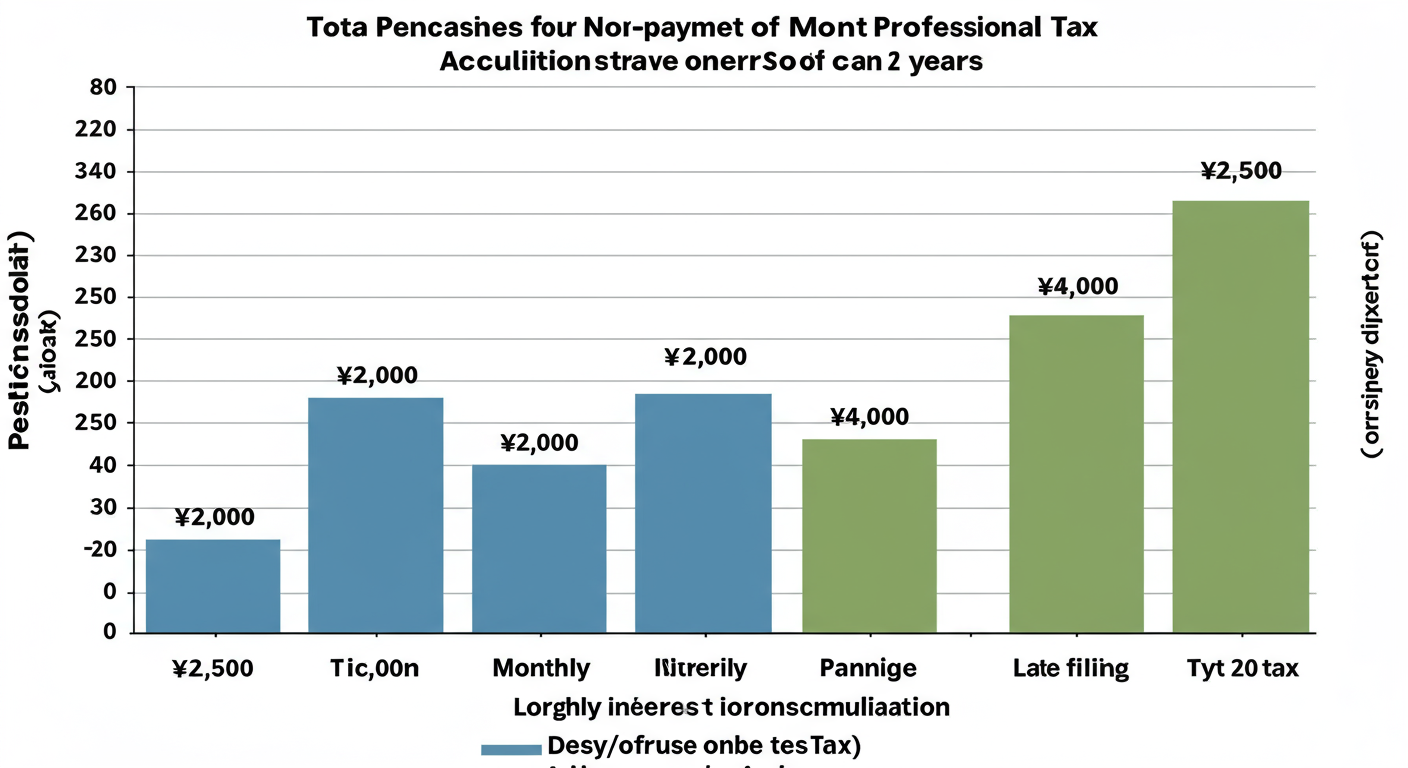
Don’t let a ₹2,500 tax turn into a ₹25,000 headache. The penalties for ignoring your professional tax obligations are real and they add up fast. From real-world cases we’ve handled, the costs of non-compliance almost always dwarf the original tax amount.
Here’s what you could be up against:
- Penalty for Late Registration: Failure to obtain a PTEC or PTRC within the prescribed time can attract a fixed penalty or a daily fine until you comply. In some states, this can be a flat ₹1,000 to ₹5,000.
- Interest on Late Payment: This is the most common penalty. If you miss the payment due date, states charge interest, typically around 1.25% to 2% per month on the outstanding tax. It compounds quickly.
- Penalty for Late Filing of Returns: Even if you’ve paid the tax, failing to file the return on time can trigger a separate penalty, often ranging from ₹1,000 to ₹2,000 per return.
The bottom line? It’s simply not worth the risk. The compliance process is straightforward, and the tax amount is minimal. Stay on top of it.
⚠️ Watch Out
Beware of phishing emails or fake notices demanding P-Tax payments. Always make payments and file returns directly through the official government portal. Never click on suspicious links or pay into private bank accounts. The National Portal of India is a good starting point to find official state government websites.
Your Next Step: From Confused to Compliant
Professional tax is no longer a mystery. You now know it’s a state-level fee, capped at ₹2,500 a year, with rules that change at the state border. You know that if you’re salaried, your employer handles it, and if you’re a business owner, the responsibility is yours.
Most importantly, you know it’s a deduction that saves you money on your income tax. It’s a small but significant piece of your overall financial picture.
So, what’s your immediate next step?
- Salaried Employee: Pull up your latest payslip. Find the “P-Tax” line. Does it match the rate for your state we discussed? Good. Now, make a mental note to ensure this deduction appears on your Form 16 next year.
- Freelancer/Business Owner: If you operate in a state that levies P-Tax and you haven’t registered, make it your #1 priority this week. Go to your state’s commercial tax website and start the PTEC registration process. It’s a small step that saves a world of future trouble.
Managing your finances is about controlling the small details. By mastering the rules of professional tax in India, you’ve just taken one more step toward complete financial clarity and control.
❓ Frequently Asked Questions
Is Professional Tax the same as Income Tax?
No, they are completely different. Professional Tax is a state-level tax on earning a livelihood, capped at ₹2,500/year, and its collection is governed by state laws. Income Tax is a central government tax on your net taxable income, with no upper limit, and is governed by the Income Tax Act, 1961.
I work remotely for a company in Karnataka, but I live in Delhi. Do I have to pay P-Tax?
Generally, professional tax liability is based on where the employee is physically working, not where the company is headquartered. Since Delhi does not levy professional tax, you would typically not be liable. However, company policies on this can vary, so it’s best to confirm with your HR department.
As a freelancer, do I need to pay P-Tax if my income is very low?
Yes, in most states. The liability for self-employed individuals is often not tied to an income slab but to the act of practicing a profession. The annual tax is a fixed amount (e.g., ₹2,500) regardless of whether you earn ₹1 lakh or ₹1 crore. You must obtain an Enrolment Certificate (PTEC) and pay.
Can I claim a refund for Professional Tax if I paid extra?
Unlike income tax, professional tax is generally not refundable. It’s a fixed levy. However, the amount you pay is fully deductible from your taxable income under Section 16(iii), which is how you get the financial benefit.
What is the constitutional basis for Professional Tax?
The power for states to levy a tax on professions, trades, callings, and employments is granted by Article 276 of the Constitution of India. The same article also imposes the ceiling of ₹2,500 per person per annum. You can review the full text on official government sites like the Legislative Department’s portal.