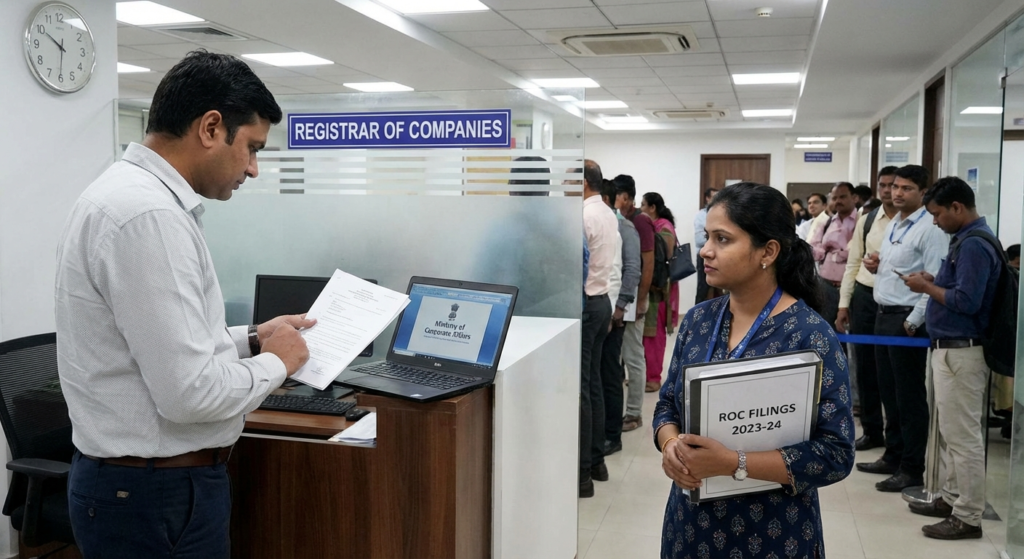
Running a company in India involves much more than just generating revenue and managing operations. Behind the scenes of every successful private limited company lies a robust framework of legal adherence known as ROC compliance India. For directors and business owners, understanding the nuances of the Registrar of Companies (ROC) requirements is not optional—it is a mandatory aspect of corporate survival.
The Ministry of Corporate Affairs (MCA) has significantly tightened the regulatory noose in recent years, making ROC compliance India a top priority for governance. Failing to adhere to these norms can lead to hefty penalties, the disqualification of directors, or even the striking off of the company’s name from the register. Whether you are a startup founder or a seasoned entrepreneur, navigating the landscape of ROC compliance India is essential to maintain your company’s active status and reputation.
In this comprehensive guide, we will walk you through the essential checklists, forms, due dates, and the consequences of non-compliance, ensuring your business remains on the right side of the law.
What is ROC Compliance India and Why is it Crucial?
The Registrar of Companies (ROC) is the authority under the Ministry of Corporate Affairs (MCA) responsible for administering the Companies Act, 2013. ROC compliance India refers to the mandatory filing of specific forms and returns that disclose the company’s financial health, management structure, and operational changes to the government.
Compliance is not merely a bureaucratic hurdle; it serves as a transparency mechanism. It ensures that stakeholders—including investors, creditors, and the public—have access to accurate information about the company. Maintaining flawless ROC compliance India builds trust and credibility, which is vital when seeking bank loans or inviting venture capital.
Legal Protection
Regular compliance protects the company and its directors from legal actions and potential prosecution by the MCA.
Financial Credibility
Banks and investors always scrutinize ROC filings (Master Data) before approving loans or funding rounds.
Active Status
Continuous filing ensures the company status remains ‘Active’ rather than ‘Dormant’ or ‘Strike-off’.
Annual Mandatory ROC Compliance India Checklist
For most Private Limited Companies, the compliance calendar is packed throughout the year. Ignoring these dates is the primary cause of penalties. To ensure you are meeting the standards of ROC compliance India, you must adhere to the following annual requirements.
1. First Board Meeting
The Board of Directors must meet within 30 days of the company’s incorporation. This is the first step in the journey of ROC compliance India. Subsequently, at least four board meetings must be held every financial year, with the gap between two meetings not exceeding 120 days.
2. Appointment of Auditor (Form ADT-1)
Within 30 days of incorporation, the Board must appoint the first auditor. In the first Annual General Meeting (AGM), the auditor is appointed for a term of 5 years. Filing Form ADT-1 is a critical component of ROC compliance India to notify the ROC about the auditor’s appointment.
3. Holding the Annual General Meeting (AGM)
Every company is required to hold an AGM within six months from the end of the financial year (i.e., by September 30th). This meeting is where the financial statements are approved by the shareholders. This serves as a precursor to the major filing events in the ROC compliance India calendar.
Key Filing Forms: AOC-4 and MGT-7
The core of annual compliance revolves around two major forms. Missing these forms triggers the most common penalties associated with ROC compliance India.
Form AOC-4 (Financial Statements)
Due Date: 30 days from the AGM.
Purpose: Filing the Balance Sheet, Profit & Loss Account, and Director’s Report. This provides a financial snapshot of the company to the ROC.
Form MGT-7 / MGT-7A (Annual Return)
Due Date: 60 days from the AGM.
Purpose: Filing details of shareholders, directors, and shareholdings. Small companies can use the abridged form MGT-7A.
It is important to note that the compliance requirements for different business structures vary. For instance, if you are running a Limited Liability Partnership, the rules differ slightly. You can check our detailed LLP annual compliance checklist guide to understand the distinction between LLP and Private Limited Company filings.
Event-Based ROC Compliance India Requirements
Apart from the annual routine, ROC compliance India also mandates reporting specific events whenever they occur within the organization. These are not date-specific but event-specific. Niti Aayog Darpan Registration Process: A Complete Step-by-Step Guide for NGOs
- Change in Directors (Form DIR-12): Whenever a director is appointed or resigns, the company must file Form DIR-12 within 30 days.
- Change of Registered Office (Form INC-22): Moving your office requires notifying the ROC to keep the records updated.
- Increase in Authorized Capital (Form SH-7): If the company wishes to issue more shares than authorized, it must first increase the capital and pay the necessary stamp duty to the MCA.
Staying on top of these event-based filings is just as crucial as annual filings. Often, businesses focus solely on tax matters and neglect these corporate governance issues. Speaking of tax, maintaining synergy between your tax filings and ROC filings is vital. For broader insights on financial regulations, explore our taxation resources.
Director KYC: A Non-Negotiable Aspect of ROC Compliance India
In recent years, the MCA has introduced the DIR-3 KYC requirement. Every director who holds a Director Identification Number (DIN) must complete their KYC annually.
DIR-3 KYC Web vs. DIR-3 KYC Form
If a director is filing for the first time or updating details, they must file the e-Form DIR-3 KYC. If there are no changes to the details previously filed, they can simply verify their credentials via the DIR-3 KYC Web service through an OTP. Failure to do this results in the deactivation of the DIN, which halts all other ROC compliance India activities for the company.
Consequences of Non-Compliance
The MCA has moved from a lenient approach to a strict adjudication regime. The cost of ignoring ROC compliance India is higher than ever before.
- Late Fees: Standard late fees apply for delayed filings. However, for certain forms, the additional fee allows filing up to a certain period, after which it becomes a compliance nightmare.
- Heavy Penalties: Under the amended Companies Act, penalties are levied on both the company and the officer in default (Directors). These can range from thousands to lakhs of rupees per day of default.
- Strike Off: The ROC has the power to strike off companies that have not commenced business within one year of incorporation or have not filed financial statements for two consecutive years.
- Director Disqualification: Directors of non-compliant companies can be disqualified for 5 years, preventing them from becoming directors in any other company.
For authoritative information on the penalties and specific sections of the Companies Act, you can refer to the Ministry of Corporate Affairs (MCA) official website.
How to Ensure Seamless ROC Compliance India
Managing ROC compliance India requires discipline and professional assistance. Here are three steps to ensure you never miss a deadline:
Hire a Company Secretary (CS)
A qualified CS is your best defense against non-compliance. They certify forms and ensure all procedural aspects of the law are followed.
Maintain Digital Signatures (DSC)
Ensure the Digital Signature Certificates of all directors are active and have not expired, as they are needed for every filing.
Internal Audits
Conduct regular internal health checks of your corporate records to identify gaps before the ROC sends a notice.
Additionally, keeping up with digital changes is vital. The MCA V3 portal has changed how forms are filed, requiring user registration for directors. Staying updated with these technical changes is part of modern ROC compliance India. For further reading on corporate laws, the Institute of Company Secretaries of India (ICSI) offers excellent resources.
Conclusion
Adhering to ROC compliance India is the bedrock of a sustainable business. It safeguards the interests of shareholders, directors, and the company itself. While the list of requirements—from AOC-4 to Director KYC—may seem daunting, breaking them down into an annual calendar makes them manageable. Remember, the cost of compliance is always lower than the cost of non-compliance. By staying proactive, leveraging professional help, and utilizing digital tools, your company can navigate the regulatory waters smoothly and focus on what matters most: growth and innovation.
Frequently Asked Questions (FAQs)
If you miss the due date, you will be liable to pay additional fees (penalties) based on the number of days of delay. Continued non-compliance can lead to prosecution and the disqualification of directors.
Yes, statutory audit is mandatory for all Private Limited Companies irrespective of their turnover or profit. Filing Form ADT-1 for auditor appointment is a key part of ROC compliance India.
Yes, the ROC has the power to strike off the name of the company from the register if it believes the company is not carrying on any business or operation for a period of two immediately preceding financial years and has not applied for dormant status.
AOC-4 is used for filing financial statements (Balance Sheet, P&L), while MGT-7 is the Annual Return containing details of shareholding, directors, and meetings. Both are essential for complete ROC compliance India.
Yes, even if there is nil business activity, a company is legally required to file its annual returns and financial statements. Alternatively, you may apply for ‘Dormant Status’ to reduce the compliance burden.
Read Also:
- MoA vs AoA: The Definitive Guide for Founders in 2026
- Internal Audit Applicability in India (2026): Is It Mandatory?
- Unlock Your 2026 Small Company Benefits
- India ROC Filing 2026: Avoid Huge Penalties
- Solo Founder? Protect Your Assets in 2026
- PAS 6 Due Date 2026: The Unlisted Company’s Guide to Flawless Filing
- Form INC-20A Filing in 2026: The Ultimate Business Commencement Guide
- Who is a Promoter? The 7 Roles of a Company’s Architect (2026)
- 2026’s Most Important Business Role