The gig economy is booming, and more professionals are trading the 9-to-5 grind for the freedom of being their own boss. However, with great freedom comes great responsibility—specifically, financial responsibility. One of the most overlooked aspects of this transition is understanding the freelancing tax implications India imposes on independent contractors.
Unlike salaried employees, where the employer handles the TDS (Tax Deducted at Source) and Form 16, freelancers are essentially sole proprietors running a micro-business. This means you are responsible for calculating your income, filing your returns, and ensuring compliance with the Income Tax Act. Ignoring these duties can lead to hefty penalties. In this comprehensive guide, we will decode the complex world of taxes, from GST to Section 44ADA, ensuring you stay compliant while maximizing your earnings.
1. Decoding the Basics of Freelancing Tax Implications India
First and foremost, it is vital to understand how the Income Tax Department (ITD) views you. In the eyes of the law, income earned through freelancing is classified as "Profits and Gains of Business or Profession." Whether you are a graphic designer, a content writer, or a software developer, your income is taxable under this head.
The freelancing tax implications India mandates are distinct from salaried tax rules. You are entitled to deduct business expenses from your gross income to arrive at your taxable income. This fundamental difference allows for significant tax planning opportunities that salaried individuals often miss out on.
2. The Presumptive Taxation Scheme: A Lifesaver
If the thought of maintaining detailed books of accounts scares you, the Government of India has a solution. Under Section 44ADA of the Income Tax Act, freelancers can opt for the Presumptive Taxation Scheme. This is a game-changer regarding freelancing tax implications India currently offers.
Under this scheme, if your total gross receipts are less than ₹75 Lakhs (increased from ₹50 Lakhs in Budget 2023, subject to cash receipt limits), you can declare just 50% of your gross income as profit. The remaining 50% is automatically assumed to be your expenses. You do not need to maintain complex accounting records or audit your books.
Eligible Professions
Engineering, Legal, Architectural, Medical, Technical Consultancy, Interior Decoration, and other notified professions.
The Benefit
Declare only 50% of income as profit. Tax is calculated on this reduced amount, significantly lowering your liability without needing proof of expenses.
3. GST Registration and Freelancing Tax Implications India
Many freelancers assume GST (Goods and Services Tax) is only for big businesses. This is a myth. Understanding GST is a critical part of navigating freelancing tax implications India.
You strictly need to register for GST if:
- Your aggregate turnover exceeds ₹20 Lakhs in a financial year (₹10 Lakhs for special category states).
- You are providing services to clients outside your state (Inter-state supply). *Note: There are exemptions for service providers up to ₹20L, but voluntary registration is often beneficial.*
- You wish to claim Input Tax Credit (ITC) on your business purchases (like laptops or software).
For those exporting services (working for international clients), you can apply for a Letter of Undertaking (LUT). This allows you to export services without paying IGST, which is a massive relief. If you are scaling up, it might be time to formalize your structure. You can learn more about how to register a business name in India to ensure you are building a brand while staying compliant.
4. TDS: The Hidden Component of Freelancing Tax Implications India
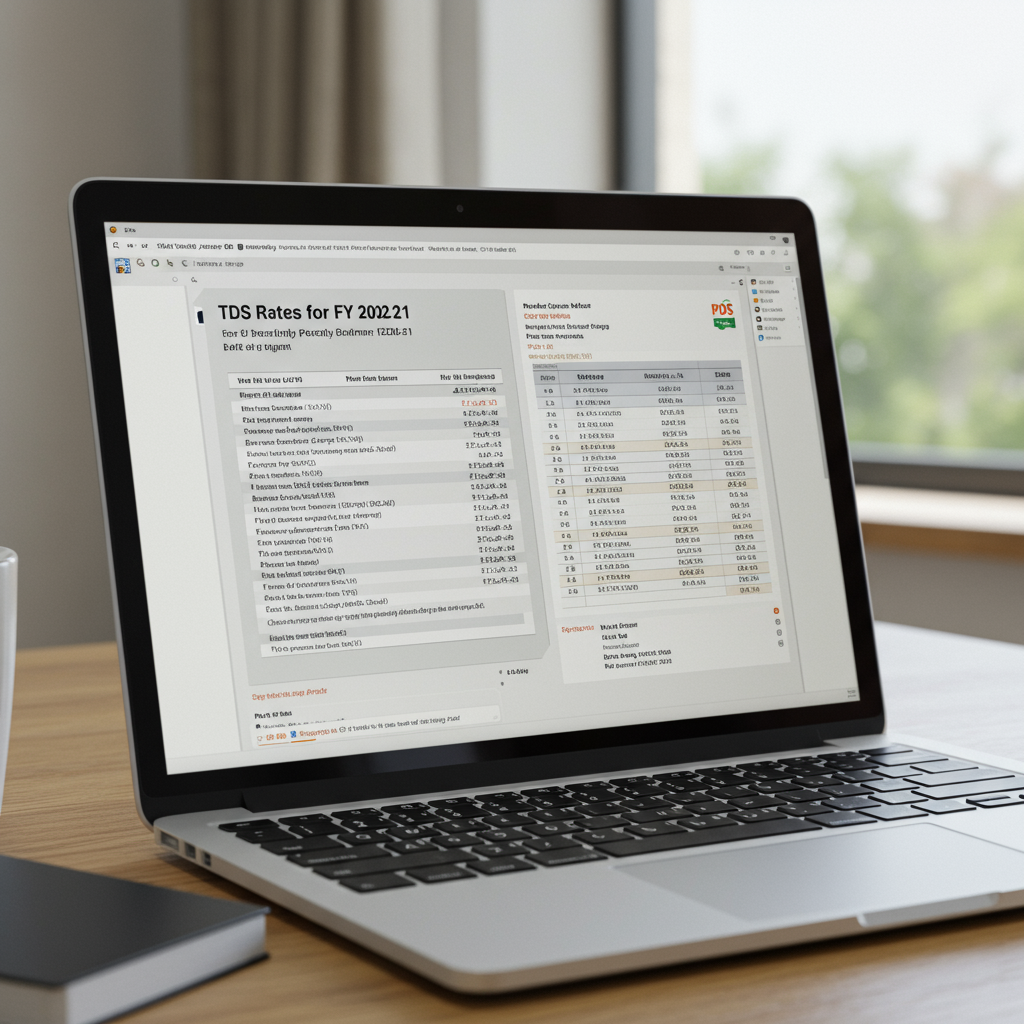
When you work with Indian clients, they are often required to deduct TDS (Tax Deducted at Source) before paying you. Usually, this is 10% under Section 194J for professional services. This deducted amount is not lost money; it is tax paid on your behalf.
However, this adds a layer of complexity to freelancing tax implications India. You must check your Form 26AS regularly to ensure the client has deposited the tax with the government. If your total tax liability is lower than the TDS deducted, you can claim a refund when filing your ITR.
Understanding Form 26AS vs. Form 16A
While salaried employees get Form 16, freelancers receive Form 16A from clients who deduct TDS. Always verify these against your Form 26AS on the income tax portal. Discrepancies here are the most common cause of tax notices.
5. Expense Deductions: Reducing Your Taxable Income
If you do not opt for the Presumptive Taxation Scheme (Section 44ADA), you have the option to claim actual expenses. This is beneficial if your profit margin is less than 50%. Proper management of expenses can drastically alter the freelancing tax implications India puts on your wallet.
Common deductible expenses include:
- Rent: If you work from a rented property.
- Depreciation: On assets like laptops, printers, and office furniture.
- Internet and Phone Bills: Partially or fully claimable if used for business.
- Meal and Entertainment: Client meeting expenses.
- Travel Costs: Travel related specifically to client work.
Keeping digital copies of all invoices is mandatory for at least 6 years. For those looking to optimize further, understanding specific government classifications can help. Check the revised MSME classification 2025 turnover limits to see if registering as an MSME can offer you additional banking or tax benefits.
6. Advance Tax Rules for Freelancers
One of the most surprising freelancing tax implications India enforces is the "Pay as you Earn" concept, known as Advance Tax. If your total tax liability for the year exceeds ₹10,000, you cannot wait until the end of the year to pay it.
You must pay tax in quarterly installments:
- On or before 15th June: 15% of advance tax.
- On or before 15th September: 45% of advance tax.
- On or before 15th December: 75% of advance tax.
- On or before 15th March: 100% of advance tax.
Note: If you opt for Section 44ADA, you can pay the entire advance tax in one installment by 15th March. Failing to do so attracts interest under Section 234B and 234C.
Which ITR Form Should You File?
Choosing the correct form is crucial for managing freelancing tax implications India correctly:
- ITR-3: For freelancers having income from business/profession (Standard choice).
- ITR-4: For freelancers opting for the Presumptive Taxation Scheme (Section 44ADA).
Pro Tip: Invest to Save
Freelancers can also claim deductions under Section 80C (PPF, ELSS, LIC) up to ₹1.5 Lakhs. Don’t forget health insurance premiums under Section 80D.
Conclusion
Navigating the freelancing tax implications India landscape might seem daunting initially, but it is manageable with the right knowledge. From leveraging Section 44ADA to understanding GST applicability, being proactive can save you a significant amount of money and legal trouble. Remember, tax evasion is illegal, but tax avoidance via smart planning is your right. Keep your books clean, file your taxes on time, and consult a Chartered Accountant if your finances get complex.
For authoritative updates, always refer to the Income Tax Department of India or check the latest GST notifications on the GST Portal.
FAQs
Yes, freelancers are liable to pay income tax if their total income exceeds the basic exemption limit (₹2.5 Lakhs or ₹3 Lakhs depending on the regime and age). Freelancing income is taxed under the head “Profits and Gains from Business or Profession.”
This refers to the Presumptive Taxation Scheme under Section 44ADA. It allows specified professionals with gross receipts up to ₹75 Lakhs to declare 50% of their income as profit and pay tax on that amount, without maintaining detailed expense records.
No, if your turnover is below ₹20 Lakhs (₹10 Lakhs in some states), GST registration is generally not mandatory unless you are making inter-state supplies. However, service providers often get relief from inter-state registration requirements up to the ₹20 Lakh limit.
No, ITR-1 is for salaried individuals with income from one house property and other sources. Freelancers must file ITR-3 or ITR-4 (if opting for presumptive taxation schemes).
Freelancers can save tax by claiming business expenses (rent, internet, travel), opting for Section 44ADA, and investing in tax-saving instruments under Section 80C (like PPF, ELSS) and Section 80D (Health Insurance).
Read Also:
- 10 Key Steps for Conversion of Partnership to Private Limited Company: The Ultimate Guide
- MSME GST Mastery: Your 2026 Cheatsheet
- Big Four Companies in India: The Ultimate 2026 Insider’s Guide
- Tax Audit Limit for AY 2026-27: The Ultimate Guide (2026)
- Verify Any Indian Company in 2026
- TDS Rates FY 2020-21: The Definitive 2026 Guide for Old Returns