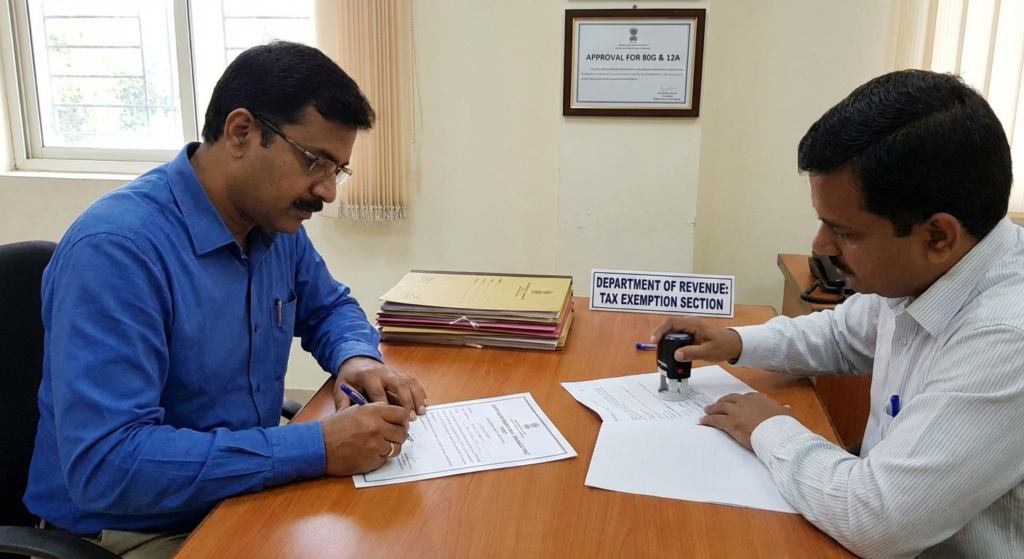
Starting a non-governmental organization (NGO) is a noble endeavor driven by the passion to create social change. However, passion alone cannot sustain an organization; financial stability and legal compliance are the bedrocks upon which successful non-profits are built. One of the most critical aspects of establishing a sustainable foundation is securing ngo registration tax exemption. Without this, an NGO acts much like a regular business in the eyes of the tax authorities, liable to pay income tax on its surplus, which can severely restrict the funds available for charitable activities.
In India, the government provides specific provisions to support charitable institutions, but navigating the bureaucratic maze can be daunting. From choosing the right legal structure to filing for 12A and 80G certificates, the journey to ngo registration tax exemption requires meticulous attention to detail. This comprehensive guide will walk you through the essential steps, legal frameworks, and compliance requirements to ensure your NGO not only survives but thrives by maximizing its resources for the greater good.
Understanding the Basics of NGO Registration Tax Exemption
Before diving into paperwork, it is vital to understand what ngo registration tax exemption actually entails. In simple terms, it refers to the legal status granted by the Income Tax Department that allows an NGO to be exempt from paying income tax on the donations and grants it receives. Furthermore, it often includes provisions that allow donors to claim tax deductions on their contributions, making your NGO a more attractive option for philanthropy.
There is a common misconception that all NGOs are automatically tax-exempt. This is not true. An NGO must specifically apply for and acquire registrations under Section 12A and Section 80G of the Income Tax Act, 1961. Achieving ngo registration tax exemption is a multi-step process that begins with the fundamental registration of the entity itself.
Choosing the Right Legal Structure
To be eligible for ngo registration tax exemption, your organization must first be legally registered as one of the following entities:
- Charitable Trust: Established under the Indian Trusts Act, 1882. Ideal for organizations with a single donor or a family-run charity.
- Society: Registered under the Societies Registration Act, 1860. Suitable for democratic groups with multiple members governing the body.
- Section 8 Company: Registered under the Companies Act, 2013. This structure brings more credibility and is preferred for larger organizations looking for corporate funding and strict compliance.
While selecting your structure, you might want to consider how other business entities operate. For instance, understanding the nuances of LLP vs Partnership difference can give you a perspective on liability and management, even though NGOs operate on a non-profit basis.
The Strategic Importance of NGO Registration Tax Exemption
Why is there so much emphasis on ngo registration tax exemption? The answer lies in sustainability and credibility. When an NGO is registered and tax-exempt, it signals to the world—and specifically to donors—that the organization is legitimate, monitored by the government, and transparent in its financial dealings.
Financial Efficiency
With tax exemption, every rupee raised goes directly toward the cause rather than paying taxes on surplus income, maximizing social impact.
Donor Attraction
Donors prefer NGOs with 80G registration because it allows them to save tax on their donations, effectively incentivizing generosity.
Government Grants
Most government schemes and international grants require valid registration and tax exemption certificates as a prerequisite for funding.
Without ngo registration tax exemption, your organization might face a tax liability of 30% plus cess on its income, significantly eroding the capital meant for social welfare. It is essentially the difference between a struggling initiative and a robust institution.
Step-by-Step Process for NGO Registration Tax Exemption
Securing these benefits involves a systematic approach. Below is the roadmap to navigating the ngo registration tax exemption landscape effectively.
Step 1: Incorporation of the Entity
As mentioned earlier, you must first register as a Trust, Society, or Section 8 Company. Ensure your Trust Deed, Memorandum of Association (MOA), or Rules and Regulations clearly state that the organization is not-for-profit.
Step 2: Apply for PAN and TAN
Once the entity is incorporated, apply for a Permanent Account Number (PAN). This is the identity of your NGO for all tax purposes. Following this, apply for a Tax Deduction and Collection Account Number (TAN) if you are required to deduct TDS. Speaking of TDS, ensuring compliance is crucial; for example, understanding Form 26Q filing for non-salary TDS is often relevant for NGOs paying professional fees or contractors.
Step 3: Filing Form 10A for 12A Registration
This is the core of ngo registration tax exemption. Section 12A of the Income Tax Act allows an NGO to claim full exemption from income tax. You must file Form 10A online through the Income Tax portal.
Step 4: Filing for Section 80G Registration
While 12A benefits the NGO, Section 80G benefits the donor. This registration is usually applied for simultaneously with 12A or shortly after. It allows donors to deduct 50% of their donation amount from their taxable income.
Deep Dive: 12A and 80G for NGO Registration Tax Exemption
The twin pillars of ngo registration tax exemption are Section 12A and Section 80G. Let’s break them down further to understand their specific roles in the exemption ecosystem.
Section 12A Registration:
This is a one-time registration (though recently renewable every 5 years) that acts as proof of your NGO’s existence as a charitable entity. Without this, all receipts are treated as income. The key condition is that 85% of the income received must be applied to charitable or religious purposes within India. If an NGO accumulates more than 15% of its income, that accumulation becomes taxable unless specific forms are filed to defer it for future projects.
Section 80G Registration:
This registration is vital for fundraising. Corporate Social Responsibility (CSR) funds almost exclusively go to NGOs holding an 80G certificate. It validates that the government recognizes your work as charitable, adding a layer of trust. The ngo registration tax exemption process is incomplete for a fundraising organization without 80G.
Documents Required for NGO Registration Tax Exemption
Preparation is key. When applying for ngo registration tax exemption via the income tax portal, ensure you have digital copies of the following:
Legal Identity
Self-certified copy of the Trust Deed, Registration Certificate, or MOA/AOA of the Section 8 Company.
Address Proof
No Objection Certificate (NOC) from the landlord and utility bills of the registered office.
Activity Report
A detailed note on the activities of the trust or institution regarding the last three years (if applicable) or projected activities.
Financials
Copies of accounts and balance sheets for the last three years (for existing NGOs).
Having these documents ready speeds up the ngo registration tax exemption application and reduces the likelihood of queries from the tax officer.
Compliance and DARPAN Registration
Beyond the Income Tax Act, NGOs seeking government funding must register on the NGO DARPAN portal maintained by NITI Aayog. This unique ID is mandatory for applying for government grants and is often linked with your ngo registration tax exemption status to verify authenticity.
Furthermore, if your NGO intends to receive foreign contributions, you must obtain registration under the Foreign Contribution Regulation Act (FCRA). This is separate from domestic tax exemption but is equally critical for global fundraising. For more details on government policies regarding non-profits, you can visit the NGO Darpan official website.
Common Pitfalls in NGO Registration Tax Exemption
Many NGOs fail to secure or retain their ngo registration tax exemption due to avoidable errors. A common mistake is engaging in commercial activities not defined in the trust deed. The law distinguishes between charitable activities and business activities. If your NGO engages in trade or commerce that is not incidental to the attainment of its objectives, the exemption can be revoked.
Another pitfall is non-compliance with filing deadlines. Just like businesses must adhere to strict timelines—similar to how companies must monitor MSME 43B(h) disallowance rules—NGOs must file their Audit Report (Form 10B/10BB) and Income Tax Return (ITR-7) annually. Failure to do so can result in the cancellation of the 12A registration.
For authoritative updates on tax laws, always refer to the Income Tax Department of India website.
Conclusion
Securing ngo registration tax exemption is not merely a bureaucratic hurdle; it is a strategic asset that validates your organization’s mission and ensures its financial health. By obtaining 12A and 80G registrations, you unlock the full potential of your non-profit, attracting more donors and ensuring that maximum funds are utilized for the beneficiaries.
While the process involves detailed documentation and strict adherence to the Income Tax Act, the long-term benefits of credibility and tax savings are undeniable. Start with the right structure, maintain transparent accounts, and ensure timely compliance to build an NGO that leaves a lasting legacy.
Frequently Asked Questions
Yes, under the new provisional registration scheme, newly registered NGOs can apply for provisional 12A and 80G registration immediately after incorporation using Form 10A. This provisional registration is valid for three years.
No, 80G is not mandatory for the NGO’s own income tax exemption; that is covered by Section 12A. However, 80G is highly recommended as it provides tax benefits to the donors, making it easier for the NGO to raise funds.
If an NGO fails to file its ITR, it may lose its tax exemption status. The income will be taxed at the maximum marginal rate, and the NGO may face penalties and potential cancellation of its 12A registration.
Provisional registration is often granted quickly, sometimes within a few weeks of filing Form 10A. However, the final permanent registration (Form 10AB) involves scrutiny and can take up to 6 months after the application is submitted.
An NGO can engage in commercial activities only if they are incidental to the main charitable objective and separate books of accounts are maintained. The receipts from such activities should not exceed 20% of the total receipts.
Read Also:
- Buying Property in 2026? Don’t Forget This!
- Master Your Freelance Taxes in 2026
- Auditor Appointment 2026: Secure Your Business Now
- E Filing in 2026: Your 7-Step Guide to Flawless Tax Returns
- Social Impact Startups: Your 2026 Guide
- The Ultimate Digital Filing System for 2026: A 7-Step Guide
- PT Online Payment Maharashtra 2026: The Definitive Guide
- Professional Tax Payment Online Maharashtra 2026: The Definitive Guide
- NGO Darpan Portal Registration 2026: A Step-by-Step Guide
- Restaurant GST in 2026: Decode Your Bill