Navigating the labyrinth of Indian Income Tax laws can be daunting for businesses and professionals alike. One of the most critical compliance areas that frequently causes confusion is Tax Deducted at Source (TDS). Specifically, understanding TDS on professional fees is vital for ensuring your business remains compliant and avoids hefty penalties. Whether you are a startup founder, a finance manager, or a freelancer, grasping the nuances of Section 194J of the Income Tax Act is non-negotiable.
In the modern economy, businesses constantly hire consultants, lawyers, engineers, and technical experts. The payments made to these individuals or entities attract specific tax deductions. This comprehensive guide will walk you through everything you need to know about TDS on professional fees, from threshold limits to the latest rate changes in 2024.
What is Section 194J and TDS on Professional Fees?
Section 194J of the Income Tax Act, 1961, governs the deduction of tax at source on payments made towards fees for professional or technical services. The primary objective of this section is to track high-value transactions in the service sector and ensure tax is collected in the year the income is earned. When we talk about TDS on professional fees, we are essentially referring to the tax a payer must deduct before making a payment to a resident payee for specific services.
It is important to note that this deduction applies not just to “professionals” in the traditional sense (like doctors or lawyers), but covers a wide ambit of technical and managerial services. The payer acts as an agent of the government, deducting the tax and depositing it into the central government’s treasury.
Who is Liable to Deduct TDS?
Not every person making a payment is required to deduct tax. The liability to deduct TDS on professional fees generally falls upon:
- Every person (other than an individual or HUF): This includes companies, partnership firms, LLPs, and local authorities.
- Individuals and HUFs (Hindu Undivided Families): They are liable only if their total sales, gross receipts, or turnover from business or profession exceed specific limits (Rs. 1 Crore for business or Rs. 50 Lakhs for profession) in the immediately preceding financial year. This aligns closely with those required to get their accounts audited.
For those managing business audits, understanding the changes in Form 3CD is crucial, as it directly correlates with your TDS compliance status.
Scope of Services Covered Under TDS on Professional Fees
To accurately apply TDS on professional fees, you must first identify if the service falls under Section 194J. The section categorizes payments into four distinct buckets. Understanding these categories is essential because the tax rate may vary depending on the nature of the service.
Professional Services
This includes services rendered by a person in the course of carrying on legal, medical, engineering, or architectural professions. It also covers accountancy, technical consultancy, interior decoration, advertising, or any other profession notified by the CBDT.
Technical Services
Fees for Technical Services (FTS) include managerial, technical, or consultancy services. This often involves the provision of expert advice or technical knowledge, excluding standard assembly or mining projects.
Royalty & Non-Compete
This covers payments made for the use of intellectual property (Royalties) or fees paid for not carrying out a certain activity or not sharing technical know-how (Non-compete fees).
Threshold Limits and Rates for TDS on Professional Fees
One of the most frequently asked questions regards the monetary limit. You are not required to deduct TDS on professional fees if the aggregate payment to a single payee during the financial year does not exceed Rs. 30,000. This limit applies separately to each category of payment (e.g., Rs. 30,000 for professional fees and Rs. 30,000 for technical fees).
The 10% vs. 2% Distinction
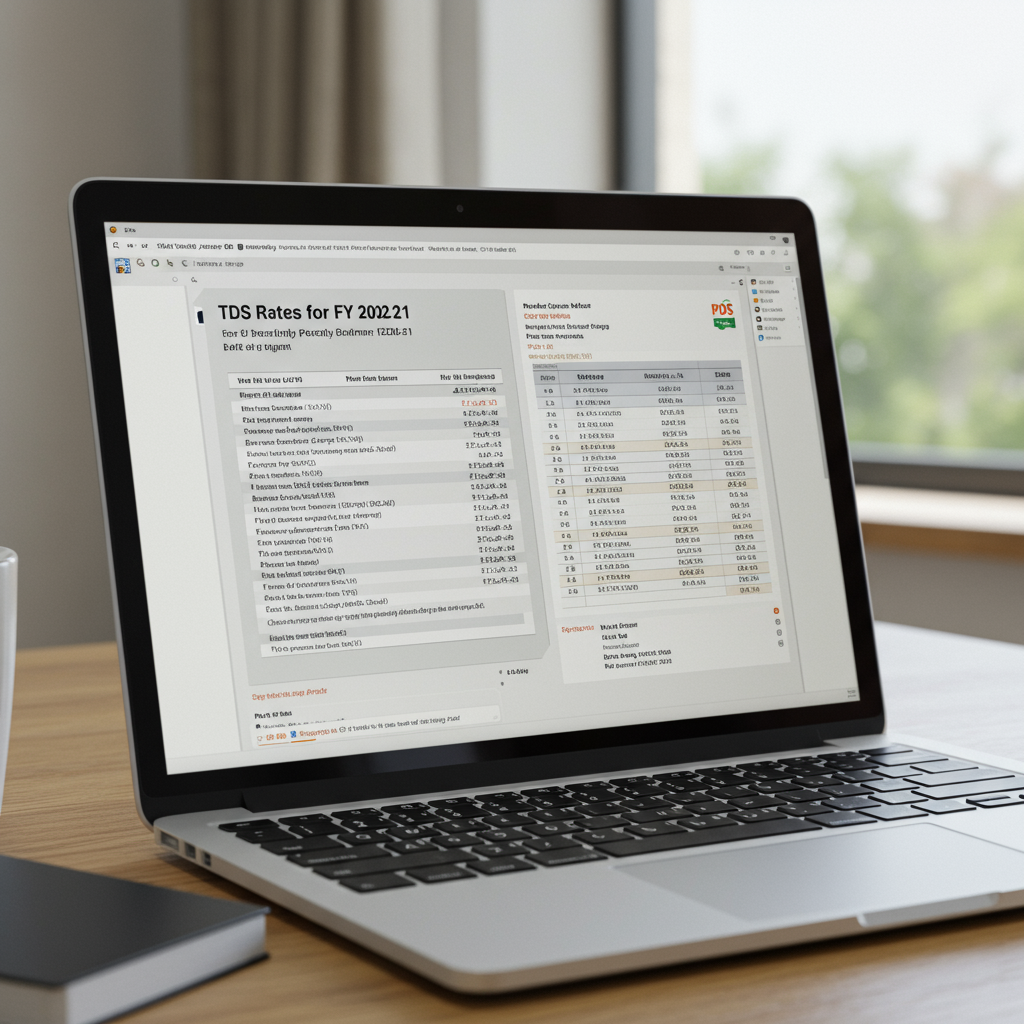
Historically, the rate was a flat 10%. However, recent amendments have introduced a concessional rate for certain technical services to reduce the burden on businesses. Here is the current breakdown:
- 10% Rate: Applicable to fees for professional services (doctors, lawyers, engineers), royalty, and non-compete fees.
- 2% Rate: Applicable to fees for technical services (FTS) and royalties where such royalty is in the nature of consideration for sale, distribution, or exhibition of cinematographic films. It also applies to payments made to call centers.
If the payee fails to furnish their PAN (Permanent Account Number), the rate of TDS on professional fees skyrockets to 20% under Section 206AA. This emphasizes the importance of vendor management and documentation.
When to Deduct and Deposit TDS?
Timing is everything in tax compliance. The deduction for TDS on professional fees must be made at the earlier of the following two dates:
- The time of credit of such sum to the account of the payee.
- The time of payment thereof in cash, by cheque, or draft.
Once deducted, the tax must be deposited to the government by the 7th of the following month. For the month of March, the due date is usually April 30th. Late deposits attract interest, which brings us to the consequences of non-compliance.
Consequences of Non-Compliance
Ignoring the rules regarding TDS on professional fees can be expensive. The Income Tax Department is vigilant about these deductions. If you fail to deduct TDS or fail to deposit it after deduction, you face:
- Disallowance of Expense: Under Section 40(a)(ia), 30% of the expenditure claimed as professional fees will be disallowed and added back to your taxable income if TDS is not deducted or deposited.
- Interest: Interest at 1% per month is levied for failure to deduct, and 1.5% per month for failure to deposit after deduction.
- Penalty: The Assessing Officer may levy a penalty equal to the amount of tax not deducted or remitted.
For small businesses, ensuring compliance is a stepping stone to growth. If you are structuring your business to handle these compliances better, you might want to explore the benefits of MSME registration, which can offer various subsidies and support mechanisms.
TDS on Professional Fees for Personal Purposes
A unique clause exists for individuals and HUFs. Under Section 194M, introduced recently, individuals and HUFs who are not required to deduct tax under Section 194J (because they are not audited) must still deduct tax at 5% if the payment to a resident contractor or professional exceeds Rs. 50 Lakhs in a year. However, for standard Section 194J compliance regarding TDS on professional fees, there is an exemption if the payment is made by an individual or HUF exclusively for personal purposes.
How to File TDS Returns
Deducting and depositing the tax is only half the battle. You must also file quarterly TDS returns (Form 26Q) to report the details of the deduction to the government. This ensures the payee sees the tax credit in their Form 26AS.
Quarterly Deadlines:
- Q1 (April-June): July 31st
- Q2 (July-Sept): October 31st
- Q3 (Oct-Dec): January 31st
- Q4 (Jan-March): May 31st
After filing the return, you must issue Form 16A (TDS Certificate) to the professional within 15 days of the due date of filing the return. This certificate is the proof they need to claim the tax credit.
For more detailed statutory forms and government notifications, you can refer to the Income Tax Department of India website.
Summary of Key Takeaways
Threshold
Rs. 30,000 per annum per payee per service category.
Rate
10% for Professional Fees; 2% for Technical Services/Call Centers.
Due Date
7th of the next month (April 30th for March).
Understanding TDS on professional fees is not just about avoiding penalties; it is about maintaining a transparent and compliant financial ecosystem for your business. By adhering to Section 194J, you contribute to the nation’s revenue stream while ensuring your business expenses remain tax-deductible. Always consult with a Chartered Accountant to assess your specific liability, as tax laws are subject to frequent amendments.
For further reading on financial regulations, reliable sources like The Institute of Chartered Accountants of India (ICAI) offer in-depth resources and updates.
Frequently Asked Questions
No, if the aggregate payment made to a single professional in a financial year is less than Rs. 30,000, you are not required to deduct TDS under Section 194J.
The TDS rate for fees for technical services (FTS) is currently 2%. However, for pure professional services like legal or medical consultancy, the rate remains at 10%.
Individuals are only required to deduct TDS under Section 194J if their business turnover exceeded Rs. 1 Crore or professional gross receipts exceeded Rs. 50 Lakhs in the previous financial year. However, for personal payments over Rs. 50 Lakhs, Section 194M may apply.
Yes, you can deposit TDS after the due date, but you will be liable to pay interest at 1.5% per month (or part of the month) from the date of deduction until the date of actual payment.
No, according to CBDT Circular No. 23/2017, TDS should be deducted only on the professional fee component and not on the GST amount, provided the GST is shown separately in the invoice.
Read Also:
- 7 Crucial Steps for NGO Registration Tax Exemption in India (2025 Guide)
- Your Ultimate 2026 80C Tax Guide
- Master Your HRA for 2026 Tax Savings
- Maharashtra PT Payment: The Ultimate Online Guide for 2026
- Form 3 LLP Filing in 2026: A Guide to Avoid Costly Penalties – Visual Story
- Your Company’s 2026 Secret Code
- Internal Audit Applicability in India (2026): Is It Mandatory? – Visual Story
- Section 194C Explained (2026): A Guide to TDS on Contractor Payments