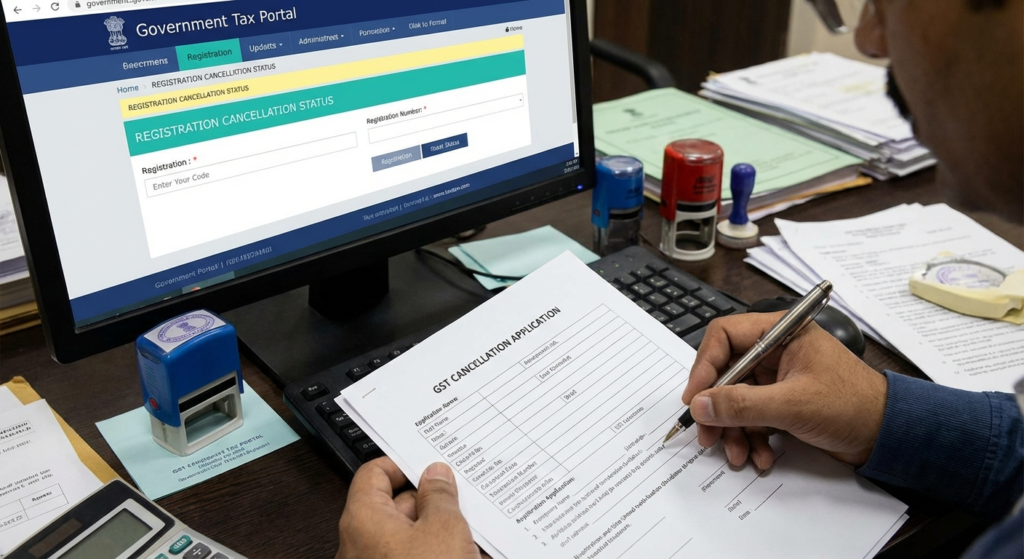
Closing a business chapter is often as crucial as starting a new one. In the dynamic landscape of Indian commerce, ensuring that you exit the regulatory framework correctly is paramount to avoiding future legal liabilities. If your business has ceased operations, undergone a merger, or simply falls below the turnover threshold, navigating the gst cancellation process is a mandatory step. Ignoring this can lead to accumulating penalties and compliance headaches that no entrepreneur wants to face.
Many business owners find the idea of bureaucratic procedures daunting. However, the Goods and Services Tax (GST) portal has streamlined the gst cancellation process to be efficient and user-friendly. Whether you are a proprietor, a partnership firm, or a private limited company, understanding how to surrender your GST registration is essential for a clean slate. In this comprehensive guide, we will walk you through the reasons, the step-by-step online procedure, and the critical documents required to complete the gst cancellation process smoothly.
Understanding the GST Cancellation Process
The gst cancellation process refers to the formal procedure through which a registered taxpayer informs the tax authorities that they no longer require their GST Identification Number (GSTIN). Once the cancellation is approved, the taxpayer is no longer required to pay or collect GST, nor are they obligated to file monthly or quarterly returns. However, until the cancellation order is issued, compliance remains mandatory.
It is important to distinguish between a voluntary cancellation and a Suo Moto cancellation. The former is initiated by the taxpayer, while the latter is a forced cancellation initiated by the tax officer due to non-compliance. Understanding the nuances of the gst cancellation process helps in avoiding the dreaded Suo Moto action, which can tarnish your financial track record.
Reasons to Initiate the GST Cancellation Process
There are several scenarios defined under the CGST Act, 2017, where a taxpayer must or can opt for cancellation. Identifying the correct reason is the first step in the gst cancellation process.
Discontinuation of Business
If the business has been fully closed, discontinued, or the proprietor has passed away, the GST registration must be surrendered immediately to stop return filing obligations.
Change in Constitution
If a sole proprietorship converts into a partnership or a private limited company, the old GSTIN must be cancelled, and a new one must be applied for under the new entity.
Turnover Below Threshold
If your annual turnover falls below the mandatory registration limit (e.g., ₹20 lakhs or ₹40 lakhs), you can voluntarily opt for the gst cancellation process.
Step-by-Step Guide to the GST Cancellation Process
The entire gst cancellation process is digital and can be completed via the official GST portal. Below is a detailed walkthrough to ensure you do not miss any critical steps.
Step 1: Login to the GST Portal
Navigate to the official GST Portal and log in using your valid credentials. Ensure that you have access to the registered mobile number and email ID, as OTP verification will be required.
Step 2: Navigate to Cancellation Service
Once logged in, go to the dashboard. Follow this path: Services > Registration > Application for Cancellation of Registration. This will open the appropriate form required to initiate the gst cancellation process.
Step 3: Fill in Basic Details
The form will auto-populate your basic details. You will need to provide the address for future correspondence. This is crucial because even after cancellation, the department may need to send notices regarding past assessments.
Step 4: Select Reason and Date
You must select the reason for cancellation from the dropdown menu (e.g., “Discontinued Business”). You also need to select the date from which the cancellation is effective. Note that during the gst cancellation process, you can select a retrospective date, but it must be justified.
Step 5: Verification and Submission
Verify the details entered. Select the authorized signatory and sign the application using a Digital Signature Certificate (DSC) or via EVC (Electronic Verification Code) sent to your registered mobile number. Upon successful submission, an ARN (Application Reference Number) is generated.
Documents Needed for the GST Cancellation Process
While the online form is straightforward, having the right data is essential for a seamless gst cancellation process. You typically do not need to upload physical documents for voluntary cancellation unless specifically asked, but you must have the following details ready:
- Stock Details: Information regarding the value of stock held, inputs contained in semi-finished or finished goods, and capital goods on the date of cancellation.
- Tax Liability: Any tax payable on the stock must be calculated and paid or offset from the electronic cash/credit ledger.
- Details of the Last Return: You should have filed your returns up to the date of cancellation. For more on keeping your filings up to date before cancellation, check our guide on filing your GST returns.
Final Return Filing in the GST Cancellation Process
Many taxpayers mistakenly believe that receiving the cancellation order ends their responsibility. This is a myth. The final and most critical step in the gst cancellation process is filing the GSTR-10 (Final Return).
GSTR-10 must be filed within three months of the date of cancellation or the date of the cancellation order, whichever is later. This return provides the details of the stock held and the tax liability thereon. Failure to file GSTR-10 is a common oversight that leads to heavy penalties and notice for non-compliance, effectively nullifying the benefits of the cancellation.
Suo Moto Cancellation and Revocation
Sometimes, the tax officer initiates the gst cancellation process due to the taxpayer’s failure to file returns for six consecutive months (or three quarters for composition dealers). This is known as Suo Moto cancellation.
If your registration has been cancelled by the officer and you wish to continue business, you can apply for Revocation of Cancellation. This must be done within 30 days (extendable by the Commissioner) of receiving the cancellation order. You will first need to file all pending returns and pay the taxes along with interest and penalties. Proper business management involves staying on top of these filings to prevent such forced interruptions to your operations.
Tracking Your GST Cancellation Process Status
After submitting the application (Form GST REG-16), you can track the status using the ARN on the GST portal. The proper officer is required to issue an order for cancellation in Form GST REG-19 within 30 days of the application. If the officer is not satisfied, they may issue a Show Cause Notice (Form GST REG-17), to which you must reply within 7 working days.
The gst cancellation process is designed to be transparent. Regular checking of the portal will ensure you respond to any queries from the department promptly, preventing rejection of your application.
Conclusion
Successfully navigating the gst cancellation process marks a compliant end to your GST registration obligations. Whether you are shutting down operations or restructuring your business entity, following the correct procedure is non-negotiable. Remember to clear all tax dues, file the GSTR-10 Final Return, and keep a record of the cancellation order. By adhering to these steps, you protect yourself from future liabilities and ensure that your business history remains clean with the tax authorities. For more detailed regulations, you can always refer to the CBIC GST Website.
FAQs
No, there is no government fee for filing the application for cancellation of GST registration. However, you must pay any outstanding tax liabilities and interest before the cancellation is approved.
You can apply, but the cancellation will likely not be approved until the dues are cleared. The system requires you to offset liability against cash or credit ledgers during the application.
If GSTR-10 is not filed within the stipulated time, a late fee is levied. Furthermore, the department may initiate recovery proceedings for the stock held on the date of cancellation.
Typically, the proper officer is required to issue the cancellation order within 30 days from the date of application submission, provided all details are correct and no clarifications are needed.
Once a GSTIN is cancelled voluntarily and the order is passed, it cannot be reactivated. You must apply for a fresh new registration. However, if it was cancelled Suo Moto by an officer, you can apply for revocation.
Read Also:
- 7 Essential Facts About GST Composition Scheme India: A Complete 2025 Guide
- Master the GST Refund Process India: 7-Step Comprehensive Guide (2025)
- Start Your Business Fast in 2026
- India’s 2026 NRI Tax Rules Explained
- Indian Companies: Your 2026 ADT-1 Filing Guide
- Form DRC 03: The Ultimate Guide to Voluntary GST Payments (2026)