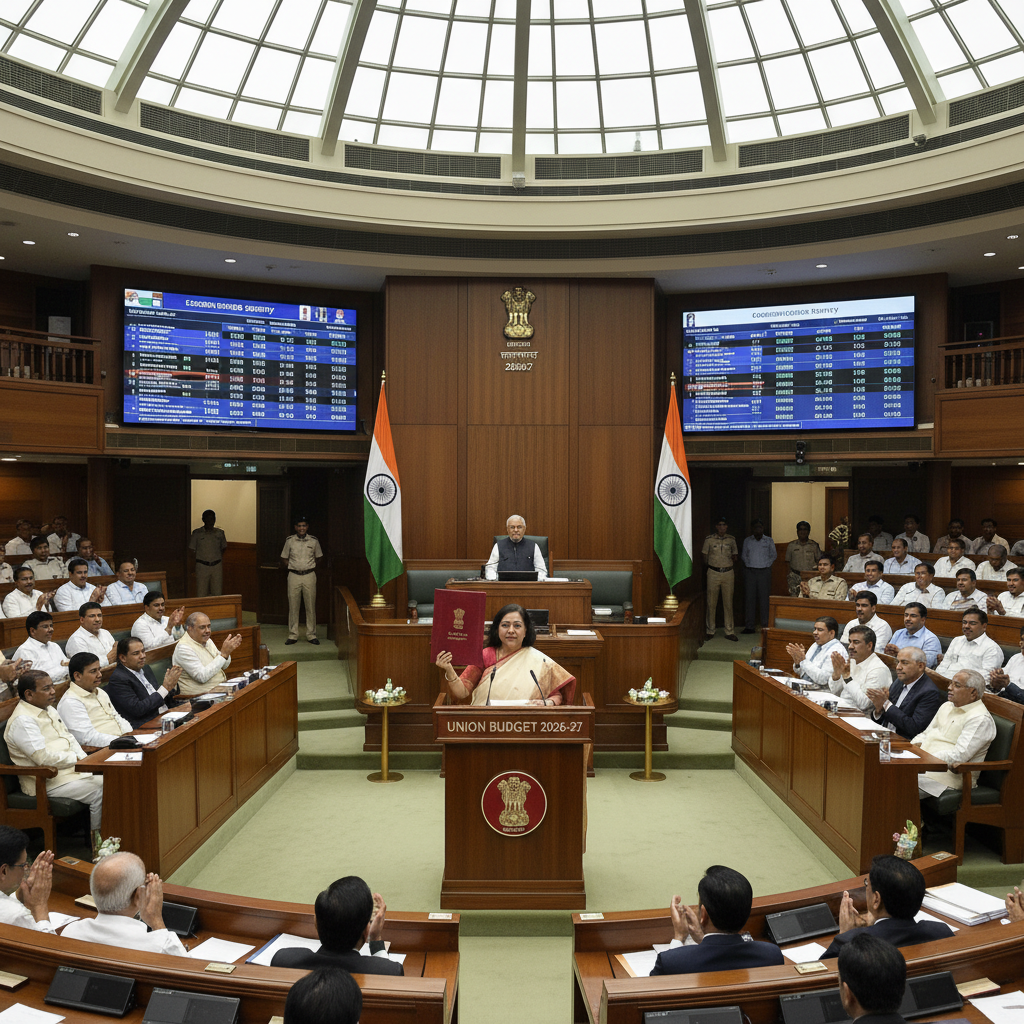
The presentation of the annual financial statement is perhaps the most anticipated economic event in India. As we look toward the future, the Union Budget 2026-27 stands as a critical milestone in India’s journey toward becoming a developed economy (Viksit Bharat) by 2047. Finance Ministers and policymakers face the dual challenge of sustaining high growth rates while ensuring fiscal consolidation.
For taxpayers, investors, and business owners, understanding the nuances of the Union Budget 2026-27 is essential for effective financial planning. Whether it is changes in income tax slabs, rationalization of GST, or new incentives for the manufacturing sector, this budget is expected to lay the groundwork for the next phase of digital and industrial evolution. In this extensive guide, we will analyze the potential impacts, sector-specific expectations, and actionable steps to prepare for the upcoming fiscal changes.
Macro-Economic Vision of Union Budget 2026-27
The Union Budget 2026-27 is expected to prioritize capital expenditure (Capex) to drive infrastructure growth while keeping inflation in check. Economic experts suggest that the government will continue its aggressive push toward green energy, digital public infrastructure, and defense indigenization.
As the global economy evolves, India’s internal consumption story remains strong. The upcoming budget will likely focus on bridging the gap between rural and urban economies, ensuring that the benefits of GDP growth trickle down to the grassroots level. This involves a strategic balance between welfare schemes and asset creation.
Infrastructure Push
Continued allocation for highways, railways, and logistics to reduce the cost of doing business and improve connectivity across industrial corridors.
Green Transition
Heavy incentives for Green Hydrogen, solar manufacturing, and EV adoption to meet global sustainability goals and reduce crude oil dependency.
Digital India 2.0
Expansion of AI centers of excellence and 5G/6G infrastructure to solidify India’s position as a global technology hub.
Direct Tax Reforms in Union Budget 2026-27
One of the most debated topics every year is personal income tax. The Union Budget 2026-27 is anticipated to bring further simplification to the tax regime. The government has been steadily encouraging taxpayers to shift to the New Tax Regime, which offers lower rates but fewer exemptions. We may see a final push to make the New Regime the default standard, potentially by tweaking the slabs to make it more attractive for the middle class.
Furthermore, the rationalization of Tax Deducted at Source (TDS) is a key area of expectation. Businesses often struggle with cash flow issues due to high withholding tax rates. For a better understanding of current trends, reviewing the TDS rate chart from the previous fiscal year can provide context on how rates have evolved leading up to 2026.
Impact on Salaried Employees in Union Budget 2026-27
Salaried individuals are the backbone of direct tax collection. In the Union Budget 2026-27, expectations are high regarding the standard deduction limit. With rising inflation and living costs in metropolitan cities, an increase in the standard deduction would provide much-needed disposable income to the workforce.
Additionally, experts predict revisions in:
- HRA Exemptions: Adjustments to metro city classifications to reflect current rental realities.
- Section 80C: The limit of Rs 1.5 lakh has remained stagnant for years. While the government favors the exemption-less regime, any relaxation here would be welcomed by those still in the Old Regime.
- Home Loan Interest: Enhanced deduction limits for affordable housing to boost the real estate sector.
GST and Indirect Tax Expectations
While the GST Council operates independently of the Budget session, the Finance Minister often outlines the roadmap for indirect taxes during the budget speech. The focus for Union Budget 2026-27 will likely be on correcting inverted duty structures that hurt domestic manufacturing.
For businesses, staying compliant is paramount. Before the new fiscal year kicks in, ensuring your filings are up to date is crucial. If you are a business owner, ensuring seamless GST return filing online is the first step toward being budget-ready. The government is expected to introduce stricter penalties for non-compliance while simultaneously easing the amnesty schemes for genuine errors.
Sector-Specific Allocations in Union Budget 2026-27
To understand where the economy is heading, we must look at where the money is going. The Union Budget 2026-27 is likely to favor sectors that contribute to self-reliance (Atmanirbhar Bharat).
Agriculture & Rural
Enhanced credit facilities for farmers and support for agritech startups to modernize farming practices and improve yield per hectare.
Healthcare
increased allocation for public healthcare infrastructure and research in biotechnology to prepare for future health crises.
MSME Support
Extension of credit guarantee schemes and PLI (Production Linked Incentive) schemes for labor-intensive sectors like textiles and leather.
MSME Benefits in Union Budget 2026-27
Micro, Small, and Medium Enterprises (MSMEs) contribute significantly to India’s GDP. The Union Budget 2026-27 is expected to address the credit gap. Digital lending platforms and lower interest rates for registered MSMEs could be on the cards. Furthermore, ease of doing business remains a priority, with potential announcements regarding the simplification of regulatory compliances and reducing the burden of multiple audits.
Step-by-Step Guide: How to Analyze the Budget
The budget document can be overwhelming. Here is a simplified step-by-step guide to analyzing the Union Budget 2026-27 effectively:
- Read the Finance Minister’s Speech: This highlights the policy intent and major announcements. It is the most accessible part of the budget.
- Check the Finance Bill: This contains the actual amendments to the Income Tax Act and other laws. This is where the “fine print” lives.
- Analyze Sectoral Allocations: Compare the funds allocated to key ministries (Defense, Railways, Agriculture) with the previous year to identify growth trends.
- Review Tax Proposals: Look specifically for changes in slabs, surcharges, and cess that directly impact your tax liability.
- Consult Experts: For business owners, it is advisable to consult Chartered Accountants to understand the specific implications on your industry.
“A budget is more than just a series of numbers on a page; it is an embodiment of our values.” — Barack Obama. This quote resonates as we look at how the Indian budget balances welfare with development.
Checklist for Taxpayers Post-Budget
Once the Union Budget 2026-27 is presented, take these immediate actions to optimize your finances:
- Re-evaluate Investment Strategy: If capital gains tax rules change, you may need to adjust your portfolio allocation between equity and debt.
- Choose Your Tax Regime: Calculate your liability under both the Old and New regimes based on the revised slabs to inform your employer for TDS deduction.
- Plan for New Levies: If customs duties on specific imported goods increase, businesses need to account for higher input costs immediately.
- Review Compliance Requirements: Check for any new mandatory disclosures required in annual returns.
For detailed official documents and the full text of the speech, you can always refer to the Union Budget Official Portal. Additionally, for tax-specific notifications, the Income Tax Department website is the primary source of truth.
Conclusion
The Union Budget 2026-27 promises to be a pivotal event, steering India towards its long-term economic goals. From infrastructure development to tax rationalization, the announcements made will have far-reaching consequences for every citizen. By staying informed and proactively adjusting your financial strategies, you can navigate the changes effectively. Whether you are a salaried employee hoping for tax relief or an entrepreneur looking for PLI schemes, preparation is key.
Stay tuned to expert analyses and ensure your financial compliances are up to date to make the most of the opportunities presented in the upcoming fiscal year.
FAQs
The Union Budget is traditionally presented on February 1st of every year by the Finance Minister of India in the Parliament. For the fiscal year 2026-27, the date is expected to be February 1, 2026.
While official details are released only on Budget day, experts anticipate a widening of tax slabs and a potential increase in the basic exemption limit to encourage more taxpayers to shift from the Old Regime to the New Regime.
The Union Budget technically deals with Direct Taxes (Income Tax) and Customs Duty. GST rates are decided by the GST Council. However, the Finance Minister may announce the government’s intent regarding GST rationalization during the budget speech.
The budget impacts small businesses through changes in corporate tax rates, credit guarantee schemes, presumptive taxation limits, and customs duties on raw materials. Announcements regarding MSME support funds are also common.
The official budget documents, including the Finance Bill and the Budget Speech, can be downloaded from the official website dedicated to the Union Budget (indiabudget.gov.in) immediately after the speech concludes.
Read Also:
- The Ultimate Guide to Choosing: LLP vs Private Limited Company for Your Business
- Optimizing Your Compliance: Understanding the CMP-08 Filing Due Date and Composition Scheme Returns
- Comprehensive Guide to GST for Ecommerce Sellers: Registration, Compliance, and Key Rules
- Comprehensive Summary of Budget 2026: Key Highlights, Tax Reforms, and Economic Roadmap
- Decoding the Budget 2026 Impact on Income Tax: A Comprehensive Guide for Taxpayers
- 7 Critical GST Amendment Rules in India: A Comprehensive Guide (2025)
- Trademark Secrets for 2026 Success
- MGT Full Form: Your Ultimate Guide to MCA Filings in 2026
- Starting a Transport Business in 2024: 10 Steps to Success
- The Modern Internal Auditor: 10 Qualities for Success in 2026
- Salary Structure Explained 2026: A Guide to CTC & Take-Home Pay
- ROC Master Data: Your 2026 Guide to Verifying Company Details
- Decoding Your Paycheck: A 7-Step Guide to Creating a Fair Salary Structure
- Big Four Companies in India: The Ultimate 2026 Insider’s Guide
- Professional Tax Payment Online Maharashtra 2026: The Definitive Guide
- Verify Any Indian Company in 2026
- EIC: Empire vs. Export in 2026
- Vet Any Indian Company in 2026
- ADT-1 Filing: The Ultimate Guide to Appointing an Auditor (2026) – Visual Story