
What if I told you that a huge portion of the funds raised by new non-profits gets eaten by taxes? It’s not a scam. It’s not mismanagement. It’s a simple, devastatingly common administrative oversight.
The truth is, your passion to change the world isn’t enough. To build a sustainable, impactful NGO in India, you must master the language of compliance. The most important words in that language? Section 12A and Section 80G.
Forget the dense legal jargon. This is your battle-tested, no-fluff guide to the complete 12A 80G registration process for 2026. You’ll learn not just what to do, but why it matters, how to avoid critical mistakes we’ve seen derail countless organizations, and how to turn these registrations into your fundraising superpower.
Let’s get your mission the financial armor it deserves.
The Twin Pillars of NGO Compliance: Understanding 12A and 80G
Think of 12A and 80G as two different keys that unlock one powerful vault. They’re often bundled together, but they serve distinct, critical functions. Getting one without the other is like having a car with no fuel.
Section 12A Registration is for your organization. It’s the foundational step that grants your NGO, Trust, or Section 8 Company tax-exempt status. Without it, any surplus income (profit) your organization generates is taxed just like a regular business. It’s the key that confirms your entity’s charitable nature in the eyes of the Income Tax Department.
Section 80G Registration is for your donors. This is the magic wand for fundraising. When you have an 80G certificate, your donors can claim a tax deduction on their contributions. This transforms a simple donation into a smart financial decision for them, dramatically increasing your ability to attract funds from individuals and corporations.
Here’s how they stack up side-by-side:
| Feature | Section 12A Registration | Section 80G Registration |
|---|---|---|
| Primary Purpose | Grants tax exemption on the NGO’s surplus income. | Provides tax deduction benefits to the NGO’s donors. |
| Who Benefits? | The NGO/Trust itself. | The individual or corporate donor. |
| Core Impact | Ensures financial resources are reinvested into charitable activities, not paid as tax. | Acts as a powerful incentive for fundraising and boosts donor confidence. |
| Is it Mandatory? | Essentially, yes. It’s the prerequisite for tax exemption and for applying for 80G. | Optional, but highly recommended for any NGO seeking public donations. |
💡 Pro Tip
In our experience, having 80G certification is a non-negotiable for securing Corporate Social Responsibility (CSR) funds. Most corporate legal teams won’t even consider a proposal from an NGO without a valid 80G certificate. It’s a fundamental trust signal.
The New Registration Lifecycle: Navigating the 2026 Rules
Gone are the days of “get it and forget it” registrations. The Finance Act, 2020, completely overhauled the system, introducing a lifecycle model focused on continuous compliance. If you’re operating on old information, you’re at risk.
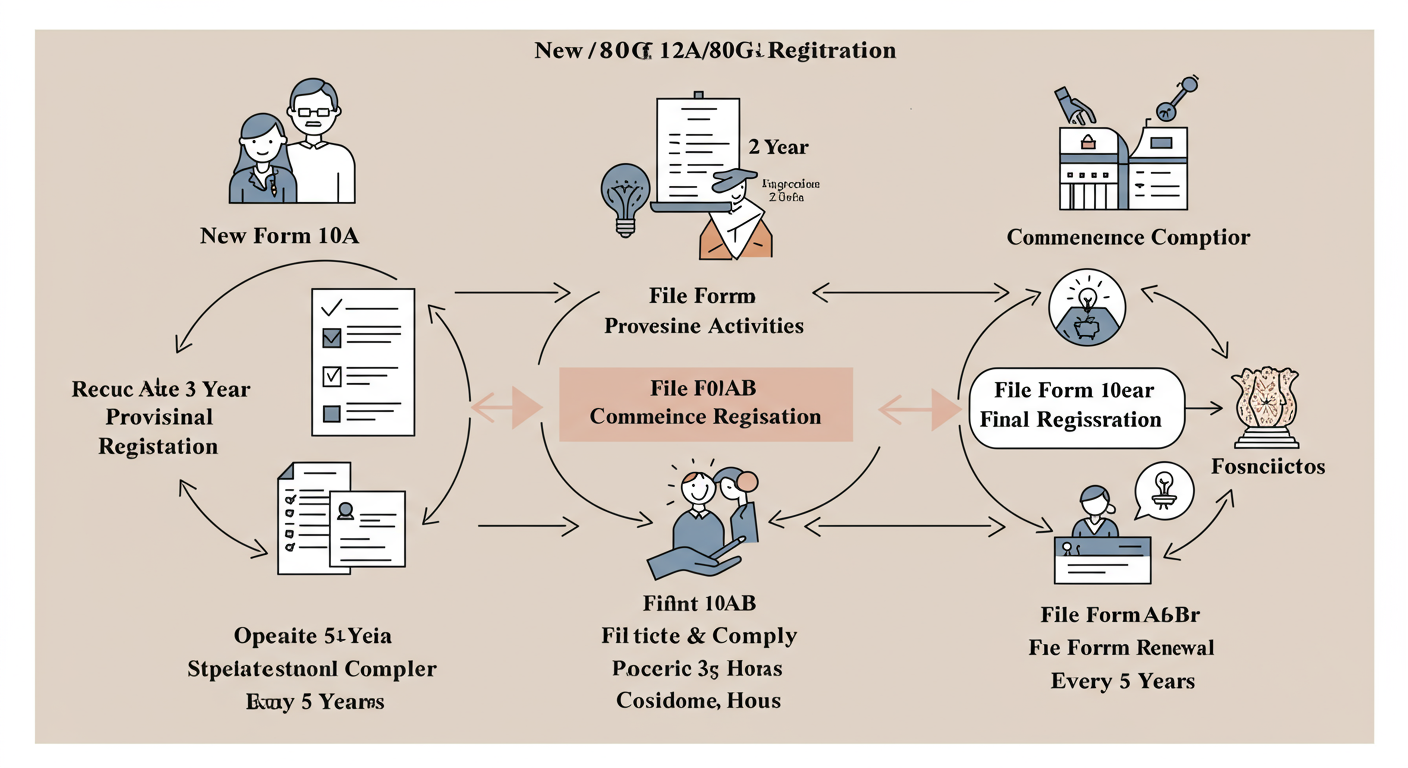
The modern process is a three-stage journey:
- Provisional Registration (Form 10A): This is for brand-new organizations. It’s a temporary, three-year approval granted without a deep inquiry into your activities. The goal is to get you up and running legally.
- Final Registration (Form 10AB): This is the real test. You must apply for this at least six months before your provisional registration expires. Here, you have to prove you’ve actually commenced charitable activities and have the records to back it up. This registration is valid for five years.
- Renewal (Form 10AB): Your five-year registration isn’t permanent. You must apply for renewal using Form 10AB at least six months before its expiry to maintain your status. This cycle repeats every five years.
⚠️ Watch Out
The deadlines are strict and unforgiving. Missing the window to convert from provisional to final registration, or to renew your five-year status, can create a compliance gap. During this gap, your tax exemption is void, and any donations received may not be eligible for 80G benefits. Set calendar alerts years in advance!
Your Step-by-Step Guide to Filing for 12A & 80G Online
The entire 12A 80G registration process is digital, handled through the Income Tax e-Filing portal. You’ll need a Digital Signature Certificate (DSC) or Electronic Verification Code (EVC) for the authorized signatory. Here’s the ground-level plan.
- Portal Registration & Prep: First, ensure your NGO has a PAN. Then, register it on the Income Tax e-Filing portal under the correct category (Trust/Society/Non-Profit). This is a foundational step many people stumble on.
- Gather Your Arsenal (Documents): Before you even log in, scan and organize all required documents into PDFs. This includes your trust deed/MOA, registration certificate, PAN card of the NGO, and detailed information (PAN, Aadhaar, address) of all trustees or governing body members. For final registration/renewal, you’ll also need audited financials for the past years.
- Locate the Correct Form: Log in, navigate to ‘e-File’ > ‘Income Tax Forms’ > ‘File Income Tax Forms’. In the search bar, type Form 10A (for new/provisional) or Form 10AB (for final/renewal). Choose the correct Assessment Year.
- Fill with Precision: The form is deceptively simple. Be meticulous. Double-check that the objects of your NGO listed in the form exactly match the objects in your trust deed. Any discrepancy is a red flag for the assessing officer.
- Upload and Verify: Attach your prepared documents. The portal has file size limits, so ensure your PDFs are optimized. Finally, submit and verify using DSC or EVC. Don’t close the window until you see the Acknowledgement Receipt Number (ARN). Save it immediately.
- The Waiting Game & Inquiry: For Form 10A, approval is usually swift. For Form 10AB, however, the Principal Commissioner of Income Tax (PCIT) will review your submission. Based on our hands-on testing of the system, be prepared for a query. They may ask for more details on your activities, proof of expenditure, or clarification on your objectives. A prompt, clear response is crucial.
🎯 Key Takeaway
The 12A 80G registration process is no longer a one-time task; it’s a cycle. Provisional registration gets you started, but final registration and timely five-year renewals are what sustain your organization’s financial health and credibility.
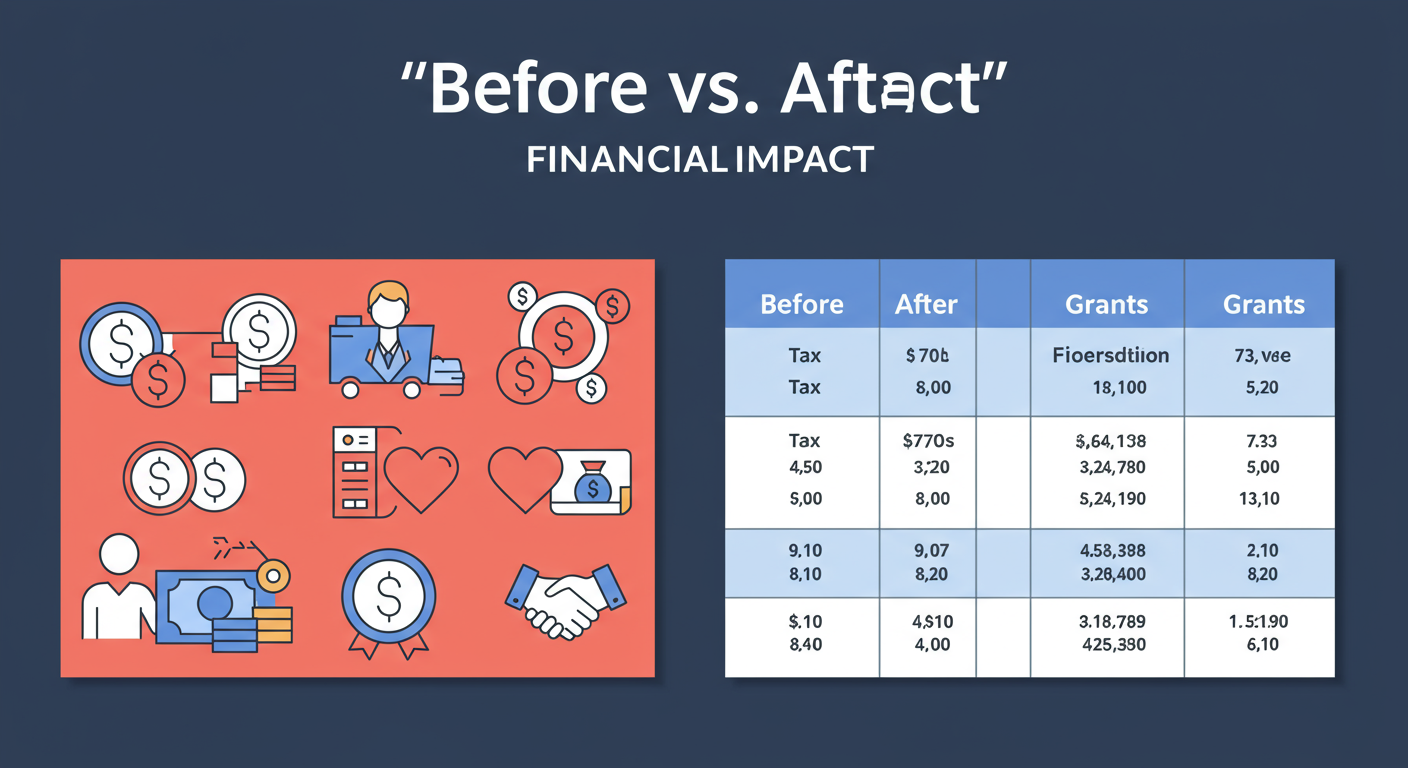
The Real-World Impact: Before vs. After 12A/80G Registration
Why go through all this trouble? The difference is night and day. Let’s imagine an NGO with a surplus income of ₹10 Lakhs in a year. LLP vs Pvt Ltd in 2026: The Definitive Guide for Indian Startups
| Metric | Before 12A/80G Registration | After 12A/80G Registration |
|---|---|---|
| Tax on Surplus Income (₹10 Lakhs) | Approx. ₹3 Lakhs (at ~30% tax rate) | ₹0 (if 85% is applied to charity) |
| Donor Incentive | None. A donation is purely altruistic. | High. A donor giving ₹50,000 can claim a deduction, saving them thousands in tax. |
| Eligibility for Govt. Grants | Ineligible for most central and state government schemes. | Eligible to apply for a wide range of government funding. |
| Credibility & Trust | Low. Appears as an informal initiative. | High. Officially recognized by the Income Tax Dept. as a legitimate charitable entity. |
Life After Registration: The Non-Negotiable Compliance Rules
Getting the certificate is just the beginning. Maintaining it requires discipline. The government is cracking down on dormant or non-compliant NGOs, and you don’t want to be on their list. Here’s what you absolutely must do: Tax Audit Applicability for A.Y 2024-25 in India
- The 85% Rule: You must spend at least 85% of your total income on your stated charitable objectives within the financial year. Failure to do so can lead to the unspent portion being taxed.
- Annual ITR Filing: Every registered NGO must file an annual Income Tax Return using Form ITR-7, regardless of whether your income is below the taxable limit. This is a mandatory reporting requirement.
- The Form 10BD Mandate: This is the big one. For your 80G status, you are required to file a “Statement of Donations” in Form 10BD each year. This form details every single donor and their contribution. You must then issue a Form 10BE certificate to each donor so they can claim their deduction.
⚠️ Watch Out
Failing to file Form 10BD is catastrophic. It carries a hefty penalty (₹200 per day of default) and, more importantly, can lead to the cancellation of your 80G registration. The tax department uses this data to cross-verify donor claims, and they take it very seriously.
💡 Pro Tip
Don’t wait until year-end to compile your donor list for Form 10BD. From day one, maintain a simple spreadsheet with every donor’s Name, Address, and PAN/Aadhaar number. This makes the annual filing a simple copy-paste job instead of a frantic, month-long scramble.
These rules are rooted in the foundational principles of the Income Tax Act, 1961, which aims to ensure that tax-exempt status is granted only to genuinely charitable and transparent organizations. For entities also structured as companies, compliance with regulations from the Ministry of Corporate Affairs runs in parallel.
❓ Frequently Asked Questions
Can I apply for 80G registration without 12A?
No. Section 12A registration is a mandatory prerequisite for applying for Section 80G. The logic is that the government must first recognize your organization as genuinely charitable (via 12A) before it can grant your donors tax benefits (via 80G).
How long is the new 12A and 80G registration valid for?
Under the new rules effective from 2021, initial registration is provisional and valid for 3 years. The subsequent final registration is valid for 5 years. You must renew it every five years by filing Form 10AB at least six months before expiry.
What is the most common reason for rejection?
From real-world campaigns we’ve managed, the most common reason is a poorly drafted “Objects Clause” in the Trust Deed or MOA. If the clause is too vague, includes non-charitable or commercial objectives, or has a provision that could benefit the founders, the application will be rejected.
What happens if I miss the deadline to file Form 10BD?
Missing the Form 10BD deadline (typically May 31st) triggers a late fee of ₹200 for every day of delay. More critically, the Commissioner has the power to impose a penalty ranging from ₹10,000 to ₹1 Lakh and can initiate proceedings to cancel your 80G registration.
Is a Digital Signature Certificate (DSC) mandatory for filing?
Yes, for most entities like Section 8 Companies and Trusts that are required to have their accounts audited, filing with a DSC is mandatory. For others, there might be an option to use an Electronic Verification Code (EVC), but having a DSC is the most reliable and professional approach.
Your Mission is Too Important to Ignore Compliance
Navigating the 12A 80G registration process isn’t just bureaucratic red tape. It’s the act of building a secure, credible, and sustainable foundation for your charitable vision.
It’s what separates a passionate project from a professional organization. It’s the difference between struggling for every rupee and attracting significant, recurring funding. The new five-year renewal cycle and stringent reporting via Form 10BD demand more diligence than ever, but they also elevate the integrity of the entire non-profit sector.
Your mission is vital. Don’t let it be undermined by avoidable compliance failures. Treat this process not as a chore, but as your first major strategic victory. Start today, be meticulous, and build an organization that’s as financially sound as it is socially impactful.