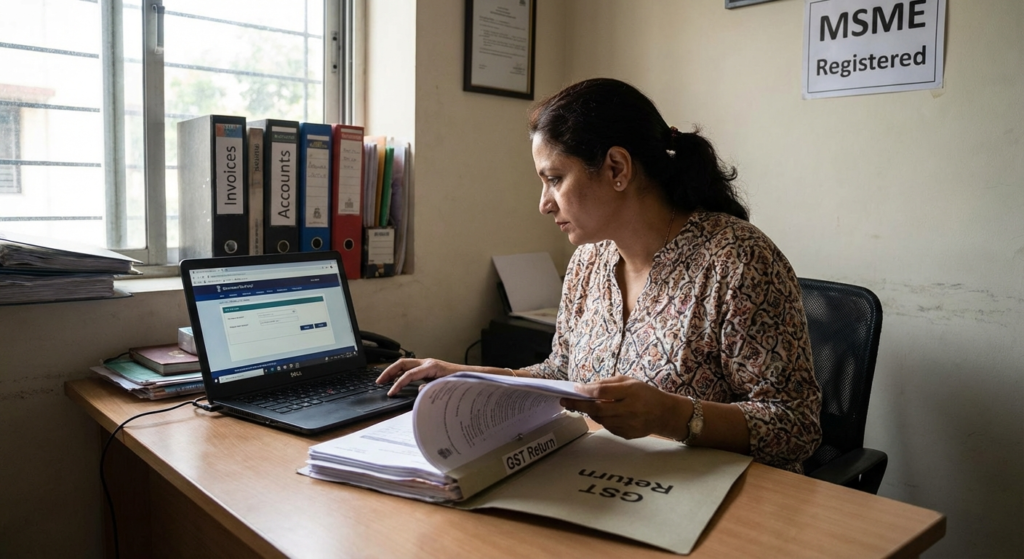
Introduction: Why Udyam Registration is Non-Negotiable for MSMEs
In the dynamic landscape of the Indian economy, Micro, Small, and Medium Enterprises (MSMEs) are the undisputed backbone. Recognizing this vital role, the Government of India launched the Udyam Registration portal, replacing the old Udyog Aadhaar Memorandum (UAM). This simplified, digital registration process provides MSMEs with an identity—the Udyam Certificate—which acts as a gateway to a massive array of governmental and financial support mechanisms. Without this certificate, businesses often miss out on crucial incentives designed specifically for their growth.
If you run a small business or are planning to launch one, understanding the full extent of the Udyam certificate benefits list is paramount to maximizing your operational efficiency and securing necessary funding. These benefits span across finance, procurement, taxation, and legal protection. Let’s dive deep into how this single registration can fundamentally transform your business trajectory.
If you haven’t yet secured your registration, learning about these advantages is the first step toward official recognition. Learn more about the required procedures and documentation through dedicated MSME Registration services.
The Foundation: Understanding Udyam and Its Significance
The Udyam Registration is a government recognition for MSMEs based on composite criteria concerning investment in plant and machinery/equipment and turnover. Once successfully registered, the entity receives a permanent registration number and an e-certificate. This certificate is not merely a formality; it is proof of your MSME status, unlocking specialized advantages.
The transition to Udyam has made the process paperless and based on self-declaration, integrating seamlessly with GST and Income Tax systems. This ease of doing business ensures that eligible enterprises can quickly leverage the full Udyam certificate benefits list without bureaucratic hurdles.
Exploring the Comprehensive Udyam Certificate Benefits List
The true value of Udyam certification lies in the tangible financial and operational advantages it provides. These benefits are structured to ease the burden on small businesses, foster innovation, and ensure timely payments.
Financial Advantages and Priority Lending
One of the most compelling reasons to obtain the certificate is access to Priority Sector Lending (PSL). The Reserve Bank of India mandates that commercial banks allocate a specific percentage of their total lending to MSMEs. Registered units receive priority, ensuring easier access to credit, often at lower interest rates than conventional loans.
Interest Rate Subvention
MSMEs often qualify for reduced interest rates, sometimes up to 1.5% less than the base rate, especially on term loans and working capital facilities. This reduction significantly lowers the cost of borrowing.
Collateral-Free Loans (CGTMSE)
The Credit Guarantee Fund Trust for Micro and Small Enterprises (CGTMSE) scheme allows MSMEs to obtain substantial loans (up to ₹2 Crore) without providing traditional collateral. The Udyam Certificate is mandatory to avail of this crucial credit guarantee.
Overdraft Facility Benefits
Banks often extend better terms and higher limits on overdraft facilities to Udyam registered businesses, ensuring greater liquidity for day-to-day operations.
The availability of subsidized credit through schemes like CGTMSE is a game-changer, particularly for start-ups or small units that lack substantial fixed assets to offer as security. This is perhaps the most immediate and impactful item on the Udyam certificate benefits list.
Government Schemes and Support Enabled by the Udyam Certificate
The certificate acts as a prerequisite for applying to numerous Central and State Government schemes aimed at modernization, technology upgradation, and skill development. These schemes often provide subsidies, grants, or financial aid that would otherwise be inaccessible.
Protection and Procurement Advantages
Beyond finance, Udyam registration offers substantial protection against common operational challenges, such as delayed payments from buyers, especially government departments or large corporations.
Public Procurement Policy (PPP)
Under the Public Procurement Policy, Central Ministries, Departments, and PSUs must procure at least 25% of their total annual purchase of goods or services from MSMEs. The Udyam certificate ensures your eligibility for these mandated contracts, providing a stable revenue stream.
Protection Against Delayed Payments
The Micro and Small Enterprises Facilitation Council (MSEFC) handles disputes related to delayed payments. Udyam registered units can file complaints, and the Council ensures timely resolution and imposes high penal interest on the buyer for delays, often three times the bank rate, as per the MSMED Act, 2006. This is a critical security measure for cash flow.
Reimbursement on ISO Certification
To encourage quality improvement, the government provides reimbursement for expenses incurred in obtaining ISO certification. This subsidy is exclusively available to Udyam registered enterprises seeking global standards recognition.
“Access to government procurement is often one of the quickest ways for a small enterprise to scale. The Udyam certificate formalizes this access, turning mandates into opportunities,” says a financial policy expert.
Operational and Regulatory Udyam Certificate Benefits List
The advantages extend into daily operations and regulatory compliance, making it easier and cheaper to manage the enterprise.
Concessions on Intellectual Property and Statutory Compliance
Innovation is key to long-term growth, and the government supports this through intellectual property concessions. Udyam registered businesses are eligible for significant fee reductions when filing patents, trademarks, or copyrights. This reduction can be as high as 50%, making IP protection affordable for small innovators.
Tender Fee Exemptions
MSMEs are often exempted from paying Earnest Money Deposit (EMD) or security deposits when bidding for government tenders, reducing the upfront capital required to participate in public procurement.
Reduced Electricity Bills
In certain states, Udyam registered units are eligible for concessional rates on electricity tariffs, contributing directly to lower operational overheads.
Statutory Compliance Ease
Many statutory and regulatory bodies offer special schemes or simplified compliance procedures for registered MSMEs. For instance, processes related to environmental clearances or labor law inspections might be streamlined or prioritized.
Ease of Structure Conversion
As your business grows, you might need to change your legal structure, perhaps moving from a proprietorship to a private limited company or an LLP. Udyam status can sometimes simplify the documentation required during these conversions. For example, understanding the intricacies of conversion of company into LLP becomes easier when your foundational documents are recognized by the MSME Ministry.
Furthermore, the government actively promotes infrastructure development tailored for MSMEs. Schemes like the Cluster Development Programme (CDP) provide financial assistance for setting up common facility centers, testing labs, and training centers that directly benefit registered units within a geographical cluster. This collective development approach accelerates growth far beyond what individual units could achieve alone.
Navigating the Process: How to Maximize the Udyam Certificate Benefits List
Simply possessing the certificate is the first step; maximizing its potential requires strategic awareness and proactive application to relevant schemes. Here are actionable tips:
- Regularly Review Ministry Updates: The Ministry of MSME continuously introduces new schemes and amends existing ones. Keeping track of these updates, often available on the official Ministry website, ensures you don’t miss out on time-sensitive financial aid or subsidies.
- Engage with Banks Proactively: Do not wait for banks to reach out. Approach commercial banks and explain your Udyam status when applying for loans or credit facilities. Reference the PSL guidelines and the specific schemes like CGTMSE to secure the best rates.
- Utilize Procurement Portals: Register on government e-procurement portals (like GeM – Government e-Marketplace) and specifically mark your MSME status. This automatically filters relevant tenders that fall under the Public Procurement Policy mandates.
- Document Everything: Maintain clear records of your Udyam registration, investment details, and turnover figures. Accurate documentation simplifies scheme applications and speeds up dispute resolution under the MSEFC.
It is worth noting that the eligibility criteria for the Udyam certificate benefits list are strictly enforced. To qualify as a Micro enterprise, investment must not exceed ₹1 Crore and turnover must not exceed ₹5 Crore. For a Small enterprise, the limits are ₹10 Crore investment and ₹50 Crore turnover. Maintaining accurate financial records is crucial for retaining this status and accessing benefits. (Source: Ministry of MSME)
Future Growth and Regulatory Ease
Beyond immediate financial gains, the Udyam certificate signals regulatory compliance and reliability. This recognition is increasingly important when dealing with large clients, international partners, and regulatory bodies. For instance, several international aid programs and foreign investment funds prioritize businesses that are formally recognized and registered by their national government as MSMEs. This recognition enhances credibility and opens doors to global opportunities.
Furthermore, the government is continuously working to simplify the tax structure for MSMEs. While Udyam registration itself does not directly alter income tax rates, it often provides the eligibility backbone for schemes like the presumptive taxation scheme (Section 44AD/44ADA), which significantly reduces compliance burden for small businesses. Proper accounting and registration ensure you meet the criteria for these simplified tax regimes. (Source: Reserve Bank of India on Priority Sector Lending)
In summary, the Udyam certificate benefits list is not just a collection of perks; it is an integrated strategy by the government to de-risk and incentivize entrepreneurship at the grassroots level. Leveraging these benefits effectively is the difference between a struggling startup and a rapidly scaling enterprise.
Conclusion: Capitalizing on the Udyam Advantage
The Udyam certificate is arguably the single most important document an MSME can possess in India today. From securing crucial collateral-free loans via CGTMSE and benefiting from favorable interest rates under Priority Sector Lending, to enjoying protection against delayed payments and gaining access to mandatory government tenders, the benefits are substantial and multifaceted. By obtaining this registration and strategically utilizing the associated schemes, businesses can stabilize their finances, accelerate technological adoption, and ensure sustainable, long-term growth. Ensure your enterprise capitalizes fully on the powerful advantages provided by the Udyam certificate benefits list.
FAQs
The Udyam Registration is fully integrated with GST and Income Tax PAN/Aadhaar data and is based on composite criteria of investment and turnover, unlike UAM which was simpler but less integrated. Udyam is permanent, requires no renewal, and is recognized as the definitive proof of MSME status, making the Udyam certificate benefits list the official gateway to government support.
While Udyam registration is voluntary, it is effectively mandatory if an enterprise wishes to avail itself of the vast majority of government benefits, subsidies, priority lending, and protection mechanisms (like the delayed payment resolution system) specifically designed for MSMEs.
Udyam registration makes the enterprise eligible for the Public Procurement Policy, which mandates that Central Ministries and PSUs reserve 25% of their procurement for MSMEs. Furthermore, registered units are often exempt from paying Earnest Money Deposits (EMD) when submitting bids, which lowers the barrier to entry for large contracts.
Initially, trading activities were excluded from MSME registration benefits. However, in July 2021, the government extended the benefits to wholesale and retail traders, allowing them to register on the Udyam portal to access Priority Sector Lending benefits only. They may not be eligible for all other benefits listed, such as manufacturing or service scheme subsidies.
To qualify as a Small Enterprise under the current Udyam definition, the business must have an investment in plant and machinery or equipment not exceeding ₹10 Crore AND an annual turnover not exceeding ₹50 Crore.
Read Also:
- The Comprehensive Guide to Obtaining and Using TAN for TDS Filing Compliance
- Mastering the CMP-08 Filing Due Date: A Comprehensive Guide for GST Composition Dealers
- The Complete Guide to ITR e Verification Steps: Methods, Benefits, and Troubleshooting
- The Ultimate QRMP Scheme Filing Guide: Simplified GST Compliance for Small Businesses
- 7 Essential Steps to Master GST Compliance for MSME Success in 2025
- MSME Registration: Your 2026 Growth Hack
- Advance Tax 2026: Pay Smart, Avoid Fines
- Unlock Your 2026 Tax Notice Fast