
What’s the one job in business that exists before the business itself? It’s not the CEO, the board, or the first employee. It’s the promoter.
Think about it. Every company, from a Silicon Valley unicorn to a local family-owned shop, started as a flicker of an idea in someone’s mind. But an idea is just static until someone steps up to do the grueling, unglamorous work of turning it into a real, legal, and operational entity. That person is the promoter—the true architect of the enterprise.
Forget the image of a nightclub hype-man. In the world of corporate strategy and law, the promoter is the visionary, the strategist, and the primary risk-taker, all rolled into one. They operate in a strange, pre-incorporation twilight zone, making binding decisions for a company that, legally, doesn’t even exist yet.
In this deep dive, you’ll learn the seven critical roles of a promoter, the serious legal tightrope they walk, and why understanding this function is non-negotiable for any aspiring founder in 2026. Let’s get into it.
Who Exactly is a Business Promoter? The Architect Before the Build
A business promoter is the individual or group who conceives a business idea and takes all the necessary steps to form a company. They are the prime movers. The instigators. They lay the entire foundation—legally, financially, and operationally—before handing the keys over to the directors and management to run the show.
This isn’t just a casual title; it carries significant legal weight. For instance, India’s Companies Act, 2013, under Section 2(69), provides a formal definition. A person is considered a promoter if they are:
- Named as a promoter in the company’s official filings (like the prospectus or annual return).
- Someone who has direct or indirect control over the company’s affairs (as a major shareholder, for example).
- A person whose advice or instructions the Board of Directors consistently follows.
This legal clarity is crucial because, as we’ll see, the role of a promoter comes with immense responsibility and personal liability. They are, in essence, the temporary guardian of a future company.
The Promoter’s Playbook: The 7 Critical Roles from Idea to Incorporation
The promoter’s job isn’t a single task but a sequence of complex, high-stakes functions. Based on our experience working with hundreds of founders, we’ve distilled their work into seven core responsibilities. This is the blueprint they follow to bring a business to life.
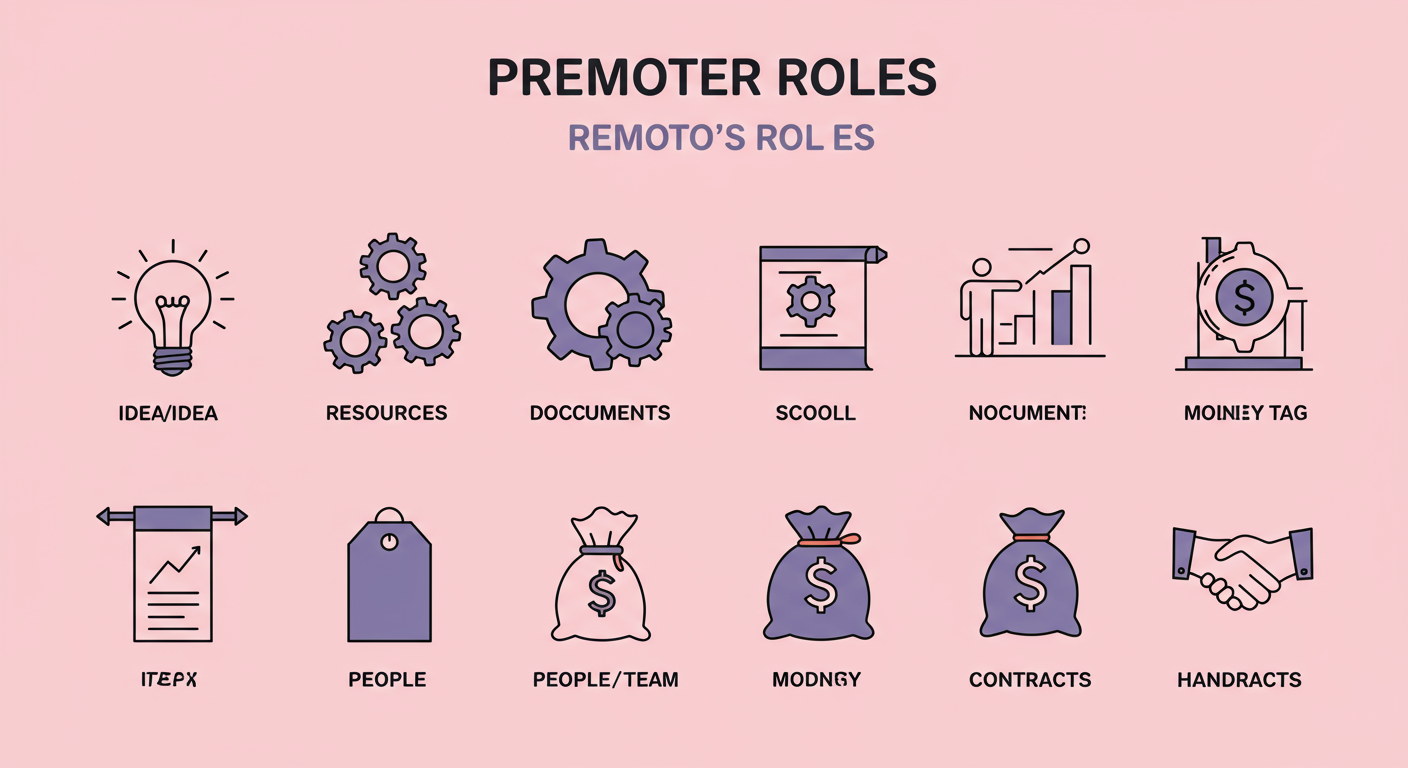
1. From Spark to Strategy: The Viability Test
Ideas are cheap. Execution is everything. The promoter’s first job is to brutally test the initial spark of an idea. Is it actually viable? This goes far beyond a gut feeling. It involves a rigorous feasibility study:
- Market Feasibility: Is there a real, paying audience for this? Who are the competitors?
- Technical Feasibility: Do we have the technology, skills, and resources to build this product or deliver this service?
- Financial Feasibility: How much capital is needed? What are the projected revenues, costs, and break-even point? Can this actually make money?
A promoter who skips this step is just building a castle on sand. It’s their job to be the idea’s biggest critic before becoming its biggest champion.
2. Assembling the Core Resources
With a viable plan, the promoter shifts into a resource magnet. They are responsible for securing the foundational assets needed to get started. This isn’t about hiring the whole team yet; it’s about acquiring the non-negotiable building blocks. This could mean finding and leasing the initial office space, securing patents for a unique invention, or purchasing essential machinery.
3. Architecting the Legal DNA
This is where the promoter puts on their legal coordinator hat. They oversee the drafting of the two most important documents in a company’s life:
- Memorandum of Association (MOA): This defines the company’s purpose, scope, and objectives. It’s the “what” and “why” of the business.
- Articles of Association (AOA): This outlines the internal rules for running the company—the duties of directors, shareholder rights, meeting procedures, etc. It’s the “how.”
Getting these documents right is critical. They form the company’s constitution, and mistakes here can lead to massive legal headaches down the road.
💡 Pro Tip
Always engage a qualified corporate lawyer to draft the MOA and AOA. While templates exist, these documents need to be tailored to your specific business model and long-term goals. From our hands-on testing, we’ve seen that a small investment in legal expertise at this stage prevents costly disputes later.
4. Giving the Company a Name
What’s in a name? A lot, actually. The promoter chooses a name for the company and then navigates the approval process with the relevant government body (like the Registrar of Companies). The name must be unique, not misleading, and not infringe on existing trademarks. It’s a simple step that can become a major roadblock if not handled diligently.
5. Appointing the Day-One Leadership
A company can’t run itself. The promoter is responsible for identifying and getting consent from the first directors of the company. These are the individuals who will take over management once the company is officially incorporated. The promoter also appoints other crucial partners like the company’s first bankers and auditors.
6. Securing the First Cheque: Preliminary Funding
Incorporation isn’t free. There are government fees, legal costs, printing expenses, and other preliminary costs. The promoter is tasked with arranging this initial seed capital. Often, this comes from the promoter’s own funds (“bootstrapping”) or from convincing early-stage angel investors to write the very first cheque based on nothing more than a plan and the promoter’s credibility.
7. Making Promises: Pre-Incorporation Contracts
This is one of the riskiest roles. To get things moving, a promoter often needs to sign contracts before the company legally exists. This could be a lease for an office or a contract with a key supplier. These are known as “pre-incorporation contracts.” MSME Udyam Certificate Download Online: A Step-by-Step Complete Guide
⚠️ Watch Out
The promoter is often personally liable for pre-incorporation contracts. If the company fails to form or, once formed, refuses to adopt the contract, the promoter can be left holding the bag. It’s crucial to ensure these contracts include a clause that allows the liability to be transferred to the new company upon its incorporation. Trademark Class 35: The Definitive Guide for Businesses (2026)
A Spectrum of Promoters: Not a One-Size-Fits-All Role
Promoters aren’t a monolith. They come from different backgrounds with diverse motivations. Understanding the type of promoter you’re dealing with (or the type you are) is key.
| Promoter Type | Primary Motivation | Typical Background | End Goal |
|---|---|---|---|
| Occasional Promoter | To commercialize their own business idea. | Entrepreneurs, inventors, industry experts. | Become a long-term director or majority shareholder. |
| Professional Promoter | Promotion is their business; they do it for a fee. | Specialized firms, business consultants. | Form the company, get paid, and move to the next project. |
| Financial Promoter | High return on investment. | Venture capital firms, investment banks. | Fund and scale the company for a profitable exit (IPO or acquisition). |
| Technical Promoter | To leverage specialized knowledge or technology. | Engineers, scientists, software developers. | Build a business around their patent or expertise, often with a financial partner. |
The Promoter’s Tightrope Walk: Fiduciary Duty and Personal Liability
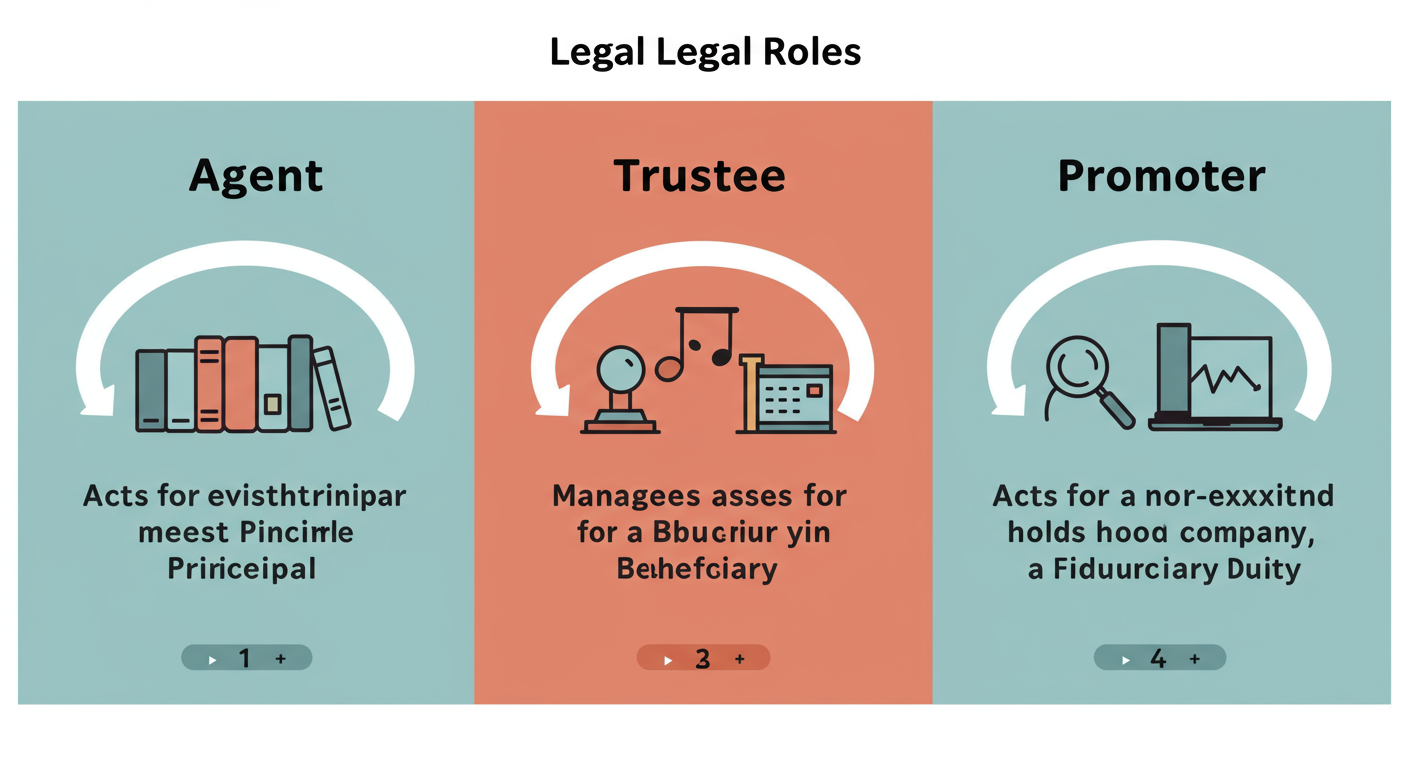
Here’s the most critical concept to grasp: a promoter stands in a fiduciary position toward the company they are creating. This is a legal relationship of utmost trust and confidence, similar to that of a guardian to a ward. Because the company doesn’t exist yet to protect itself, the law places a heavy burden on the promoter to act in its best interests. This isn’t just a moral obligation; it’s a legal one with serious consequences.
This fiduciary duty imposes two non-negotiable rules:
- No Secret Profits: A promoter cannot personally profit from transactions with the company without full disclosure. Imagine a promoter buys land for $500,000 and, a month later, sells it to their newly formed company for $800,000 without revealing the original price. That $300,000 is a “secret profit,” and the promoter can be legally forced to return it to the company. Profit is allowed, but only if it’s transparent and approved by an independent board.
- Full Disclosure of Personal Interest: The promoter must reveal any personal interest in a deal. If a promoter’s spouse owns the company being hired to build the new website, that conflict of interest must be disclosed. Transparency is paramount.
Breaching these duties can lead to lawsuits, reversal of transactions, and personal financial ruin. Trust me on this one, I’ve seen it play out, and it’s not pretty.
🎯 Key Takeaway
The role of a promoter is to be the company’s first and most important guardian. They transform a raw idea into a legally sound, financially viable, and operational entity by navigating a complex pre-launch checklist, all while bound by a strict fiduciary duty to act in the future company’s best interest.
The Promoter’s Value: Before and After
The impact of a competent promoter is transformative. They don’t just start a company; they set its trajectory. Here’s a simple breakdown of the value they add.
| Stage | Without a Promoter | With a Competent Promoter |
|---|---|---|
| Idea | A raw, untested concept. High risk of failure. | A thoroughly vetted business plan with market, financial, and technical validation. |
| Legal Structure | Confusion over legal forms, potential for costly documentation errors. | A solid legal foundation with a professionally drafted MOA and AOA. |
| Funding | A “great idea” with no capital. Struggles to cover basic setup costs. | Preliminary funding secured to cover incorporation and initial operational expenses. |
| Operations | No contracts, no location, no leadership. A state of paralysis. | Key pre-incorporation contracts signed, first directors appointed, and ready for Day 1. |
The Reward for the Risk: How Promoters Get Paid
Given the immense effort and personal risk, how does a promoter get compensated? They can’t just send an invoice. Remuneration must be formally arranged after the company is incorporated. Common methods include:
- Lump-Sum Payment: A straightforward cash payment for services rendered.
- Equity (Shares): The company allots shares to the promoter, making them an owner. This aligns their long-term interests with the company’s success.
- Commission: A percentage commission on the initial shares sold to the public or private investors.
- Profitable Asset Sale (with disclosure): The promoter sells a personal asset (like property or a patent) to the company at a disclosed and approved profit.
💡 Pro Tip
For founders acting as promoters, taking compensation in the form of equity is often the most strategic move. It conserves precious cash in the early days and directly ties your reward to the future value you create. Ensure this is properly documented in a founder’s agreement.
❓ Frequently Asked Questions
Can a company have more than one promoter?
Yes, absolutely. In fact, it’s very common for startups to have two or more co-founders who act as co-promoters. They share the workload, risks, and responsibilities of forming the company.
What happens to contracts a promoter signs before the company is formed?
These are called pre-incorporation contracts, and they are a tricky area of corporate law. Initially, the promoter is personally liable. After incorporation, the company can choose to “adopt” the contract, which transfers the liability from the promoter to the company. Authoritative resources like Investopedia provide detailed explanations of this process.
Is a promoter the same as a CEO or founder?
Not necessarily. A “founder” is often the promoter, but the terms aren’t perfectly interchangeable. “Promoter” is a legal term for the person who incorporates the company. “Founder” is a more general business term. A promoter might form a company and then hire a CEO to run it, without being the CEO themselves.
Can a promoter be fired?
The role of a “promoter” technically ends once the company is successfully incorporated and the board of directors takes over. After that, if the promoter has taken on a role like CEO or director, they can be removed from that position according to the company’s articles of association and employment law, but their historical status as the promoter cannot be changed.
Conclusion: The Unsung Hero of Every Enterprise
The role of a promoter is one of the most challenging and crucial in the entire business lifecycle. They are the catalysts who dare to bridge the vast chasm between a mere idea and a functioning enterprise. They navigate legal mazes, secure the first dollars, and bear significant personal risk, all for a company that doesn’t yet exist.
Their work sets the entire ethical and operational tone for the company’s future. A diligent, transparent promoter builds a foundation of trust and good governance. A careless one plants seeds of future disaster.
So, if you’re an aspiring entrepreneur with a big idea keeping you up at night, you’re already standing at the starting line of the promoter’s journey. Your next step isn’t just to dream bigger, but to start building the blueprint. Your future company depends on it.