
You just landed the job. The offer letter flashes a huge number: your Cost to Company (CTC). You’re ecstatic. But then, your first paycheck arrives, and the amount in your bank account is… a lot smaller. What happened?
This jarring gap between expectation and reality is where most people first collide with the complexities of a salary structure. It’s not a single number; it’s a carefully engineered framework of components, some you get now, some later, and some you never see in cash at all.
Look, understanding this framework is no longer optional. For employers, it’s the engine of talent acquisition and retention. For you, the employee, it’s the key to unlocking your true earning potential and making smarter financial decisions. In this deep dive, we’ll dissect the entire salary structure, piece by piece, so you can master your compensation in 2026.
What is a Salary Structure? (And Why It’s Not Just One Number)
Think of a company’s salary structure as its compensation philosophy brought to life. It’s a strategic system that defines how jobs are valued and paid, ensuring fairness internally while staying competitive externally. It’s the “why” behind your pay.
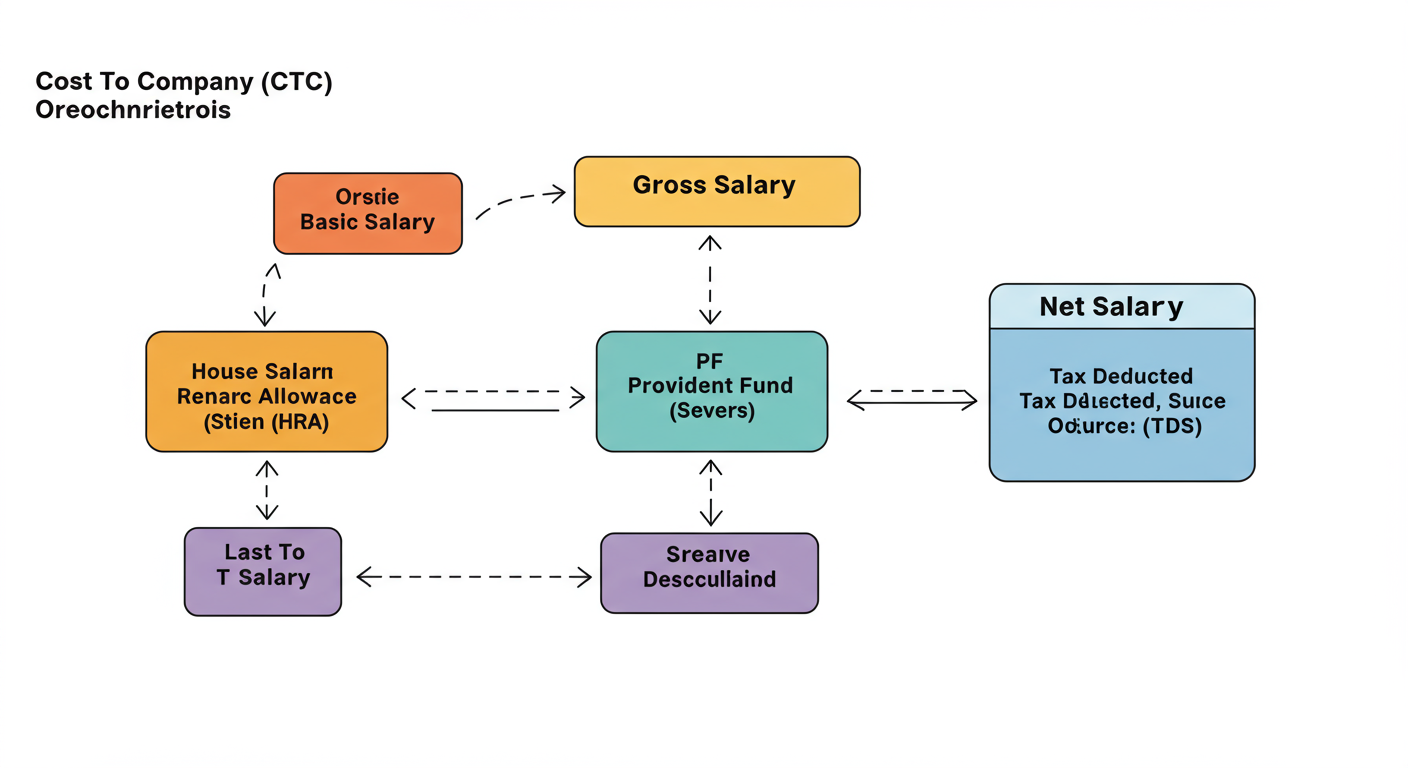
It’s not just about your monthly take-home. It’s the entire recipe of your compensation, including fixed pay, performance bonuses, hidden benefits, and mandatory contributions. The central tension always lies between three key figures: CTC, Gross Salary, and Net Salary. Based on our experience analyzing hundreds of compensation plans, this is the single biggest point of confusion.
Let’s clear it up right now.
| Compensation Term | What It Really Means | Simple Analogy |
|---|---|---|
| Cost to Company (CTC) | The total cost the employer incurs for you. This includes your salary, all benefits (like insurance), and the employer’s contributions to your retirement funds (like PF). | The full sticker price of a car, including taxes, registration, and extended warranty. |
| Gross Salary | Your total earnings before any deductions. This is your Basic Salary plus all allowances (like HRA, LTA, etc.). It does NOT include the employer’s PF contribution. | The car’s base price plus optional feature packages you’ve added. |
| Net (In-Hand) Salary | The actual amount deposited into your bank account. It’s your Gross Salary minus all deductions (like your PF contribution, income tax (TDS), and professional tax). | The final amount you actually pay to drive the car off the lot. |
A well-designed structure provides clear answers to tough questions: Why does a senior engineer earn more than a junior one? How do our salaries stack up against the competition? And crucially, how can I grow my earnings here? Transparency here builds trust. It’s that simple.
The Anatomy of a Paycheck: Deconstructing the 7 Core Components
To truly master your compensation, you need to understand its building blocks. Every salary structure is a blend of these seven elements, each with a distinct purpose. Let’s break them down.
1. Basic Salary
This is the bedrock. The foundation. It’s the fixed, core part of your salary, typically making up 40-60% of your CTC. Don’t underestimate its importance. Why? Because so many other critical components—like your Provident Fund contributions and, often, House Rent Allowance—are calculated as a percentage of this number. A higher basic salary means a healthier retirement fund and potentially better allowances.
⚠️ Watch Out
Beware the “low basic, high allowances” trap. Some companies inflate the CTC with numerous taxable allowances while keeping the basic salary low. This can reduce your long-term savings (PF, Gratuity) and may not be as tax-efficient as it seems. Always check the basic salary percentage.
2. Allowances
Allowances are sums paid to cover specific needs or expenses. They are the most common way companies add flexibility and tax-efficiency to a salary. Key examples include:
- House Rent Allowance (HRA): To help cover rental costs. This offers significant tax benefits if you live in rented accommodation.
- Leave Travel Allowance (LTA): For travel expenses within India while on leave. This is another powerful tax-saving tool.
- Special Allowance: This is often a “balancing” figure, making up the difference between the fixed components and the Gross Salary. It’s typically fully taxable.
- Conveyance/Transport Allowance: To cover commuting costs.
3. Perquisites (Perks)
Perks are non-cash benefits that enhance your work and life. While they might not be money in the bank, their value is part of your CTC and can be substantial. Modern perks go beyond the old-school company car and include things like:
- Health and wellness insurance for you and your family.
- Subsidized meals or food coupons.
- Remote work stipends for home office setup.
- Stock options (ESOPs), giving you ownership in the company.
- Learning and development budgets.
4. Variable & Performance Pay
This is the “at-risk” portion of your pay, tied directly to performance—yours, your team’s, or the company’s. It’s a powerful motivator. This isn’t guaranteed money, but it’s where high-performers can significantly boost their annual earnings. It includes annual bonuses, sales commissions, and project-based incentives.
💡 Pro Tip
When negotiating an offer, don’t just accept the “target bonus” figure at face value. Ask: “What has the average bonus payout for this role been over the last two years?” This gives you a realistic picture of what you can actually expect to earn.
5. Retirement & Long-Term Benefits
This is the money set aside for your future. It’s a forced savings plan that pays off decades down the line. The main components are:
- Provident Fund (PF): A mandatory retirement savings scheme. Both you and your employer contribute 12% of your basic salary each month. The employer’s contribution is part of your CTC but not your gross salary.
- Gratuity: A lump-sum “thank you” payment for employees who complete five or more years of service with a company.
6. Statutory Deductions
These are the non-negotiable deductions mandated by law. They are subtracted from your Gross Salary to arrive at your Net Salary.
- Employee’s PF Contribution: Your 12% share.
- Tax Deducted at Source (TDS): The estimated income tax for the month, deducted by your employer on behalf of the government.
- Professional Tax: A small state-level tax on employment.
7. Net (In-Hand) Salary
The grand finale. This is the cash that actually hits your bank account. The simple (but painful) formula is: Net Salary = Gross Salary – All Deductions (PF, TDS, etc.).
🎯 Key Takeaway
A salary structure is a strategic blend of fixed pay, variable incentives, benefits, and long-term savings. Focusing only on the CTC or Net Salary is a mistake. True financial empowerment comes from understanding how all the components work together to create your total compensation package.
For Employers: How to Build a Competitive Salary Structure in 5 Steps
For business leaders and HR professionals, designing a salary structure isn’t an administrative task—it’s a core business strategy. A solid structure is your best weapon in the war for talent. After testing various models, we’ve found this five-step process to be the most effective. Tax Audit Due Date for AY 2023-24: A Comprehensive Guide
- Define Job Architecture & Leveling: Before you can price a job, you must understand it. Analyze every role’s responsibilities, required skills, and impact on the business. Group similar roles into job families (e.g., Engineering, Marketing) and then create levels within them (e.g., Junior, Mid-Level, Senior, Principal). This creates clear career paths.
- Conduct Market Benchmarking: You can’t operate in a vacuum. You must know what the market is paying for similar roles. Use credible salary surveys and industry reports to benchmark your roles against competitors in your industry and location. According to India’s Ministry of Labour & Employment guidelines, paying fair wages is not just good practice but a legal necessity.
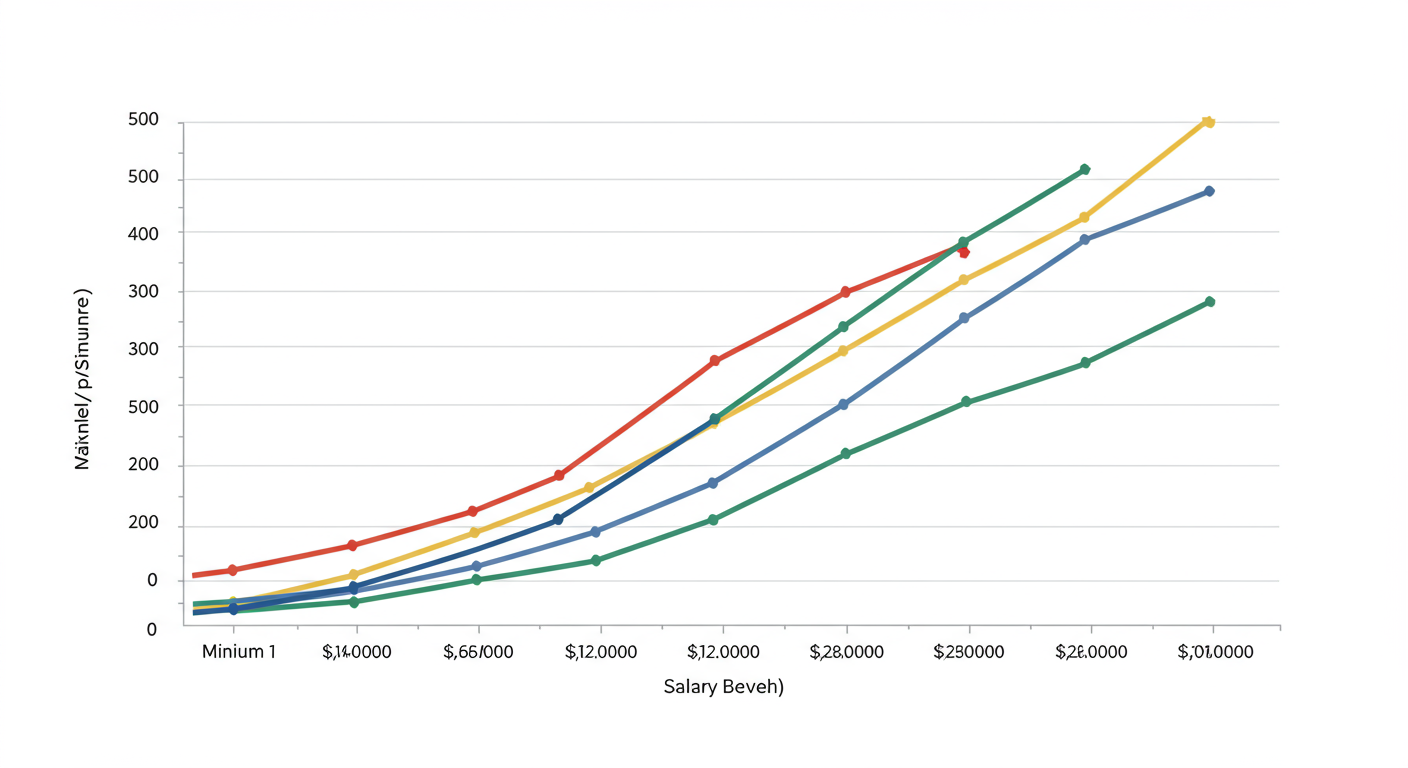
- Design Pay Bands & Philosophy: For each job level, create a pay band with a minimum, midpoint, and maximum salary. Your compensation philosophy dictates where you aim to pay within this band. Do you want to lead the market (paying at the 75th percentile) or match it (paying at the 50th percentile)? This is a critical strategic decision.
- Determine the Fixed vs. Variable Mix: The right mix depends on the role. A sales role might have a 50/50 split between fixed salary and variable commission to drive aggressive growth. An administrative role, however, might be 95% fixed pay to ensure stability.
- Ensure Compliance & Communicate Transparently: Your structure must adhere to all labor laws, from minimum wage to PF regulations. Once finalized, communicate it. Employees who understand how they are paid and how they can progress are more engaged and motivated. Trust me on this one.
| Role Type | Typical Fixed Pay % | Typical Variable Pay % | Rationale |
|---|---|---|---|
| Sales / Business Development | 50-70% | 30-50% | Directly incentivizes revenue generation and achieving targets. |
| Software Engineering | 85-95% | 5-15% | Focuses on stable, high-quality output with bonuses for project milestones or company performance. |
| Customer Support | 90-95% | 5-10% | Prioritizes consistent service quality, with small bonuses tied to satisfaction metrics (CSAT). |
| Executive Leadership (C-Suite) | 40-60% | 40-60% | Aligns executive compensation with long-term company performance and shareholder value. |
⚠️ Watch Out
Pay compression is a silent killer of morale. This happens when the pay gap between new hires and experienced employees shrinks, often because market rates have risen faster than internal raises. Regular audits of your pay bands are essential to ensure you’re rewarding loyalty and experience.
For Employees: How to Analyze and Negotiate Your Salary Package
Alright, let’s switch hats. You’re the one receiving the offer. How do you make sure you’re getting a great deal? It’s about looking beyond the headline CTC number.
From real-world negotiation coaching, the smartest candidates don’t just ask for more money; they ask for a better structure. A 10% higher CTC might sound great, but if it all comes in the form of a fully taxable “special allowance,” you might be worse off than with a slightly lower CTC that has a higher basic salary and more tax-friendly components.
💡 Pro Tip
During negotiations, try this: “Thank you for the offer. I’m excited about the role. Could we explore restructuring the package to have a slightly higher basic salary component? It would be more beneficial for my long-term financial planning.” This shows you’re a savvy, long-term thinker, not just a money-grabber.
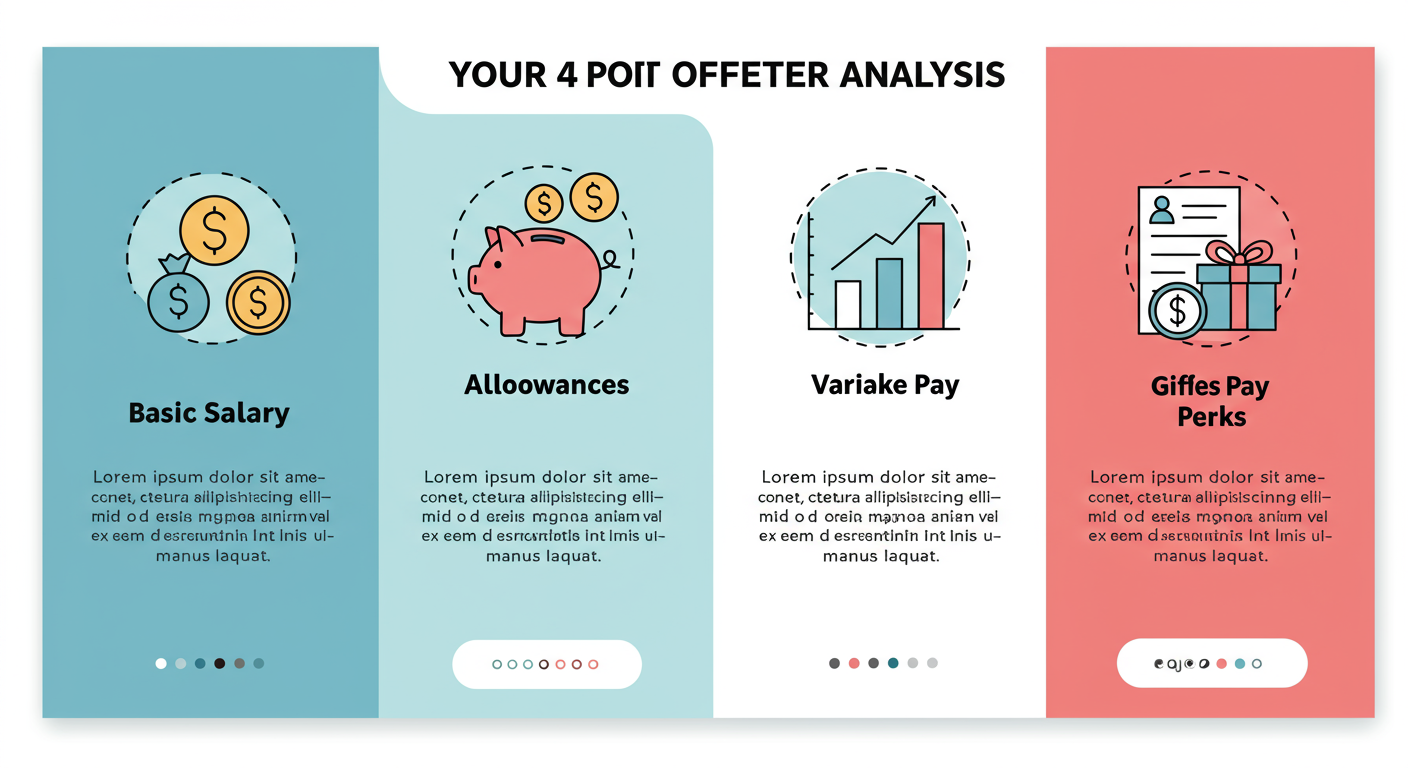
When you get an offer letter, run through this mental checklist:
- What’s the Basic Salary percentage? Aim for 50% or higher if possible.
- What are the major allowances? Are they tax-friendly (HRA, LTA) or fully taxable?
- What’s the target variable pay? And what’s the historical payout?
- What are the non-monetary benefits? Don’t forget to value health insurance, learning budgets, and other perks. As the Harvard Business Review points out, these can add significant value to your total compensation.
Understanding the legal and ethical frameworks around pay can also give you confidence. Leading experts recommend familiarizing yourself with concepts of pay equity and fairness, which are central to modern compensation strategy. Resources from institutions like Cornell Law School’s Legal Information Institute provide excellent, unbiased information on compensation laws.
The Future of Salary Structures: Trends for 2026 and Beyond
Compensation isn’t static. It’s evolving fast. Here are a few trends we’re seeing that will shape how you’re paid in the coming years:
The future of compensation is about flexibility and transparency. The one-size-fits-all model is dying, replaced by systems that empower employees to choose what matters most to them.
- Pay Transparency: More and more companies (and states/countries) are mandating that job postings include salary ranges. This is a massive shift that gives candidates more power.
- Flexible “Cafeteria” Benefits: Instead of a fixed set of perks, companies are giving employees a budget to spend on what they value most—be it a better health plan, a bigger remote work stipend, or more childcare support.
- Location-Agnostic vs. Location-Based Pay: The remote work revolution has sparked a huge debate. Will companies pay the same salary for the same role regardless of location, or will they adjust pay based on the local cost of living? This is a battle that’s still playing out.
❓ Frequently Asked Questions
What is the difference between CTC and Gross Salary?
CTC (Cost to Company) is the total cost an employer incurs for an employee, including the employer’s PF contribution and insurance premiums. Gross Salary is your total earnings before any deductions, consisting of your Basic Salary plus all allowances. Your take-home pay is calculated from your Gross Salary, not your CTC.
How is the Basic Salary component determined?
Basic Salary is typically set as a percentage of the CTC, usually between 40% and 60%. The exact percentage is determined by company policy, industry norms, and legal requirements. A higher basic is generally better for long-term savings like PF and gratuity.
Are all allowances tax-free?
No. Some allowances like House Rent Allowance (HRA) and Leave Travel Allowance (LTA) offer tax exemptions under specific conditions and up to certain limits. However, many others, such as a “Special Allowance,” are usually fully taxable. It’s crucial to know which is which.
Why do companies have different salary structures?
A company’s salary structure reflects its unique strategy, industry, size, and culture. A fast-growing tech startup might prioritize stock options (ESOPs) and high variable pay, while a stable manufacturing firm might offer a higher fixed salary and more robust retirement benefits.
Can I negotiate my salary structure, not just the total CTC?
Absolutely. In fact, it’s one of the smartest things you can do. While the overall framework might be rigid, you can often negotiate the mix of components. Asking to increase the basic salary portion or to restructure allowances for better tax efficiency is a common and respected negotiation tactic.
Conclusion: From Confusion to Command
A salary structure is far more than a line item in an HR budget. It’s the financial backbone of the employer-employee relationship. For companies, it’s a strategic lever for attracting, motivating, and retaining the people who drive success.
For you, it’s the blueprint to your financial well-being. By moving past the dizzying CTC number and learning to dissect the components—the basic, the allowances, the variables, and the benefits—you shift from being a passive recipient to an active architect of your compensation.
So, the next time you look at a payslip or an offer letter, don’t just see the numbers. See the structure. Analyze it, understand it, and use that knowledge to your advantage. That is how you take command of your career and your financial future.