
The Unseen Guardian: Why an Auditor’s Opinion Can Make or Break Your Business
Imagine two startups, both seeking a crucial round of funding. Both have promising products and impressive revenue growth. But one secures a multi-million dollar investment with favorable terms, while the other is met with skepticism and walks away empty-handed. What was the difference? A single document: a clean, unqualified auditor’s report.
That’s not an exaggeration. In the high-stakes world of business, trust is everything. And auditors are the designated guardians of that trust. But their role is one of the most misunderstood in the corporate world. They aren’t just glorified accountants looking for typos. They are detectives, strategists, and independent arbiters of financial truth.
This article pulls back the curtain. You’re about to learn the 10 fundamental duties of an auditor that form the bedrock of market confidence. We’ll go beyond the textbook definitions to show you what these duties look like in the real world, how they’ve evolved for 2026, and why understanding them is critical for every investor, founder, and manager.
More Than a Rubber Stamp: Why Auditors Are Indispensable
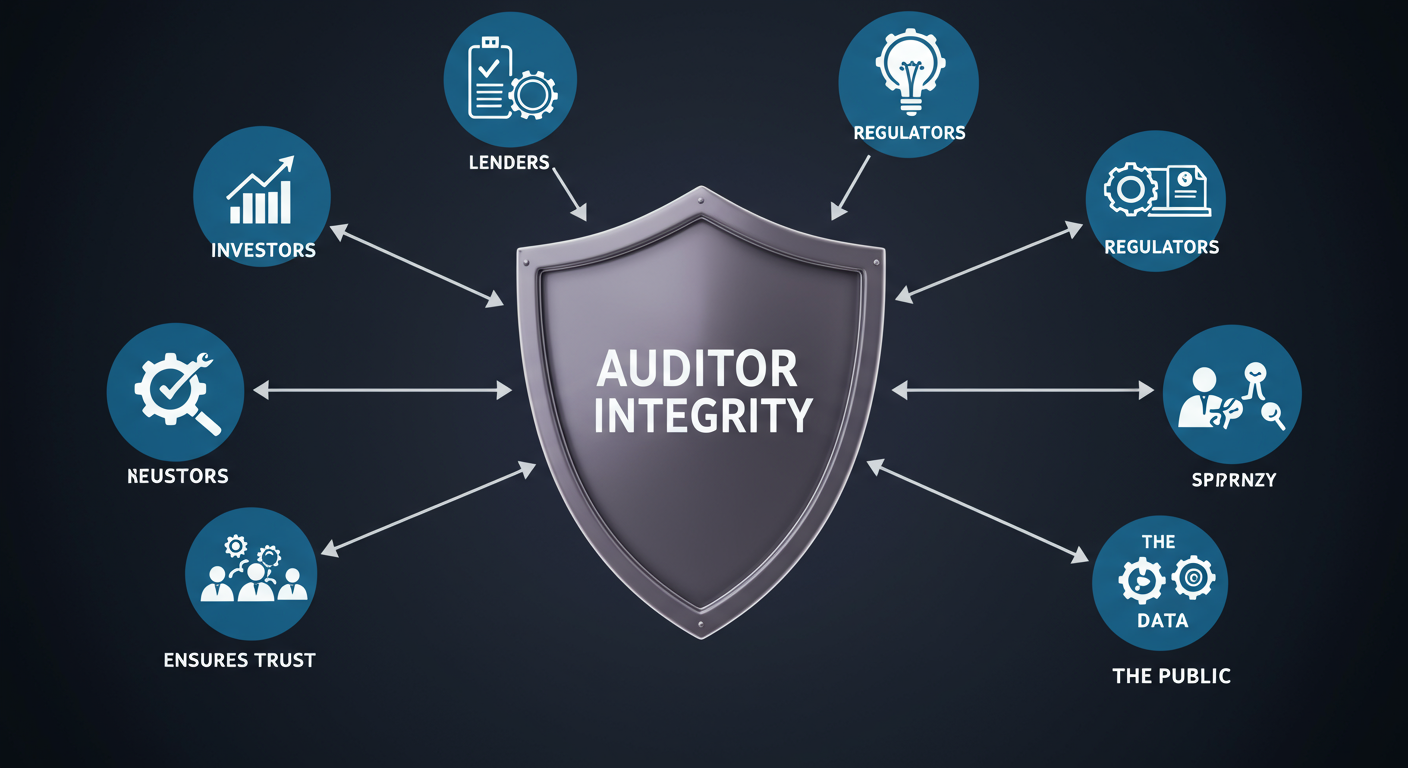
Let’s get one thing straight: an audit isn’t a punishment. It’s a health check. A competent auditor provides an independent, expert opinion on the state of a company’s financial health. This isn’t just a “nice to have”—it’s the very engine of a functioning capital market. Why? Because their work directly impacts four key areas:
- Credibility and Trust: An audited financial statement is the gold standard. It tells investors, banks, and partners that the numbers have been scrutinized by an unbiased professional. Based on our experience with clients seeking loans, banks often offer significantly better interest rates on the back of a clean audit report.
- Internal Accountability: Knowing an audit is on the horizon changes behavior. It forces management to maintain meticulous records and strengthen internal controls. It creates a culture where “we’ll fix it later” is no longer an option.
- Strategic Decision-Making: You can’t plan for the future with faulty data. Audited financials provide a reliable foundation for budgeting, forecasting, and making tough strategic calls. It’s the difference between navigating with a GPS and using a hand-drawn map.
- Regulatory Compliance: For many companies, especially public ones, an annual audit isn’t optional—it’s the law. Auditors ensure the company is playing by the rules set by bodies like the SEC or, in India, under the Companies Act, 2013. This avoids crippling fines and legal trouble.
💡 Pro Tip
Don’t wait for the audit to get your house in order. Implement a “continuous close” process where you reconcile accounts monthly, not just annually. This makes the actual audit smoother, cheaper, and less disruptive. It also gives you a real-time view of your financial health.
The Auditor’s Playbook: The 10 Core Duties Explained
While the scope of an audit can vary, these ten duties form the universal mandate for any statutory auditor. They are interconnected and build upon one another to create a comprehensive review.
1. To Form and Express an Opinion on Financial Statements
This is the grand finale. The ultimate output of an audit is the auditor’s report, which contains their professional opinion. This isn’t a simple pass/fail. The opinion states whether the financial statements present a “true and fair view” of the company’s financial reality. Trust me on this one, the type of opinion issued can have massive consequences.
| Type of Opinion | What It Means | Real-World Implication |
|---|---|---|
| Unqualified (Clean) | The financial statements are free from material misstatements. The auditor has no reservations. | Green light for investors and lenders. The highest level of assurance. |
| Qualified | The statements are mostly fair, except for a specific, isolated issue that the auditor details. | A yellow flag. Stakeholders will scrutinize the “except for” part heavily. It may complicate financing. |
| Adverse | The financial statements are materially misstated and do not present a true and fair view. | A massive red flag. This destroys credibility and can trigger loan defaults or regulatory investigations. |
| Disclaimer of Opinion | The auditor could not obtain enough evidence to form an opinion at all. | Also a major red flag. It suggests major problems with record-keeping or management obstruction. |
2. To Verify the Accuracy of Books and Records
To form that opinion, an auditor has to get their hands dirty. This duty involves digging into the transactions that make up the numbers. It’s not about checking every single invoice. It’s about smart, risk-based testing. This includes:
- Vouching: Tracing a transaction from the financial statement back to its source document (like an invoice or contract).
- Tracing: Following a source document forward to ensure it was recorded correctly in the books.
- Confirmations: Contacting third parties (like banks or customers) to independently confirm balances.
3. To Assess Risks of Fraud and Error
While management is responsible for preventing fraud, a key duty of an auditor is to maintain “professional skepticism” and actively look for red flags. This means asking tough questions. Why did sales spike 300% in the last month of the quarter? Why are certain vendors always paid immediately while others wait 90 days? According to the International Financial Reporting Standards (IFRS) framework, auditors must design procedures specifically to address the risk of management overriding controls.
⚠️ Watch Out
An audit provides reasonable assurance, not an absolute guarantee, against fraud. A well-colluded and sophisticated fraud can sometimes go undetected even in a high-quality audit. The auditor’s job is to ensure the financial statements aren’t materially misstated, not to find every single dollar of theft.
4. To Evaluate the Internal Control System
A company’s internal controls are the processes and procedures designed to prevent errors and fraud. Think of them as the guardrails on a highway. An auditor must understand and evaluate these controls. Are expense reports approved by a manager? Is access to the accounting system restricted? Strong controls mean lower risk, allowing the auditor to perform less detailed testing. Weak controls are a huge red flag, demanding a much deeper dive.
5. To Comply with Professional Auditing Standards
Auditors don’t just make things up as they go. They are bound by a strict set of rules called Standards on Auditing (SAs) or International Standards on Auditing (ISAs). These standards govern everything from how an audit is planned and executed to the specific wording used in the final report. Adherence to these standards is what separates a professional audit from a casual review and ensures consistency and quality across the profession.
6. To Report Directly to Shareholders
This is a critical point about independence. The statutory auditor is appointed by and reports to the company’s shareholders, not the CEO or CFO they work with daily. The auditor’s report is presented at the Annual General Meeting (AGM). This direct line of accountability ensures the auditor’s primary allegiance is to the owners of the company, not the management team whose performance is being evaluated.
7. To Maintain Strict Independence and Objectivity
Independence is the soul of auditing. An auditor cannot have financial interests in their client, provide certain conflicting non-audit services, or have close personal relationships with management. They must be independent in both fact and appearance. Even the perception of a conflict of interest can undermine the value of the audit. From real-world cases, we’ve seen audit firms fired simply because a new partner’s spouse worked at a client company in a senior role.
8. To Inquire and Obtain Necessary Information
An auditor has the legal right to access a company’s books, records, and personnel. A crucial duty is to exercise this right by making specific inquiries. They don’t just accept the information given; they probe and question it. A common question is, “Can you walk me through the process for recognizing revenue on this new subscription product?” The answers (and any hesitation) provide valuable audit evidence.
9. To Report on Specific Legal and Regulatory Matters
Beyond the main financial statements, laws often require auditors to report on a checklist of other items. In India, the Companies (Auditor’s Report) Order, or CARO, requires a detailed report on things like the maintenance of fixed asset records, physical verification of inventory, and repayment of loans. This adds another layer of specific scrutiny that keeps companies on their toes.
10. To Uphold Client Confidentiality
During an audit, auditors become privy to a company’s most sensitive strategic and financial information. A fundamental ethical duty is to keep this information strictly confidential. They cannot use it for personal gain or disclose it to anyone without legal or professional cause. This duty is what allows clients to be open and transparent, which is essential for a successful audit. ROC Annual Filing 2026: Understanding the Critical AOC-4 MGT-7 Filing Due Date 2026 and Penalty Structure
🎯 Key Takeaway
The core duties of an auditor are not a simple checklist; they are a framework for providing independent, expert assurance. Their ultimate purpose is to enhance the degree of confidence that intended users can place in the financial statements, which underpins the entire system of business and investment. Quant Mutual Funds Review 2026: The Secret to Their Growth?
The Audit in Action: A 5-Step Process Guide
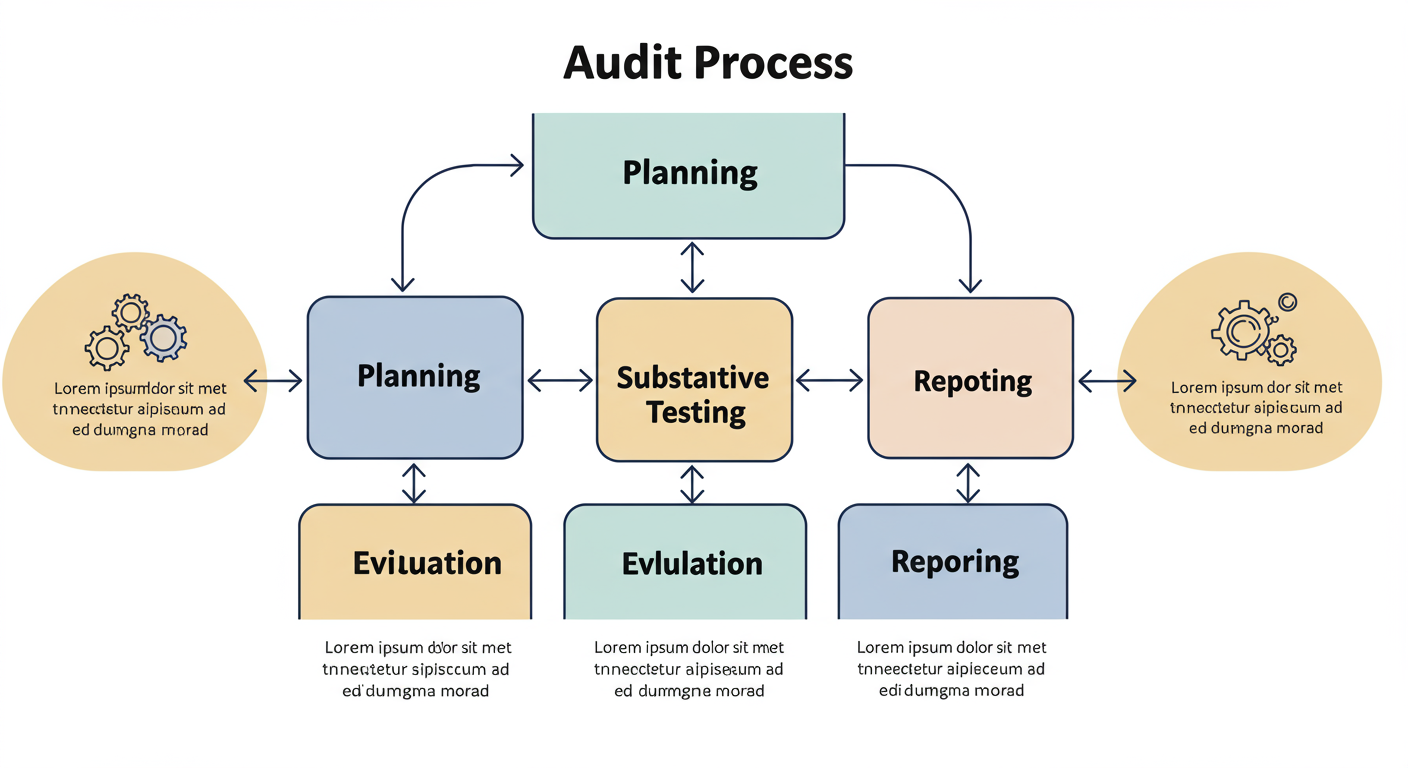
So, how do these duties translate into a real-world engagement? While every audit is unique, they generally follow a structured, five-phase process.
- Phase 1: Planning and Risk Assessment. This is the most critical phase. The auditor gains an understanding of the business and its environment, identifies key risks of material misstatement, and develops an overall audit strategy. This is where they decide which areas need the most attention.
- Phase 2: Internal Control Testing. The auditor tests the effectiveness of the company’s key internal controls. For example, they might test a sample of 25 purchase orders to ensure they were all properly approved before payment was made.
- Phase 3: Substantive Testing. This is the “deep dive” into the numbers. The auditor performs detailed testing of account balances and transactions. This includes things like confirming bank balances, observing inventory counts, and vouching major sales.
- Phase 4: Evaluation and Completion. The auditor aggregates all the evidence gathered, evaluates any misstatements found, and performs final analytical procedures. They also get a signed representation letter from management confirming their responsibilities.
- Phase 5: Reporting. The final step is to issue the auditor’s report, which includes their formal opinion on the financial statements. This report is then delivered to the shareholders and becomes a public document for listed companies.
The Auditor of 2026: Navigating AI, Data, and ESG
The auditor’s role is not static. Technology and societal expectations are forcing a rapid evolution. The duties remain the same, but how they are performed is changing dramatically.
From Sampling to Full Population Testing
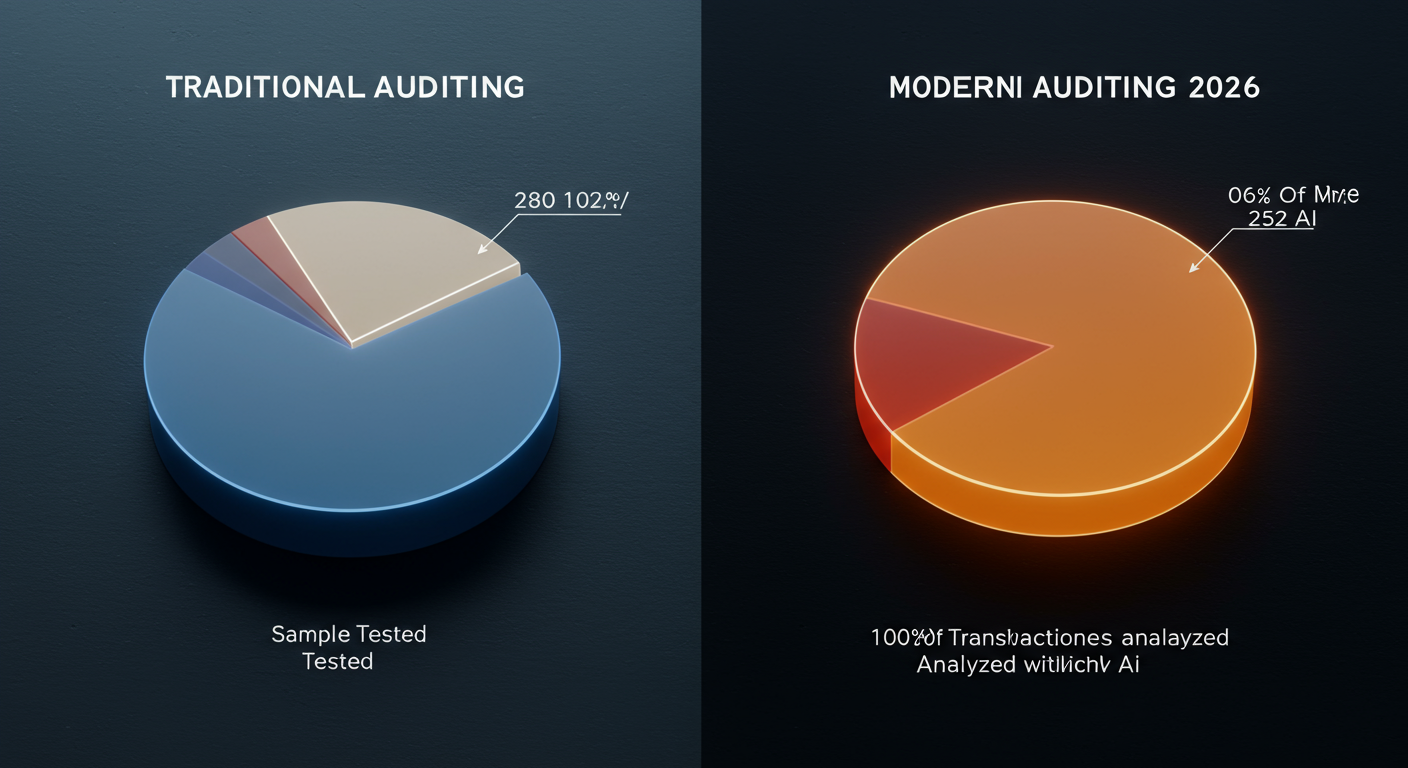
In the past, auditors tested a small “sample” of transactions. Today, data analytics tools allow them to analyze 100% of a company’s data. Instead of checking 50 invoices, they can now run an algorithm across all 500,000 to instantly identify outliers, duplicate payments, or transactions that violate company policy. This is a quantum leap in an auditor’s ability to spot anomalies.
The Rise of ESG Reporting Assurance
Investors no longer care only about financial returns. Environmental, Social, and Governance (ESG) factors are now a massive part of corporate valuation. Leading experts and regulatory bodies are pushing for mandatory, audited ESG reports. This creates a new frontier for auditors, who must now develop skills to provide assurance over non-financial data, such as carbon emissions, employee diversity statistics, and supply chain ethics. This is a complex but vital new duty. For more on this trend, leading institutions like Harvard Business School’s Business & Environment Initiative provide extensive research on the integration of sustainability into corporate strategy.
| Metric | Before a Robust Audit | After a Robust Audit |
|---|---|---|
| Investor Confidence | Low; skepticism over self-reported numbers. | High; trust in third-party verified data. |
| Loan Interest Rates | Higher rates to compensate for perceived risk. | Lower, more favorable rates due to reduced risk. |
| Internal Efficiency | Chaotic processes, frequent errors, and rework. | Streamlined controls, fewer errors, and faster closing. |
| Valuation Multiple | Discounted due to uncertainty and lack of transparency. | Higher multiple reflecting quality of earnings and governance. |
💡 Pro Tip
When choosing an auditor, ask them specifically about their technology stack and their experience with ESG assurance. An audit firm that still relies solely on manual sampling and has no ESG expertise is living in the past. You need a partner who can audit your business of tomorrow, not just your business of yesterday.
⚠️ Watch Out
Beware of the “familiarity threat.” Using the same audit firm for decades can sometimes lead to complacency. While a long-term relationship has benefits, professional standards require rotating the lead audit partner every few years to ensure a fresh pair of eyes is always on your books. This is a safeguard for your own protection.
Your Strategic Partner in a Complex World
The duties of an auditor are far more profound than a simple compliance exercise. They are the architects of financial trust, providing the independent assurance that allows our economic engine to run smoothly.
By understanding their ten core responsibilities—from expressing a formal opinion to maintaining unwavering independence and adapting to new challenges like ESG—you can transform your relationship with your auditor. Stop seeing the audit as an annual chore and start seeing it as a strategic opportunity: a chance to strengthen your controls, enhance your credibility, and build a more resilient and valuable business.
Your next step? Don’t just file away your last audit report. Re-read it with this new perspective. What story does it tell? And more importantly, how can you and your auditor work together to make next year’s story even stronger?
❓ Frequently Asked Questions
What is the single most important duty of an auditor?
The primary and most crucial duty is to form and express an independent, professional opinion on whether a company’s financial statements provide a “true and fair view.” All other duties are performed in service of this ultimate goal.
Can an auditor be held liable for not finding every instance of fraud?
Not necessarily. An auditor’s duty is to provide ‘reasonable assurance,’ not an absolute guarantee. If they conducted a thorough audit in line with professional standards but failed to detect a masterfully concealed fraud, they may not be liable. However, they can be held liable if they were found to be negligent or failed to exercise appropriate professional skepticism.
What’s the difference between an internal and an external (statutory) auditor?
Think of it this way: an external auditor works for the shareholders, while an internal auditor works for the company’s management. The external auditor’s main duty is to opine on the annual financial statements for outside stakeholders. The internal auditor focuses on improving the company’s internal controls, risk management, and operational efficiency for the benefit of the management and the board.
How has technology changed the duties of an auditor in 2026?
Technology hasn’t changed the fundamental duties, but it has revolutionized how they are performed. Auditors now use data analytics to test 100% of transactions instead of small samples, use AI to identify high-risk areas, and are increasingly being asked to provide assurance over complex IT systems and non-financial ESG data.
Do all companies need to have an audit?
It depends on the jurisdiction and company type. In many countries, all publicly listed companies and most private limited companies are legally required to have an annual statutory audit. However, smaller entities like sole proprietorships or partnerships may only require an audit if they cross certain revenue thresholds defined by tax laws.